Some cool china fast prototyping images:
Protei 011 “Optimist” Kit
Image by cesarharada.com
scoutbots.com/
protei.org
(Source from rapid prototyping from China blog)
Some cool china fast prototyping images:
Protei 011 “Optimist” Kit
Image by cesarharada.com
scoutbots.com/
protei.org
Check out these prototype china images:
Ubco Assembly
Image by locusresearch
Close up shot of 2×2 in the course of assembly
Ubco components
Image by locusresearch
Close up shot of 2×2 for the duration of assembly
Ubco parts
Image by locusresearch
Close up shot of 2×2 during assembly
A few good china prototype manufacturing photos I located:
Steven F. Udvar-Hazy Center: Photomontage of SR-71 on the port side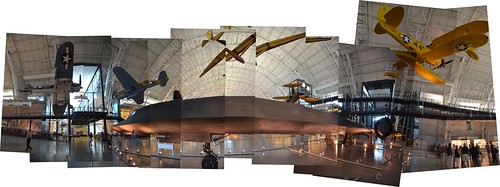
Image by Chris Devers
Posted by means of e-mail to ☛ HoloChromaCinePhotoRamaScope‽: cdevers.posterous.com/panoramas-of-the-sr-71-blackbird-at…. See the full gallery on Posterous …
• • • • •
See far more pictures of this, and the Wikipedia report.
Specifics, quoting from Smithsonian National Air and Space Museum | Lockheed SR-71 Blackbird:
No reconnaissance aircraft in history has operated globally in a lot more hostile airspace or with such complete impunity than the SR-71, the world’s fastest jet-propelled aircraft. The Blackbird’s efficiency and operational achievements placed it at the pinnacle of aviation technologies developments throughout the Cold War.
This Blackbird accrued about two,800 hours of flight time in the course of 24 years of active service with the U.S. Air Force. On its final flight, March six, 1990, Lt. Col. Ed Yielding and Lt. Col. Joseph Vida set a speed record by flying from Los Angeles to Washington, D.C., in 1 hour, 4 minutes, and 20 seconds, averaging three,418 kilometers (two,124 miles) per hour. At the flight’s conclusion, they landed at Washington-Dulles International Airport and turned the airplane more than to the Smithsonian.
Transferred from the United States Air Force.
Manufacturer:
Lockheed Aircraft Corporation
Designer:
Clarence L. "Kelly" Johnson
Date:
1964
Nation of Origin:
United States of America
Dimensions:
Overall: 18ft 5 15/16in. x 55ft 7in. x 107ft 5in., 169998.5lb. (5.638m x 16.942m x 32.741m, 77110.8kg)
Other: 18ft 5 15/16in. x 107ft 5in. x 55ft 7in. (5.638m x 32.741m x 16.942m)
Components:
Titanium
Physical Description:
Twin-engine, two-seat, supersonic strategic reconnaissance aircraft airframe constructed largley of titanium and its alloys vertical tail fins are constructed of a composite (laminated plastic-kind material) to minimize radar cross-section Pratt and Whitney J58 (JT11D-20B) turbojet engines feature massive inlet shock cones.
Long Description:
No reconnaissance aircraft in history has operated in a lot more hostile airspace or with such total impunity than the SR-71 Blackbird. It is the quickest aircraft propelled by air-breathing engines. The Blackbird’s overall performance and operational achievements placed it at the pinnacle of aviation technologies developments in the course of the Cold War. The airplane was conceived when tensions with communist Eastern Europe reached levels approaching a full-blown crisis in the mid-1950s. U.S. military commanders desperately needed correct assessments of Soviet worldwide military deployments, especially close to the Iron Curtain. Lockheed Aircraft Corporation’s subsonic U-two (see NASM collection) reconnaissance aircraft was an in a position platform but the U. S. Air Force recognized that this comparatively slow aircraft was currently vulnerable to Soviet interceptors. They also understood that the speedy development of surface-to-air missile systems could put U-2 pilots at grave risk. The danger proved reality when a U-2 was shot down by a surface to air missile more than the Soviet Union in 1960.
Lockheed’s 1st proposal for a new high speed, higher altitude, reconnaissance aircraft, to be capable of avoiding interceptors and missiles, centered on a design and style propelled by liquid hydrogen. This proved to be impracticable since of considerable fuel consumption. Lockheed then reconfigured the style for conventional fuels. This was feasible and the Central Intelligence Agency (CIA), already flying the Lockheed U-2, issued a production contract for an aircraft designated the A-12. Lockheed’s clandestine ‘Skunk Works’ division (headed by the gifted style engineer Clarence L. "Kelly" Johnson) created the A-12 to cruise at Mach 3.2 and fly well above 18,288 m (60,000 feet). To meet these challenging requirements, Lockheed engineers overcame a lot of daunting technical challenges. Flying far more than three occasions the speed of sound generates 316° C (600° F) temperatures on external aircraft surfaces, which are sufficient to melt traditional aluminum airframes. The design group chose to make the jet’s external skin of titanium alloy to which shielded the internal aluminum airframe. Two conventional, but very effective, afterburning turbine engines propelled this remarkable aircraft. These power plants had to operate across a enormous speed envelope in flight, from a takeoff speed of 334 kph (207 mph) to far more than three,540 kph (2,200 mph). To prevent supersonic shock waves from moving inside the engine intake causing flameouts, Johnson’s group had to style a complex air intake and bypass program for the engines.
Skunk Performs engineers also optimized the A-12 cross-section style to exhibit a low radar profile. Lockheed hoped to achieve this by meticulously shaping the airframe to reflect as little transmitted radar energy (radio waves) as attainable, and by application of specific paint made to absorb, rather than reflect, those waves. This treatment became one of the very first applications of stealth technology, but it never ever completely met the design ambitions.
Test pilot Lou Schalk flew the single-seat A-12 on April 24, 1962, soon after he became airborne accidentally for the duration of higher-speed taxi trials. The airplane showed wonderful guarantee but it needed considerable technical refinement just before the CIA could fly the very first operational sortie on May 31, 1967 – a surveillance flight over North Vietnam. A-12s, flown by CIA pilots, operated as component of the Air Force’s 1129th Unique Activities Squadron beneath the "Oxcart" program. While Lockheed continued to refine the A-12, the U. S. Air Force ordered an interceptor version of the aircraft designated the YF-12A. The Skunk Operates, nonetheless, proposed a "specific mission" version configured to conduct post-nuclear strike reconnaissance. This program evolved into the USAF’s familiar SR-71.
Lockheed built fifteen A-12s, which includes a specific two-seat trainer version. Two A-12s had been modified to carry a unique reconnaissance drone, designated D-21. The modified A-12s have been redesignated M-21s. These have been developed to take off with the D-21 drone, powered by a Marquart ramjet engine mounted on a pylon amongst the rudders. The M-21 then hauled the drone aloft and launched it at speeds high adequate to ignite the drone’s ramjet motor. Lockheed also built 3 YF-12As but this type never ever went into production. Two of the YF-12As crashed for the duration of testing. Only a single survives and is on display at the USAF Museum in Dayton, Ohio. The aft section of a single of the "written off" YF-12As which was later utilised along with an SR-71A static test airframe to manufacture the sole SR-71C trainer. One SR-71 was lent to NASA and designated YF-12C. Including the SR-71C and two SR-71B pilot trainers, Lockheed constructed thirty-two Blackbirds. The 1st SR-71 flew on December 22, 1964. Simply because of extreme operational charges, military strategists decided that the much more capable USAF SR-71s need to replace the CIA’s A-12s. These had been retired in 1968 soon after only one year of operational missions, largely over southeast Asia. The Air Force’s 1st Strategic Reconnaissance Squadron (part of the 9th Strategic Reconnaissance Wing) took more than the missions, flying the SR-71 starting in the spring of 1968.
Following the Air Force began to operate the SR-71, it acquired the official name Blackbird– for the unique black paint that covered the airplane. This paint was formulated to absorb radar signals, to radiate some of the tremendous airframe heat generated by air friction, and to camouflage the aircraft against the dark sky at higher altitudes.
Experience gained from the A-12 program convinced the Air Force that flying the SR-71 safely required two crew members, a pilot and a Reconnaissance Systems Officer (RSO). The RSO operated with the wide array of monitoring and defensive systems installed on the airplane. This equipment incorporated a sophisticated Electronic Counter Measures (ECM) program that could jam most acquisition and targeting radar. In addition to an array of sophisticated, higher-resolution cameras, the aircraft could also carry equipment designed to record the strength, frequency, and wavelength of signals emitted by communications and sensor devices such as radar. The SR-71 was created to fly deep into hostile territory, avoiding interception with its tremendous speed and higher altitude. It could operate safely at a maximum speed of Mach three.3 at an altitude more than sixteen miles, or 25,908 m (85,000 ft), above the earth. The crew had to put on pressure suits comparable to those worn by astronauts. These suits have been needed to safeguard the crew in the event of sudden cabin stress loss even though at operating altitudes.
To climb and cruise at supersonic speeds, the Blackbird’s Pratt & Whitney J-58 engines have been made to operate continuously in afterburner. While this would seem to dictate higher fuel flows, the Blackbird really accomplished its greatest "gas mileage," in terms of air nautical miles per pound of fuel burned, in the course of the Mach three+ cruise. A typical Blackbird reconnaissance flight might require a number of aerial refueling operations from an airborne tanker. Every single time the SR-71 refueled, the crew had to descend to the tanker’s altitude, typically about six,000 m to 9,000 m (20,000 to 30,000 ft), and slow the airplane to subsonic speeds. As velocity decreased, so did frictional heat. This cooling effect triggered the aircraft’s skin panels to shrink significantly, and those covering the fuel tanks contracted so a lot that fuel leaked, forming a distinctive vapor trail as the tanker topped off the Blackbird. As quickly as the tanks were filled, the jet’s crew disconnected from the tanker, relit the afterburners, and again climbed to high altitude.
Air Force pilots flew the SR-71 from Kadena AB, Japan, throughout its operational profession but other bases hosted Blackbird operations, too. The 9th SRW occasionally deployed from Beale AFB, California, to other places to carryout operational missions. Cuban missions have been flown directly from Beale. The SR-71 did not commence to operate in Europe until 1974, and then only temporarily. In 1982, when the U.S. Air Force based two aircraft at Royal Air Force Base Mildenhall to fly monitoring mission in Eastern Europe.
When the SR-71 became operational, orbiting reconnaissance satellites had already replaced manned aircraft to collect intelligence from sites deep inside Soviet territory. Satellites could not cover each and every geopolitical hotspot so the Blackbird remained a essential tool for worldwide intelligence gathering. On several occasions, pilots and RSOs flying the SR-71 offered information that proved important in formulating productive U. S. foreign policy. Blackbird crews offered critical intelligence about the 1973 Yom Kippur War, the Israeli invasion of Lebanon and its aftermath, and pre- and post-strike imagery of the 1986 raid carried out by American air forces on Libya. In 1987, Kadena-primarily based SR-71 crews flew a number of missions over the Persian Gulf, revealing Iranian Silkworm missile batteries that threatened industrial shipping and American escort vessels.
As the overall performance of space-based surveillance systems grew, along with the effectiveness of ground-primarily based air defense networks, the Air Force started to drop enthusiasm for the costly program and the 9th SRW ceased SR-71 operations in January 1990. In spite of protests by military leaders, Congress revived the plan in 1995. Continued wrangling more than operating budgets, even so, quickly led to final termination. The National Aeronautics and Space Administration retained two SR-71As and the one particular SR-71B for high-speed research projects and flew these airplanes till 1999.
On March six, 1990, the service profession of 1 Lockheed SR-71A Blackbird ended with a record-setting flight. This special airplane bore Air Force serial quantity 64-17972. Lt. Col. Ed Yeilding and his RSO, Lieutenant Colonel Joseph Vida, flew this aircraft from Los Angeles to Washington D.C. in 1 hour, 4 minutes, and 20 seconds, averaging a speed of 3,418 kph (2,124 mph). At the conclusion of the flight, ‘972 landed at Dulles International Airport and taxied into the custody of the Smithsonian’s National Air and Space Museum. At that time, Lt. Col. Vida had logged 1,392.7 hours of flight time in Blackbirds, more than that of any other crewman.
This particular SR-71 was also flown by Tom Alison, a former National Air and Space Museum’s Chief of Collections Management. Flying with Detachment 1 at Kadena Air Force Base, Okinawa, Alison logged a lot more than a dozen ‘972 operational sorties. The aircraft spent twenty-4 years in active Air Force service and accrued a total of 2,801.1 hours of flight time.
Wingspan: 55’7"
Length: 107’5"
Height: 18’6"
Weight: 170,000 Lbs
Reference and Further Reading:
Crickmore, Paul F. Lockheed SR-71: The Secret Missions Exposed. Oxford: Osprey Publishing, 1996.
Francillon, Rene J. Lockheed Aircraft Given that 1913. Annapolis, Md.: Naval Institute Press, 1987.
Johnson, Clarence L. Kelly: Far more Than My Share of It All. Washington D.C.: Smithsonian Institution Press, 1985.
Miller, Jay. Lockheed Martin’s Skunk Works. Leicester, U.K.: Midland Counties Publishing Ltd., 1995.
Lockheed SR-71 Blackbird curatorial file, Aeronautics Division, National Air and Space Museum.
DAD, 11-11-01
Some cool metal parts china photos:
mong kok, supplies
Image by cesarharada.com
mong kok, supplies
Image by cesarharada.com
Some cool cnc engineering photos:
handrail joint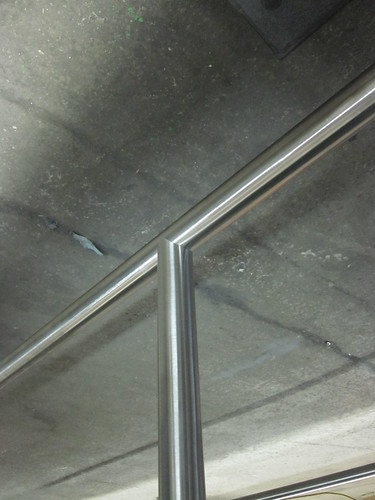
Image by Caliper Studio
Center stringer convenience stair connects two office floors in Starret Lehigh constructing. Stringer and slab edge assemblies are blackened. Twenty 4 stainless steel treads are welded to the stringer type a continuous ribbon. 1 1/four" diameter handrail posts are continuous bent "C" shapes that wrap about treds and are welded to stringer. Stair will be delivered to site in one particular piece [24′ extended 3′ wide 3′ tall @ 2000lbs].
Style by Diller Scofidio + Renfro
Detailing, Fabrication and Installation by Caliper Studio. Caliper Studio engaged Eckersley O’Callaghan & partners for engineering solutions.
A few nice precision engineering photos I located:
Collet Holder Morse Taper
Image by tudedude
View On Black
Just a Tiny Drill
Image by tudedude
Old Metal functioning Lathe
Image by tudedude
A couple of nice precision engineering components images I found:
Beaulieu National Motor Museum 18-09-2012
Image by Karen Roe
1903 Cadillac
USA
This Model A was the initial Cadillac to be brought to Britain. Frederick Stanley Bennett imported it and drove it in the 1903 Thousand Miles Trial. Bennett subsequently became the official UK importer and was behind the standardisation tests of 1908 in which three identical Cadillacs were dismantled and then rebuilt from a mixed up pile of components, proving the interchangeability of the elements.
Produced in 1902 by Henry Leland, Cadillac was constructed upon the remains of the original Henry Ford Firm. From the starting Leland insisted on the highest requirements of precision engineering in order to build a quality mass produced car, demanding that ‘We need to make every piston so precise and every single cylinder so exact that every piston will fit into every cylinder’. Regardless of these higher production requirements more than 2000 Cadillacs had been developed in 1903.
Engine: 1609cc, 1 cylinder, overhead valve, six,5hp
Performance: 30mph
Cost New: £200
Manufacturer: Cadillac Automobile Business, Detroit
Owner: Mr J.F. Bennett and Mrs M Southam
Housing a collection of over 250 automobiles and motorcycles telling the story of motoring on the roads of Britain from the dawn of motoring to the present day, the award winning (Winner – The International Historic Motoring Awards of the Year 2012) National Motor Museum appeals to all age groups. From World Land Speed Record Breakers such as Campbell’s famous Bluebird to film favourites such as the magical flying car, Chitty Chitty Bang Bang and uncommon oddities like the giant orange on wheels. Don’t miss fascinating extra attributes such as the Motorsport Gallery, Wheels and Jack Tucker’s Garage – A permanent, multi award-winning 1930’s garage has been produced inside the Museum, comprehensive down to the final nut and bolt and rusty drainpipe. While the building is a comprehensive fabrication, everything in it – all the fixtures, fittings, tools and ephemera – are genuine artefacts collected over a period of 25 years.
Custom Inshore Snook Spinning Rod
Image by Cajun Custom Rods
This Cajun Custom Rods™ “Inshore Snook Spinning Rod" is functionality-enhanced and hand-crafted to provide you the quite greatest custom fishing rod obtainable – loaded for inshore fishing action! Precision-tuned for energy-finesse inshore spin-casting, this custom fishing rod leverages cutting-edge technologies to incorporate: a classic layout of hand-tuned Titanium REC Recoil spinning guides with "Spring-Back technology," a CCR™ split grip manage technique utilizing Super Grade Premium Higher Density (HD) Portuguese cork, a sensitivity-tuned and ergonomic AERO spinning reel seat (silver hood / comfort finish), ProWrap "Metallic Green & Black" thread, and a laser-cut Snook decal. This custom fishing rod is built around a perfectly engineered 7′ Lamiglas inshore popping series rod blank … engineered, fabricated, and hand-tuned to each premium component! Custom-made, corrosion-proof, and strike-prepared … At Cajun Custom Rods™, you style the rod of your dreams and we’ll build your self-assurance!”
"Tight Wraps, Tight Lines, and Content Fishing on the 4th of July!"
– Jaesen Yerger
Cajun Custom Rods™, Inc.
www.cajuncustomrods.com
Custom Inshore Snook Spinning Rod
Image by Cajun Custom Rods
This Cajun Custom Rods™ “Inshore Snook Spinning Rod" is efficiency-enhanced and hand-crafted to supply you the extremely greatest custom fishing rod available – loaded for inshore fishing action! Precision-tuned for power-finesse inshore spin-casting, this custom fishing rod leverages cutting-edge technologies to include: a standard layout of hand-tuned Titanium REC Recoil spinning guides with "Spring-Back technology," a CCR™ split grip manage program utilizing Super Grade Premium High Density (HD) Portuguese cork, a sensitivity-tuned and ergonomic AERO spinning reel seat (silver hood / comfort finish), ProWrap "Metallic Green & Black" thread, and a laser-cut Snook decal. This custom fishing rod is constructed around a completely engineered 7′ Lamiglas inshore popping series rod blank … engineered, fabricated, and hand-tuned to every single premium element! Custom-developed, corrosion-proof, and strike-ready … At Cajun Custom Rods™, you design the rod of your dreams and we’ll create your self-assurance!”
"Tight Wraps, Tight Lines, and Content Fishing on the 4th of July!"
– Jaesen Yerger
Cajun Custom Rods™, Inc.
www.cajuncustomrods.com
Some cool high precision engineering photos:
Image from page 1147 of “Electrical globe” (1883)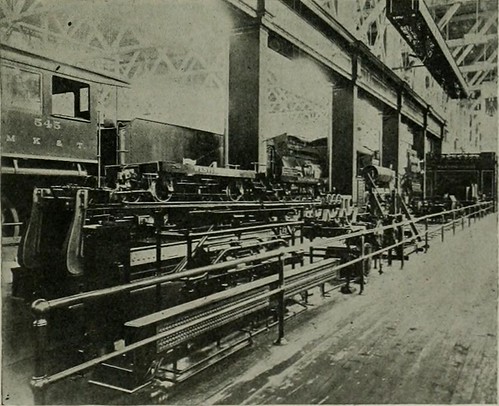
Image by World wide web Archive Book Images
Identifier: electricalworld43newy
Title: Electrical planet
Year: 1883 (1880s)
Authors:
Subjects: Electrical engineering
Publisher: [New York McGraw-Hill Pub. Co., etc.]
Contributing Library: Engineering – University of Toronto
Digitizing Sponsor: University of Toronto
View Book Page: Book Viewer
About This Book: Catalog Entry
View All Images: All Pictures From Book
Click right here to view book on-line to see this illustration in context in a browseable on the web version of this book.
Text Appearing Prior to Image:
or belt ordirect connection rotary converters, motor-generator sets, oil-in-sulated and air-blast transformers, direct-present and alternating-existing railway motors and controllers, single and polyphase in-duction motors of constant and variable speeds, direct-current motorsof several kinds, including motors for variable-speed service fromsingle and double-voltage circuits, switchboard apparatus, ammeters,voltmeters, wattmeters, synchroscopes, energy factor meters, circuit-breakers and switches, a lot of of them electrically operated portableinstruments, instruments of precision, potential regulators, and innu-merable other forms of auxiliary apparatus and instruments. Thealternating-existing, series-wound, single-phase crane motors, sim-ilar in sort and common construction to the single-phase railwaymotors exhibited in the Transportation Building, and the new West-inghouse Unit Switch System of Numerous Control are also to heseen in this section. The spectacular high-tension sign, utilizing a
Text Appearing After Image:
FIG. five.—BRAKE E.XHIBITS, TRANSPORTATION Developing. brake which is now so considerably in use. The method at present gen-erally adopted when two pumps are used on 1 locomotive isshown, and a single of the novel attributes of the rack is that all valvesare placed ig duplicate, a single sectioned so as to show the internalworking mechanism, and connected to the valve in use in such a ELECTRICAL Planet and ENGINEER. Vol. XLIII, No. 24. manner that it moves as the standard valve is operated. The opera-tion of the different valves is therefore readily studied. The Westinghouse friction draft gear also is shown in section,with a machine specially made for testing it in operation. Theavailable power which can be e.xerted on the draft gear approximates2,000 pounds. A triple valve testing rack is presented to show themanner in which this device is now getting installed in a lot of rail-road shops. Sectional parts also are shown of the other apparatusof the Westinghouse Air Brake Organization and the WestinghouseTraction Brake
Note About Photos
Please note that these photos are extracted from scanned page photos that may have been digitally enhanced for readability – coloration and look of these illustrations may possibly not perfectly resemble the original function.
A couple of good higher precision engineering pictures I discovered:
1965 – 1976 Lancia Fulvia Coupé
Image by Georg Sander
The Lancia Fulvia is an Italian auto introduced at the Geneva Motor Show in 1963 by Lancia. It was made by that company by means of 1976. Fulvias are notable for their role in automobile racing history, including winning the International Rally Championship in 1972. On testing it in 1967, Road & Track summed up the Fulvia as "a precision motorcar, an engineering tour de force".
(Wikipedia)
– – –
Der Lancia Fulvia ist ein Automobil des italienischen Herstellers Lancia. Es wurde von Herbst 1963 bis Ende 1976 gebaut und gilt als Nachfolgemodell des Lancia Appia.
Wie andere nach dem 1950 vorgestellten Aurelia entwickelten Lancia-Modelle war der Fulvia nach einer klassischen Römerstraße, hier der Via Fulvia, benannt. Im Herbst 1972 wurde dieses Method der Benennung wieder geändert: der unter Fiat-Regie gebaute Nachfolger des Fulvia war der Lancia Beta.
Der Fulvia war als Berlina (Limousine) und als Coupé erhältlich. Außerdem gab es wie bei Lancia üblich ein bei Carrozzeria Zagato entworfenes und in Kleinserie gebautes Fließheckcoupé mit dem traditionellen Namen Sport. Das technische Konzept des Fulvia stammt von Antonio Fessia, die Type wurde von Pietro Castagnero bei Lancia entworfen.
(Wikipedia)
Some cool prototype china images:
Ubco Assembly
Image by locusresearch
2×2 in assambly, China 2015
Ubco Assembly
Image by locusresearch
2×2 in assambly, China 2015
Ubco Assembly
Image by locusresearch
2×2 in assambly, China 2015
Verify out these milling engineering photos:
PA – Mill Run: Fallingwater – Living space fireplace and kettle
Image by wallyg
A boulder best, increasing unaltered above the level of the very first floor, serves as the hearth of the 1,800-square-foot living area fireplace and the functional and spiritual heart of Fallingwater. To the left hangs a spherical Cherokee-red kettle that can be swung over the fire. The kettle, copied soon after one Frank Lloyd Wright utilised at Taliesin, was intended to serve mulled wine, but proved unworkable. The fireplace fork is signed by the master ironworker Samuel Yellin, who created it about 1930 for La Tourelle.
Fallingwater, often referred to as the Edgar J. Kaufmann Sr. Residence or just the Kaufmann Residence, situated inside a five,100-acre nature reserve 50 miles southeast of Pittsburgh, was developed by Frank Lloyd Wright and constructed amongst 1936 and 1939. Built more than a 30-foot flowing waterfall on Bear Run in the Mill Run section of Stewart Township, Fayette County, Pennsylvania, the property served as a vacation retreat for the Kaufmann loved ones like patriarch, Edgar Kaufmann Sr., was a productive Pittsburgh businessman and president of Kaufmann’s Department Shop, and his son, Edgar Kaufmann, Jr., who studied architecture briefly below Wright. Wright collaborated with employees engineers Mendel Glickman and William Wesley Peters on the structural design and style, and assigned his apprentice, Robert Mosher, as his permanent on-internet site representative throughout building. Despite frequent conflicts between Wright, Kaufmann, and the building contractor, the home and guesthouse were lastly constructed at a cost of 5,000.
Fallingwater was designated a National Historic Landmark in 1966. It was listed among the Smithsonian’s 28 Areas to See Prior to You Die. In a 1991 poll of members of the American Institute of Architects (AIA), it was voted "the very best all-time work of American architecture." In 2007, Fallingwater was ranked #29 on the AIA 150 America’s Favorite Architecture list.
National Register #74001781 (1974)
PA – Mill Run: Fallingwater – Dressing Space
Image by wallyg
Fallingwater’s Dressing Room, on the second floor, is often referred to as Edgar Kaufmann Sr’s Study or Edgar Kaufmann Sr’s bedroom.
Fallingwater, sometimes referred to as the Edgar J. Kaufmann Sr. Residence or just the Kaufmann Residence, located within a five,100-acre nature reserve 50 miles southeast of Pittsburgh, was created by Frank Lloyd Wright and built amongst 1936 and 1939. Built over a 30-foot flowing waterfall on Bear Run in the Mill Run section of Stewart Township, Fayette County, Pennsylvania, the property served as a trip retreat for the Kaufmann family members including patriarch, Edgar Kaufmann Sr., was a productive Pittsburgh businessman and president of Kaufmann’s Division Retailer, and his son, Edgar Kaufmann, Jr., who studied architecture briefly beneath Wright. Wright collaborated with staff engineers Mendel Glickman and William Wesley Peters on the structural style, and assigned his apprentice, Robert Mosher, as his permanent on-website representative all through construction. Regardless of frequent conflicts in between Wright, Kaufmann, and the building contractor, the property and guesthouse were finally constructed at a price of five,000.
Fallingwater was designated a National Historic Landmark in 1966. It was listed among the Smithsonian’s 28 Places to See Just before You Die. In a 1991 poll of members of the American Institute of Architects (AIA), it was voted "the greatest all-time perform of American architecture." In 2007, Fallingwater was ranked #29 on the AIA 150 America’s Favored Architecture list.
National Register #74001781 (1974)
Verify out these prototype producers in china photos:
Steven F. Udvar-Hazy Center: South hangar panorama, like Vought OS2U-three Kingfisher seaplane, B-29 Enola Gay, among other people
Image by Chris Devers
Quoting Smithsonian National Air and Space Museum | Vought OS2U-3 Kingfisher:
The Kingfisher was the U.S. Navy’s principal ship-primarily based, scout and observation aircraft during Globe War II. Revolutionary spot welding methods gave it a smooth, non-buckling fuselage structure. Deflector plate flaps that hung from the wing’s trailing edge and spoiler-augmented ailerons functioned like further flaps to enable slower landing speeds. Most OS2Us operated in the Pacific, where they rescued a lot of downed airmen, like World War I ace Eddie Rickenbacker and the crew of his B-17 Flying Fortress.
In March 1942, this airplane was assigned to the battleship USS Indiana. It later underwent a six-month overhaul in California, returned to Pearl Harbor, and rejoined the Indiana in March 1944. Lt. j.g. Rollin M. Batten Jr. was awarded the Navy Cross for creating a daring rescue in this airplane below heavy enemy fire on July four, 1944.
Transferred from the United States Navy.
Manufacturer:
Vought-Sikorsky Aircraft Division
Date:
1937
Country of Origin:
United States of America
Dimensions:
Overall: 15ft 1 1/8in. x 33ft 9 1/2in., 4122.6lb., 36ft 1 1/16in. (460 x 1030cm, 1870kg, 1100cm)
Materials:
Wings covered with fabric aft of the main spar
Physical Description:
Two-seat monoplane, deflector plate flaps hung from the trailing edge of the wing, ailerons drooped at low airspeeds to function like further flaps, spoilers.
Steven F. Udvar-Hazy Center: P-40 Warhawk with “sharktooth” nose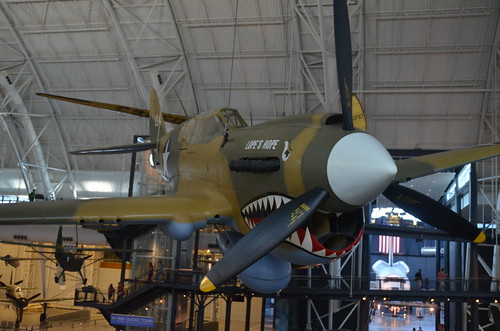
Image by Chris Devers
See a lot more pictures of this, and the Wikipedia article.
Specifics, quoting from Smithsonian National Air and Space Museum | Curtiss P-40E Warhawk (Kittyhawk IA):
No matter whether identified as the Warhawk, Tomahawk, or Kittyhawk, the Curtiss P-40 proved to be a effective, versatile fighter throughout the first half of Globe War II. The shark-mouthed Tomahawks that Gen. Claire Chennault’s "Flying Tigers" flew in China against the Japanese remain among the most well-known airplanes of the war. P-40E pilot Lt. Boyd D. Wagner became the 1st American ace of World War II when he shot down six Japanese aircraft in the Philippines in mid-December 1941.
Curtiss-Wright built this airplane as Model 87-A3 and delivered it to Canada as a Kittyhawk I in 1941. It served until 1946 in No. 111 Squadron, Royal Canadian Air Force. U.S. Air Force personnel at Andrews Air Force Base restored it in 1975 to represent an aircraft of the 75th Fighter Squadron, 23rd Fighter Group, 14th Air Force.
Donated by the Exchange Club in Memory of Kellis Forbes.
Manufacturer:
Curtiss Aircraft Firm
Date:
1939
Country of Origin:
United States of America
Dimensions:
All round: 330 x 970cm, 2686kg, 1140cm (10ft 9 15/16in. x 31ft 9 7/8in., 5921.6lb., 37ft four 13/16in.)
Supplies:
All-metal, semi-monocoque
Physical Description:
Single engine, single seat, fighter aircraft.
Long Description:
Whether or not it was the Tomahawk, Warhawk, or Kittyhawk, the Curtiss P-40 was a effective and versatile fighter aircraft for the duration of the 1st half of Globe War II. The shark-mouthed Tomahawks that General Claire Chennault led against the Japanese remain among the most well-known airplanes of the war. In the Phillipines, Lt. Boyd D. Wagner became the initial American ace of Planet War II whilst flying a P-40E when he shot down six Japanese aircraft in the course of mid-December 1941. P-40s had been first-line Army Air Corps fighters at the begin of the war but they quickly gave way to far more advanced styles such as the Republic P-47 Thunderbolt and the Lockheed P-38 Lightning (see NASM collection for each aircraft). The P-40 is not ranked amongst the very best all round fighters of the war but it was a rugged, effective style obtainable in big numbers early in the war when America and her allies urgently necessary them. The P-40 remained in production from 1939 to the end of 1944 and a total of 13, 737 have been built.
Design engineer Dr. Donovan R. Berlin layed the foundation for the P-40 in 1935 when he created the agile, but lightly-armed, P-36 fighter equipped with a radial, air-cooled engine. The Curtiss-Wright Corporation won a production contract for 210 P-36 airplanes in 1937-the biggest Army airplane contract awarded because World War I. Worldwide, fighter aircraft styles matured rapidly in the course of the late 1930s and it was soon apparent that the P-36 was no match for newer European designs. Higher altitude overall performance in particular became a priceless commodity. Berlin attempted to increase the P-36 by redesigning it in to accommodate a turbo-supercharged Allison V-1710-11 inline, liquid-cooled engine. The new aircraft was designated the XP-37 but proved unpopular with pilots. The turbo-supercharger was not trustworthy and Berlin had placed the cockpit as well far back on the fuselage, restricting the view to the front of the fighter. Nonetheless, when the engine was not giving difficulty, the more-streamlined XP-37 was a lot more quickly than the P-36.
Curtiss attempted once more in 1938. Berlin had modified yet another P-36 with a new Allison V-1710-19 engine. It was designated the XP-40 and very first flew on October 14, 1938. The XP-40 looked promising and Curtiss supplied it to Army Air Corps leaders who evaluated the airplane at Wright Field, Ohio, in 1939, along with numerous other fighter proposals. The P-40 won the competitors, soon after some modifications, and Curtiss received an order for 540. At this time, the armament package consisted of two .50 caliber machine guns in the fuselage and 4 .30 caliber machine guns in the wings.
After production began in March 1940, France ordered 140 P-40s but the British took delivery of these airplanes when Paris surrendered. The British named the aircraft Tomahawks but identified they performed poorly in higher-altitude combat over northern Europe and relegated them to low-altitude operations in North Africa. The Russians bought much more than 2,000 P-40s but information of their operational history stay obscure.
When the United States declared war, P-40s equipped numerous of the Army Air Corps’s front line fighter units. The plucky fighter ultimately saw combat in practically each and every theater of operations being the most powerful in the China-Burma-India (CBI) Theater. Of all the CBI groups that gained the most notoriety of the complete war, and remains to this day synonymous with the P-40, is the American Volunteer Group (AVG) or the Flying Tigers. The unit was organized right after the Chinese gave former U. S. Army Air Corps Captain Claire Lee Chennault virtually 9 million dollars in 1940 to buy aircraft and recruit pilots to fly against the Japanese. Chennault’s most critical assistance within the Chinese government came from Madam Chiang Kai-shek, a Lt. Colonel in the Chinese Air Force and for a time, the service’s overall commander.
The income from China diverted an order placed by the British Royal Air Force for one hundred Curtiss-Wright P-40B Tomahawks but getting airplanes was only one particular important step in making a fighting air unit. Educated pilots had been required, and rapidly, as tensions across the Pacific escalated. On April 15, 1941, President Franklin D. Roosevelt quietly signed an Executive Order permitting Chennault to recruit straight from the ranks of American military reserve pilots. Within a few months, 350 flyers joined from pursuit (fighter), bomber, and patrol squadrons. In all, about half the pilots in the Flying Tigers came from the U. S. Navy and Marine Corps even though the Army Air Corps supplied 1-third. Factory test pilots at Bell, Consolidated, and other firms, and commercial airline pilots, filled the remaining slots.
The Flying Tigers flew their 1st mission on December 20. The unit’s name was derived from the ferocious fangs and teeth painted on the nose of AVG P-40s at either side of the distinctive, large radiator air intake. The concept is mentioned to originate from images in a magazine that showed Royal Air Force Tomahawks of No. 112 Squadron, operating in the western desert of North Africa, adorned with fangs and teeth painted about their air intakes. The Flying Tigers had been the first genuine opposition the Japanese military encountered. In much less than 7 months of action, AVG pilots destroyed about 115 Japanese aircraft and lost only 11 planes in air-to-air combat. The AVG disbanded on July four, 1942, and its assets, which includes a few pilots, became a component of the U. S. Army Air Forces (AAF) 23rd Fighter Group in the newly activated 14th Air Force. Chennault, now a Brigadier Common, assumed command of the 14th AF and by war’s end, the 23rd was one of the highest-scoring Army fighter groups.
As wartime expertise in the P-40 mounted, Curtiss made several modifications. Engineers added armor plate, greater self-sealing fuel tanks, and far more potent engines. They modified the cockpit to enhance visibility and changed the armament package to six, wing-mounted, .50 caliber machine guns. The P-40E Kittyhawk was the very first model with this gun package and it entered service in time to serve in the AVG. The last model created in quantity was the P-40N, the lightest P-40 constructed in quantity, and significantly more quickly than preceding models. Curtiss constructed a single P-40Q. It was the quickest P-40 to fly (679 kph/422 mph) but it could not match the functionality of the P-47 Thunderbolt and the P-51 Mustang so Curtiss ended development of the P-40 series with this model. In addition to the AAF, several Allied nations purchased and flew P-40s like England, France, China, Russia, Australia, New Zealand, Canada, South Africa, and Turkey.
The Smithsonian P-40E did not serve in the U. S. military. Curtiss-Wright built it in Buffalo, New York, as Model 87-A3 and delivered it to Canada as a Kittyhawk IA on March 11, 1941. It served in No. 111 Squadron, Royal Canadian Air Force (RCAF). When the Japanese navy moved to attack Midway, they sent a diversionary battle group to menace the Aleutian Islands. Canada moved No. 111 Squadron to Alaska to assist defend the region. Right after the Japanese threat diminished, the unit returned to Canada and at some point transferred to England without having its P-40s. The RCAF declared the NASM Kittyhawk IA surplus on July 27, 1946, and the aircraft at some point returned to the United States. It had several owners prior to ending up with the Explorer Scouts youth group in Meridian, Mississippi. Throughout the early 1960s, the Smithsonian started looking for a P-40 with a documented history of service in the AVG but discovered none. In 1964, the Exchange Club in Meridian donated the Kittyhawk IA to the National Aeronautical Collection, in memory of Mr. Kellis Forbes, a local man devoted to Boys Club activities. A U. S. Air Force Reserve crew airlifted the fighter to Andrews Air Force Base, Maryland, on March 13, 1964. Andrews personnel restored the airplane in 1975 and painted it to represent an aircraft of the 75th Fighter Squadron, 23rd Fighter Group, 14th Air Force.
• • •
Quoting from Wikipedia | Curtiss P-40 Warhawk:
The Curtiss P-40 Warhawk was an American single-engine, single-seat, all-metal fighter and ground attack aircraft that 1st flew in 1938. It was employed by the air forces of 28 nations, such as these of most Allied powers in the course of World War II, and remained in front line service till the finish of the war. It was the third most-made American fighter, following the P-51 and P-47 by November 1944, when production of the P-40 ceased, 13,738 had been constructed, all at Curtiss-Wright Corporation‘s primary production facility at Buffalo, New York.
The P-40 design and style was a modification of the preceding Curtiss P-36 this lowered improvement time and enabled a speedy entry into production and operational service.
Warhawk was the name the United States Army Air Corps adopted for all models, generating it the official name in the United States for all P-40s. The British Commonwealth and Soviet air forces utilised the name Tomahawk for models equivalent to the P-40B and P-40C, and the name Kittyhawk for models equivalent to the P-40D and all later variants.
The P-40’s lack of a two-stage supercharger produced it inferior to Luftwaffe fighters such as the Messerschmitt Bf 109 or the Focke-Wulf Fw 190 in high-altitude combat and it was rarely utilized in operations in Northwest Europe. In between 1941 and 1944, however, the P-40 played a crucial role with Allied air forces in three main theaters: North Africa, the Southwest Pacific and China. It also had a considerable role in the Middle East, Southeast Asia, Eastern Europe, Alaska and Italy. The P-40’s functionality at high altitudes was not as crucial in those theaters, where it served as an air superiority fighter, bomber escort and fighter bomber.
P-40s 1st saw combat with the British Commonwealth squadrons of the Desert Air Force (DAF) in the Middle East and North African campaigns, in the course of June 1941. The Royal Air Force‘s No. 112 Squadron was amongst the first to operate Tomahawks, in North Africa, and the unit was the initial to feature the "shark mouth" logo, copying related markings on some Luftwaffe Messerschmitt Bf 110 twin-engine fighters. [N 1]
Even though it gained a post-war reputation as a mediocre design, appropriate only for close air assistance, much more current analysis like scrutiny of the records of individual Allied squadrons indicates that the P-40 performed surprisingly properly as an air superiority fighter, at instances suffering extreme losses, but also taking a extremely heavy toll on enemy aircraft. The P-40 supplied the further benefit of low cost, which kept it in production as a ground-attack fighter extended following it was obsolete in the air superiority function.
As of 2008, 19 P-40s were airworthy.
• • • • •
See far more pictures of this, and the Wikipedia write-up.
Information, quoting from Smithsonian National Air and Space Museum | Space Shuttle Enterprise:
Manufacturer:
Rockwell International Corporation
Country of Origin:
United States of America
Dimensions:
General: 57 ft. tall x 122 ft. lengthy x 78 ft. wing span, 150,000 lb.
(1737.36 x 3718.57 x 2377.44cm, 68039.6kg)
Materials:
Aluminum airframe and physique with some fiberglass characteristics payload bay doors are graphite epoxy composite thermal tiles are simulated (polyurethane foam) except for test samples of actual tiles and thermal blankets.
The 1st Space Shuttle orbiter, "Enterprise," is a full-scale test automobile used for flights in the atmosphere and tests on the ground it is not equipped for spaceflight. Although the airframe and flight handle elements are like these of the Shuttles flown in space, this automobile has no propulsion system and only simulated thermal tiles due to the fact these attributes had been not necessary for atmospheric and ground tests. "Enterprise" was rolled out at Rockwell International’s assembly facility in Palmdale, California, in 1976. In 1977, it entered service for a nine-month-long strategy-and-landing test flight system. Thereafter it was employed for vibration tests and fit checks at NASA centers, and it also appeared in the 1983 Paris Air Show and the 1984 World’s Fair in New Orleans. In 1985, NASA transferred "Enterprise" to the Smithsonian Institution’s National Air and Space Museum.
Transferred from National Aeronautics and Space Administration
A few nice china prototype photos I located:
Dragon Shaped Vessel at Sanxingdui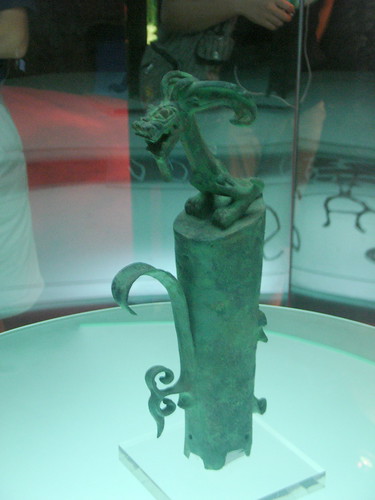
Image by drs2biz
This dragon-shaped piece appears to be an attachment to yet another, larger one particular. It looks lengthy, slender and a tiny like a lizard, being sometimes named the Sacred Goat since of its huge ears and horns. Various dragon-shaped ornaments show, to virtually an extreme, a grotesque and exaggerated style of art, specifically with some distinctive types of expression such as a horse-head, a twisted physique, human fingers and blade-shaped wings from which an early prototype of the dragon figure in China could be detected.
Pictured in Hong Kong on board a single of the Wright Group’s tri-axle double deckers purchased by the Kowloon Motor Bus Business (KMB)
Image by Northern Ireland Executive
Enterprise Minister Arlene Foster today congratulated The Wright Group on its export good results in Hong Kong.
The Minister was speaking during a go to to the Kowloon Motor Bus Company (KMB), which lately took delivery of a prototype two-axle vehicle from the Ballymena firm. Arlene Foster stated: “As one of Northern Ireland’s most innovative manufacturing firms, The Wright Group recognises the value to be gained by continued investment in product development."
The Wright Group lately secured orders for 290 entirely constructed up tri-axle double decker buses from the Kowloon Motor Bus Firm. A number of these automobiles have currently been shipped and are in service in Hong Kong.
The Minister concluded: “Clearly, the Wright Group’s investments in innovation, supported by my Division via Invest Northern Ireland, are now bearing fruit and will continue to help the future growth of the firm.”
Left to right, Edmond Ho, Managing Director, Enterprise Minister Arlene Foster, Evan Auyang, Deputy Managing Director KMB and Alastair Hamilton, Chief Executive, Invest NI.
Beijing
Image by Mr Thinktank
yet another Navy prototype
Check out these precision engineering company photos:
Steven F. Udvar-Hazy Center: Boeing B-29 Superfortress “Enola Gay” (view into nose cockpit)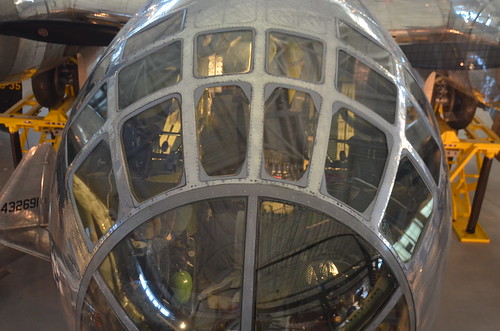
Image by Chris Devers
See far more photographs of this, and the Wikipedia article.
Specifics, quoting from Smithsonian National Air and Space Museum | Boeing B-29 Superfortress "Enola Gay":
Boeing’s B-29 Superfortress was the most sophisticated propeller-driven bomber of Globe War II and the very first bomber to house its crew in pressurized compartments. Despite the fact that developed to fight in the European theater, the B-29 located its niche on the other side of the globe. In the Pacific, B-29s delivered a range of aerial weapons: traditional bombs, incendiary bombs, mines, and two nuclear weapons.
On August six, 1945, this Martin-built B-29-45-MO dropped the very first atomic weapon employed in combat on Hiroshima, Japan. 3 days later, Bockscar (on display at the U.S. Air Force Museum close to Dayton, Ohio) dropped a second atomic bomb on Nagasaki, Japan. Enola Gay flew as the advance weather reconnaissance aircraft that day. A third B-29, The Wonderful Artiste, flew as an observation aircraft on each missions.
Transferred from the United States Air Force.
Manufacturer:
Boeing Aircraft Co.
Martin Co., Omaha, Nebr.
Date:
1945
Country of Origin:
United States of America
Dimensions:
Overall: 900 x 3020cm, 32580kg, 4300cm (29ft 6 5/16in. x 99ft 1in., 71825.9lb., 141ft 15/16in.)
Materials:
Polished general aluminum finish
Physical Description:
Four-engine heavy bomber with semi-monoqoque fuselage and higher-aspect ratio wings. Polished aluminum finish general, regular late-World War II Army Air Forces insignia on wings and aft fuselage and serial quantity on vertical fin 509th Composite Group markings painted in black "Enola Gay" in black, block letters on decrease left nose.
Extended Description:
Boeing’s B-29 Superfortress was the most sophisticated, propeller-driven, bomber to fly during World War II, and the initial bomber to home its crew in pressurized compartments. Boeing installed extremely sophisticated armament, propulsion, and avionics systems into the Superfortress. For the duration of the war in the Pacific Theater, the B-29 delivered the initial nuclear weapons utilised in combat. On August 6, 1945, Colonel Paul W. Tibbets, Jr., in command of the Superfortress Enola Gay, dropped a extremely enriched uranium, explosion-type, "gun-fired," atomic bomb on Hiroshima, Japan. Three days later, Major Charles W. Sweeney piloted the B-29 Bockscar and dropped a hugely enriched plutonium, implosion-variety atomic bomb on Nagasaki, Japan. Enola Gay flew as the advance climate reconnaissance aircraft that day. On August 14, 1945, the Japanese accepted Allied terms for unconditional surrender.
In the late 1930s, U. S. Army Air Corps leaders recognized the want for extremely lengthy-variety bombers that exceeded the performance of the B-17 Flying Fortress. Numerous years of preliminary studies paralleled a continuous fight against these who saw restricted utility in creating such an costly and unproven aircraft but the Air Corps issued a requirement for the new bomber in February 1940. It described an airplane that could carry a maximum bomb load of 909 kg (2,000 lb) at a speed of 644 kph (400 mph) a distance of at least eight,050 km (5,000 miles). Boeing, Consolidated, Douglas, and Lockheed responded with design and style proposals. The Army was impressed with the Boeing design and issued a contract for two flyable prototypes in September 1940. In April 1941, the Army issued yet another contract for 250 aircraft plus spare parts equivalent to an additional 25 bombers, eight months prior to Pearl Harbor and nearly a year-and-a-half prior to the very first Superfortress would fly.
Among the design’s innovations was a extended, narrow, higher-aspect ratio wing equipped with big Fowler-variety flaps. This wing style allowed the B-29 to fly extremely fast at high altitudes but maintained comfortable handling characteristics throughout takeoff and landing. Far more revolutionary was the size and sophistication of the pressurized sections of the fuselage: the flight deck forward of the wing, the gunner’s compartment aft of the wing, and the tail gunner’s station. For the crew, flying at extreme altitudes became a lot far more comfortable as stress and temperature could be regulated. To protect the Superfortress, Boeing created a remote-controlled, defensive weapons method. Engineers placed 5 gun turrets on the fuselage: a turret above and behind the cockpit that housed two .50 caliber machine guns (4 guns in later versions), and an additional turret aft close to the vertical tail equipped with two machine guns plus two more turrets beneath the fuselage, each and every equipped with two .50 caliber guns. One of these turrets fired from behind the nose gear and the other hung further back near the tail. One more two .50 caliber machine guns and a 20-mm cannon (in early versions of the B-29) had been fitted in the tail beneath the rudder. Gunners operated these turrets by remote manage–a accurate innovation. They aimed the guns utilizing computerized sights, and each and every gunner could take handle of two or a lot more turrets to concentrate firepower on a single target.
Boeing also equipped the B-29 with advanced radar gear and avionics. Based on the sort of mission, a B-29 carried the AN/APQ-13 or AN/APQ-7 Eagle radar program to aid bombing and navigation. These systems have been accurate enough to permit bombing by way of cloud layers that completely obscured the target. The B-29B was equipped with the AN/APG-15B airborne radar gun sighting technique mounted in the tail, insuring precise defense against enemy fighters attacking at night. B-29s also routinely carried as a lot of as twenty various varieties of radios and navigation devices.
The initial XB-29 took off at Boeing Field in Seattle on September 21, 1942. By the finish of the year the second aircraft was prepared for flight. Fourteen service-test YB-29s followed as production began to accelerate. Creating this sophisticated bomber essential massive logistics. Boeing constructed new B-29 plants at Renton, Washington, and Wichita, Kansas, even though Bell built a new plant at Marietta, Georgia, and Martin constructed 1 in Omaha, Nebraska. Each Curtiss-Wright and the Dodge automobile firm vastly expanded their manufacturing capacity to construct the bomber’s strong and complicated Curtiss-Wright R-3350 turbo supercharged engines. The system essential thousands of sub-contractors but with extraordinary work, it all came together, despite main teething problems. By April 1944, the initial operational B-29s of the newly formed 20th Air Force started to touch down on dusty airfields in India. By May, 130 B-29s had been operational. In June, 1944, much less than two years following the initial flight of the XB-29, the U. S. Army Air Forces (AAF) flew its initial B-29 combat mission against targets in Bangkok, Thailand. This mission (longest of the war to date) referred to as for 100 B-29s but only 80 reached the target location. The AAF lost no aircraft to enemy action but bombing benefits were mediocre. The very first bombing mission against the Japanese main islands because Lt. Col. "Jimmy" Doolittle’s raid against Tokyo in April 1942, occurred on June 15, once again with poor final results. This was also the initial mission launched from airbases in China.
With the fall of Saipan, Tinian, and Guam in the Mariana Islands chain in August 1944, the AAF acquired airbases that lay a number of hundred miles closer to mainland Japan. Late in 1944, the AAF moved the XXI Bomber Command, flying B-29s, to the Marianas and the unit started bombing Japan in December. However, they employed high-altitude, precision, bombing tactics that yielded poor benefits. The higher altitude winds had been so strong that bombing computers could not compensate and the climate was so poor that rarely was visual target acquisition achievable at high altitudes. In March 1945, Major General Curtis E. LeMay ordered the group to abandon these tactics and strike rather at night, from low altitude, using incendiary bombs. These firebombing raids, carried out by hundreds of B-29s, devastated much of Japan’s industrial and financial infrastructure. But Japan fought on. Late in 1944, AAF leaders selected the Martin assembly line to produce a squadron of B-29s codenamed SILVERPLATE. Martin modified these Superfortresses by removing all gun turrets except for the tail position, removing armor plate, installing Curtiss electric propellers, and modifying the bomb bay to accommodate either the "Fat Man" or "Little Boy" versions of the atomic bomb. The AAF assigned 15 Silverplate ships to the 509th Composite Group commanded by Colonel Paul Tibbets. As the Group Commander, Tibbets had no specific aircraft assigned to him as did the mission pilots. He was entitled to fly any aircraft at any time. He named the B-29 that he flew on 6 August Enola Gay following his mother. In the early morning hours, just prior to the August 6th mission, Tibbets had a young Army Air Forces upkeep man, Private Nelson Miller, paint the name just under the pilot’s window.
Enola Gay is a model B-29-45-MO, serial quantity 44-86292. The AAF accepted this aircraft on June 14, 1945, from the Martin plant at Omaha (Positioned at what is today Offut AFB close to Bellevue), Nebraska. Following the war, Army Air Forces crews flew the airplane for the duration of the Operation Crossroads atomic test program in the Pacific, despite the fact that it dropped no nuclear devices for the duration of these tests, and then delivered it to Davis-Monthan Army Airfield, Arizona, for storage. Later, the U. S. Air Force flew the bomber to Park Ridge, Illinois, then transferred it to the Smithsonian Institution on July four, 1949. Even though in Smithsonian custody, the aircraft remained stored at Pyote Air Force Base, Texas, between January 1952 and December 1953. The airplane’s last flight ended on December 2 when the Enola Gay touched down at Andrews Air Force Base, Maryland. The bomber remained at Andrews in outside storage till August 1960. By then, concerned about the bomber deteriorating outdoors, the Smithsonian sent collections staff to disassemble the Superfortress and move it indoors to the Paul E. Garber Facility in Suitland, Maryland.
The staff at Garber began functioning to preserve and restore Enola Gay in December 1984. This was the biggest restoration project ever undertaken at the National Air and Space Museum and the specialists anticipated the operate would call for from seven to nine years to total. The project in fact lasted nearly two decades and, when completed, had taken roughly 300,000 work-hours to complete. The B-29 is now displayed at the National Air and Space Museum, Steven F. Udvar-Hazy Center.
Steven F. Udvar-Hazy Center: Boeing B-29 Superfortress “Enola Gay”, with Lockheed P-38J-10-LO Lightning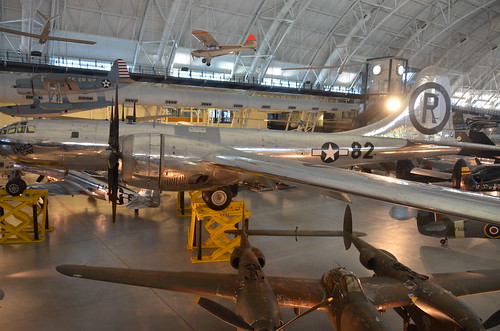
Image by Chris Devers
Quoting Smithsonian National Air and Space Museum | Lockheed P-38J-10-LO Lightning :
In the P-38 Lockheed engineer Clarence "Kelly" Johnson and his team of designers created one of the most productive twin-engine fighters ever flown by any nation. From 1942 to 1945, U. S. Army Air Forces pilots flew P-38s more than Europe, the Mediterranean, and the Pacific, and from the frozen Aleutian Islands to the sun-baked deserts of North Africa. Lightning pilots in the Pacific theater downed much more Japanese aircraft than pilots flying any other Allied warplane.
Maj. Richard I. Bong, America’s leading fighter ace, flew this P-38J-10-LO on April 16, 1945, at Wright Field, Ohio, to evaluate an experimental method of interconnecting the movement of the throttle and propeller manage levers. Even so, his correct engine exploded in flight before he could conduct the experiment.
Transferred from the United States Air Force.
Manufacturer:
Lockheed Aircraft Company
Date:
1943
Country of Origin:
United States of America
Dimensions:
Overall: 390 x 1170cm, 6345kg, 1580cm (12ft 9 9/16in. x 38ft 4 5/8in., 13988.2lb., 51ft ten 1/16in.)
Supplies:
All-metal
Physical Description:
Twin-tail boom and twin-engine fighter tricycle landing gear.
• • • • •
Quoting Smithsonian National Air and Space Museum | Boeing B-29 Superfortress "Enola Gay":
Boeing’s B-29 Superfortress was the most sophisticated propeller-driven bomber of World War II and the initial bomber to home its crew in pressurized compartments. Even though created to fight in the European theater, the B-29 located its niche on the other side of the globe. In the Pacific, B-29s delivered a range of aerial weapons: conventional bombs, incendiary bombs, mines, and two nuclear weapons.
On August six, 1945, this Martin-built B-29-45-MO dropped the very first atomic weapon utilised in combat on Hiroshima, Japan. Three days later, Bockscar (on display at the U.S. Air Force Museum close to Dayton, Ohio) dropped a second atomic bomb on Nagasaki, Japan. Enola Gay flew as the advance weather reconnaissance aircraft that day. A third B-29, The Great Artiste, flew as an observation aircraft on each missions.
Transferred from the United States Air Force.
Manufacturer:
Boeing Aircraft Co.
Martin Co., Omaha, Nebr.
Date:
1945
Nation of Origin:
United States of America
Dimensions:
All round: 900 x 3020cm, 32580kg, 4300cm (29ft six 5/16in. x 99ft 1in., 71825.9lb., 141ft 15/16in.)
Materials:
Polished overall aluminum finish
Physical Description:
Four-engine heavy bomber with semi-monoqoque fuselage and high-aspect ratio wings. Polished aluminum finish all round, common late-Globe War II Army Air Forces insignia on wings and aft fuselage and serial quantity on vertical fin 509th Composite Group markings painted in black "Enola Gay" in black, block letters on reduce left nose.
Image from page 1050 of “Electrical globe” (1883)
Image by Web Archive Book Images
Identifier: electricalworld43newy
Title: Electrical globe
Year: 1883 (1880s)
Authors:
Subjects: Electrical engineering
Publisher: [New York McGraw-Hill Pub. Co., and so forth.]
Contributing Library: Engineering – University of Toronto
Digitizing Sponsor: University of Toronto
View Book Web page: Book Viewer
About This Book: Catalog Entry
View All Images: All Images From Book
Click here to view book on the internet to see this illustration in context in a browseable on-line version of this book.
Text Appearing Prior to Image:
he Regular Underground CableCompany close to the northwest corner entrance. The installation of ing was in its infancy. About the walls of the exhibit spaces arehung photographs of the pioneers and their early work. The Jumbodynamo, produced by the Edison Machine Functions, direct-connected toa high-speed engine, forms an intriguing comparison with themodel of the General Electric io,ooo-hp Niagara generator, which 1036 ELECTRICAL World and ENGINEER. Vol. XLIII, Xo. 22 is across the aisle. The 1st Edison electric locomotive vith itspassenger automobile shows in a graphic way the progress in transportationmade since 1880. The photograph of the British section reveals the splendid displayof electrical and scientific instruments created by the English manu-facturers. Most of these instruments have been tested and havecertificates from Lord Kelvins laboratory or the National PhysicalLaboratory. The Basic Post Workplace makes an superb displayof the telegraphic apparatus used in Fantastic Britain. Kelvin and
Text Appearing Soon after Image:
FIG. six.—ENGLISH EXHIBIT. James White, of Glasgow, and Muirhead & Co., of Kent, have casesof galvanometers, condensers, common cells, ammeters, voltmetersand other instruments of precision. In the foreground may beseen a working model of Behrs monorail and high-speed vehicle asauthorized by act of Parliament for the railway amongst Manchesterand Liverpool, to be operated at a speed of no miles per hour. The greater component of the sp-ace of the Wagner Electric Business, ofSt. Louis, in Section 9. is occupied by the a variety of applications ofsingle-phase alternating-existing motors. This includes the standardform, enclosed, semi-enclosed and back-geared types, from }4 to 35hp. The notable feature of these motors is their beginning beneath
Note About Pictures
Please note that these pictures are extracted from scanned web page images that may have been digitally enhanced for readability – coloration and appearance of these illustrations may possibly not completely resemble the original operate.
Check out these metal stamping china photos:
Image from page 847 of “Hardware merchandising January-March 1911″ (1911)
Image by Web Archive Book Photos
Identifier: hardmerchjanmar1911toro
Title: Hardware merchandising January-March 1911
Year: 1911 (1910s)
Authors:
Subjects: Hardware market Hardware Implements, utensils, and so forth Constructing
Publisher: Toronto :
Contributing Library: Fisher – University of Toronto
Digitizing Sponsor: Algoma University, Trent University, Lakehead University, Laurentian University, Nipissing University, Ryerson University and University of Toronto Libraries
View Book Page: Book Viewer
About This Book: Catalog Entry
View All Photos: All Photos From Book
Click here to view book online to see this illustration in context in a browseable on-line version of this book.
Text Appearing Prior to Image:
es:tablish re-sale rates on all their lines. Re:sale priceson GILLETTES have been fixed from thestart. They have always provided to each and every retailer a good andprotected profit. The traveling man has it in his power to be of great as-sistance to the retailer. GILLETTE salesmen think about it a element of their duty, aswell as their pleasure, to share with every retailer who wantsit, the benefit of the data and the recommendations whichthey are continually picking up. Let them assist you.- If I were a retailer I would make the makers print-ed matter function for me, and I would get the reputation of beingheadquarters for the newest and ideal goods of the bestmanufacturers. Is your store the GILLETTE headquarters? Are the signs,cards and folders weve sent you operating for you to the bestadvantage? We are pushing the slogan of Created in Canada! The correctness of this principle, is recognized by all Can-adians. The GILLETTE is Made in Canada. What otherrazor do you sell of which this is correct?
Text Appearing Right after Image:
The Gillette Security Razor Co. of Canada, Restricted Office and Factory: 63 St. Alexander^Street, MONTREAL Offices in NEW YORK (Occasions Building), CHICAGO (Stock Exchange Building), LONDON, ENGLAND, and SHANGHAI, CHINA Factories in Montreal, Boston, Leicester,Berlin and Paris HARDWARE AND METAL A This Mark stamped into the Blanks we make_^_ protects the user.
Note About Images
Please note that these pictures are extracted from scanned page photos that may possibly have been digitally enhanced for readability – coloration and look of these illustrations may possibly not perfectly resemble the original operate.
Some cool speedy prototyping in china images:
Tom Chi fast prototyping workshop
Image by gabriella_levine
Tom Chi speedy prototyping workshop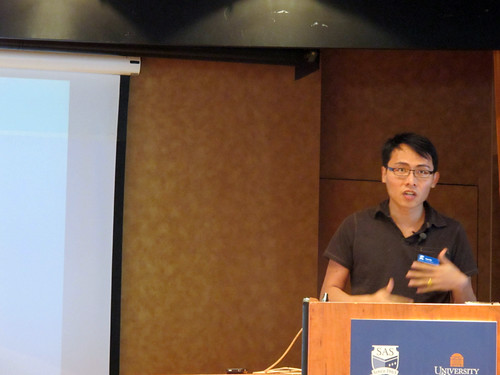
Image by gabriella_levine
Tom Chi speedy prototyping workshop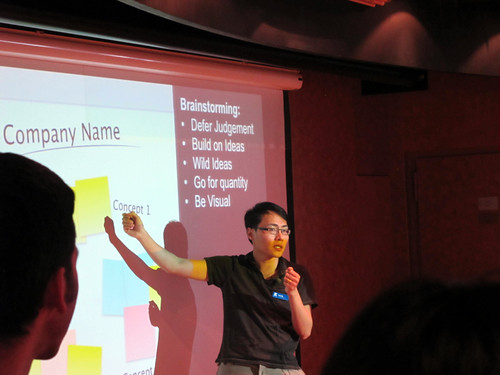
Image by gabriella_levine
A few good sheet metal parts china pictures I identified:
Image from page 194 of “Burma” (1900)
Image by Internet Archive Book Pictures
Identifier: cu31924023498557
Title: Burma
Year: 1900 (1900s)
Authors: Ferrars, Max Ferrars, Bertha
Subjects: Ethnology
Publisher: London : S. Low, Marston & Co., Ltd.
Contributing Library: Cornell University Library
Digitizing Sponsor: MSN
View Book Web page: Book Viewer
About This Book: Catalog Entry
View All Photos: All Images From Book
Click here to view book on the web to see this illustration in context in a browseable on the internet version of this book.
Text Appearing Ahead of Image:
rch over to thespot exactly where the toe-post of the Indian patten is set. Tanned leather slippersof European shape produced by Chinese are now ousting the Burman sandal andwood patten. Most of the properly-known metals are discovered in Burma. Ahead of the importationof pig, bar, and sheet metals, and of metal manufactures from the West began,Lawd settlers from Zimme (Chiengmai, Tyin-mai) practised the smelting ofiron, copper, tin, zinc, and lead. Theseindustries have disappeared. Metalgoods utilised to come in from the ShanStates-and China, but the principalmanufacture was carried on by Bur-mans and Taliings. Even at present,the only heavy metal goods importedare iron cauldrons, anvils, sledge-ham-mers, and vices—besides machinery.Saws, files, chisels, augers, hinges andlocks, nails and screws, dies and taps,pocket-knives and fancy metal goods,are imported. Bells for the templeprecincts were, until not too long ago, the , ^ ■ 224. ETCHED Design ON LACQUER (HNQEP- heaviest castings made, but of late a pyittaunq).
Text Appearing Soon after Image:
I04 BURMA rivalry has sprung up between the towns in casting massive pictures. For the bestbells, a bronze consisting of four components copper to two of tin is used. The alloyis enriched—as they fancy—by pious donors who cast silver into the melting-pot. Ordinary bells are made of brass pictures also are cast in brass. The J y —C /*r , * »» v,f.j ^ ■ ■1 % •■ £i J MB % ^ i- ■ «S- ^^K^HKkl) |t^?^| r^t^ m –i^^M ■„.. ~=^».j y: „^^
Note About Images
Please note that these photos are extracted from scanned page photos that could have been digitally enhanced for readability – coloration and appearance of these illustrations may not perfectly resemble the original operate.
Some cool china speedy prototyping photos:
pfc_07_06-copy-1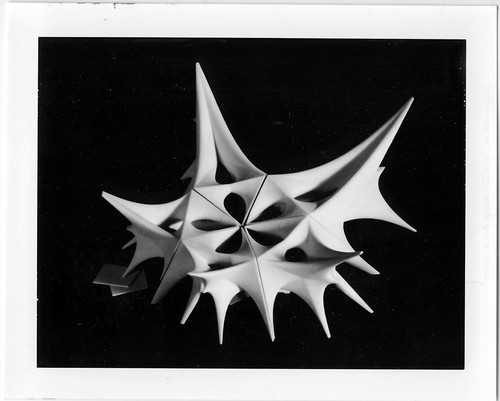
Image by core.formula
A collection of speedy prototyping models (ZPrint) produced in the Pratt Institute College of Architecture 2007 PreFab China Design Studio:Evan Douglis, Richard Sarrach, Che-Wei Wang, Eric Wong
Function made by: Dan Breitner, Andres Correa , Brad Rothenberg
Please visit www.core.kind-ula.com + www.prefabchina.com for far more
Some cool fast prototyping in china photos:
pfc_07_18-copy-1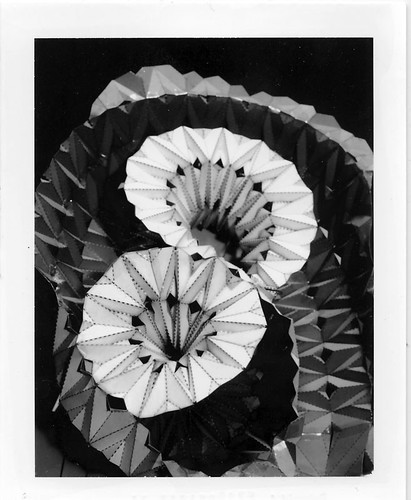
Image by core.formula
Prefab china
A collection of fast prototyping models (ZPrint) produced in the Pratt Institute College of Architecture 2007 PreFab China Style Studio,Evan Douglis, Richard Sarrach, Che-Wei Wang, Eric Wong
Perform by: Chris Egervary , Matt Macher , Ed Mulligan and Jun Pak
Please check out www.core.type-ula.com + www.prefabchina.com for far more
All pictures are scanned from the proof poloroid of a large format 4×5 camera. The photographer is Kim Keever and will be element of the upcoming publication Autogenic Structures by Evan Douglis
pfc_07_05-copy-1
Image by core.formula
A collection of rapid prototyping models (ZPrint) created in the Pratt Institute College of Architecture 2007 PreFab China Design and style Studio,Evan Douglis, Richard Sarrach, Che-Wei Wang, Eric Wong
Work made by: Sebastian Misiurek, Alex Drabyk, and Ivan Delgado
Please pay a visit to www.core.form-ula.com + www.prefabchina.com for more
Verify out these china prototyping images:
Tom Chi fast prototyping workshop
Image by gabriella_levine
pfc_07_06-copy-1
Image by core.formula
A collection of rapid prototyping models (ZPrint) created in the Pratt Institute College of Architecture 2007 PreFab China Design and style Studio:Evan Douglis, Richard Sarrach, Che-Wei Wang, Eric Wong
Function produced by: Dan Breitner, Andres Correa , Brad Rothenberg
Please pay a visit to www.core.form-ula.com + www.prefabchina.com for far more
Tom Chi rapid prototyping workshop
Image by gabriella_levine
