Showing posts with label Prototype. Show all posts

Friday, October 30, 2015

Honda to quickly come with a prototype


by RDECOM

Honda, a Japanese premium business in the production of automobiles, two wheelers and engines has plans to showcase the prototype representation worldwide to unveil an all new tiny size auto. The new little size automobile will be launched in Thailand in 2011 but will be exhibited in the 27th Thailand International Motor Expo 2010 which will start off in November and also will be introduced in India quickly. The Honda New Little Notion has already been exhibited in India in January and In Thailand in March in 2010. The prototype depicts the vehicle packaging similar to the mass production model. Honda is planning to bring in two diverse models which will be based on the Prototype, of the tiny auto based on the simple style. Honda, in India is planning to come with a new modest auto which will be manufactured as per Indian norms to advantage from the escalating demand in the Indian vehicle industry. And in Thailand, Honda plans to come with the new model which will fulfil the requirements of the island’s fuel efficient norms. Honda, apart from showcasing the two new different versions for the sub Continent nations is also preparing to exhibit Honda Accord, Honda City, Honda Civic, Honda Jazz (in Japan, it is also recognized as Match), Honda Freed and Honda CR-V. The organization will also showcase its two wheeler which is a new sports model set for international common and a scooter model made on global standard. Each the two wheelers will be exported from Thailand. With plans to expand far more in the Indian auto marketplace, Honda typically comes with newer technologies and revised products. Honda is preparing to revamp the Honda Jazz soon. The modifications are not significantly but the exterior looks will be made more sleek and fashionable. If looking at the Indian industry, Honda Jazz is positioned in the hatchback segment. It is the 1st car from the Honda in this segment. The hatchback is produced on the same lines as Honda City which guarantees technological advancement and varied functions. The savvy car is completely equipped with 1.2 litre, 1198 cc engine affixed with 4 cylinder which gives 90 Ps @ 6200 rpm and 116 Nm torque @ 4900 rpm. The rivals of Honda Jazz in India incorporate Skoda Fabia, Hyundai i20 and Chevrolet SRV.


At CarDekho.com, we supply information on the most current Honda Jazz and far more importantly the low cost Honda City


.


(Source from rapid prototyping from China blog)

Tuesday, October 27, 2015

Honda to soon come with a prototype


Honda, a Japanese premium company in the production of automobiles, two wheelers and engines has plans to showcase the prototype representation worldwide to unveil an all new little size auto. The new little size auto will be launched in Thailand in 2011 but will be exhibited in the 27th Thailand International Motor Expo 2010 which will start off in November and also will be introduced in India soon. The Honda New Modest Concept has already been exhibited in India in January and In Thailand in March in 2010. The prototype depicts the car packaging comparable to the mass production model. Honda is arranging to bring in two different models which will be primarily based on the Prototype, of the tiny automobile based on the standard design. Honda, in India is planning to come with a new tiny vehicle which will be manufactured as per Indian norms to advantage from the escalating demand in the Indian car market place. And in Thailand, Honda plans to come with the new model which will fulfil the wants of the island’s fuel efficient norms. Honda, apart from showcasing the two new diverse versions for the sub Continent nations is also planning to exhibit Honda Accord, Honda City, Honda Civic, Honda Jazz (in Japan, it is also known as Match), Honda Freed and Honda CR-V. The business will also showcase its two wheeler which is a new sports model set for international regular and a scooter model made on global standard. Both the two wheelers will be exported from Thailand. With plans to expand far more in the Indian auto market place, Honda frequently comes with newer technologies and revised merchandise. Honda is preparing to revamp the Honda Jazz quickly. The adjustments are not a lot but the exterior appears will be produced a lot more sleek and fashionable. If searching at the Indian marketplace, Honda Jazz is positioned in the hatchback segment. It is the first automobile from the Honda in this segment. The hatchback is produced on the exact same lines as Honda City which ensures technological advancement and varied characteristics. The savvy auto is completely equipped with 1.2 litre, 1198 cc engine affixed with 4 cylinder which gives 90 Ps @ 6200 rpm and 116 Nm torque @ 4900 rpm. The rivals of Honda Jazz in India incorporate Skoda Fabia, Hyundai i20 and Chevrolet SRV.


At CarDekho.com, we provide info on the most current Honda Jazz and more importantly the cheap Honda City


.


(Source from rapid prototyping from China blog)

Sunday, October 18, 2015

Action Mold Adds Action Prototype


Action Prototype &amp Action Mold have a history of successfully going the added mile to service our customer’s requirements. We did it last year by bringing on line our first Engel 90VV Vertical molding machine and Toshiba EC20 power efficient higher precision mold press’s.


It offers a extensive fast prototype and approach of manufacturing services that has been developed to get your products to different markets in the greatest achievable way. Also, it can collect the best outcomes in the quickest possible way. Also, we have the capability to supply service when it comes in high and low volume production when it comes to plastic parts. Likewise, customers need to have to know that we are devoted I making use of power-saving equipments. Our equipments are also environmentally safe and do not impose any threat to it. We use zero VOC paints in order for people not to have any difficulties when it comes to their well being.


When it comes to the industries we serve, clients can have the likelihood to know that we have a wide variety of services that can offer fantastic assist for everybody. We can offer service to defense, automotive, architectural, entertainment and even educational aspect, which is why we have a lengthy-standing list of happy consumers that you can use as a reference for our top quality services. All you need to have to do is to keep in touch with us if you want to know the rates we offer you. We can talk about your item development wants and get a quote in order to back you up successfully.


With our wide variety of services that can offer you great service, rest assured that you are in good hands. All our clients can get the possibility to have the satisfaction that they need when it comes to our offerings. Furthermore, we offer you plastic component style for injection molding, which is why it is up to you to truly consider our solutions. Consumers will by no means go wrong when it comes to our solutions. With the addition of Action Prototype in 2009 we have had excellent achievement in implementing our complete turn important help of plastic component production.


From concept all the way by means of to the packaging. Which is typically referred to as “Cradle to Grave”. We continue to supply a lot more inventive options to answer our consumers manufacturing requirements. If you have any projects coming up please let us know if we can help you in any way. We are happy to handle all or component of your project. Let us take the head ache out of your provide chain.


We provide excellent plastic design and injection molding in order to support you get the greatest. With our fast prototype services, anticipate the very best results that you want to have.


(Source from rapid prototyping from China blog)

Tuesday, October 13, 2015

Cool Prototype China photos

Check out these prototype china images:


Ubco Assembly

Image by locusresearch

Close up shot of 2×2 in the course of assembly


Ubco components

Image by locusresearch

Close up shot of 2×2 for the duration of assembly


Ubco parts

Image by locusresearch

Close up shot of 2×2 during assembly


(Source from rapid prototyping from China blog)

Monday, October 12, 2015

Sweepstakes Winner Gets $10000 Towards Patent and Prototype Cost At Globe ...

Sweepstakes Winner Gets 000 Towards Patent and Prototype Expense At Planet

World Patent Marketing Dollars can be spent with World Patent Marketing and advertising for patent registration, prototypes, licensing costs, manufacturing, advertising or distribution fees. Stephanie, one of Planet Patent Advertising and marketing&#39s several inventors, can commit her prize …
Study far more on GlobeNewswire (press release)


This Wearable Device Translates Sign Language To English

The device, nevertheless in the prototype stage, can recognize some 40 ASL indicators with 96 % accuracy. … In China, researchers have utilized Microsoft&#39s Kinect motion-sensing equipment to translate Chinese Sign Language into spoken and written words.
Study more on Smithsonian


IN DEPTH: Is the tide turning for Chinese offshore?

Ming Yang, for instance, with the assist of German designer Aerodyn, has constructed, installed and grid-connected its prototype 6.5MW two-blade, downwind offshore turbine at the intertidal demonstration website off Rudong, Jiangsu province. Calculations suggest …
Read more on Recharge (subscription)


(Source from rapid prototyping from China blog)

Sunday, October 11, 2015

Cool China Prototype Manufacturing photos

A few good china prototype manufacturing photos I located:


Steven F. Udvar-Hazy Center: Photomontage of SR-71 on the port side

Image by Chris Devers
Posted by means of e-mail to ☛ HoloChromaCinePhotoRamaScope‽: cdevers.posterous.com/panoramas-of-the-sr-71-blackbird-at…. See the full gallery on Posterous …


• • • • •


See far more pictures of this, and the Wikipedia report.


Specifics, quoting from Smithsonian National Air and Space Museum | Lockheed SR-71 Blackbird:


No reconnaissance aircraft in history has operated globally in a lot more hostile airspace or with such complete impunity than the SR-71, the world’s fastest jet-propelled aircraft. The Blackbird’s efficiency and operational achievements placed it at the pinnacle of aviation technologies developments throughout the Cold War.


This Blackbird accrued about two,800 hours of flight time in the course of 24 years of active service with the U.S. Air Force. On its final flight, March six, 1990, Lt. Col. Ed Yielding and Lt. Col. Joseph Vida set a speed record by flying from Los Angeles to Washington, D.C., in 1 hour, 4 minutes, and 20 seconds, averaging three,418 kilometers (two,124 miles) per hour. At the flight’s conclusion, they landed at Washington-Dulles International Airport and turned the airplane more than to the Smithsonian.


Transferred from the United States Air Force.


Manufacturer:
Lockheed Aircraft Corporation


Designer:
Clarence L. &quotKelly&quot Johnson


Date:

1964


Nation of Origin:

United States of America


Dimensions:

Overall: 18ft 5 15/16in. x 55ft 7in. x 107ft 5in., 169998.5lb. (5.638m x 16.942m x 32.741m, 77110.8kg)

Other: 18ft 5 15/16in. x 107ft 5in. x 55ft 7in. (5.638m x 32.741m x 16.942m)


Components:

Titanium


Physical Description:

Twin-engine, two-seat, supersonic strategic reconnaissance aircraft airframe constructed largley of titanium and its alloys vertical tail fins are constructed of a composite (laminated plastic-kind material) to minimize radar cross-section Pratt and Whitney J58 (JT11D-20B) turbojet engines feature massive inlet shock cones.


Long Description:

No reconnaissance aircraft in history has operated in a lot more hostile airspace or with such total impunity than the SR-71 Blackbird. It is the quickest aircraft propelled by air-breathing engines. The Blackbird’s overall performance and operational achievements placed it at the pinnacle of aviation technologies developments in the course of the Cold War. The airplane was conceived when tensions with communist Eastern Europe reached levels approaching a full-blown crisis in the mid-1950s. U.S. military commanders desperately needed correct assessments of Soviet worldwide military deployments, especially close to the Iron Curtain. Lockheed Aircraft Corporation’s subsonic U-two (see NASM collection) reconnaissance aircraft was an in a position platform but the U. S. Air Force recognized that this comparatively slow aircraft was currently vulnerable to Soviet interceptors. They also understood that the speedy development of surface-to-air missile systems could put U-2 pilots at grave risk. The danger proved reality when a U-2 was shot down by a surface to air missile more than the Soviet Union in 1960.


Lockheed’s 1st proposal for a new high speed, higher altitude, reconnaissance aircraft, to be capable of avoiding interceptors and missiles, centered on a design and style propelled by liquid hydrogen. This proved to be impracticable since of considerable fuel consumption. Lockheed then reconfigured the style for conventional fuels. This was feasible and the Central Intelligence Agency (CIA), already flying the Lockheed U-2, issued a production contract for an aircraft designated the A-12. Lockheed’s clandestine ‘Skunk Works’ division (headed by the gifted style engineer Clarence L. &quotKelly&quot Johnson) created the A-12 to cruise at Mach 3.2 and fly well above 18,288 m (60,000 feet). To meet these challenging requirements, Lockheed engineers overcame a lot of daunting technical challenges. Flying far more than three occasions the speed of sound generates 316° C (600° F) temperatures on external aircraft surfaces, which are sufficient to melt traditional aluminum airframes. The design group chose to make the jet’s external skin of titanium alloy to which shielded the internal aluminum airframe. Two conventional, but very effective, afterburning turbine engines propelled this remarkable aircraft. These power plants had to operate across a enormous speed envelope in flight, from a takeoff speed of 334 kph (207 mph) to far more than three,540 kph (2,200 mph). To prevent supersonic shock waves from moving inside the engine intake causing flameouts, Johnson’s group had to style a complex air intake and bypass program for the engines.


Skunk Performs engineers also optimized the A-12 cross-section style to exhibit a low radar profile. Lockheed hoped to achieve this by meticulously shaping the airframe to reflect as little transmitted radar energy (radio waves) as attainable, and by application of specific paint made to absorb, rather than reflect, those waves. This treatment became one of the very first applications of stealth technology, but it never ever completely met the design ambitions.


Test pilot Lou Schalk flew the single-seat A-12 on April 24, 1962, soon after he became airborne accidentally for the duration of higher-speed taxi trials. The airplane showed wonderful guarantee but it needed considerable technical refinement just before the CIA could fly the very first operational sortie on May 31, 1967 – a surveillance flight over North Vietnam. A-12s, flown by CIA pilots, operated as component of the Air Force’s 1129th Unique Activities Squadron beneath the &quotOxcart&quot program. While Lockheed continued to refine the A-12, the U. S. Air Force ordered an interceptor version of the aircraft designated the YF-12A. The Skunk Operates, nonetheless, proposed a &quotspecific mission&quot version configured to conduct post-nuclear strike reconnaissance. This program evolved into the USAF’s familiar SR-71.


Lockheed built fifteen A-12s, which includes a specific two-seat trainer version. Two A-12s had been modified to carry a unique reconnaissance drone, designated D-21. The modified A-12s have been redesignated M-21s. These have been developed to take off with the D-21 drone, powered by a Marquart ramjet engine mounted on a pylon amongst the rudders. The M-21 then hauled the drone aloft and launched it at speeds high adequate to ignite the drone’s ramjet motor. Lockheed also built 3 YF-12As but this type never ever went into production. Two of the YF-12As crashed for the duration of testing. Only a single survives and is on display at the USAF Museum in Dayton, Ohio. The aft section of a single of the &quotwritten off&quot YF-12As which was later utilised along with an SR-71A static test airframe to manufacture the sole SR-71C trainer. One SR-71 was lent to NASA and designated YF-12C. Including the SR-71C and two SR-71B pilot trainers, Lockheed constructed thirty-two Blackbirds. The 1st SR-71 flew on December 22, 1964. Simply because of extreme operational charges, military strategists decided that the much more capable USAF SR-71s need to replace the CIA’s A-12s. These had been retired in 1968 soon after only one year of operational missions, largely over southeast Asia. The Air Force’s 1st Strategic Reconnaissance Squadron (part of the 9th Strategic Reconnaissance Wing) took more than the missions, flying the SR-71 starting in the spring of 1968.


Following the Air Force began to operate the SR-71, it acquired the official name Blackbird– for the unique black paint that covered the airplane. This paint was formulated to absorb radar signals, to radiate some of the tremendous airframe heat generated by air friction, and to camouflage the aircraft against the dark sky at higher altitudes.


Experience gained from the A-12 program convinced the Air Force that flying the SR-71 safely required two crew members, a pilot and a Reconnaissance Systems Officer (RSO). The RSO operated with the wide array of monitoring and defensive systems installed on the airplane. This equipment incorporated a sophisticated Electronic Counter Measures (ECM) program that could jam most acquisition and targeting radar. In addition to an array of sophisticated, higher-resolution cameras, the aircraft could also carry equipment designed to record the strength, frequency, and wavelength of signals emitted by communications and sensor devices such as radar. The SR-71 was created to fly deep into hostile territory, avoiding interception with its tremendous speed and higher altitude. It could operate safely at a maximum speed of Mach three.3 at an altitude more than sixteen miles, or 25,908 m (85,000 ft), above the earth. The crew had to put on pressure suits comparable to those worn by astronauts. These suits have been needed to safeguard the crew in the event of sudden cabin stress loss even though at operating altitudes.


To climb and cruise at supersonic speeds, the Blackbird’s Pratt &amp Whitney J-58 engines have been made to operate continuously in afterburner. While this would seem to dictate higher fuel flows, the Blackbird really accomplished its greatest &quotgas mileage,&quot in terms of air nautical miles per pound of fuel burned, in the course of the Mach three+ cruise. A typical Blackbird reconnaissance flight might require a number of aerial refueling operations from an airborne tanker. Every single time the SR-71 refueled, the crew had to descend to the tanker’s altitude, typically about six,000 m to 9,000 m (20,000 to 30,000 ft), and slow the airplane to subsonic speeds. As velocity decreased, so did frictional heat. This cooling effect triggered the aircraft’s skin panels to shrink significantly, and those covering the fuel tanks contracted so a lot that fuel leaked, forming a distinctive vapor trail as the tanker topped off the Blackbird. As quickly as the tanks were filled, the jet’s crew disconnected from the tanker, relit the afterburners, and again climbed to high altitude.


Air Force pilots flew the SR-71 from Kadena AB, Japan, throughout its operational profession but other bases hosted Blackbird operations, too. The 9th SRW occasionally deployed from Beale AFB, California, to other places to carryout operational missions. Cuban missions have been flown directly from Beale. The SR-71 did not commence to operate in Europe until 1974, and then only temporarily. In 1982, when the U.S. Air Force based two aircraft at Royal Air Force Base Mildenhall to fly monitoring mission in Eastern Europe.


When the SR-71 became operational, orbiting reconnaissance satellites had already replaced manned aircraft to collect intelligence from sites deep inside Soviet territory. Satellites could not cover each and every geopolitical hotspot so the Blackbird remained a essential tool for worldwide intelligence gathering. On several occasions, pilots and RSOs flying the SR-71 offered information that proved important in formulating productive U. S. foreign policy. Blackbird crews offered critical intelligence about the 1973 Yom Kippur War, the Israeli invasion of Lebanon and its aftermath, and pre- and post-strike imagery of the 1986 raid carried out by American air forces on Libya. In 1987, Kadena-primarily based SR-71 crews flew a number of missions over the Persian Gulf, revealing Iranian Silkworm missile batteries that threatened industrial shipping and American escort vessels.


As the overall performance of space-based surveillance systems grew, along with the effectiveness of ground-primarily based air defense networks, the Air Force started to drop enthusiasm for the costly program and the 9th SRW ceased SR-71 operations in January 1990. In spite of protests by military leaders, Congress revived the plan in 1995. Continued wrangling more than operating budgets, even so, quickly led to final termination. The National Aeronautics and Space Administration retained two SR-71As and the one particular SR-71B for high-speed research projects and flew these airplanes till 1999.


On March six, 1990, the service profession of 1 Lockheed SR-71A Blackbird ended with a record-setting flight. This special airplane bore Air Force serial quantity 64-17972. Lt. Col. Ed Yeilding and his RSO, Lieutenant Colonel Joseph Vida, flew this aircraft from Los Angeles to Washington D.C. in 1 hour, 4 minutes, and 20 seconds, averaging a speed of 3,418 kph (2,124 mph). At the conclusion of the flight, ‘972 landed at Dulles International Airport and taxied into the custody of the Smithsonian’s National Air and Space Museum. At that time, Lt. Col. Vida had logged 1,392.7 hours of flight time in Blackbirds, more than that of any other crewman.


This particular SR-71 was also flown by Tom Alison, a former National Air and Space Museum’s Chief of Collections Management. Flying with Detachment 1 at Kadena Air Force Base, Okinawa, Alison logged a lot more than a dozen ‘972 operational sorties. The aircraft spent twenty-4 years in active Air Force service and accrued a total of 2,801.1 hours of flight time.


Wingspan: 55’7&quot

Length: 107’5&quot

Height: 18’6&quot

Weight: 170,000 Lbs


Reference and Further Reading:


Crickmore, Paul F. Lockheed SR-71: The Secret Missions Exposed. Oxford: Osprey Publishing, 1996.


Francillon, Rene J. Lockheed Aircraft Given that 1913. Annapolis, Md.: Naval Institute Press, 1987.


Johnson, Clarence L. Kelly: Far more Than My Share of It All. Washington D.C.: Smithsonian Institution Press, 1985.


Miller, Jay. Lockheed Martin’s Skunk Works. Leicester, U.K.: Midland Counties Publishing Ltd., 1995.


Lockheed SR-71 Blackbird curatorial file, Aeronautics Division, National Air and Space Museum.


DAD, 11-11-01


(Source from rapid prototyping from China blog)

Friday, October 9, 2015

Millesimal fineness - prototype circuit boards - China printed circuit assemblies

Millesimal fineness is a technique of denoting the purity of platinum, gold and silver alloys by components per thousand of pure metal by mass in the alloy. For example, an alloy containing 75% gold is denoted as “750”. Many European nations use the percentage hallmark stamps (i.e. ‘585’, ‘750’, and so forth) rather than ’14K’, ’18K’, and so on., which is utilized in the United States.


It is an extension of the older carat (karat in North American spelling) technique of denoting the purity of gold by fractions of 24, such as “18 carat” for an alloy with 75% (18 parts per 24) pure gold by mass.


The millesimal fineness is usually rounded to a three figure quantity, especially where utilized as a hallmark, and the fineness could vary slightly from the standard versions of purity.


The most typical millesimal finenesses used for valuable metals:


999 (also known as 3 nines fine)


995 (what most dealer would acquire your platinum at if it is 100% pure)


950 (the most widespread purity for platinum jewellery)


900 (also identified as one nine fine)


999.99 (The purest variety of Gold in the marketplace)


999 (Fine gold equivalent to 24 carat, also recognized as 3 nines fine)


990 also known as two nines fine


916 (equivalent to 22 carat)


833 (equivalent to 20 carat)


750 (equivalent to 18 carat)


625 (equivalent to 15 carat)


585 (equivalent to 14 carat)


417 (equivalent to ten carat)


375 (equivalent to 9 carat)


333 (equivalent to 8 carat minimum regular for gold in Germany after 1884)


999.9 (Ultra-fine silver used by Royal Canadian Mint in the Canadian Silver Maple Leaf)


999 (Fine silver used in bullion bars, also identified as three nines fine)


980 (frequent common used in Mexico ca.1930 – 1945)


958 (equivalent to Britannia silver)


950 (equivalent to “French 1st Regular”)


925 (equivalent to Sterling silver)


900 (equivalent to “Coin silver” in the USA, also recognized as one particular nine fine)


875 (could be discovered in former USSR and in Switzerland)


833 (typical regular used in continental silver specifically among the Dutch, Swedish, and Germans)


830 (widespread normal utilised in older Scandinavian silver)


835 (a regular predominantly employed in Germany soon after 1884)


800 (minimum standard for silver in Germany after 1884 Egyptian silver Canadian silver circulating coinage)


750 (uncommon silver common discovered in older German, Swiss and Austro-Hungarian silver)


Gold as an investment


Silver as an investment


Anklet Belt buckle Belly chain Bracelet Brooch Chatelaine Crown Cufflink Earring lapel pin Necklace Pendant Ring Tiara Tie clip Watch (pocket)


Bench jeweler Goldsmith Jewelry designer Lapidary Watchmaker


Casting (centrifugal, lost-wax, vacuum) Enameling Engraving Filigree Metal clay Plating Polishing Repouss and chasing Soldering Stonesetting Wire wrapping


Draw plate File Hammer Mandrel Pliers


Gold Palladium Platinum Rhodium Silver


Britannia silver Colored gold Crown gold Electrum Platinum sterling Shakudo Shibuichi Sterling silver Tumbaga


Brass Bronze Copper Kuromido Pewter Stainless steel Titanium


Aventurine Agate Alexandrite Amethyst Aquamarine Carnelian Citrine Diamond Emerald Garnet Jade Jasper Malachite Lapis lazuli Moonstone Obsidian Onyx Opal Peridot Quartz Ruby Sapphire Sodalite Sunstone Tanzanite Tiger’s Eye Topaz Tourmaline


Amber Copal Coral Jet Pearl Abalone


Carat (unit) Carat (purity) Discovering Millesimal fineness


Associated topics: Body piercing Fashion Gemology Metalworking Wearable art


We are higher high quality suppliers, our merchandise such as prototype circuit boards , China printed circuit assemblies for oversee purchaser. To know far more, please visits gerber pcb.


Far more Cnc Prototype China Articles


(Source from rapid prototyping from China blog)

Friday, October 2, 2015

Action Mold Adds Action Prototype


Action Prototype &amp Action Mold have a history of effectively going the further mile to service our customer’s requirements. We did it last year by bringing on line our very first Engel 90VV Vertical molding machine and Toshiba EC20 energy efficient higher precision mold press’s.


It offers a complete speedy prototype and method of manufacturing solutions that has been designed to receive your goods to various markets in the best achievable way. Also, it can gather the best final results in the quickest feasible way. Also, we have the capacity to offer you service when it comes in high and low volume production when it comes to plastic parts. Likewise, customers require to know that we are dedicated I employing power-saving equipments. Our equipments are also environmentally safe and do not impose any threat to it. We use zero VOC paints in order for men and women not to have any difficulties when it comes to their overall health.


When it comes to the industries we serve, consumers can have the opportunity to know that we have a wide range of services that can offer fantastic assist for absolutely everyone. We can offer service to defense, automotive, architectural, entertainment and even educational aspect, which is why we have a lengthy-standing list of happy buyers that you can use as a reference for our quality services. All you want to do is to keep in touch with us if you want to know the prices we provide. We can discuss your item improvement requirements and get a quote in order to back you up properly.


With our wide variety of services that can provide you wonderful service, rest assured that you are in very good hands. All our customers can get the opportunity to have the satisfaction that they need to have when it comes to our offerings. Furthermore, we offer you plastic component style for injection molding, which is why it is up to you to truly think about our solutions. Buyers will never ever go wrong when it comes to our solutions. With the addition of Action Prototype in 2009 we have had great good results in implementing our total turn essential assistance of plastic part production.


From notion all the way through to the packaging. Which is frequently referred to as “Cradle to Grave”. We continue to offer much more creative options to answer our customers manufacturing wants. If you have any projects coming up please let us know if we can support you in any way. We are happy to handle all or element of your project. Let us take the head ache out of your provide chain.


We supply wonderful plastic design and injection molding in order to support you get the ideal. With our fast prototype services, anticipate the very best results that you want to have.


(Source from rapid prototyping from China blog)

Tuesday, September 29, 2015

Nice China Prototype Manufacturing images

A few nice china prototype manufacturing images I found:


Steven F. Udvar-Hazy Center: Photomontage of SR-71 on the port side
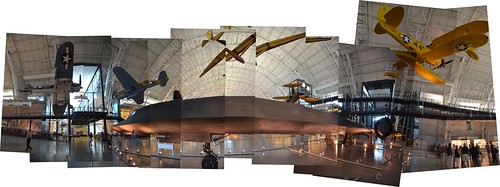
Image by Chris Devers
Posted by means of e-mail to ☛ HoloChromaCinePhotoRamaScope‽: cdevers.posterous.com/panoramas-of-the-sr-71-blackbird-at…. See the complete gallery on Posterous …


• • • • •


See more photos of this, and the Wikipedia post.


Specifics, quoting from Smithsonian National Air and Space Museum | Lockheed SR-71 Blackbird:


No reconnaissance aircraft in history has operated globally in more hostile airspace or with such full impunity than the SR-71, the world’s quickest jet-propelled aircraft. The Blackbird’s efficiency and operational achievements placed it at the pinnacle of aviation technologies developments during the Cold War.


This Blackbird accrued about two,800 hours of flight time throughout 24 years of active service with the U.S. Air Force. On its final flight, March 6, 1990, Lt. Col. Ed Yielding and Lt. Col. Joseph Vida set a speed record by flying from Los Angeles to Washington, D.C., in 1 hour, four minutes, and 20 seconds, averaging three,418 kilometers (two,124 miles) per hour. At the flight’s conclusion, they landed at Washington-Dulles International Airport and turned the airplane over to the Smithsonian.


Transferred from the United States Air Force.


Manufacturer:
Lockheed Aircraft Corporation


Designer:
Clarence L. &quotKelly&quot Johnson


Date:

1964


Nation of Origin:

United States of America


Dimensions:

Overall: 18ft five 15/16in. x 55ft 7in. x 107ft 5in., 169998.5lb. (five.638m x 16.942m x 32.741m, 77110.8kg)

Other: 18ft 5 15/16in. x 107ft 5in. x 55ft 7in. (five.638m x 32.741m x 16.942m)


Components:

Titanium


Physical Description:

Twin-engine, two-seat, supersonic strategic reconnaissance aircraft airframe constructed largley of titanium and its alloys vertical tail fins are constructed of a composite (laminated plastic-type material) to reduce radar cross-section Pratt and Whitney J58 (JT11D-20B) turbojet engines feature huge inlet shock cones.


Long Description:

No reconnaissance aircraft in history has operated in more hostile airspace or with such complete impunity than the SR-71 Blackbird. It is the quickest aircraft propelled by air-breathing engines. The Blackbird’s functionality and operational achievements placed it at the pinnacle of aviation technology developments during the Cold War. The airplane was conceived when tensions with communist Eastern Europe reached levels approaching a complete-blown crisis in the mid-1950s. U.S. military commanders desperately needed correct assessments of Soviet worldwide military deployments, especially close to the Iron Curtain. Lockheed Aircraft Corporation’s subsonic U-two (see NASM collection) reconnaissance aircraft was an able platform but the U. S. Air Force recognized that this comparatively slow aircraft was already vulnerable to Soviet interceptors. They also understood that the speedy development of surface-to-air missile systems could place U-2 pilots at grave threat. The danger proved reality when a U-2 was shot down by a surface to air missile more than the Soviet Union in 1960.


Lockheed’s very first proposal for a new high speed, higher altitude, reconnaissance aircraft, to be capable of avoiding interceptors and missiles, centered on a style propelled by liquid hydrogen. This proved to be impracticable simply because of considerable fuel consumption. Lockheed then reconfigured the design for traditional fuels. This was feasible and the Central Intelligence Agency (CIA), already flying the Lockheed U-two, issued a production contract for an aircraft designated the A-12. Lockheed’s clandestine ‘Skunk Works’ division (headed by the gifted design and style engineer Clarence L. &quotKelly&quot Johnson) created the A-12 to cruise at Mach 3.two and fly effectively above 18,288 m (60,000 feet). To meet these difficult specifications, Lockheed engineers overcame many daunting technical challenges. Flying a lot more than three times the speed of sound generates 316° C (600° F) temperatures on external aircraft surfaces, which are sufficient to melt standard aluminum airframes. The design team chose to make the jet’s external skin of titanium alloy to which shielded the internal aluminum airframe. Two standard, but very powerful, afterburning turbine engines propelled this exceptional aircraft. These power plants had to operate across a huge speed envelope in flight, from a takeoff speed of 334 kph (207 mph) to far more than three,540 kph (2,200 mph). To avoid supersonic shock waves from moving inside the engine intake causing flameouts, Johnson’s team had to design and style a complicated air intake and bypass system for the engines.


Skunk Functions engineers also optimized the A-12 cross-section design and style to exhibit a low radar profile. Lockheed hoped to attain this by very carefully shaping the airframe to reflect as small transmitted radar power (radio waves) as possible, and by application of special paint developed to absorb, rather than reflect, those waves. This therapy became one particular of the 1st applications of stealth technologies, but it never ever totally met the design and style objectives.


Test pilot Lou Schalk flew the single-seat A-12 on April 24, 1962, after he became airborne accidentally in the course of higher-speed taxi trials. The airplane showed great promise but it needed considerable technical refinement ahead of the CIA could fly the initial operational sortie on May 31, 1967 – a surveillance flight more than North Vietnam. A-12s, flown by CIA pilots, operated as portion of the Air Force’s 1129th Particular Activities Squadron under the &quotOxcart&quot system. Although Lockheed continued to refine the A-12, the U. S. Air Force ordered an interceptor version of the aircraft designated the YF-12A. The Skunk Functions, however, proposed a &quotspecific mission&quot version configured to conduct post-nuclear strike reconnaissance. This method evolved into the USAF’s familiar SR-71.


Lockheed built fifteen A-12s, such as a unique two-seat trainer version. Two A-12s have been modified to carry a unique reconnaissance drone, designated D-21. The modified A-12s have been redesignated M-21s. These have been created to take off with the D-21 drone, powered by a Marquart ramjet engine mounted on a pylon in between the rudders. The M-21 then hauled the drone aloft and launched it at speeds high sufficient to ignite the drone’s ramjet motor. Lockheed also built three YF-12As but this kind in no way went into production. Two of the YF-12As crashed during testing. Only a single survives and is on display at the USAF Museum in Dayton, Ohio. The aft section of one of the &quotwritten off&quot YF-12As which was later employed along with an SR-71A static test airframe to manufacture the sole SR-71C trainer. One particular SR-71 was lent to NASA and designated YF-12C. Which includes the SR-71C and two SR-71B pilot trainers, Lockheed constructed thirty-two Blackbirds. The first SR-71 flew on December 22, 1964. Because of intense operational expenses, military strategists decided that the more capable USAF SR-71s ought to replace the CIA’s A-12s. These have been retired in 1968 following only 1 year of operational missions, mainly more than southeast Asia. The Air Force’s 1st Strategic Reconnaissance Squadron (portion of the 9th Strategic Reconnaissance Wing) took over the missions, flying the SR-71 beginning in the spring of 1968.


Soon after the Air Force began to operate the SR-71, it acquired the official name Blackbird– for the specific black paint that covered the airplane. This paint was formulated to absorb radar signals, to radiate some of the tremendous airframe heat generated by air friction, and to camouflage the aircraft against the dark sky at high altitudes.


Experience gained from the A-12 plan convinced the Air Force that flying the SR-71 safely essential two crew members, a pilot and a Reconnaissance Systems Officer (RSO). The RSO operated with the wide array of monitoring and defensive systems installed on the airplane. This gear integrated a sophisticated Electronic Counter Measures (ECM) program that could jam most acquisition and targeting radar. In addition to an array of advanced, high-resolution cameras, the aircraft could also carry gear developed to record the strength, frequency, and wavelength of signals emitted by communications and sensor devices such as radar. The SR-71 was made to fly deep into hostile territory, avoiding interception with its tremendous speed and higher altitude. It could operate safely at a maximum speed of Mach three.three at an altitude a lot more than sixteen miles, or 25,908 m (85,000 ft), above the earth. The crew had to put on stress suits related to those worn by astronauts. These suits were essential to shield the crew in the event of sudden cabin pressure loss whilst at operating altitudes.


To climb and cruise at supersonic speeds, the Blackbird’s Pratt &amp Whitney J-58 engines were developed to operate continuously in afterburner. Whilst this would seem to dictate high fuel flows, the Blackbird really achieved its ideal &quotgas mileage,&quot in terms of air nautical miles per pound of fuel burned, during the Mach three+ cruise. A typical Blackbird reconnaissance flight may well call for several aerial refueling operations from an airborne tanker. Every time the SR-71 refueled, the crew had to descend to the tanker’s altitude, usually about 6,000 m to 9,000 m (20,000 to 30,000 ft), and slow the airplane to subsonic speeds. As velocity decreased, so did frictional heat. This cooling impact caused the aircraft’s skin panels to shrink significantly, and those covering the fuel tanks contracted so considerably that fuel leaked, forming a distinctive vapor trail as the tanker topped off the Blackbird. As quickly as the tanks had been filled, the jet’s crew disconnected from the tanker, relit the afterburners, and once more climbed to high altitude.


Air Force pilots flew the SR-71 from Kadena AB, Japan, throughout its operational career but other bases hosted Blackbird operations, also. The 9th SRW sometimes deployed from Beale AFB, California, to other areas to carryout operational missions. Cuban missions had been flown straight from Beale. The SR-71 did not start to operate in Europe until 1974, and then only temporarily. In 1982, when the U.S. Air Force primarily based two aircraft at Royal Air Force Base Mildenhall to fly monitoring mission in Eastern Europe.


When the SR-71 became operational, orbiting reconnaissance satellites had currently replaced manned aircraft to collect intelligence from web sites deep inside Soviet territory. Satellites could not cover each and every geopolitical hotspot so the Blackbird remained a crucial tool for global intelligence gathering. On numerous occasions, pilots and RSOs flying the SR-71 provided data that proved vital in formulating profitable U. S. foreign policy. Blackbird crews supplied crucial intelligence about the 1973 Yom Kippur War, the Israeli invasion of Lebanon and its aftermath, and pre- and post-strike imagery of the 1986 raid performed by American air forces on Libya. In 1987, Kadena-primarily based SR-71 crews flew a number of missions over the Persian Gulf, revealing Iranian Silkworm missile batteries that threatened industrial shipping and American escort vessels.


As the overall performance of space-primarily based surveillance systems grew, along with the effectiveness of ground-based air defense networks, the Air Force began to drop enthusiasm for the high-priced system and the 9th SRW ceased SR-71 operations in January 1990. Despite protests by military leaders, Congress revived the system in 1995. Continued wrangling over operating budgets, even so, soon led to final termination. The National Aeronautics and Space Administration retained two SR-71As and the one particular SR-71B for higher-speed analysis projects and flew these airplanes till 1999.


On March 6, 1990, the service profession of a single Lockheed SR-71A Blackbird ended with a record-setting flight. This particular airplane bore Air Force serial quantity 64-17972. Lt. Col. Ed Yeilding and his RSO, Lieutenant Colonel Joseph Vida, flew this aircraft from Los Angeles to Washington D.C. in 1 hour, 4 minutes, and 20 seconds, averaging a speed of 3,418 kph (two,124 mph). At the conclusion of the flight, ‘972 landed at Dulles International Airport and taxied into the custody of the Smithsonian’s National Air and Space Museum. At that time, Lt. Col. Vida had logged 1,392.7 hours of flight time in Blackbirds, much more than that of any other crewman.


This certain SR-71 was also flown by Tom Alison, a former National Air and Space Museum’s Chief of Collections Management. Flying with Detachment 1 at Kadena Air Force Base, Okinawa, Alison logged a lot more than a dozen ‘972 operational sorties. The aircraft spent twenty-four years in active Air Force service and accrued a total of two,801.1 hours of flight time.


Wingspan: 55’7&quot

Length: 107’5&quot

Height: 18’6&quot

Weight: 170,000 Lbs


Reference and Additional Reading:


Crickmore, Paul F. Lockheed SR-71: The Secret Missions Exposed. Oxford: Osprey Publishing, 1996.


Francillon, Rene J. Lockheed Aircraft Considering that 1913. Annapolis, Md.: Naval Institute Press, 1987.


Johnson, Clarence L. Kelly: More Than My Share of It All. Washington D.C.: Smithsonian Institution Press, 1985.


Miller, Jay. Lockheed Martin’s Skunk Operates. Leicester, U.K.: Midland Counties Publishing Ltd., 1995.


Lockheed SR-71 Blackbird curatorial file, Aeronautics Division, National Air and Space Museum.


DAD, 11-11-01


(Source from rapid prototyping from China blog)
Wednesday, September 23, 2015

Prototype and Invention Designers


Idea Invention


A idea design and style is one particular which is generally performed by an artist, engineer, or CAD drafting service. This purpose behind the notion style is to demonstrate the appearance, functionality, and point out certain elements of the invention to the patent office. I’ve come to discover that the greatest route to go is by making use of a CAD drafting company or 3D modeling service. There are two factors for this. Initial of all CAD designers can add surface textures, lighting, environments, and other elements to a rendering that make the conceptual design and style appear genuine. Secondly if you use a CAD drafting service they can in fact design and style your invention totally which will be prepared for manufacturing. As a result you can just use the final 3D model developed to demonstrate the concept design and style as it will be. That’s what you call killing two styles with a single designer. Saving cash, headache and time for you in the future.


Prototype &amp CAD


Inventors at first and not seasoned correctly have a tendency to be unsure on how to go about acquiring their prototype made. CAD drafting solutions, and 3d modeling companies can generate idea styles, or 3D CAD models prepared for manufacturing molds, CNC, mechanical parts and a lot more. These CAD designers use unique software program which permits them to make 3D models which can be written on files, transferred to some sort of manufacturing machine and developed. These files can be sent on the internet as attachments to emails, so all you require is world wide web access to deliver the CAD drawings.


Invention Designers


Invention designers fall into the exact same category as prototype designers simply because each use CAD drafting solutions and 3D modeling businesses to generate the styles. It is really important to try and uncover an invention designer who will try to save you funds. Some of the methods they can do this are by slimming the item down to be less expensive in manufacturing, only charging for the design and style time. This is extremely crucial to Inventors who are on a tight price range. The most critical aspect to look for when choosing an Invention designer or prototype designer is to uncover a single who will make your prototype as if it have been going straight to the manufacturer for production. If the CAD designer can attain this it will save the Inventor from having to pay twice for the exact same standard design and style. A CAD drafter or 3D modeler can be your greatest or worst friend depending on who you use. If the firm has individual designers with tons of creativity and abilities performing unique CAD commands than they ought to have no problem.


Clay Bowling-Owner of eLine Design and style LLC an On the internet Invention &amp Prototype Design Firm-If You would like to find out much more about the Invention &amp Prototype Style Approach Click Here-CAD Designers &amp 3D Modeling Company


(Source from rapid prototyping from China blog)

Saturday, September 12, 2015

Protei 11. First commercial prototype. 20140331 Hong Kong.

Verify out these china prototypes images:


Protei 11. First industrial prototype. 20140331 Hong Kong.

Image by cesarharada.com

protei.org


Protei 11. First industrial prototype. 20140331 Hong Kong.

Image by cesarharada.com

protei.org


(Source from rapid prototyping from China blog)
Friday, August 28, 2015

Most current Fast Prototype China News

Award-Winning EMS Provider, Creation Technologies, Seems on Fox Business

… including complete-service manufacturing facilities, two turnkey product improvement centers, and two NPI centers for fast prototyping. The firm also has facilities in Canada, Mexico and China. On August 13th, Marvel Production Group, LLC (MPG …
Study a lot more on GlobeNewswire (press release)


Sophisticated filament is important to 3D printing revolution

… holds them collectively.&quot I thought about that story the other day for the duration of a telephone contact with Xiaofan Luo, founder of the Chinese company Polymaker, which makes filament for 3D printers. polymax-engine.jpg … The team figured that 3D printing — then …
Read more on ZDNet


Boy With Severely Deformed &#39Porcelain Legs&#39 Sees His Life Saved by 3D Printing

Just ask a six-year-old tiny boy in China, named Komine, who was born with a condition effecting about a single in 20,000 newborns, known as Osteogenesis Imperfecta (also recognized as “brittle bone disease” or Lobstein Syndrome). If you thought breaking a bone …
Read a lot more on 3DPrint.com


Petalite bids to raise £300k to launch rapid smartphone charger

Twelve component companies located in France, the US, China and Thailand have also been sourced, with the initial 1,100 Petalite batteries scheduled for delivery in October. Leigh Purnell, founder and inventor of Petalite, mentioned: &quotPortable batteries …
Study more on Birmingham Post


(Source from rapid prototyping from China blog)

Saturday, August 8, 2015

Most recent Prototype Engineering News

Late night thoughts on Mahler&#39s 9th

Schoenberg is of the great examples of the human spirit in our century, that spirit that is after all our only hope, he is the prototype of ambiguous man compulsively engineering his personal destruction although at the very same time and constantly flying on …
Read more on Slipped Disc


Durham Region organizations and schools benefitting from higher awareness of 3D

For organizations, the advantages of the technologies consist of reduced prototype costs and the ability to manufacture an item more quickly and significantly less expensively, even though validating their styles and item efficiency really early in the design and style approach. “When you&#39re …
Read more on durhamregion.com


Former NFL Player Says His Headphones Are Much better Than Beats by Dre / Actual Biz

Really planet have a little bit of background and designing and engineering and saw want to go because what I would&#39ve been fairly great affable and so. Plane Lama premium foremost was massive semi have phones … And if that was valid and I would come back …
Study far more on ABC News


Forrest Bird, inventor – obituary

In 1954 he founded Bird Goods Corporation and set to operate on a new prototype utilizing the good stress regulator and some strawberry shortcake tins, which he christened the Bird Residual Breather. Two years later it was released commercially as …
Read much more on Telegraph.co.uk


(Source from rapid prototyping from China blog)

Monday, August 3, 2015

Nice Prototype China photographs

A handful of good prototype china images I discovered:


Ubco Assembly


Image by locusresearch

2×2 in assambly, China 2015


(Source from rapid prototyping from China blog)

Friday, July 31, 2015

Most current Prototype China News

Somerville clean tech startups are bringing manufacturing jobs back to

… out how to locate and partner with manufacturing organizations. &quotCrossing that chasm of going from a prototype to anything that can be tested in the field to mass production is actually difficult for startups to do,&quot said Greentown Labs CEO and Executive …
Read more on Boston Business Journal (blog)


An Aging UN in 2015. But How About a New UN in 2020?

(The Commission steers clear of the possibility of interstate military clashes–also known as wars–in areas like the former Soviet Union or the South China Sea or the Indian subcontinent nowadays, and who knows where tomorrow.) There is a lot to applaud …
Study a lot more on GlobalSolutions.org (weblog)


Begin Up Studio WPM Capital Ventures, a Division of Planet Patent Marketing and advertising

WPM Prototyping: works with customers to create 1 or a lot more sorts of prototype, like: look, proof of concept, functional model or a production level prototype. WPM Manufacturing: gives overseas production from all 14 major industrial zones …
Study a lot more on GlobeNewswire (press release)


Microsoft Lumia Prototype Leaks, Rumored To Have Polycarbonate Physique &amp Powerful

NokiaPowerUser reported that an alleged Lumia prototype has been spotted sporting an HD show and a strong Snapdragon 810 chipset. The pictures are posted by user SZ Leaks on Baidu Tieba, China&#39s version of the Google+ social network. Could this&nbsp…
Study far more on Gospel Herald


(Source from rapid prototyping from China blog)

Sunday, July 19, 2015

Good Prototype China photos

Some cool prototype china images:


Ubco Assembly


Image by locusresearch

2×2 in assambly, China 2015


Ubco Assembly


Image by locusresearch

2×2 in assambly, China 2015


Ubco Assembly


Image by locusresearch

2×2 in assambly, China 2015


(Source from rapid prototyping from China blog)

Thursday, July 9, 2015

Newest China Prototype News

Adidas Recycled Design: Ocean Waste Utilised In Generating Sneakers

Last week, at a Parley for the Oceans occasion hosted by the United Nations, Parley founder Cyrill Gutsch and Adidas representative Eric Liedtke presented their most recent collaborative project – a shoe prototype with an upper made completely from recycled …
Study a lot more on Chinatopix


Xiaomi Mi 5 And Mi five Plus Specs, Pricing And Features Cued In New Leak!

The new leaked information come from China&#39s Weibo, which also hinted at the innards of the larger variant of the Xiaomi Mi five, believed to be dubbed the Xiaomi Mi five Plus. The Mi five will be priced at CNY 2,399 (about $ 386), according to reports on NDTV Gadgets.
Study more on KDramaStars


The US versus Japan robot fight is really a ploy to develop a entirely new type

For the next seven months MegaBot worked on building its next prototype robot referred to as the Mark II. The final item was a 15-foot, 12,000 pound bot that rolls about via tank treads and is piloted by a group of two human operators that sit inside the …
Read a lot more on Business Insider


(Source from rapid prototyping from China blog)

Friday, July 3, 2015

Most current Fast Prototype China News

Hacking the meals chain, Silicon Valley style

Brooklyn-primarily based startup Contemporary Meadow is establishing an edible cultured meat prototype along with bioengineered leather products, which do not demand animal slaughter. The company has funding from tech venture firms Sequoia Capital and Artis Ventures.
Read far more on Yahoo Tech


Organovo CEO: 3D bioprinting organs will aid us get men and women off transplant

… identified in the manufacturing sector as &quotadditive manufacturing&quot or &quotrapid prototyping&quot – a way to produce objects quickly with no needing to wait weeks to get the completed item from a factory in China – 3D printing human tissue is a …
Study more on International Company Times UK


(Source from rapid prototyping from China blog)

Friday, June 26, 2015

Prototype PCB: Necessity and Benefits


PCB prototype plays a really critical role in the creation and design and style of PCB (Printed Circuit Boards). The design of the PCB does not rely on single elements rather depends on range of elements which demands expertise and testing for many occasions. And prototype offers you the opportunity to check your solution just before production. Really, we can say that the design depends on indistinct set of necessities. This is produced to define the needed functions for the electrical and mechanical items. And the prototype aids to fulfill these needs by giving you a possibility for proving your design.


The designers contain all the necessary functionalities these can match in the board. As regarding to the specifications, the board alterations its shape. Occasionally it is big with the extensive specifications. And at times it’s tiny with fewer needs. Once again several items are necessary to make a PCB prototype of production stage. Amongst them, functionality with reliability is a should. The complexity and functionality determines the necessary quantity of layers. Some board consists of only two layers as they have less functionality and some have even more than 32 layers for their complexity and higher functionality. And the size also differs a lot. As the board has to sit completely into its desired method, it have to be made in the ideal shape. The tolerance is also a factor as the layers and copper traces definitely depend on it. Most PCB has a design and style with a tolerance that makes the layers and copper traces even far more essential. As they are developed with highly tight tolerances, they are made very integrated. And this integrity sometime causes some vital troubles. So, it should be checked carefully for the accuracy. The voltage have to be moderate with the application and the signals have to also be clean. Once more, the surface components need to meet the needed tolerance. And soon after taking into consideration all these respects, the developed initial board is called the prototype. These are developed for testing. They are mostly created based on the number of testing required. After the testing is completed, the production begins with the style.


These PCB prototypes are checked in all crucial circumstances as every thing should be checked and each dilemma have to be solved ahead of the production. Once more, the leads and traces are re-measured so that it meets the required thickness. The VIAS and holes need to have person programming for each board and their generating process is also sophisticated. The tolerances and electrical signals are tested even right after the addition of the surface elements. When all the elements are added and it is created as the specification, it is ultimately tested for numerous occasions for the necessary result. The board should also be in a position to offer proper reliability and effectiveness. In this time, the board is tested with out planting it in the atmosphere it is created for. And all actions are recorded. And when it meets the common good quality, it is sent for production. But if any incorrect occurs, it is tested again and sent for further answer. Even at times the entire style is changed for the failure in tests.


The prototype is produced by the organizations to verify their products and inventions just before manufacturing. And hence it helps a excellent deal in the development of PCB.


Prototype PCB Printed Circuit Boards Speedy Quick Manufacturer. We specialize in PCB prototypes. Complete featured Computer boards at excellent prices. Contact for quick, correct PCB quotes on all your PCB fabrication needs.


(Source from rapid prototyping from China blog)

Thursday, June 25, 2015

Latest Cnc Prototype China News

A speedy prototyping primer: From Batman&#39s belt to a hardware revolution

Considering that fast prototyping is becoming central to the new hardware startup paradigm, and the impact on robotics in certain will likely be enormous, I turned to Dr. Martin Culpepper, a professor in the division of mechanical engineering at MIT and an …
Study more on ZDNet


With 3-D printing, item development flies

It&#39s not uncommon for an engineer or designer at Fiat Chrysler&#39s tech center in Auburn Hills, Mich., to see a prototype component deposited on his or her desk much less than 24 hours right after ordering it. That sort of speed — never ever just before regularly possible in …
Read more on Automotive News (subscription) (weblog)


(Source from rapid prototyping from China blog)