Showing posts with label Manufacturing. Show all posts

Sunday, October 25, 2015

Latest China Prototyping Manufacturing News

Sakti3&#39s quest for a greater battery: Hype, funding, promises, and then a

The prospect for advances in manufacturing method, as opposed to battery technology, is largely what has led Musk to forecast a 50% drop in battery costs with the construction of Tesla&#39s future lithium-ion “gigafactory” outside Reno, Nevada. Regardless of …
Read a lot more on Quartz


Calling All Startups: Highway1 Hardware Accelerator is Open for Applications

… design, advertising and marketing and company staff alongside a 1000 square foot hardware prototyping lab. The plan incorporates a trip to Shenzhen, China to see 1st hand the worldwide manufacturing and provide chain management of scaling a hardware business.
Read far more on Crowdfund Insider


How Upkar Sharma envisions CREA to be a international force in brand merchandising space

We have, more than the years, invested in setting up manufacturing units in India, sourcing workplace in China and sales office in the Middle East (Dubai). But the greatest investment or utilisation of money has been travel. Over the last 5 years, since the …
Read a lot more on Entrepreneur


(Source from rapid prototyping from China blog)

Monday, October 19, 2015

Newest China Prototyping Manufacturing News

This Desktop Robotic Arm Can Make Virtually Anything, Which includes New Parts For Itself

And then enlisted Dragon Innovation to support tweak the industrial style and set up manufacturing offers in China, as properly as helping with supply chains for components. But that … &quotIt actually, truly speeds up the prototyping procedure for a lot of various …
Read far more on Chicago Inno


CIPSA CIRCUITS Installs Orbotech Fusion AOI and Sprint 120 Inkjet Systems

ORBOTECH LTD announced today that CIPSA CIRCUITS, a European PCB manufacturer and long-time client of Orbotech, has completed integration of two Orbotech Fusion AOI systems and one Orbotech Sprint 120 inkjet technique, purchased in the initial half of …
Read much more on I-Connect007


(Source from rapid prototyping from China blog)

Saturday, October 17, 2015

Semiconductor Manufacturing Int&#39l Rating Enhanced to Purchase at Zacks (SMI)

Semiconductor Manufacturing Int&#39l Rating Increased to Get at Zacks (SMI)

Headquartered in Shanghai, China, SMIC has a 300-millimeter wafer fabrication facility (fab) and 3 200 mm wafer fabs in its Shanghai mega-fab, two 300 mm wafer fabs in its Beijing mega-fab, a 200 mm wafer fab in Tianjin, and an in-property assembly …
Study far more on Monetary Wisdom Works


Taiwanese Unveil Initial Industrial 3D Printing Metal Method, Will Maintain

cslogo The Taiwanese not only have a penchant for exploring new technology, they have as a complete been working difficult to emerge as severe leaders in manufacturing and innovation, aside from the world of the Computer and laptop. Serious and ongoing&nbsp…
Read much more on 3DPrint.com


European Stocks Rise as U.S. Jobs Data Is Awaited

Also in Frankfurt, Klöckner &amp Co. was up properly over two% right after announcing Thursday that its U.S. unit has bought sheet metal fabrication company American Fabricators of Nashville, Tenn. The firm generates annual revenue of about $ 30 million, Klöckner …
Study far more on TheStreet.com


(Source from rapid prototyping from China blog)

Sunday, October 11, 2015

Cool China Prototype Manufacturing photos

A few good china prototype manufacturing photos I located:


Steven F. Udvar-Hazy Center: Photomontage of SR-71 on the port side

Image by Chris Devers
Posted by means of e-mail to ☛ HoloChromaCinePhotoRamaScope‽: cdevers.posterous.com/panoramas-of-the-sr-71-blackbird-at…. See the full gallery on Posterous …


• • • • •


See far more pictures of this, and the Wikipedia report.


Specifics, quoting from Smithsonian National Air and Space Museum | Lockheed SR-71 Blackbird:


No reconnaissance aircraft in history has operated globally in a lot more hostile airspace or with such complete impunity than the SR-71, the world’s fastest jet-propelled aircraft. The Blackbird’s efficiency and operational achievements placed it at the pinnacle of aviation technologies developments throughout the Cold War.


This Blackbird accrued about two,800 hours of flight time in the course of 24 years of active service with the U.S. Air Force. On its final flight, March six, 1990, Lt. Col. Ed Yielding and Lt. Col. Joseph Vida set a speed record by flying from Los Angeles to Washington, D.C., in 1 hour, 4 minutes, and 20 seconds, averaging three,418 kilometers (two,124 miles) per hour. At the flight’s conclusion, they landed at Washington-Dulles International Airport and turned the airplane more than to the Smithsonian.


Transferred from the United States Air Force.


Manufacturer:
Lockheed Aircraft Corporation


Designer:
Clarence L. &quotKelly&quot Johnson


Date:

1964


Nation of Origin:

United States of America


Dimensions:

Overall: 18ft 5 15/16in. x 55ft 7in. x 107ft 5in., 169998.5lb. (5.638m x 16.942m x 32.741m, 77110.8kg)

Other: 18ft 5 15/16in. x 107ft 5in. x 55ft 7in. (5.638m x 32.741m x 16.942m)


Components:

Titanium


Physical Description:

Twin-engine, two-seat, supersonic strategic reconnaissance aircraft airframe constructed largley of titanium and its alloys vertical tail fins are constructed of a composite (laminated plastic-kind material) to minimize radar cross-section Pratt and Whitney J58 (JT11D-20B) turbojet engines feature massive inlet shock cones.


Long Description:

No reconnaissance aircraft in history has operated in a lot more hostile airspace or with such total impunity than the SR-71 Blackbird. It is the quickest aircraft propelled by air-breathing engines. The Blackbird’s overall performance and operational achievements placed it at the pinnacle of aviation technologies developments in the course of the Cold War. The airplane was conceived when tensions with communist Eastern Europe reached levels approaching a full-blown crisis in the mid-1950s. U.S. military commanders desperately needed correct assessments of Soviet worldwide military deployments, especially close to the Iron Curtain. Lockheed Aircraft Corporation’s subsonic U-two (see NASM collection) reconnaissance aircraft was an in a position platform but the U. S. Air Force recognized that this comparatively slow aircraft was currently vulnerable to Soviet interceptors. They also understood that the speedy development of surface-to-air missile systems could put U-2 pilots at grave risk. The danger proved reality when a U-2 was shot down by a surface to air missile more than the Soviet Union in 1960.


Lockheed’s 1st proposal for a new high speed, higher altitude, reconnaissance aircraft, to be capable of avoiding interceptors and missiles, centered on a design and style propelled by liquid hydrogen. This proved to be impracticable since of considerable fuel consumption. Lockheed then reconfigured the style for conventional fuels. This was feasible and the Central Intelligence Agency (CIA), already flying the Lockheed U-2, issued a production contract for an aircraft designated the A-12. Lockheed’s clandestine ‘Skunk Works’ division (headed by the gifted style engineer Clarence L. &quotKelly&quot Johnson) created the A-12 to cruise at Mach 3.2 and fly well above 18,288 m (60,000 feet). To meet these challenging requirements, Lockheed engineers overcame a lot of daunting technical challenges. Flying far more than three occasions the speed of sound generates 316° C (600° F) temperatures on external aircraft surfaces, which are sufficient to melt traditional aluminum airframes. The design group chose to make the jet’s external skin of titanium alloy to which shielded the internal aluminum airframe. Two conventional, but very effective, afterburning turbine engines propelled this remarkable aircraft. These power plants had to operate across a enormous speed envelope in flight, from a takeoff speed of 334 kph (207 mph) to far more than three,540 kph (2,200 mph). To prevent supersonic shock waves from moving inside the engine intake causing flameouts, Johnson’s group had to style a complex air intake and bypass program for the engines.


Skunk Performs engineers also optimized the A-12 cross-section style to exhibit a low radar profile. Lockheed hoped to achieve this by meticulously shaping the airframe to reflect as little transmitted radar energy (radio waves) as attainable, and by application of specific paint made to absorb, rather than reflect, those waves. This treatment became one of the very first applications of stealth technology, but it never ever completely met the design ambitions.


Test pilot Lou Schalk flew the single-seat A-12 on April 24, 1962, soon after he became airborne accidentally for the duration of higher-speed taxi trials. The airplane showed wonderful guarantee but it needed considerable technical refinement just before the CIA could fly the very first operational sortie on May 31, 1967 – a surveillance flight over North Vietnam. A-12s, flown by CIA pilots, operated as component of the Air Force’s 1129th Unique Activities Squadron beneath the &quotOxcart&quot program. While Lockheed continued to refine the A-12, the U. S. Air Force ordered an interceptor version of the aircraft designated the YF-12A. The Skunk Operates, nonetheless, proposed a &quotspecific mission&quot version configured to conduct post-nuclear strike reconnaissance. This program evolved into the USAF’s familiar SR-71.


Lockheed built fifteen A-12s, which includes a specific two-seat trainer version. Two A-12s had been modified to carry a unique reconnaissance drone, designated D-21. The modified A-12s have been redesignated M-21s. These have been developed to take off with the D-21 drone, powered by a Marquart ramjet engine mounted on a pylon amongst the rudders. The M-21 then hauled the drone aloft and launched it at speeds high adequate to ignite the drone’s ramjet motor. Lockheed also built 3 YF-12As but this type never ever went into production. Two of the YF-12As crashed for the duration of testing. Only a single survives and is on display at the USAF Museum in Dayton, Ohio. The aft section of a single of the &quotwritten off&quot YF-12As which was later utilised along with an SR-71A static test airframe to manufacture the sole SR-71C trainer. One SR-71 was lent to NASA and designated YF-12C. Including the SR-71C and two SR-71B pilot trainers, Lockheed constructed thirty-two Blackbirds. The 1st SR-71 flew on December 22, 1964. Simply because of extreme operational charges, military strategists decided that the much more capable USAF SR-71s need to replace the CIA’s A-12s. These had been retired in 1968 soon after only one year of operational missions, largely over southeast Asia. The Air Force’s 1st Strategic Reconnaissance Squadron (part of the 9th Strategic Reconnaissance Wing) took more than the missions, flying the SR-71 starting in the spring of 1968.


Following the Air Force began to operate the SR-71, it acquired the official name Blackbird– for the unique black paint that covered the airplane. This paint was formulated to absorb radar signals, to radiate some of the tremendous airframe heat generated by air friction, and to camouflage the aircraft against the dark sky at higher altitudes.


Experience gained from the A-12 program convinced the Air Force that flying the SR-71 safely required two crew members, a pilot and a Reconnaissance Systems Officer (RSO). The RSO operated with the wide array of monitoring and defensive systems installed on the airplane. This equipment incorporated a sophisticated Electronic Counter Measures (ECM) program that could jam most acquisition and targeting radar. In addition to an array of sophisticated, higher-resolution cameras, the aircraft could also carry equipment designed to record the strength, frequency, and wavelength of signals emitted by communications and sensor devices such as radar. The SR-71 was created to fly deep into hostile territory, avoiding interception with its tremendous speed and higher altitude. It could operate safely at a maximum speed of Mach three.3 at an altitude more than sixteen miles, or 25,908 m (85,000 ft), above the earth. The crew had to put on pressure suits comparable to those worn by astronauts. These suits have been needed to safeguard the crew in the event of sudden cabin stress loss even though at operating altitudes.


To climb and cruise at supersonic speeds, the Blackbird’s Pratt &amp Whitney J-58 engines have been made to operate continuously in afterburner. While this would seem to dictate higher fuel flows, the Blackbird really accomplished its greatest &quotgas mileage,&quot in terms of air nautical miles per pound of fuel burned, in the course of the Mach three+ cruise. A typical Blackbird reconnaissance flight might require a number of aerial refueling operations from an airborne tanker. Every single time the SR-71 refueled, the crew had to descend to the tanker’s altitude, typically about six,000 m to 9,000 m (20,000 to 30,000 ft), and slow the airplane to subsonic speeds. As velocity decreased, so did frictional heat. This cooling effect triggered the aircraft’s skin panels to shrink significantly, and those covering the fuel tanks contracted so a lot that fuel leaked, forming a distinctive vapor trail as the tanker topped off the Blackbird. As quickly as the tanks were filled, the jet’s crew disconnected from the tanker, relit the afterburners, and again climbed to high altitude.


Air Force pilots flew the SR-71 from Kadena AB, Japan, throughout its operational profession but other bases hosted Blackbird operations, too. The 9th SRW occasionally deployed from Beale AFB, California, to other places to carryout operational missions. Cuban missions have been flown directly from Beale. The SR-71 did not commence to operate in Europe until 1974, and then only temporarily. In 1982, when the U.S. Air Force based two aircraft at Royal Air Force Base Mildenhall to fly monitoring mission in Eastern Europe.


When the SR-71 became operational, orbiting reconnaissance satellites had already replaced manned aircraft to collect intelligence from sites deep inside Soviet territory. Satellites could not cover each and every geopolitical hotspot so the Blackbird remained a essential tool for worldwide intelligence gathering. On several occasions, pilots and RSOs flying the SR-71 offered information that proved important in formulating productive U. S. foreign policy. Blackbird crews offered critical intelligence about the 1973 Yom Kippur War, the Israeli invasion of Lebanon and its aftermath, and pre- and post-strike imagery of the 1986 raid carried out by American air forces on Libya. In 1987, Kadena-primarily based SR-71 crews flew a number of missions over the Persian Gulf, revealing Iranian Silkworm missile batteries that threatened industrial shipping and American escort vessels.


As the overall performance of space-based surveillance systems grew, along with the effectiveness of ground-primarily based air defense networks, the Air Force started to drop enthusiasm for the costly program and the 9th SRW ceased SR-71 operations in January 1990. In spite of protests by military leaders, Congress revived the plan in 1995. Continued wrangling more than operating budgets, even so, quickly led to final termination. The National Aeronautics and Space Administration retained two SR-71As and the one particular SR-71B for high-speed research projects and flew these airplanes till 1999.


On March six, 1990, the service profession of 1 Lockheed SR-71A Blackbird ended with a record-setting flight. This special airplane bore Air Force serial quantity 64-17972. Lt. Col. Ed Yeilding and his RSO, Lieutenant Colonel Joseph Vida, flew this aircraft from Los Angeles to Washington D.C. in 1 hour, 4 minutes, and 20 seconds, averaging a speed of 3,418 kph (2,124 mph). At the conclusion of the flight, ‘972 landed at Dulles International Airport and taxied into the custody of the Smithsonian’s National Air and Space Museum. At that time, Lt. Col. Vida had logged 1,392.7 hours of flight time in Blackbirds, more than that of any other crewman.


This particular SR-71 was also flown by Tom Alison, a former National Air and Space Museum’s Chief of Collections Management. Flying with Detachment 1 at Kadena Air Force Base, Okinawa, Alison logged a lot more than a dozen ‘972 operational sorties. The aircraft spent twenty-4 years in active Air Force service and accrued a total of 2,801.1 hours of flight time.


Wingspan: 55’7&quot

Length: 107’5&quot

Height: 18’6&quot

Weight: 170,000 Lbs


Reference and Further Reading:


Crickmore, Paul F. Lockheed SR-71: The Secret Missions Exposed. Oxford: Osprey Publishing, 1996.


Francillon, Rene J. Lockheed Aircraft Given that 1913. Annapolis, Md.: Naval Institute Press, 1987.


Johnson, Clarence L. Kelly: Far more Than My Share of It All. Washington D.C.: Smithsonian Institution Press, 1985.


Miller, Jay. Lockheed Martin’s Skunk Works. Leicester, U.K.: Midland Counties Publishing Ltd., 1995.


Lockheed SR-71 Blackbird curatorial file, Aeronautics Division, National Air and Space Museum.


DAD, 11-11-01


(Source from rapid prototyping from China blog)

Tuesday, September 29, 2015

Nice China Prototype Manufacturing images

A few nice china prototype manufacturing images I found:


Steven F. Udvar-Hazy Center: Photomontage of SR-71 on the port side
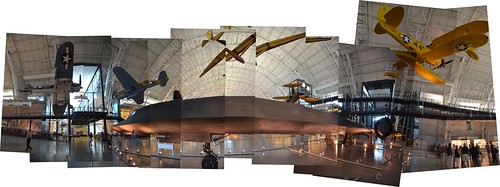
Image by Chris Devers
Posted by means of e-mail to ☛ HoloChromaCinePhotoRamaScope‽: cdevers.posterous.com/panoramas-of-the-sr-71-blackbird-at…. See the complete gallery on Posterous …


• • • • •


See more photos of this, and the Wikipedia post.


Specifics, quoting from Smithsonian National Air and Space Museum | Lockheed SR-71 Blackbird:


No reconnaissance aircraft in history has operated globally in more hostile airspace or with such full impunity than the SR-71, the world’s quickest jet-propelled aircraft. The Blackbird’s efficiency and operational achievements placed it at the pinnacle of aviation technologies developments during the Cold War.


This Blackbird accrued about two,800 hours of flight time throughout 24 years of active service with the U.S. Air Force. On its final flight, March 6, 1990, Lt. Col. Ed Yielding and Lt. Col. Joseph Vida set a speed record by flying from Los Angeles to Washington, D.C., in 1 hour, four minutes, and 20 seconds, averaging three,418 kilometers (two,124 miles) per hour. At the flight’s conclusion, they landed at Washington-Dulles International Airport and turned the airplane over to the Smithsonian.


Transferred from the United States Air Force.


Manufacturer:
Lockheed Aircraft Corporation


Designer:
Clarence L. &quotKelly&quot Johnson


Date:

1964


Nation of Origin:

United States of America


Dimensions:

Overall: 18ft five 15/16in. x 55ft 7in. x 107ft 5in., 169998.5lb. (five.638m x 16.942m x 32.741m, 77110.8kg)

Other: 18ft 5 15/16in. x 107ft 5in. x 55ft 7in. (five.638m x 32.741m x 16.942m)


Components:

Titanium


Physical Description:

Twin-engine, two-seat, supersonic strategic reconnaissance aircraft airframe constructed largley of titanium and its alloys vertical tail fins are constructed of a composite (laminated plastic-type material) to reduce radar cross-section Pratt and Whitney J58 (JT11D-20B) turbojet engines feature huge inlet shock cones.


Long Description:

No reconnaissance aircraft in history has operated in more hostile airspace or with such complete impunity than the SR-71 Blackbird. It is the quickest aircraft propelled by air-breathing engines. The Blackbird’s functionality and operational achievements placed it at the pinnacle of aviation technology developments during the Cold War. The airplane was conceived when tensions with communist Eastern Europe reached levels approaching a complete-blown crisis in the mid-1950s. U.S. military commanders desperately needed correct assessments of Soviet worldwide military deployments, especially close to the Iron Curtain. Lockheed Aircraft Corporation’s subsonic U-two (see NASM collection) reconnaissance aircraft was an able platform but the U. S. Air Force recognized that this comparatively slow aircraft was already vulnerable to Soviet interceptors. They also understood that the speedy development of surface-to-air missile systems could place U-2 pilots at grave threat. The danger proved reality when a U-2 was shot down by a surface to air missile more than the Soviet Union in 1960.


Lockheed’s very first proposal for a new high speed, higher altitude, reconnaissance aircraft, to be capable of avoiding interceptors and missiles, centered on a style propelled by liquid hydrogen. This proved to be impracticable simply because of considerable fuel consumption. Lockheed then reconfigured the design for traditional fuels. This was feasible and the Central Intelligence Agency (CIA), already flying the Lockheed U-two, issued a production contract for an aircraft designated the A-12. Lockheed’s clandestine ‘Skunk Works’ division (headed by the gifted design and style engineer Clarence L. &quotKelly&quot Johnson) created the A-12 to cruise at Mach 3.two and fly effectively above 18,288 m (60,000 feet). To meet these difficult specifications, Lockheed engineers overcame many daunting technical challenges. Flying a lot more than three times the speed of sound generates 316° C (600° F) temperatures on external aircraft surfaces, which are sufficient to melt standard aluminum airframes. The design team chose to make the jet’s external skin of titanium alloy to which shielded the internal aluminum airframe. Two standard, but very powerful, afterburning turbine engines propelled this exceptional aircraft. These power plants had to operate across a huge speed envelope in flight, from a takeoff speed of 334 kph (207 mph) to far more than three,540 kph (2,200 mph). To avoid supersonic shock waves from moving inside the engine intake causing flameouts, Johnson’s team had to design and style a complicated air intake and bypass system for the engines.


Skunk Functions engineers also optimized the A-12 cross-section design and style to exhibit a low radar profile. Lockheed hoped to attain this by very carefully shaping the airframe to reflect as small transmitted radar power (radio waves) as possible, and by application of special paint developed to absorb, rather than reflect, those waves. This therapy became one particular of the 1st applications of stealth technologies, but it never ever totally met the design and style objectives.


Test pilot Lou Schalk flew the single-seat A-12 on April 24, 1962, after he became airborne accidentally in the course of higher-speed taxi trials. The airplane showed great promise but it needed considerable technical refinement ahead of the CIA could fly the initial operational sortie on May 31, 1967 – a surveillance flight more than North Vietnam. A-12s, flown by CIA pilots, operated as portion of the Air Force’s 1129th Particular Activities Squadron under the &quotOxcart&quot system. Although Lockheed continued to refine the A-12, the U. S. Air Force ordered an interceptor version of the aircraft designated the YF-12A. The Skunk Functions, however, proposed a &quotspecific mission&quot version configured to conduct post-nuclear strike reconnaissance. This method evolved into the USAF’s familiar SR-71.


Lockheed built fifteen A-12s, such as a unique two-seat trainer version. Two A-12s have been modified to carry a unique reconnaissance drone, designated D-21. The modified A-12s have been redesignated M-21s. These have been created to take off with the D-21 drone, powered by a Marquart ramjet engine mounted on a pylon in between the rudders. The M-21 then hauled the drone aloft and launched it at speeds high sufficient to ignite the drone’s ramjet motor. Lockheed also built three YF-12As but this kind in no way went into production. Two of the YF-12As crashed during testing. Only a single survives and is on display at the USAF Museum in Dayton, Ohio. The aft section of one of the &quotwritten off&quot YF-12As which was later employed along with an SR-71A static test airframe to manufacture the sole SR-71C trainer. One particular SR-71 was lent to NASA and designated YF-12C. Which includes the SR-71C and two SR-71B pilot trainers, Lockheed constructed thirty-two Blackbirds. The first SR-71 flew on December 22, 1964. Because of intense operational expenses, military strategists decided that the more capable USAF SR-71s ought to replace the CIA’s A-12s. These have been retired in 1968 following only 1 year of operational missions, mainly more than southeast Asia. The Air Force’s 1st Strategic Reconnaissance Squadron (portion of the 9th Strategic Reconnaissance Wing) took over the missions, flying the SR-71 beginning in the spring of 1968.


Soon after the Air Force began to operate the SR-71, it acquired the official name Blackbird– for the specific black paint that covered the airplane. This paint was formulated to absorb radar signals, to radiate some of the tremendous airframe heat generated by air friction, and to camouflage the aircraft against the dark sky at high altitudes.


Experience gained from the A-12 plan convinced the Air Force that flying the SR-71 safely essential two crew members, a pilot and a Reconnaissance Systems Officer (RSO). The RSO operated with the wide array of monitoring and defensive systems installed on the airplane. This gear integrated a sophisticated Electronic Counter Measures (ECM) program that could jam most acquisition and targeting radar. In addition to an array of advanced, high-resolution cameras, the aircraft could also carry gear developed to record the strength, frequency, and wavelength of signals emitted by communications and sensor devices such as radar. The SR-71 was made to fly deep into hostile territory, avoiding interception with its tremendous speed and higher altitude. It could operate safely at a maximum speed of Mach three.three at an altitude a lot more than sixteen miles, or 25,908 m (85,000 ft), above the earth. The crew had to put on stress suits related to those worn by astronauts. These suits were essential to shield the crew in the event of sudden cabin pressure loss whilst at operating altitudes.


To climb and cruise at supersonic speeds, the Blackbird’s Pratt &amp Whitney J-58 engines were developed to operate continuously in afterburner. Whilst this would seem to dictate high fuel flows, the Blackbird really achieved its ideal &quotgas mileage,&quot in terms of air nautical miles per pound of fuel burned, during the Mach three+ cruise. A typical Blackbird reconnaissance flight may well call for several aerial refueling operations from an airborne tanker. Every time the SR-71 refueled, the crew had to descend to the tanker’s altitude, usually about 6,000 m to 9,000 m (20,000 to 30,000 ft), and slow the airplane to subsonic speeds. As velocity decreased, so did frictional heat. This cooling impact caused the aircraft’s skin panels to shrink significantly, and those covering the fuel tanks contracted so considerably that fuel leaked, forming a distinctive vapor trail as the tanker topped off the Blackbird. As quickly as the tanks had been filled, the jet’s crew disconnected from the tanker, relit the afterburners, and once more climbed to high altitude.


Air Force pilots flew the SR-71 from Kadena AB, Japan, throughout its operational career but other bases hosted Blackbird operations, also. The 9th SRW sometimes deployed from Beale AFB, California, to other areas to carryout operational missions. Cuban missions had been flown straight from Beale. The SR-71 did not start to operate in Europe until 1974, and then only temporarily. In 1982, when the U.S. Air Force primarily based two aircraft at Royal Air Force Base Mildenhall to fly monitoring mission in Eastern Europe.


When the SR-71 became operational, orbiting reconnaissance satellites had currently replaced manned aircraft to collect intelligence from web sites deep inside Soviet territory. Satellites could not cover each and every geopolitical hotspot so the Blackbird remained a crucial tool for global intelligence gathering. On numerous occasions, pilots and RSOs flying the SR-71 provided data that proved vital in formulating profitable U. S. foreign policy. Blackbird crews supplied crucial intelligence about the 1973 Yom Kippur War, the Israeli invasion of Lebanon and its aftermath, and pre- and post-strike imagery of the 1986 raid performed by American air forces on Libya. In 1987, Kadena-primarily based SR-71 crews flew a number of missions over the Persian Gulf, revealing Iranian Silkworm missile batteries that threatened industrial shipping and American escort vessels.


As the overall performance of space-primarily based surveillance systems grew, along with the effectiveness of ground-based air defense networks, the Air Force began to drop enthusiasm for the high-priced system and the 9th SRW ceased SR-71 operations in January 1990. Despite protests by military leaders, Congress revived the system in 1995. Continued wrangling over operating budgets, even so, soon led to final termination. The National Aeronautics and Space Administration retained two SR-71As and the one particular SR-71B for higher-speed analysis projects and flew these airplanes till 1999.


On March 6, 1990, the service profession of a single Lockheed SR-71A Blackbird ended with a record-setting flight. This particular airplane bore Air Force serial quantity 64-17972. Lt. Col. Ed Yeilding and his RSO, Lieutenant Colonel Joseph Vida, flew this aircraft from Los Angeles to Washington D.C. in 1 hour, 4 minutes, and 20 seconds, averaging a speed of 3,418 kph (two,124 mph). At the conclusion of the flight, ‘972 landed at Dulles International Airport and taxied into the custody of the Smithsonian’s National Air and Space Museum. At that time, Lt. Col. Vida had logged 1,392.7 hours of flight time in Blackbirds, much more than that of any other crewman.


This certain SR-71 was also flown by Tom Alison, a former National Air and Space Museum’s Chief of Collections Management. Flying with Detachment 1 at Kadena Air Force Base, Okinawa, Alison logged a lot more than a dozen ‘972 operational sorties. The aircraft spent twenty-four years in active Air Force service and accrued a total of two,801.1 hours of flight time.


Wingspan: 55’7&quot

Length: 107’5&quot

Height: 18’6&quot

Weight: 170,000 Lbs


Reference and Additional Reading:


Crickmore, Paul F. Lockheed SR-71: The Secret Missions Exposed. Oxford: Osprey Publishing, 1996.


Francillon, Rene J. Lockheed Aircraft Considering that 1913. Annapolis, Md.: Naval Institute Press, 1987.


Johnson, Clarence L. Kelly: More Than My Share of It All. Washington D.C.: Smithsonian Institution Press, 1985.


Miller, Jay. Lockheed Martin’s Skunk Operates. Leicester, U.K.: Midland Counties Publishing Ltd., 1995.


Lockheed SR-71 Blackbird curatorial file, Aeronautics Division, National Air and Space Museum.


DAD, 11-11-01


(Source from rapid prototyping from China blog)

Wednesday, July 29, 2015

Proto Labs Joins MySolidWorks Manufacturing Network, Connecting SOLIDWORKS ...

Proto Labs Joins MySolidWorks Manufacturing Network, Connecting SOLIDWORKS

Proto Labs is a major on the internet and technologies-enabled fast-turn manufacturer of custom components for prototyping and short-run production. Proto Labs gives “Real Components, Actually Fast” by utilizing injection molding, personal computer numerical handle (CNC …
Read far more on MarketWatch


Autodesk Reveals Spark and Ember Integration with Fusion 360 at SolidCon 2015

3dp_fusion360_autodesk_logo CAD and 3D printing computer software developer Autodesk was really clear when they announced their new Spark 3D printing platform and Ember 3D printer virtually a year ago, noting that the goal was to make 3D printing simpler and&nbsp…
Read more on 3DPrint.com


Keanu Reeves and the New KRGT-1 Motorcycle: An Excellent Adventure

IN ACTING CLASS it&#39s named space perform, a sort of pantomime to generate the illusion of handling an object that isn&#39t there, like smoking an invisible cigarette. Keanu Reeves resorts to space work when he describes his new motorcycle, putting his fists …
Read far more on Wall Street Journal


(Source from rapid prototyping from China blog)

Wednesday, July 1, 2015

Beckwood Press Firm Partners with Oak Ridge National Laboratory to Create Sophisticated Composite Materials & Manufacturing Processes


&#13

&#13


Engineer’s rendering of the Beckwood one hundred ton composite forming hydraulic press


&#13

&#13


Oak Ridge National Laboratory (ORNL), a planet leader in the research and development of sophisticated materials and economical green power solutions, has awarded Beckwood Press Company a contract to manufacture a custom hydraulic press for the compression molding of numerous composite components. The research and development efforts created on the press will ultimately contribute to automotive and aerospace market lightweighting efforts, intended to generate greater performance merchandise with improved fuel efficiency. Scheduled for completion in September 2015, the 100-ton custom press will feature a 36”x36” function region and integrated numerous zone heated platens for precision temperature control.


&#13


In addition to the custom hydraulic press, ORNL will set up a Triform Model 16-5BD Fluid Cell sheet hydroforming technique (also manufactured by Beckwood), which features 5000 PSI of maximum forming pressure and a 16” diameter forming region. The Triform 16-5BD enables for the formation of complex geometries with the use of a pressurized diaphragm, which can be programmed to apply a range of forming pressures to accommodate the different components getting formed. The inherent flexibility of the Triform method – which involves the capacity to dwell, or preserve pressure on the part for extended periods of time – along with the capability to use inexpensive tooling (including 3D printed tooling), will enhance ORNL’s capacity to conduct critical material and manufacturing-approach study, per their project objectives.


&#13


“It is our goal to make this lab the intersection of our 3D printing capabilities and composites processing,” mentioned Jesse Smith, Manager of Industrial Partnerships &amp Financial Development Science &amp Technologies Partnerships at Oak Ridge National Laboratory. “It is going to be a extremely impressive showplace for industry, and we are excited to have Beckwood on our group!”


&#13


The Beckwood machines will be used at ORNL by the Institute for Sophisticated Composites Manufacturing Innovation (IACMI). Led by the University of Tennessee and heaquartered in Knoxville, the IACMI’s primary purpose is to develop new low-cost, higher-speed, and effective manufacturing and recycling approach technologies that will promote widespread use of advanced fiber-reinforced polymer composites. By way of the new IACMI Institute, a world-class team of leading industrial makers – such as Beckwood, material suppliers, computer software developers, government and academia will concentrate on lowering the general manufacturing fees of advanced composites by 50 percent, reducing the power utilized to make composites by 75 percent, and escalating the ability to recycle composites by a lot more than 95 percent inside the subsequent decade. Beckwood is a proud supporter of the IACMI and all of its goals and initiatives, and through the contributions of these machines is operating diligently to attain “Resource Member” status.


&#13


“Beckwood is honored by every partnership we forge,” mentioned Beckwood’s President, Jeffrey Debus. “Manufacturing organizations rely on our 40 years of knowledge to give sophisticated manufacturing solutions that boost their capability, and competitiveness in the marketplace. But this certain Department of Energy chance, and the long-term influence their analysis &amp improvement efforts could have on the automotive and aerospace industries, is unique,” he continued. “The chance to contribute in this manner, and be a element of this critical, macro R&ampD work, is anything that offers our group of engineers and manufacturing pros wonderful pride.”


&#13


About Oak Ridge National Laboratory:


&#13


Oak Ridge National Laboratory (ORNL) is the largest US Department of Power science and power laboratory, conducting simple and applied analysis to provide transformative solutions to compelling issues in energy and safety. Headquartered in Knoxville, TN, ORNL’s diverse capabilities span a broad variety of scientific and engineering disciplines, enabling the Laboratory to explore basic science challenges and to carry out the investigation necessary to accelerate the delivery of solutions to the marketplace.


&#13


About Beckwood Press Firm:


&#13


The Beckwood Press Organization is a top hydraulic press manufacturer, positioned in St. Louis, MO USA. They supply top quality, custom hydraulic presses for virtually each and every business &amp application, like a line of temperature controlled presses for compression molding, composite forming and high-temperature Hot Forming / SPF applications. Beckwood also manufactures the Triform line of Sheet Hydroforming Presses in each Fluid Cell and Deep Draw configurations, hydraulic ring expanders / sizers, hot joggle presses, as effectively as a line of stretch forming machines for each extrusion, sheet / major edge applications. Get the latest news from Beckwood at http://www.beckwoodpress.com/news.


&#13

&#13

&#13

&#13

&#13


(Source from rapid prototyping from China blog)

Tuesday, June 23, 2015

Valmie Sources Inc (OTCBB:VMRI) To Explore Drone Manufacturing In China

Valmie Sources Inc (OTCBB:VMRI) To Discover Drone Manufacturing In China

… design optimization, packaging and shipping, custom engineering, testing, and injection molding, and mass assembly, fast prototyping capabilities, spin welding and 5-axis CNC trimming. China is transforming into a pioneer leader in UAV manufacturing.
Read more on StocksnTrade (registration) (weblog)


(Source from rapid prototyping from China blog)

Tuesday, June 16, 2015

Valmie Sources Inc (OTCBB:VMRI) Exploring UAV Manufacturing ...

Valmie Sources Inc (OTCBB:VMRI) Exploring UAV Manufacturing

Valmie Resources Inc (OTCBB:VMRI), which develops computer software for advanced unmanned aerial automobile (UAV), shed points right after it shared its China dreams. The firm released a press note final week … The firm&#39s President and CEO, Gerald B. Hammack stated …
Read much more on Journal Transcript


Saab signs A320 PTF partnership with PacAvi

The aerostructures division of Saab has signed a deal with PacAvi to manufacture the major deck cargo door for the US-primarily based engineering and conversion specialist&#39s A320 and A321 passenger-to-freighter (PTF) aircraft conversion programme. Saab said it&nbsp…
Study more on MRO Network


Defence groups in below-the-radar race to replace cold war relic

If it fails, Northrop looks likely to recede from the ranks of companies that can deal with the final assembly and integration of a huge, complex military aircraft. The business at the moment assembles only a handful of aircraft every year, such as …
Read a lot more on Financial Times


(Source from rapid prototyping from China blog)

Friday, June 5, 2015

19 Year Old Luminary Utilizes 3D Printing & CAD-CAM Manufacturing Technologies To Improve Every Day Lives

Clearwater, Florida (PRWEB) June 04, 2015


It’s not extremely common to hear about a 19 year old that operates for NASA and is steadfastly functioning on a resolution that will improve the lives of many at a really human level. That’s right, meet Easton LaChappelle. Easton is that 19 year old visionary and innovator that sees the differences between Science and Engineering and is bringing them together. He is moving them forward into Manufacturing to generate “first of a kind” artificial limbs, enhancing the actual human planet of life improvement.&#13

The average price of amputation in the United States is 4.9 per every 1000 men and women. While 52% of individuals with limb loss becoming below the age of 65, a lot of these individuals are using prosthetics to retain a good quality of life and re-enter the workforce. The use of prosthetics makes it possible for people with the loss of a limb to execute the regular functions of everyday living. A huge percentage of men and women with limb loss (70% to 90%) are capable to return to perform and function in their residence atmosphere. Since prosthetics permit an person to carry out activities for themselves and have much more handle over their lives, it assists folks deal with the psychological trauma of limb loss. However, artificial limbs expense much more funds than the typical particular person can afford even with insurance benefits. So how does a nation and its population make these devices accessible to those that require them? It’s achievable Easton LaChappelle may when once more have an answer.


&#13


Easton continues to refine his function and began operating with 3D printing. He realized that his project could truly be implemented virtually via 3D printing. Becoming restricted by spending budget he worked on designing his subsequent hand model at 14 in a CAD design technique and turning to a mentor of his that worked for Makerbot to aid him with the 3D printing. He sent him the models and they in turn 3D printed them for him. Now he started operating with metals and refining the project. The 1st leg of his reveal were science fairs that he could attend. “During that time I went for making the entire arm and getting into greater control systems etc,” says Easton. During one of the science fairs, Easton met a 7 year old girl using a limb that price $ 80,000. All of a sudden factors took on an totally various meaning. He realized that because she was only 7 years old she would need to have a series of new prosthetics as she grew up. It was clear that this would amount to hundreds of thousands of dollars by means of the years to come. That struck him as far as well much. “This was the very first genuine moment I realized that what I was carrying out could change peoples lives,” says Easton. “Suddenly there was some true motivation and the purpose became to figure out how to make a much more affordable version of this centered around the user,” he adds. At that point he started talking to as many prosthetic customers as he could uncover to really discover as significantly as he could. He began seeing that the devises have been truly not centered about the user. Rather they have been constructed about a dilemma as opposed to a users needs. While standard prosthetic hands focused on open and close he needed to make the hand move like his did. He identified this eye opening and began hunting into how amputees have been utilizing prosthetics in sports and obtaining valuable feedback from speaking to them that he just couldn’t get on the internet. Now he started finding a way to create a prosthetic arm that was lighter than a human arm and that would move as a true arm might.


&#13


As factors continued to create Easton received a get in touch with from American life coach, self-help author and International motivational speaker Tony Robbins who inspires and assists thousands of people with various life problems. Mr. Robbins has devoted a lot of his time and energy to helping victims with the psychological elements of having seasoned a extreme accident. Apparently, Robbins was listening and watching what Easton was undertaking. Robbins had not too long ago helped a young lady deal with the loss of her youngsters and baby soon after a film theater shooting in Colorado, who became paralyzed as a result. The aim was to assist her with the physical aspects of her injury. Following Easton graduated high college he and two other individuals, Aaron Blue and Tim Schnieder formed their firm referred to as Unlimited Tomorrow with the assist of Tony Robbins to pursue the Exoskeleton and other items. After once more, Easton saw that equivalent exoskeleton kind products on the market cost $ 100K or much more and only had a battery life of about 3 hours. And once again, the devises did not center about the user, rather the function alternatively. They merely didn’t give the user a lot of practical life kind functionality. “It also goes back to the psychology as well where you have to have anything that is organic looking that represents human life and encounter effectively,” adds Easton. As a outcome Easton began experimenting with silicone components that would go over the hands to make them look much more human-like or anything that could be made to look like the persons other hand.


&#13


“The factor with exoskeletons is that they are large and bulky which tends to make the individual sort of the center of interest. The only other alternative is a wheelchair which is also a center of interest kind circumstance and we just want to get away from that,” says Easton. “It’s amazing piece of technology but I feel it can be far better,” he adds. Generally you have this structure that goes around your physique that also involves a large backpack. So Easton is prototyping a structure that is little sufficient to truly fit underneath a person’s cloths. The initial question for Easton was how to fit far more batteries into it but realized the very first question was how to do more with significantly less energy. That was a enormous query. How to do much more with significantly less energy became the focus. Because February 2015 they have worked on the efficiency issues, developing and prototyping and patenting the outcomes.


&#13


In the course of the starting of Unlimited Tomorrow and attempting to turn the suggestions they had into reality they got involved in the manufacturing side of point and started functioning with CNC machines. In adding to the reasonably priced 3D printing they were already making use of, they necessary to expand the manufacturing method to make a final solution. This brought Easton to the planet of CNC machining and programming. With no prior understanding of CNC or CAD-CAM software, Easton started studying about the approach of programming toolpaths and machining. They utilised CNC machines to create molds for components out of composites and diverse metals. “It’s 1 point to have this effective equipment, but how do you actually control it and turn a drawing into an actual part?” is what Easton asked himself. &#13

This is exactly where Easton located BobCAD-CAM. “This is where the BobCAD system comes into the approach,” says Easton. “Because we do a lot of quite precise and precise machined components employing the 4th axis capabilities, we needed a person who was certainly an sector leader that was also utilized in the medical and aerospace industries is how we found BobCAD-CAM,” he adds. He continues, “we required a company that had the corporate structure to continue improvement and who would function with us and give us with the specialty kind machining factors we need.” “We’re all about efficiency. Becoming that we can sit down and design and style one thing and have it becoming produced an hour later, we are all for that.” he continues. CNC is an essential aspect of the overall creation of 4th axis parts as nicely as components out of aluminums in order to reduce weight. This gives them the rigidity they need to have as nicely as hold the accuracy and tolerances they have to keep.


&#13


They do a lot of in-home production, vacuum infusion to make the needed panels. They machine the panels as there are unique hole patterns for distinct brackets and far more. They use a Tormach 1100 CNC machine with a 4th axis to make the precision elements they need. “It was simple to get started,” says Easton. “The CNC was fascinating for me to choose up,” he adds. “We use SOLIDWORKS for our modeling and then go straight into BobCAM for SOLIDWORKS with STL files we create to get correct toolpaths and the g-code we want,” says Easton, referring to the method. They have decided to make their newest 3D Printed arm open supply. Even as Easton refines his designs, he’s employing new and more effective tools such as the HP Sprout to post his styles on the internet for any person to refine, repurpose, and use. He’s not just creating one particular issue, he’s giving everybody the potential to be their own engineer, to take what was as soon as an involved, arcane method and make it one particular anyone can do. As tools such as the HP Sprout continue to proliferate, creating 3D modeling and object scanning as basic as placing the object beneath a camera, he continues to redefine the globe.


&#13


Limitless Tomorrow believes the combination of present technologies with open ended curriculum is a potent combination to create creativity in today’s classrooms. Actually focusing on STEM Science, Technology, Engineering &amp Math. It’s much more than just robotics and engineering. This is taking sensible 3D printing even additional into education space and modify the face of customer 3D printing. “Students can understand about all of this at a much younger age than ever just before and have genuine practical information,” says Easton. “The open supply aspect of this is generating teams of online developers, engineers and makers out there which is actually incredible,” he adds. “If you do great items in the world, company will come and the men and women will be there,” he says when asked about the business side of his projects. “If you just go after everyone for a dollar at the end of the day then what do you have….just a lot of money and that’s about it,” he continues. This coming right after he announced not too long ago at the CES (Customer Electric Show) in Las Vegas that their new robotic arm analysis and technologies will be open source, releasing every thing on-line February 7, 2015.


&#13


BobCAD-CAM has supplied CAD/CAM CNC Application merchandise to the worldwide manufacturing market for over 25 years. BobCAD-CAM application can be discovered to increase CNC productivity for a lot of applications including educational and independent hobby residence use. BobCAD-CAM also supplies a range of top quality coaching and technical help solutions to their clients. For more information on BobCAD-CAM application get in touch with 877-262-2231 or 727-442-3554. For a cost-free trial CAD-CAM technique pay a visit to http://www.bobcad.com . To read the complete story on Easton LaChappelle &amp Limitless Tomorrow visit http:// [Limitless Tomorrow Story.


&#13

&#13

&#13

&#13

&#13


(Source from rapid prototyping from China blog)

Tuesday, May 26, 2015

Gearbox desires to be at heart of reawakening of Kenyan manufacturing

Gearbox wants to be at heart of reawakening of Kenyan manufacturing

Five prototype cars have been ultimately created, named Pioneer Nyayo Cars, attaining a speed of 120km/h. But, due to a lack of funds, the auto never entered production. Reminders of the bold … His vision for Gearbox is for it to work alongside …
Study much more on Disrupt Africa


S-97 Raider Flies | Heaviest Heavy Lift Copter Ever Upgraded, Made Once again

Sikorsky&#39s S-97 Raider helicopter prototype has produced its maiden flight, with this likely to be a welcome distraction from the firm&#39s present ailing enterprise scenario. The coaxial helicopter&#39s core X2 technologies will be at the heart of the Sikorsky …
Read more on Defense Business Day-to-day


András Göllner: RCA Viktor–His Master&#39s Voice in Canada (Overture)

RCA Viktor is as considerably of a prototype of the post-liberal-democratic predatory state as RCA Victor was a prototype in the world of sound engineering close to a century ago. There are, to be certain, other regimes that are equivalent to Orbán&#39s, but his is the …
Read far more on Hungarian Free of charge Press


INJECTION MOLDING AT NPE: Presses, Robots &amp Cell Automation

In addition, its HST Series of servo-hydraulic toggle presses, very first seen in prototype kind at NPE 2012, have since created into a total line from 80 to 650 tons. Functions incorporate an adjustable moving-platen help to decrease tiebar loading …
Read a lot more on Plastics Technologies


(Source from rapid prototyping from China blog)

Sunday, April 19, 2015

Lady-Owned Nu-Set Lock Manufacturing Business Now in Supplier Diversity Council

El Monte, CA (PRWEB) April 15, 2015


Nu-Set Lock Manufacturing Company, headquartered in El Monte, CA, is pleased to announce their new membership in SCMSDC (Southern California Minority Supplier Diversity Council). “It’s unusual for a significant manufacturing company to be women-owned, particularly in the traditionally male-dominated industries of hardware and security products in China and in the U.S., ” stated Caron Ng, Vice President. “But we are fortunate that in the US, being a minority also positive aspects our organization.” Nu-Set lately was accepted as a member in SCMSDC, which demands a comprehensive vetting method to insure authenticity. Organizations who are certified as WBE (Females Enterprise Enterprise) or MBE (Minority Organization Enterprise) receive certain benefits in the bidding procedure with key corporations or government agencies in performing business where supplier diversity matters.


&#13


“These double certifications will give Nu-Set access to do company with massive corporations and key industries. These incorporate housing, construction, medical, real estate, and other people exactly where higher good quality safety and safety goods are paramount,” said Ms.Ng.


&#13


Nu-Set’s ability to offer customized lock options to these industries has positioned it as a leader in manufacturing. Key distributors have embraced some of Nu-Set’s most current items, such as a push button lock box for the emergency access solutions and EMS solutions,the commercially used heavy-duty padlocks that have captivated the trucking industries, the distinctive weatherproof jacket and double-locking shackle design, and the electric cord series which are extensively sold at the House Depot, to name just a handful of.


&#13


You can recognize genuine Nu-Set items by their Lady-Owned logo, which is incorporated in their packaging. To understand far more about woman-owned items, check out http://www.womenownedlogo.com/their-stories/2015/two/three/nu-set-lock


&#13


About: Nu-Set is a lock company with a principal manufacturing facility in China as effectively as assembly and distribution warehouses in El Monte, CA and Oklahoma City, OK. As a maker of lock boxes, padlocks, door locks, crucial locks, and something connected to home safety, Nu-Set has grown to incorporate industrial grade plastics moldings, metal moldings, and other customized, precision merchandise. Supported by its personal group of engineers, Nu-Set provides customized options to match all clients’ requirements. As a “custom-produced hardware shop,” Nu-Set provides unique packages to wholesalers, retailers, and person users, and can tailor to specialist industries and on the internet markets.


&#13


###


&#13

&#13

&#13

&#13

&#13


(Source from rapid prototyping from China blog)

Thursday, April 9, 2015

Students Learn About CNC Machining Technology and Modern day Manufacturing Profession Opportunities at Okuma America Corporation


Charlotte, NC (PRWEB) March 25, 2015


Okuma America Corporation, a planet-leader in CNC machine tool manufacturing, hosted higher college students from the Floyd D. Johnson Technologies Center, York Complete High College, York, South Carolina on Friday, March 13 in Charlotte, North Carolina. This exclusive event gave students the chance to find out much more about CNC machining technologies and career possibilities in the machine tool industry.


&#13


The pre-engineering students toured Okuma Headquarters, the Aerospace Center of Excellence and the Partners in THINC technologies center. Okuma America President &amp COO Jim King, and Okuma sales and technical specialists educated students about career possibilities as engineers, machine tool operators, programmers and service experts. The students viewed reside cutting demonstrations on state-of-the-art machine tools in addition to trying their hand at the manual art of hand scraping.


&#13


“Community outreach is critical to Okuma. We’re pleased to be able to showcase our facilities and technologies and introduce students to the wide selection of career possibilities accessible in the manufacturing market. Hopefully their time spent right here ignites a passion for the machine tool business,” mentioned Jim King, President &amp COO.


&#13


Okuma is hosting many student-focused, educational events during the upcoming year which includes a unique occasion in October to celebrate Manufacturing Day. For much more info on Okuma America Corporation and Partners in THINC pay a visit to http://www.okuma.com/.


&#13


About Okuma America Corporation&#13

Okuma America Corporation is the U.S.-based sales and service affiliate of Okuma Corporation, a planet leader in CNC (personal computer numeric manage) machine tools, founded in 1898 in Nagoya, Japan. The organization is the industry’s only single-supply provider, with the CNC machine, drive, motors, encoders, spindle and CNC control all manufactured by Okuma. Okuma’s innovative and reliable technology, paired with complete, localized service protection, permits users to run continuously with self-assurance – maximizing profitability. Along with its industry-top distribution network (biggest in the Americas), and Partners in THINC, Okuma facilitates quality, productivity and efficiency, empowering the customer and enabling competitive advantage in today’s demanding manufacturing environment. For far more information, go to http://www.okuma.com/ or stick to us on Facebook or Twitter @OkumaAmerica.


&#13


About Partners in THINC&#13

Partners in THINC is a collaboration network of far more than 40 business leaders who come together to solve problems and explore new productivity ideas for real-globe manufacturers. With the open architecture, Computer-based THINC®-OSP handle as its nucleus, Partners in THINC brings specialized equipment, expertise and a commitment to give the ideal possible integrated options to the finish-user. For far more details, pay a visit to http://www.okuma.com/partners-in-thinc.


&#13


###


&#13

&#13

&#13

&#13

&#13


Associated Cnc Engineering Press Releases


(Source from rapid prototyping from China blog)

Sunday, March 1, 2015

OEM Server Appliance Manufacturing and Logistics for EMEA Now Obtainable through AMAX Ireland Facility


FREMONT,CA (PRWEB) February 23, 2015


AMAX, a major solutions provider of application-tailored Data Center/Cloud and custom Server Appliance solutions, these days announced its factory readiness for manufacturing and distributing custom-branded OEM server options for ISVs and enterprises all through EMEA.


&#13


Headquartered in Silicon Valley, AMAX is recognized for building total turnkey server options primarily based on the highest requirements of high quality, regardless of whether standalone server appliances integrated and optimized with computer software, or multi-rack cluster infrastructures. AMAX has set up its Shannon, Ireland facility to mirror its state-of-the-art OEM manufacturing in Silicon Valley, and will offer you the identical comprehensive menu of OEM services such as:&#13


&#13

NPI Services (Platform design and style, Prototype Improvement, HALT &amp DVT Testing)&#13

Custom Branding&#13

Computer software Integration/Validation&#13

Provide Chain Management &#13

Item Management (Element Life Cycle Management &amp Revision Control)&#13

Full Volume Manufacturing &#13

Rack Integration&#13

Global Logistics &amp Inventory Management&#13

Worldwide Certification/Regulatory Services&#13

Worldwide Onsite Help

With AMAX’s custom server solutions and services, European computer software companies can increase ROI by selling a full integrated item, while making certain positive buyer experience and adoption via validated options that eliminate any compatibility or functionality concerns at the end user website. In addition, in conjunction with places in Silicon Valley and China, the Ireland facility expands AMAX’s global footprint by way of North America, APAC and EMEA, permitting US and international businesses with international clients to rapidly manufacture and deploy their items all through the world while also efficiently handling RMAs.


&#13


AMAX goods are manufactured to the highest ISO 9001, ISO 14001 and ISO 13485 requirements. ISO 9001 good quality management is the highest quality standard in manufacturing, which AMAX has incorporated to produce lean and cellular manufacturing tactics in order to enhance productivity. ISO 14001 Environmental Management Program (EMS) regular certification aims to continually increase environmental functionality. Lately, AMAX was awarded the really-selective ISO: 13485: 2003 certification. It is certain to the designing and manufacturing of health-related devices, and is extensively identified within the manufacturing market as the most rigorously stringent certification representing the highest standard of high quality a organization can attain.


&#13


“A key driver behind why we expanded into EMEA was to fill the demand for a quality-oriented server manufacturer who could give the custom-tailored platforms and solutions that businesses require to enhance income from their application products,” stated Jean Shih, President, AMAX. “AMAX is the business that major enterprises trust to manufacture the hardware behind their brand. With the extension of our Ireland facility, our consumers now have maximum flexibility and efficiency in how they provide and assistance their solution to their worldwide client base.”


&#13


To understand far more about AMAX’s OEM services, please check out http://www.amax.com/oem/.


&#13


If you want to know how an integrated software program + hardware appliance model can drive computer software income and buyer adoption, please study our weblog post, “Why Do ISVs Want Appliances?


&#13


About AMAX


&#13


AMAX is a trusted leader in Information Center, HPC and OEM Options in North America and has been recognized for numerous market awards including most lately, the 2014 Very best of VMWorld and Intel Server Innovation Award for its CloudMax™ Converged Cloud Infrastructure resolution. Founded in 1979 and headquartered in Silicon Valley with added locations in China and Ireland to offer you worldwide manufacturing and logistics, AMAX is a full service open-architecture manufacturer specializing in revolutionary server-to-rack level solutions developed for Datacenter, HPC, Cloud and Massive Data applications. AMAX’s extensive menu of services contains very best-in-class engineering &amp architectural design and style, ISO-certified manufacturing, customizable test automation, provide chain management, as well as international logistics, certification &amp technical help. As an Official OCP Solutions Provider, AMAX can create its solutions making use of both normal and OCP architecture. To discover a lot more, please pay a visit to http://www.amax.com/


&#13

&#13

&#13

&#13

&#13


Much more Prototype Manufacturers In China Press Releases


(Source from rapid prototyping from China blog)

Wednesday, February 11, 2015

Engineering 165/265: Sophisticated Manufacturing Alternatives. Lec three. Mechanical Machining II (Spring 2014)


UCI Engineering 165/265 Mechanical and Aerospace Engineering (Spring 2014) Lec 03. Mechanical and Aerospace Engineering: Advanced Manufacturing Options — Me…


(Source from rapid prototyping from China blog)

prototype manufacturing in China


Recommend prototype manufacturing in China. Jevny technology co.,Ltd is a prototype factory located in Shenzhen China,
Video Rating: 0 / 5


(Source from rapid prototyping from China blog)

Thursday, January 22, 2015

Bay Area hardware startups get gateway to China&#39s manufacturing universe in ...

Bay Area hardware startups get gateway to China&#39s manufacturing universe in

Rather than living on airplanes or moving part-time to China, Bay Location entrepreneurs developing customer electronics devices right now have the luxury of developing manufacturing prototypes with teams of designers and engineers who work straight with …
Read a lot more on San Francisco Company Occasions (weblog)


(Source from rapid prototyping from China blog)

Monday, January 12, 2015

Advance 3D Printing and Custom Injection Molding for Prototyping and Manufacturing


Shenzhen, China (PRWEB) January 07, 2015


HLH Prototypes is one of the leading providers of 3D printing manufacturing combined with rapid custom injection molding in China. This allows you to quickly realize a prototype and then rapidly move to rapid injection molding. HLH Prototypes prides itself on convenient and affordable prototyping services. They are able to manufacture low-to-mid-volume prototype and production of plastic and metal components. HLH Prototypes completes projects with high precision and accuracy with customer satisfaction.


“In their state-of-the art facility, HLH Prototypes is one of the leading 3D printing manufacturers in China,” says Susie Su. The company has a team of CAD engineers and tooling engineers to assist clients with all their CAD requirements. Their highly experienced engineers produce drawings in a massive range of programs for a variety of applications. Clients are given 3D prototypes and models for them to test and evaluate throughout the design and development process.


The team at HLH Prototypes is full of skilled engineers who provide quality of service to their clients. They are considered the first choice of 3D printing and bespoke manufacturers in China for prototyping and production. The company has invested heavily in technology while keeping their services to be cost competitive.


“HLH Prototypes offers custom injection molding in China from their UKAS ISO certified facilities,” said Susie. Their engineers are able to work on plastic injection molds to fit any program requirement regardless of product size and complexity. HLH Prototypes is able to shave weeks off lead times to ensure clients get high quality products on time and every time.


HLH Prototypes help clients’ increase their ROI on the development phase of a product for manufacturing. Their quick and reliable services come from advanced technologies that are utilized by an experienced team. HLH Prototypes has the lowest price from any rapid tooling manufacturers in China that uses custom injection molding in China.


About The Company:


HLH Prototyping offers the best prototyping service with high quality CNC machining, 3D printing, and custom injection molding services in China. They will be attending many events in 2015 to feature the advancement in their services. In March 2015 they will attend the TCT Show + Personalized which is the leading event dedicated to 3D printing, additive manufacturing and product development. HLH Prototypes has the lowest price of any 3D printing manufacturers in China that uses custom Injection Molding. When it comes to rapid prototyping in China, they are right ahead.


Contact Information:


Office: 1801 Xing Ji Building, Xin Sha Road, Shajing, Baoan, Shenzhen, China, 518125


Factory: 2nd floor, Building 6, Hua Fa Industrial Park, Fu Yuan 1st Road, Fuyong, Baoan, Shenzhen, China


Tel: +86-755-82569129 (ext 817 for English)


Fax: +86-755-82569136


info(at)hlhprototypes(dot)com, Fax No (0)1753684199, Accounts (0)1753689910. Ext-103


(Source from rapid prototyping from China blog)

Monday, January 5, 2015

Rapid Prototyping Services - Low Danger Manufacturing


MERI China is a U.S.-based fast prototyping services firm that helps simplify the solution manufacturing method. From initial investigation, improvement and prot…
Video Rating: 5 / five


Courtesy of Gerry! NO COPYRIGHT INTENDED, ALL RIGHTS RESERVED TO S.M.E. ORGANISATION AND ALL INVOLVED IN ITS Making. UPLOADED FOR EDUCATIONAL PURPOSES ONLY. …
Video Rating: five / five


(Source from rapid prototyping from China blog)

Tuesday, December 2, 2014

China"s prototyping, manufacturing and deployment ecosystem - Strong 2014


Huaqiangbei, or HBQ, is renowned for its electronics markets, serving Shenzhen’s prototyping, manufacturing and deployment ecosystem. The region is reported as…
Video Rating: 5 / five


(Source from rapid prototyping in China blog)