Showing posts with label images. Show all posts

Monday, October 26, 2015

Cool Sheet Metal China images

Some cool sheet metal china pictures:


Image from web page 100 of “An American engineer in China” (1900)

Image by World wide web Archive Book Photos
Identifier: cu31924023226081
Title: An American engineer in China
Year: 1900 (1900s)
Authors: Parsons, William Barclay, 1859-1932
Subjects: Parsons, William Barclay, 1859-1932 Railroads
Publisher: New York, McClure, Phillips &amp co.
Contributing Library: Cornell University Library
Digitizing Sponsor: MSN


View Book Page: Book Viewer
About This Book: Catalog Entry
View All Pictures: All Photos From Book


Click here to view book on the web to see this illustration in context in a browseable online version of this book.


Text Appearing Ahead of Image:
set, I donot know, but the last we saw of that man he washugging his rind like a ti-easure. Before we hadseen the last of his horse, nonetheless, we felt that ifthe pumaloe rind had constituted the complete ofthe acquire-cost we still need to have been thelosers. It is surprising how closely the men and women in onesection of the country pattern after those else-where, when one particular remembers the lack, almostabsolute lack, of intercommunication. But inspite of the basic sameness, which perhapsappears higher than it is on account of the uni-formity in physiognomy of the men and women, with theMongolian coloring and jet-black hair, there weremany pecuHar customs which appeared to belocalized, as numerous of them were found only in Chapter III: Hu-nan, the Closed Province 95 tiny districts, and travelled Chinese who accom-panied me, stated that they had in no way prior to seensimilar things elsewhere in the empire. Of thesethe most singular was the carrying of tiny bam-boo baskets lined with sheet metal and filled with


Text Appearing Soon after Image:
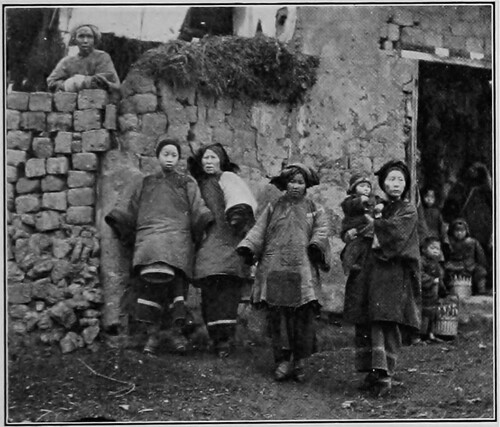
A Peculiar Custom by Chinese Women of Wearing Heat-ing-Baskets hot wood-ashes. Such baskets the girls in onelocality suspend from a belt beneath their shortblouses. Occasionally the baskets are worn infront, often behind, and occasionally in bothplaces, according, apparently, to the fancy of thewearer. Youngsters also produced use of the heating 96 An American Engineer in China apparatus, but men only seldom. No matter howworn, the effect in all situations was both extraordi-nary and comical. To get a photograph of Chi-nese ladies is almost as hard as to photographa herd of wild deer. Girls are supposed tokeep away from any man, and of course a foreignman is specially terrible. The picture of thewomen and their baskets was obtained by cau-tious stalking behind some Chinese, even though theirattention was attracted by 1 of the members ofmy employees. The immediate after the shutter droppedthe group had scattered. In farming strategies the Chinaman in the inte-rior is, of course, centuries behind. His gra


Note About Images
Please note that these images are extracted from scanned page photos that may possibly have been digitally enhanced for readability – coloration and look of these illustrations may not completely resemble the original work.


Image from web page 142 of “The art of lead burning a practical treatise explaining the apparatus and processes” (1905)

Image by Internet Archive Book Images
Identifier: artofleadburning00fayc
Title: The art of lead burning a practical treatise explaining the apparatus and processes
Year: 1905 (1900s)
Authors: Fay, C. H
Subjects: Lead burning
Publisher: New York, D. Williams company
Contributing Library: The Library of Congress
Digitizing Sponsor: The Library of Congress


View Book Page: Book Viewer
About This Book: Catalog Entry
View All Pictures: All Photos From Book


Click right here to view book on the internet to see this illustration in context in a browseable on-line version of this book.


Text Appearing Ahead of Image:
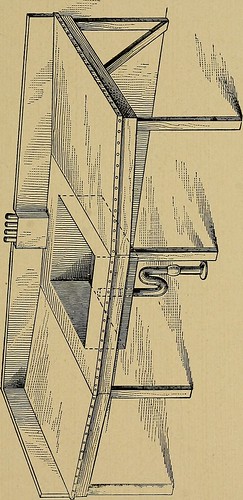
d just as forlead. Britannia metal is fast becoming the favoritelining for splash and drip boards on butlers pan-attempt sinks, as also for lining the function benches insaloons. It is soft enough to enable the most deli-cate china to be laid on it with no danger of chip-ping, and is also quite straightforward to preserve clean. It takesa high polish and constantly looks well. The methodof cutting the metal for a butlers pantry sink isshown in Fig. 51, the dotted lines showing theactual dimensions of the write-up to be covered,although the complete lines show the laps required tocover the edges of the board. This metal isharder than lead, and will not dress smooth withthe dresser. Any uneven spots have to be presseddown with a hot flatiron. The approach of turn-ing the edges is shown at a. The bending iron isheated and rubbed over the edge, progressively turn- THE ART OF LEAD BURNING. 139 ing the edges till they are at their suitable posi-tion. The iron must be constantly heated to in-positive the ideal final results, and if appropriately carried out no


Text Appearing Soon after Image:
cq CQ 1 140 THE ART OF LEAD BURNING. wrinkles will seem. A lined perform bench isalso shown in Fig, 52, which shows the methodof placing in the bar washer. The sheet metalmust be cut and fitted to its place and all theseams feasible ought to be soldered before placingthe metal in position. The edges must be tackedon the beneath side of the function, when practicable,with copper tacks. Sooner or later the blow pipe solderer will becalled upon to make repairs on Britannia metal,and will be shocked to discover that it will be impos-sible to solder the metal, owing to the excess ofmoisture beneath it. The greatest way to overcomethis, which is practically the only difficulty thatoccurs, is to reduce out a little square patch. Theedge can be cleaned and a patch of new metalcarefully fitted into the hole. When prepared to be-gin soldering, a piece of blotting paper ought to beinserted amongst the patch and board. Thispaper will absorb all the moisture and let theseam to be neatly soldered. The man who makeshimself


Note About Images
Please note that these images are extracted from scanned web page pictures that might have been digitally enhanced for readability – coloration and appearance of these illustrations could not perfectly resemble the original work.


Image from web page 620 of “Mechanical Contracting & Plumbing January-December 1912” (1912)

Image by Net Archive Book Images
Identifier: mechcontract1912toro
Title: Mechanical Contracting &amp Plumbing January-December 1912
Year: 1912 (1910s)
Authors:
Subjects: Air conditioning Refrigeration and refrigerating machinery Heating Plumbing
Publisher: Toronto : Maclean-Hunter Pub. Co.
Contributing Library: Fisher – University of Toronto
Digitizing Sponsor: University of Toronto


View Book Page: Book Viewer
About This Book: Catalog Entry
View All Photos: All Pictures From Book


Click right here to view book on-line to see this illustration in context in a browseable on-line version of this book.


Text Appearing Just before Image:
-■•mum We Can FurnishYour Requirements in All PLUMBING GOODS We handle a total line of Enameled Baths Enameled LavatoriesSinks and Laundry Tubs


Text Appearing Soon after Image:
Write us about ourVictorian China Lavatories. The James Morrison Brass Mfg.Company, Ltd. Producers and dealers in a completeline of Plumbing and Heating Supplies 93-97 Adelaide Street West TORONTO 19 Complete Course in Sheet Metal Work In prob. 23, plate 21, fig. 1 representsa pail, of which A-B is a boss, or rein-forcement on the deal with. The pattern is just a circle havingthe identical curve as the deal with, and iscut out to shape shown by fig. two, thenformed to shape by fig. three, and solderedto deal with. In prob. 24, fig. 1, is a strainer pail,the brest B is developed the exact same as thebrest on the watering pail, prob. 18,plate 20. To develop the spout A, continue theline C- any distance, and parallel to By L. W. KOSER this carry a line from the point V, asV-7. Draw a cross section of the spout fig.2, then divide it into equal spaces andcarry lines from exact same till they cut thelines O-V and C-V. Lay out a stretchout at correct anglesto C-O, as fig. three, and carry lines fromthe distinct points o


Note About Photos
Please note that these photos are extracted from scanned web page photos that could have been digitally enhanced for readability – coloration and look of these illustrations may not perfectly resemble the original operate.


(Source from rapid prototyping from China blog)

Sunday, October 4, 2015

Nice Machining Engineering images

A few good machining engineering photos I discovered:


:)*

Image by The hills are alive*
If you’ve got the time go genuinely large. It is worth it.


Electronic sound effects you can make with the Science Fair


electronic bird

electronic cat

electronic bird with CdS

2 way electronic bird

chicken peeping

knocking noise

woodpecker sound

light controlled electronic harp

T-transistor toy organ

wireless electronic organ

light-music maker,

electronic metronome

electronic motorcycle noise

machine gun sound generator

sound effects generator

sleep inducer


Drilling for Terrestrial Heat

Image by Kecko

This mobile gear can drill to a maximum depth of 300 m. Now they go down to 165 meters. Lutzenberg, Switzerland, Oct 1, 2008.


Adjustable Reamer in Hand Chuck

Image by tudedude


(Source from rapid prototyping from China blog)

Tuesday, September 29, 2015

Nice China Prototype Manufacturing images

A few nice china prototype manufacturing images I found:


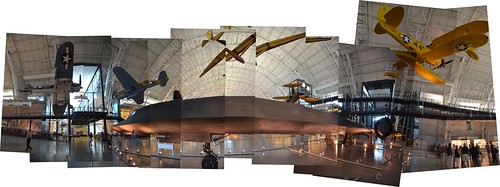
Steven F. Udvar-Hazy Center: Photomontage of SR-71 on the port side

Image by Chris Devers
Posted by means of e-mail to ☛ HoloChromaCinePhotoRamaScope‽: cdevers.posterous.com/panoramas-of-the-sr-71-blackbird-at…. See the complete gallery on Posterous …


• • • • •


See more photos of this, and the Wikipedia post.


Specifics, quoting from Smithsonian National Air and Space Museum | Lockheed SR-71 Blackbird:


No reconnaissance aircraft in history has operated globally in more hostile airspace or with such full impunity than the SR-71, the world’s quickest jet-propelled aircraft. The Blackbird’s efficiency and operational achievements placed it at the pinnacle of aviation technologies developments during the Cold War.


This Blackbird accrued about two,800 hours of flight time throughout 24 years of active service with the U.S. Air Force. On its final flight, March 6, 1990, Lt. Col. Ed Yielding and Lt. Col. Joseph Vida set a speed record by flying from Los Angeles to Washington, D.C., in 1 hour, four minutes, and 20 seconds, averaging three,418 kilometers (two,124 miles) per hour. At the flight’s conclusion, they landed at Washington-Dulles International Airport and turned the airplane over to the Smithsonian.


Transferred from the United States Air Force.


Manufacturer:
Lockheed Aircraft Corporation


Designer:
Clarence L. &quotKelly&quot Johnson


Date:

1964


Nation of Origin:

United States of America


Dimensions:

Overall: 18ft five 15/16in. x 55ft 7in. x 107ft 5in., 169998.5lb. (five.638m x 16.942m x 32.741m, 77110.8kg)

Other: 18ft 5 15/16in. x 107ft 5in. x 55ft 7in. (five.638m x 32.741m x 16.942m)


Components:

Titanium


Physical Description:

Twin-engine, two-seat, supersonic strategic reconnaissance aircraft airframe constructed largley of titanium and its alloys vertical tail fins are constructed of a composite (laminated plastic-type material) to reduce radar cross-section Pratt and Whitney J58 (JT11D-20B) turbojet engines feature huge inlet shock cones.


Long Description:

No reconnaissance aircraft in history has operated in more hostile airspace or with such complete impunity than the SR-71 Blackbird. It is the quickest aircraft propelled by air-breathing engines. The Blackbird’s functionality and operational achievements placed it at the pinnacle of aviation technology developments during the Cold War. The airplane was conceived when tensions with communist Eastern Europe reached levels approaching a complete-blown crisis in the mid-1950s. U.S. military commanders desperately needed correct assessments of Soviet worldwide military deployments, especially close to the Iron Curtain. Lockheed Aircraft Corporation’s subsonic U-two (see NASM collection) reconnaissance aircraft was an able platform but the U. S. Air Force recognized that this comparatively slow aircraft was already vulnerable to Soviet interceptors. They also understood that the speedy development of surface-to-air missile systems could place U-2 pilots at grave threat. The danger proved reality when a U-2 was shot down by a surface to air missile more than the Soviet Union in 1960.


Lockheed’s very first proposal for a new high speed, higher altitude, reconnaissance aircraft, to be capable of avoiding interceptors and missiles, centered on a style propelled by liquid hydrogen. This proved to be impracticable simply because of considerable fuel consumption. Lockheed then reconfigured the design for traditional fuels. This was feasible and the Central Intelligence Agency (CIA), already flying the Lockheed U-two, issued a production contract for an aircraft designated the A-12. Lockheed’s clandestine ‘Skunk Works’ division (headed by the gifted design and style engineer Clarence L. &quotKelly&quot Johnson) created the A-12 to cruise at Mach 3.two and fly effectively above 18,288 m (60,000 feet). To meet these difficult specifications, Lockheed engineers overcame many daunting technical challenges. Flying a lot more than three times the speed of sound generates 316° C (600° F) temperatures on external aircraft surfaces, which are sufficient to melt standard aluminum airframes. The design team chose to make the jet’s external skin of titanium alloy to which shielded the internal aluminum airframe. Two standard, but very powerful, afterburning turbine engines propelled this exceptional aircraft. These power plants had to operate across a huge speed envelope in flight, from a takeoff speed of 334 kph (207 mph) to far more than three,540 kph (2,200 mph). To avoid supersonic shock waves from moving inside the engine intake causing flameouts, Johnson’s team had to design and style a complicated air intake and bypass system for the engines.


Skunk Functions engineers also optimized the A-12 cross-section design and style to exhibit a low radar profile. Lockheed hoped to attain this by very carefully shaping the airframe to reflect as small transmitted radar power (radio waves) as possible, and by application of special paint developed to absorb, rather than reflect, those waves. This therapy became one particular of the 1st applications of stealth technologies, but it never ever totally met the design and style objectives.


Test pilot Lou Schalk flew the single-seat A-12 on April 24, 1962, after he became airborne accidentally in the course of higher-speed taxi trials. The airplane showed great promise but it needed considerable technical refinement ahead of the CIA could fly the initial operational sortie on May 31, 1967 – a surveillance flight more than North Vietnam. A-12s, flown by CIA pilots, operated as portion of the Air Force’s 1129th Particular Activities Squadron under the &quotOxcart&quot system. Although Lockheed continued to refine the A-12, the U. S. Air Force ordered an interceptor version of the aircraft designated the YF-12A. The Skunk Functions, however, proposed a &quotspecific mission&quot version configured to conduct post-nuclear strike reconnaissance. This method evolved into the USAF’s familiar SR-71.


Lockheed built fifteen A-12s, such as a unique two-seat trainer version. Two A-12s have been modified to carry a unique reconnaissance drone, designated D-21. The modified A-12s have been redesignated M-21s. These have been created to take off with the D-21 drone, powered by a Marquart ramjet engine mounted on a pylon in between the rudders. The M-21 then hauled the drone aloft and launched it at speeds high sufficient to ignite the drone’s ramjet motor. Lockheed also built three YF-12As but this kind in no way went into production. Two of the YF-12As crashed during testing. Only a single survives and is on display at the USAF Museum in Dayton, Ohio. The aft section of one of the &quotwritten off&quot YF-12As which was later employed along with an SR-71A static test airframe to manufacture the sole SR-71C trainer. One particular SR-71 was lent to NASA and designated YF-12C. Which includes the SR-71C and two SR-71B pilot trainers, Lockheed constructed thirty-two Blackbirds. The first SR-71 flew on December 22, 1964. Because of intense operational expenses, military strategists decided that the more capable USAF SR-71s ought to replace the CIA’s A-12s. These have been retired in 1968 following only 1 year of operational missions, mainly more than southeast Asia. The Air Force’s 1st Strategic Reconnaissance Squadron (portion of the 9th Strategic Reconnaissance Wing) took over the missions, flying the SR-71 beginning in the spring of 1968.


Soon after the Air Force began to operate the SR-71, it acquired the official name Blackbird– for the specific black paint that covered the airplane. This paint was formulated to absorb radar signals, to radiate some of the tremendous airframe heat generated by air friction, and to camouflage the aircraft against the dark sky at high altitudes.


Experience gained from the A-12 plan convinced the Air Force that flying the SR-71 safely essential two crew members, a pilot and a Reconnaissance Systems Officer (RSO). The RSO operated with the wide array of monitoring and defensive systems installed on the airplane. This gear integrated a sophisticated Electronic Counter Measures (ECM) program that could jam most acquisition and targeting radar. In addition to an array of advanced, high-resolution cameras, the aircraft could also carry gear developed to record the strength, frequency, and wavelength of signals emitted by communications and sensor devices such as radar. The SR-71 was made to fly deep into hostile territory, avoiding interception with its tremendous speed and higher altitude. It could operate safely at a maximum speed of Mach three.three at an altitude a lot more than sixteen miles, or 25,908 m (85,000 ft), above the earth. The crew had to put on stress suits related to those worn by astronauts. These suits were essential to shield the crew in the event of sudden cabin pressure loss whilst at operating altitudes.


To climb and cruise at supersonic speeds, the Blackbird’s Pratt &amp Whitney J-58 engines were developed to operate continuously in afterburner. Whilst this would seem to dictate high fuel flows, the Blackbird really achieved its ideal &quotgas mileage,&quot in terms of air nautical miles per pound of fuel burned, during the Mach three+ cruise. A typical Blackbird reconnaissance flight may well call for several aerial refueling operations from an airborne tanker. Every time the SR-71 refueled, the crew had to descend to the tanker’s altitude, usually about 6,000 m to 9,000 m (20,000 to 30,000 ft), and slow the airplane to subsonic speeds. As velocity decreased, so did frictional heat. This cooling impact caused the aircraft’s skin panels to shrink significantly, and those covering the fuel tanks contracted so considerably that fuel leaked, forming a distinctive vapor trail as the tanker topped off the Blackbird. As quickly as the tanks had been filled, the jet’s crew disconnected from the tanker, relit the afterburners, and once more climbed to high altitude.


Air Force pilots flew the SR-71 from Kadena AB, Japan, throughout its operational career but other bases hosted Blackbird operations, also. The 9th SRW sometimes deployed from Beale AFB, California, to other areas to carryout operational missions. Cuban missions had been flown straight from Beale. The SR-71 did not start to operate in Europe until 1974, and then only temporarily. In 1982, when the U.S. Air Force primarily based two aircraft at Royal Air Force Base Mildenhall to fly monitoring mission in Eastern Europe.


When the SR-71 became operational, orbiting reconnaissance satellites had currently replaced manned aircraft to collect intelligence from web sites deep inside Soviet territory. Satellites could not cover each and every geopolitical hotspot so the Blackbird remained a crucial tool for global intelligence gathering. On numerous occasions, pilots and RSOs flying the SR-71 provided data that proved vital in formulating profitable U. S. foreign policy. Blackbird crews supplied crucial intelligence about the 1973 Yom Kippur War, the Israeli invasion of Lebanon and its aftermath, and pre- and post-strike imagery of the 1986 raid performed by American air forces on Libya. In 1987, Kadena-primarily based SR-71 crews flew a number of missions over the Persian Gulf, revealing Iranian Silkworm missile batteries that threatened industrial shipping and American escort vessels.


As the overall performance of space-primarily based surveillance systems grew, along with the effectiveness of ground-based air defense networks, the Air Force began to drop enthusiasm for the high-priced system and the 9th SRW ceased SR-71 operations in January 1990. Despite protests by military leaders, Congress revived the system in 1995. Continued wrangling over operating budgets, even so, soon led to final termination. The National Aeronautics and Space Administration retained two SR-71As and the one particular SR-71B for higher-speed analysis projects and flew these airplanes till 1999.


On March 6, 1990, the service profession of a single Lockheed SR-71A Blackbird ended with a record-setting flight. This particular airplane bore Air Force serial quantity 64-17972. Lt. Col. Ed Yeilding and his RSO, Lieutenant Colonel Joseph Vida, flew this aircraft from Los Angeles to Washington D.C. in 1 hour, 4 minutes, and 20 seconds, averaging a speed of 3,418 kph (two,124 mph). At the conclusion of the flight, ‘972 landed at Dulles International Airport and taxied into the custody of the Smithsonian’s National Air and Space Museum. At that time, Lt. Col. Vida had logged 1,392.7 hours of flight time in Blackbirds, much more than that of any other crewman.


This certain SR-71 was also flown by Tom Alison, a former National Air and Space Museum’s Chief of Collections Management. Flying with Detachment 1 at Kadena Air Force Base, Okinawa, Alison logged a lot more than a dozen ‘972 operational sorties. The aircraft spent twenty-four years in active Air Force service and accrued a total of two,801.1 hours of flight time.


Wingspan: 55’7&quot

Length: 107’5&quot

Height: 18’6&quot

Weight: 170,000 Lbs


Reference and Additional Reading:


Crickmore, Paul F. Lockheed SR-71: The Secret Missions Exposed. Oxford: Osprey Publishing, 1996.


Francillon, Rene J. Lockheed Aircraft Considering that 1913. Annapolis, Md.: Naval Institute Press, 1987.


Johnson, Clarence L. Kelly: More Than My Share of It All. Washington D.C.: Smithsonian Institution Press, 1985.


Miller, Jay. Lockheed Martin’s Skunk Operates. Leicester, U.K.: Midland Counties Publishing Ltd., 1995.


Lockheed SR-71 Blackbird curatorial file, Aeronautics Division, National Air and Space Museum.


DAD, 11-11-01


(Source from rapid prototyping from China blog)

Friday, September 11, 2015

Nice Rapidly Prototyping images

A couple of nice quick prototyping images I located:


DTJ_010566

Image by dagtj

Workshop: Great Design and style More rapidly, Day two: Paper prototyping


(Source from rapid prototyping from China blog)

Friday, September 4, 2015

Good Precision Engineering images

A few nice precision engineering pictures I located:


Clamp Variety Knurling tool

Image by tudedude

The clamp sort of knurling tool is suggested as they put far significantly less strain on the lathe.


Identical tool as ahead of but different background and lighting, trying to boost all black pictures and to improve the detail shown.


(Source from rapid prototyping from China blog)

Monday, August 17, 2015

Good Higher Precision Engineering images

Verify out these high precision engineering pictures:


Egyptian Obelisk – St. Peter’s Square


Image by HuTDoG83
Vibrant Rome – Photo 1 of 6


The Ancient Romans have been strongly influenced by the obelisk form, to the extent that there are now far more than twice as many obelisks standing in Rome as stay in Egypt. All fell soon after the Roman period except for the Vatican obelisk and were re-erected in distinct areas.


Re-erecting the obelisk had daunted even Michelangelo, but Sixtus V was determined to erect it in front of St Peter’s, of which the nave was but to be built. He had a complete-sized wooden mock-up erected inside months of his election. Domenico Fontana, the assistant of Giacomo Della Porta in the Basilica’s building, presented the Pope with a tiny model crane of wood and a heavy tiny obelisk of lead, which Sixtus himself was in a position to raise by turning a little winch with his finger. Fontana was provided the project.

The obelisk, half-buried in the debris of the ages, was first excavated as it stood then it took from April 30 to Might 17, 1586 to move it on rollers to the Piazza: it needed nearly 1000 males, 140 carthorses, 47 cranes. The re-erection, scheduled for September 14, the Feast of the Exaltation of the Cross, was watched by a big crowd. It was a well-known feat of engineering, which created the reputation of Fontana, who detailed it in a book illustrated with copperplate etchings, Della Trasportatione dell’Obelisco Vaticano et delle Fabriche di Nostro Signore Papa Sisto V (1590),[ten][11] which itself set a new regular in communicating technical details and influenced subsequent architectural publications by its meticulous precision.[12] Before getting re-erected the obelisk was exorcised. It is stated that Fontana had teams of relay horses to make his getaway if the enterprise failed. When Carlo Maderno came to build the Basilica’s nave, he had to place the slightest kink in its axis, to line it precisely with the obelisk.


Source: Wikipedia


Ideal viewed Huge | On Black


As often, comments/suggestions/critiques/faves are often welcome! Thank you all for viewing my photo!


(Source from rapid prototyping from China blog)

Saturday, August 8, 2015

Good Metal Parts China images

A handful of good metal parts china images I discovered:


mong kok, supplies


Image by cesarharada.com


(Source from rapid prototyping from China blog)

Sunday, July 19, 2015

Nice Metal Parts China images

Verify out these metal parts china images:


mong kok, components


Image by cesarharada.com


mong kok, materials


Image by cesarharada.com


(Source from rapid prototyping from China blog)

Monday, June 29, 2015

Cool Speedy Prototyping China images

Check out these speedy prototyping china photos:


Speedy prototyping Protei 011 “Optimist”


Image by cesarharada.com


(Source from rapid prototyping from China blog)

Saturday, June 27, 2015

Nice Stamping Parts China images

Verify out these stamping components china photos:


Image from web page 95 of “Sunset” (1898)


Image by Internet Archive Book Photos
Identifier: sunset74jansout
Title: Sunset
Year: 1898 (1890s)
Authors: Southern Pacific Company. Passenger Division
Subjects:
Publisher: [San Francisco, Calif. : Passenger Dept., Southern Pacific Co.] Menlo Park, CA : Sunset Publishing Corporation
Contributing Library: Web Archive
Digitizing Sponsor: Internet Archive


View Book Page: Book Viewer
About This Book: Catalog Entry
View All Pictures: All Pictures From Book


Click here to view book online to see this illustration in context in a browseable on the web version of this book.


Text Appearing Before Image:
to the jaded traveler, thisdesert oasis, and a single of the grandestplaces we know of for a winter holi-day. Do you want a booklet on PalmSprings resorts? Send along a three-cent stamp then, please. Although in theSouth strategy to see all of the country.Create us for the Official Tourist Guideto Southern California, What to Doand See, and What It Will Expense. Zion NationalPark Open Travel Editor, Sunset Magazine: We are spending the winter in southern Cali-fornia. Among the trips we had planned whilethere is the 1 to Boulder Dam. We are wonder-ing ij it would he feasible to go on to Zion Na-tional Park white we are so close to? We understandit closes throughout the winter, but believed we mightbe able to see at least a component of it by driiing inand out the same day. Have you any folders onZion?—T. G., Portland, Oregon. Heretofore Zion National Park hasusually been closed throughout the winter—that is, all accommodations in thepark have been closed. Late in the fallof 1934, nonetheless, it was decided to TRAVEL


Text Appearing Right after Image:
HOW far it is!. . half the wayaround the world.Yet how near ! Twoweeks every single way onswift, modern day lin-ers—at the lowest fare in the globe thinking about serv-ice and the distance traveled. Let your self six |weeks and you can make the trip with ease. Atcost as low as practically any six weeks trip ! The |yen exchange, keep in mind, is strongly in your favor,not against you. Don’t forget too the all-inclusiveitineraries supplied at the lowest feasible expense by theJapan Tourist Bureau—trips that show you the greatcities, shrines and scenic miracles of Nippon in aweek, two weeks or more, as you decide on. jnpnn tourist burehu Address your tourist agent or the Japan TouristBureau, c/o Japanese Govt Railways, iil FifthAve., N. Y. C, or Chamber of CommerceBldg., llil South Broadway, Los Angeles, Cat.,or c/o .Nippon Yusen Kaisha, 2i Broadway,N. Y. C. Please address Dept. S in every single case tofacilitate prompt reply. TOURING MAPS Did you get your copy of the UnitedStates Touring Map as otiered last monthlor a


Note About Images
Please note that these photos are extracted from scanned web page photos that may possibly have been digitally enhanced for readability – coloration and look of these illustrations might not completely resemble the original work.


220809 Waratah


Image by Nico Nelson

The floral emblem of our state of New South Wales in Australia. Telopea speciosissima.


****See beneath from the Australian Capital Botanic Gardens Website:****


The generic name Telopea is derived from the Greek ‘telopos’, meaning ‘seen from afar’, and refers to the fantastic distance from which the crimson flowers are discernible. The certain name speciosissima is the superlative of the Latin adjective ‘speciosus’, meaning ‘beautiful’ or ‘handsome’. ‘Waratah’, the Aboriginal name for the species, was adopted by early settlers at Port Jackson.


Telopea is an eastern Australian genus of 4 species. Two are confined to New South Wales, one to Tasmania and 1 extends from eastern Victoria into New South Wales. Telopea belongs to the family members, Proteaceae, which is predominantly Australian and southern African in distribution and involves genera such as Grevillea, Banksia, Macadamia and Hakea. Protea cynaroides, King Protea, is the official floral emblem of the Republic of South Africa.


The Waratah is a stout, erect shrub which could grow to 4 metres. The dark green leathery leaves, 13-25 cm in length, are arranged alternately and have a tendency to be coarsely toothed. The flowers are grouped in rounded heads 7 to ten cm in diameter surrounded by crimson bracts, about five to 7 cm long. It flowers from September to November and nectar-searching for birds act as pollinators. Big winged seeds are released when the brown leathery pods split along one particular side.


Telopea speciosissima distribution mapThe species is fairly widespread on the central coast and adjoining mountains of New South Wales, occurring from the Gibraltar Variety, north of Sydney, to Conjola in the south. It grows mostly in the shrub understorey in open forest developed on sandstone and adjoining volcanic formations, from sea level to above 1000 metres in the Blue Mountains. Soils inside its variety have a tendency to be sandy and low in plant nutrients. Rainfall is moderately higher. Waratah plants resist destruction by bushfires, a natural element of their habitat, by regenerating from the rootstock. Flowering recommences two years right after a moderate fire.


The Waratah is a spectacular garden topic in appropriate soil and climate it flowers prolifically and tends to be long-lived. Failures can generally be attributed to the effects of unsuitable soil situations, aspect or climate. Seeds must be sown in a coarse sandy medium and quickly right after germination the seedlings ought to be transplanted into person pots of related soil. Fresh seeds germinate readily but the seedlings are prone to the fungal illness, ‘damping off’, which might be lowered by exposing the seedlings to complete light, except for the shading needed soon after transplanting. Propagation by cuttings is also attainable. In the garden, plants ought to be grown in lightly shaded to sunny positions in deep, nicely drained soil. They need to be properly watered till fully established but waterlogging should be avoided.


The Waratah responds effectively to pruning which encourages flowering the following year, and overcomes the organic tendency of the shrub to assume a straggly shape. Some pruning is achieved by cutting flowers for decoration. It is a spectacular cut flower and lasts well in water.


Flowers are typically crimson, but a rare creamy white kind, Telopea ‘Wirrimbirra White’, has been cultivated effectively as a horticultural curiosity. Manipulated hybrids of T. speciosissima have been created combining the grandeur of its flowers with the greater frost tolerance of other Telopea species. Hybrids between T. speciosissima and the Braidwood Waratah, T. mongaensis, have smaller sized flowers but are typically far more floriferous with a compact shape and appealing foliage. 1 of these hybrids is the registered cultivar, Telopea ‘Braidwood Brilliant’, a spectacular garden plant developed at the Australian National Botanic Gardens.


The Waratah occurs naturally in at least ten national parks in the geological formation, know as the Sydney Basin. Brisbane Water, Dharug and Macquarie Pass National Parks are among the places where this species is conserved. Waratahs are cultivated north of Sydney and in the Dandenong Ranges, Victoria. They are grown in Israel, New Zealand and Hawaii for the cut flower trade. It was introduced to England in 1789 but can’t survive English winters out of doors except in the south-west coastal regions, and it seldom flowers in glasshouses. It is also cultivated in California.


waratah belt buckleWhen the Australian flora started to influence artists and craftsmen of European origin, the Waratah was adopted as a motif. The Museum of Applied Arts and Sciences in Sydney has a important collection of arts and crafts featuring styles primarily based on the Waratah. The diversity of media used in the collection incorporate suede, stained glass, bone china and earthenware, glassware, copper, bronze, and wood. In 1915, R. T. Baker, a passionate advocate of the waratah (and other regional flora) as a motif in art, craft and industry, wrote:


‘The whole plant (waratah) lends itself to such a boldness of artistic concepts in all branches of Applied Art that it has couple of compeers amongst the representatives of the entire floral world…’


A little later artists like Margaret Preston utilised the bold shape of the Waratah in her hand-coloured woodcut prints.


Several government authorities and community groups in New South Wales use the Waratah in their insignia, usually adopting a stylised version of the flowerhead. It was depicted on the three shilling stamp, one of a set issued in 1959 illustrating Australian flora. Margaret Stones, an Australian botanical artist then attached to the employees of Kew Gardens, London, made the stamp. The Waratah was utilized once again on the 30 cent stamp as part of a State floral emblem set issued on ten July 1968.


Bag o’ Cash


Image by axoplasm

Chinese cash is funny for 6 motives.


1. Newer bills (after about 1999) all picture Chairman Mao, regardless of denomination.


2. There are bills for little denominations (less than 1 yuan). So there are 1, 2, and five jiao bills. A jiao is 1/ten of a yuan. This is like printing halfpenny bills.


3. The Chinese use money for everything. I have never ever noticed a check, either private or cashiers (most expats get paid in cash we get a transfer like direct deposit). And quite quite few areas take credit cards. In fact, I can consider of only two: the Marco Polo hotel, and the Esprit store.


4. The largest denomination is 100 yuan (about ). Combine this with #two (above) and you get a predicament exactly where, for instance, when you have to pay the travel agent 10,000 yuan, that means going to the bank, waiting in line for two hours (yes, that’s how extended it normally requires, in component due to the fact everyone insists on counting these [I AM NOT Generating THIS UP] bricks of cash in suitcases), filling out 4 types and photocopying your passport, and obtaining a literal BAG OF Money which all but has &quot$ &quot stamped on the side. I particularly enjoy paying our rent this way.


five. The Chinese appreciate counting money. No a single trusts that they are getting the anticipated amount of money. Even when it is the FREAKING BANK that is giving it to them. Every person expects you to count all 200 bills by hand. This is basically protocol. Chinese people find out to count money by folding it at the corner and peeling by means of it really quickly. They find foreigners tediously counting money utilizing two hands truly hilarious.


6. The 100 yuan bill is PHYSICALLY a lot larger than the other denominations, and a lot bigger than non-Chinese wallets. I had to get a new wallet, for instance, WHICH I HATE. I like tiny skinny wallets but Chinese wallets are these gigantic pelvis busters.


(Source from rapid prototyping from China blog)

Friday, June 19, 2015

Thursday, June 11, 2015

Nice Quick Prototyping images

A few good rapidly prototyping images I identified:


The Race to Build a True-Life Version of the “Star Trek” Tricorder


Image by genphyslab

The Race to Construct a Actual-Life Version of the “Star Trek” Tricorder – General PHYSICS LABORATORY (GPL)

By Evan Ackerman


Photo: XPRIZETech From “Star Trek” Dressed in a Starfleet uniform, Tatiana Rypinski holds a replica tricorder for the duration of a photo shoot for the Qualcomm Tricorder XPrize. She leads a single of the finalist teams in the competitors.
Tatiana Rypinski is maybe two bites into her salad when she realizes it&#8217s time for her next meeting. She gets to her feet and heads to the Biomedical Engineering Design and style Studio, a hybrid of prototyping space, wet lab, and machine shop at the Johns Hopkins University&#8217s Homewood campus, in Baltimore. Rypinski and a couple of of her colleagues collect close to some worktables with energy outlets dangling from the ceiling. A tool cart is in 1 corner, a microscope in one more. Two three-D printers sit idle along a wall. The students have agreed to meet me right here to discuss their perform on a project whose purpose is not just inspired by science fiction—it in fact comes straight out of “Star Trek.” They want to create a medical tricorder.

In 1966, “Star Trek” introduced the tricorder as, in essence, a plot device. Like the transporter, which could “beam” individuals in between starships and planets with no asking the audience to sit via lengthy landing sequences, the tricorder could quickly diagnose healthcare circumstances and recommend treatment options, keeping the story moving. With a wave of this fictional device, a Starfleet crew member could get a complete health-related evaluation with no possessing to be admitted to the ship&#8217s sick bay.

Right here in the true globe, although, if you have a nonemergency scenario, you may wait days—weeks, in some places—to see a doctor. And if you want laboratory tests, receiving a diagnosis can take even longer. A lot of waiting is involved, and waiting is the final factor you want to do when you&#8217re sick. It&#8217s even worse in the building world, where a shortage of health-related facilities and personnel implies that seeing a physician may not be an alternative at all. What we need to have is a tricorder. A genuine a single.

Rypinski is the leader of Aezon, one of the teams participating in the Qualcomm Tricorder XPrize. The competition launched in 2012, when the XPrize Foundation and U.S. chipmaker Qualcomm challenged innovators from about the planet to create a portable, consumer-friendly device capable of diagnosing a complete set of health-related circumstances. A lot more than 300 teams registered, and soon after a series of critiques, the organizers selected 10 finalists, announced last August.

This month, the final phase of the competition begins. Each and every finalist team was expected to deliver 30 working prototypes, which will now undergo a battery of tests with genuine patients. Prizes totaling US million will go to the winner and two runners-up, to be announced early subsequent year, when “Star Trek” will be celebrating its 50th anniversary.
Aezon is the youngest finalist team: All of its members are undergraduates at Hopkins. Some have by no means even observed the original “Star Trek” episodes. “My dad is a huge fan, even though,” a single student tells me. For her component, Rypinski is unfazed. “This is anything we&#8217re doing because we love it,” she says, “and I feel that sets us apart.”

The other finalists contain high-profile startups like Scanadu, in Silicon Valley, and properly-funded health-related organizations like DNA Medicine Institute, in Cambridge, Mass., which has a partnership with NASA. 4 teams are based in the United States, and the other six are from Canada, England, India, Northern Ireland, Slovenia, and Taiwan.

Their tricorders won&#8217t be all-powerful transportable scanners like these in “Star Trek,” but they nevertheless must demonstrate some impressive capabilities. They&#8217ll have to diagnose 13 medical circumstances, like anemia, diabetes, hepatitis A, leukocytosis, pneumonia, stroke, tuberculosis, and urinary tract infections. In addition, teams pick three further conditions from a list that includes meals-borne illness, melanoma, osteoporosis, whooping cough, shingles, mononucleosis, strep throat, and HIV. And their systems must be capable to monitor important indicators like temperature, blood stress and oxygen saturation, heart price, and respiratory rate—not only in true time but for periods of many days as properly.

The objectives might appear impossibly hard, but XPrize believes they can be achieved, thanks to a host of fairly recent technological advances. These incorporate sophisticated machine-studying approaches applied to health-related data, price-powerful microfluidic and other lab-on-a-chip systems, and faster and more affordable laboratory tests such as rapid polymerase chain reaction (PCR) for DNA evaluation. Just as critical, there&#8217s the popularization of individual genomics services and fitness-tracking gear, exemplifying people&#8217s need to find out more about their bodies and health.

Simply because the enabling technologies currently exist in some kind right now, a lot of the challenge is about integrating them into a compelling program, says Grant Campany, senior director of the Qualcomm Tricorder XPrize. A tricorder isn&#8217t intended to maintain you out of your physician&#8217s office: It won&#8217t be capable to treat any of the situations it can identify. But it will be capable to give you a quick and detailed image of what may possibly be the matter with you—which is significantly better than googling your symptoms and sorting via dubious medical sites, as numerous people do today.

Campany says the diseases chosen for the challenge are often not diagnosed early adequate and for that reason lead to a substantial quantity of deaths and hospitalizations: “The purpose here is to attempt to identify things as soon as possible so that men and women don&#8217t wait and get sicker.”

Tricorder XPrize: The Final Frontier
This month, the US million Qualcomm Tricorder XPrize enters its final phase. The ten finalists listed beneath are expected to deliver a set of working prototypes to be tested with genuine sufferers. The winner will be announced early next year.


Aezon (Rockville, Md.)

Students from Johns Hopkins University are creating a 3-element program that consists of a smartphone app, a vitals monitoring device worn about the neck, and a lab unit to analyze samples of blood, urine, and saliva.


Cloud DX (Kitchener, Ont., Canada)

The private business&#8217s dozen or so engineers and scientists are creating Vitaliti, a vitals monitor worn about the neck. The group&#8217s tricorder will also include an earpiece and lab evaluation unit with smartphone integration.


Danvantri (Chennai, India)

Backed by technology firm American Megatrends India, Danvantri (named for the Hindu god of medicine) is augmenting its commercially offered B.OL.T. electronic blood stress cuff with a suite of modular sensors for its tricorder.


DMI (Cambridge, Mass.)

DMI plans to integrate its advanced diagnostic technique (which won XPrize&#8217s Nokia Sensing XChallenge in 2014 and will undergo trials on the International Space Station) with a wearable vitals patch.


Dynamical Biomarkers Group (Zhongli City, Taiwan)

Sponsored by smartphone manufacturer HTC, DBG is a group of Taiwanese and U.S. engineers and physicians. It is constructing a tricorder based on a sensor suite and imaging technique to analyze vitals and samples of blood and urine.


Final Frontier Health-related Devices (Paoli, Pa.)

Three brothers and a sister—with backgrounds in medicine, engineering, and personal computer science—form the core of Final Frontier. Their tricorder contains a handheld device that utilizes optical sensors to avoid the require for blood samples.


MESI Simplifying Diagnostics (Ljubljana, Slovenia)

MESI is a startup founded by a group of physicians and engineers. Its tricorder consists of a health-related-grade wristband, a smartphone app, and a couple of diagnostic modules for identification of distinct illnesses.


Scanadu (Moffett Field, Calif.)

With Scout, a handheld vitals scanner, Scanadu reached a record .six million in crowdsourced funding in 2013. For its XPrize tricorder, the team could enhance Scout and combine it with a wearable device and a lab test kit.


SCANurse (London)

A diagnostic medical manufacturer, SCANurse is hoping to develop a tricorder that is “minimally invasive,” employing sensors and laptop vision whenever feasible alternatively of asking patients to supply blood or urine.


Zensor (Belfast, Northern Ireland)

The team is focusing on a wearable electrocardiogram sensor that also measures vitals like respiration rate and temperature. Diagnostics on blood and urine will be performed by a miniature microspectroscopy lab.


It&#8217s late February, and Aezon is reaching a critical phase of its project. Rypinski tells me the team has a number of operating components but now requirements to combine them into a total method that can be delivered to the organizers in just 3 months. There&#8217s a restricted amount that she&#8217s prepared to share with me about her group&#8217s tricorder Aezon, like most other XPrize competitors, is maintaining its technologies heavily under wraps.

Nevertheless, it&#8217s secure to say the a variety of systems will most likely work in a comparable style. How? Say you&#8217re feeling ill. Most tricorders will probably consist of an application running on a telephone or tablet as the main user interface. The app—a sort of AI doctor—will start by asking you a series of inquiries: Do you have a headache? Are you feeling dizzy? Did you vomit? It could also ask you about your age, weight, height, and healthcare history.

Next, it will collect your vitals, measured by a sensing device you wear on your body—a fitness tracker–style wristband, or possibly an electronic necklace. (The competitors calls for this monitor to be in a position to collect data for 72 hours, even whilst you sleep.) Based on your answers and essential signs, the app could ask you to perform some added tests. These you will do making use of yet one more piece of hardware, a type of “lab in a box” unit, which will be in a position to perform certain diagnostic tests utilizing samples of saliva, urine, or blood.

Finally, soon after getting the test results and crunching all the other information, the app will give you a diagnosis and direct you to more details such as dependable medical resources or help groups for individuals with that illness. It may also include a “call your doctor” button, or it may even dial an emergency quantity.

Some teams are building devices that you could error for a “Star Trek” prop. Scanadu, before it joined the XPrize competitors, ran a extremely profitable crowdfunding campaign to develop Scout, a sleek white disc you place against your forehead. Packed with sensors, the little device measures heart rate, skin and core physique temperature, respiration rate, blood pressure and oxygen saturation, and electrocardiogram (ECG) information. For the XPrize, it&#8217s unclear regardless of whether the company will use the exact same device or improve it, perhaps coupling it with a wearable accessory that can collect information over longer periods.

Canadian group Cloud DX has designed a futuristic-hunting plastic collar to measure vital signs. The U-shaped device wraps about your neck, and its extremities have electrodes that sit over your chest to record your heart&#8217s electrical activity. Its tricorder also consists of a lipstick-size scanning wand for skin and ear exams that its creators say “Dr. McCoy would be proud of,” referring to the USS
Enterprise&#8216s chief healthcare officer.
Sitting in the Biomedical
Engineering Style Studio, Rypinski and her colleagues appear definitely exhausted, and it seems like they&#8217re operating on small much more than determined enthusiasm. She tells me that following reading about the tricorder competitors in 2012, she sent e-mails to various departments at Johns Hopkins—known for its powerful biomedical engineering program—to see if anybody was interested in forming a team. A lot of men and women showed up for the 1st handful of meetings. The difficult component was finding individuals who would come back. “Over time, the folks who had been truly interested in the project stuck with it,” she says, “and right here we are.”

For the competitors, Aezon adopted a divide-and-conquer strategy. The 30 or so group members formed tiny groups to investigate person ailments and establish which information they needed to effectively diagnose every of them.

Two of Rypinski&#8217s colleagues—Alex Kearns, a mechanical engineering student, and Akshay Srivatsan, a laptop science student—tell me they have developed a smartphone-based diagnostic app that operates “the way a medical doctor thinks.” To do that, the app relies on a machine-learning approach known as a naive Bayes classifier, which is commonly employed by researchers developing such healthcare-diagnostic applications. The concept is to adjust the probability of a given diagnosis every single time the method receives a new piece of data, which may possibly consist of symptoms, vitals, or lab benefits.

To collect important signs from individuals, some Aezon group members created a monitoring device to be worn around the neck. Its creators decided to kind an independent firm, Aegle, to raise funds and market the monitor separately following the competitors.

For some of its tests, Aezon has partnered with the Johns Hopkins BioMEMS &amp Single Molecule Dynamics Lab. The group is hoping that some micro- and nanoscale molecular analysis methods not too long ago created at the lab could be employed in a quickly and low-cost diagnostic test of blood samples.

For other tests, though, the group is turning to simpler technologies. Cyrus Zhou, a biophysics key, and Ned Samson, a mechanical engineering student, are operating on a test for leukocytosis, which is an elevated white blood cell count. “Initially, we had been going to make a microfluidic device,” says Samson. “But from the folks we talked to, it&#8217s like a Ph.D. to do that.”

The students found a commercially available chip that causes blood cells to spread out, creating them easier to see. They&#8217re now trying to combine the chip with a set of lenses that can act as a easy and affordable optical microscope. Their plan is to use the camera on the smartphone and Aezon&#8217s app to count white blood cells with laptop vision. “It&#8217s got every little thing,” says Samson. “It&#8217s small, it&#8217s expense effective, it&#8217s doable.”
Between June and December of this year, XPrize will assess the teams&#8217 prototypes at the UC San Diego Medical Center. The effort will involve recruiting nearly 500 people—three customer testers per device, per condition—to acquire a representative outcome for every condition with each tricorder.

The winning team will be the one particular that has the highest health assessment score (primarily based on the tricorder&#8217s potential to correctly identify the condition that the user has) while also getting among the five teams with the highest “consumer experience” score (primarily based on the tricorder&#8217s aesthetic appeal, ease of use, and functionality).

“These devices must be in a position to function in such a way that a typical individual with some understanding of smartphones ought to be capable to understand how to operate them,” says Campany, the Tricorder XPrize director. “We&#8217ve put 45 % of the score on the consumer expertise, since that&#8217s how essential we think it is.”

This assessment won&#8217t be a clinical trial, which would be far more challenging. Even if some of the tricorders operate nicely, there will still be a lengthy list of queries that will need to have to be answered prior to the devices can be commercialized. Are they safe? Do they keep a user&#8217s medical information private? Who&#8217s liable if there&#8217s a misdiagnosis?

A month following my pay a visit to to Johns Hopkins, I verify in with Rypinski to see how items are going. Aezon has finalized the design of its tricorder and is now tweaking its elements to make positive they work nicely with each other and offer a cohesive user encounter. Rypinski doesn&#8217t know how she will really feel when the prototype ultimately ships to XPrize—and there&#8217s practically nothing far more that her team (or any of the other teams) can do, apart from wait for the benefits of the consumer testing. Proper now she can barely locate time to consume lunch.

“We have a really tight deadline to meet,” she says. “After that, we&#8217ll have all the time in the planet.”

Tricorder stand-in

Your Smartphone
Can a smartphone tricked out with gizmos and apps replace a doctor&#8217s classic diagnostic tools? We&#8217ll quickly discover out. Capitalizing on the impressive sensors and processing energy in today&#8217s smartphones, startups are turning them into mobile diagnostic and monitoring instruments for both consumers and health care workers. As capable as some of these innovations currently are, it&#8217s unclear regardless of whether they will pass muster with government regulators, which is why many of their makers are not but touting them as bona fide medical devices. —Sarah Lewin


Pediatrics

Infant Essential-Indicators Checker

The Owlet Wise Sock keeps tabs on an infant&#8217s heart rate and blood-oxygen levels. LEDs shine red and infrared light via the foot, and sensors measure how that light is absorbed by oxygen-carrying hemoglobin molecules in arterial blood. The sock transmits this information more than Bluetooth to a base station and to the smartphone of the nearby (and presumably anxious) parent.
Cost: US (offered for preorder)


Ophthalmology

Eye Examiner

The Transportable Eye Examination Kit (PEEK) adds a lens adapter to the smartphone&#8217s camera. Overall health care workers in remote locations can then use the phone to scan a patient&#8217s retina for disease and to verify for cataracts. Associated smartphone apps can be employed to test the patient&#8217s vision.
Cost: &pound70 (accessible for preorder not available in the United States)


Otology

Eardrum Inspector

The Oto turns an iPhone into an otoscope that utilizes the phone&#8217s camera to view the eardrum at high magnification. With the house version, parents can send photos of their youngsters&#8217s eardrums to on-contact clinicians to diagnose middle-ear infections. A pro version allows medical doctors to share images with their individuals.
Price: US for the Oto Property (at present available only in California) 9 for the Oto Clinic


Cardiology

An ECG in Your Telephone

With the AliveCor Heart Monitor, a patient with a heart condition can gather a individual electrocardiogram, a record of the heart&#8217s electrical activity. While the patient touches electrode-carrying sensors attached to the telephone&#8217s case, an connected app displays the patient&#8217s heart rate and flags irregular rhythms known as atrial fibrillations. The app also transmits information to the patient&#8217s physician.
Value: US


Illustrations: James Provost

Psychology

One thing to Watch More than You

Mental-health clinicians can use the Mobile Therapy app to maintain tabs on individuals amongst sessions. The app makes use of self-reports, linguistic evaluation, and smartphone sensors to gather data about the patient&#8217s feelings, behaviors, movements, and interactions with other men and women. It then relays this data to the clinician, who can appear for trends and spot problems signs.
Price: US per year for a clinician


This report originally appeared in print as “The Race to Build a Genuine-Life Tricorder.”
Share on Facebook (Opens in new window)Click to share on Twitter (Opens in new window)Click to share on Google+ (Opens in new window)A lot moreClick to share on Tumblr (Opens in new window)Click to share on LinkedIn (Opens in new window)Click to share on Pinterest (Opens in new window)Click to share on Reddit (Opens in new window)Click to share on Pocket (Opens in new window)Click to share on StumbleUpon (Opens in new window)Click to e mail this to a buddy (Opens in new window)Click to print (Opens in new window)


www.genphys.com/engineering/engineering-news/the-race-to-…


Internet Thingies


Image by TonZ

Experimental gadgets in our household about the ‘Internet of Things’


(Source from rapid prototyping from China blog)
Sunday, April 5, 2015

Cool Rapid Prototype China images

Check out these speedy prototype china images:


Steven F. Udvar-Hazy Center: P-40 Warhawk & F-4 Corsair hanging over the SR-71 Blackbird, among other people


Image by Chris Devers

Quoting Smithsonian National Air and Space Museum | Curtiss P-40E Warhawk (Kittyhawk IA):


No matter whether recognized as the Warhawk, Tomahawk, or Kittyhawk, the Curtiss P-40 proved to be a effective, versatile fighter during the initial half of Planet War II. The shark-mouthed Tomahawks that Gen. Claire Chennault’s &quotFlying Tigers&quot flew in China against the Japanese remain amongst the most popular airplanes of the war. P-40E pilot Lt. Boyd D. Wagner became the very first American ace of World War II when he shot down six Japanese aircraft in the Philippines in mid-December 1941.


Curtiss-Wright constructed this airplane as Model 87-A3 and delivered it to Canada as a Kittyhawk I in 1941. It served until 1946 in No. 111 Squadron, Royal Canadian Air Force. U.S. Air Force personnel at Andrews Air Force Base restored it in 1975 to represent an aircraft of the 75th Fighter Squadron, 23rd Fighter Group, 14th Air Force.


Donated by the Exchange Club in Memory of Kellis Forbes.


Manufacturer:
Curtiss Aircraft Firm


Date:

1939


Country of Origin:

United States of America


Dimensions:

All round: 330 x 970cm, 2686kg, 1140cm (10ft 9 15/16in. x 31ft 9 7/8in., 5921.6lb., 37ft four 13/16in.)


Materials:

All-metal, semi-monocoque


Physical Description:

Single engine, single seat, fighter aircraft.


• • • • •


See far more photos of this, and the Wikipedia article.


Particulars, quoting from Smithsonian National Air and Space Museum | Lockheed SR-71 Blackbird:


No reconnaissance aircraft in history has operated globally in much more hostile airspace or with such complete impunity than the SR-71, the world’s fastest jet-propelled aircraft. The Blackbird’s functionality and operational achievements placed it at the pinnacle of aviation technology developments in the course of the Cold War.


This Blackbird accrued about 2,800 hours of flight time throughout 24 years of active service with the U.S. Air Force. On its final flight, March 6, 1990, Lt. Col. Ed Yielding and Lt. Col. Joseph Vida set a speed record by flying from Los Angeles to Washington, D.C., in 1 hour, four minutes, and 20 seconds, averaging 3,418 kilometers (two,124 miles) per hour. At the flight’s conclusion, they landed at Washington-Dulles International Airport and turned the airplane over to the Smithsonian.


Transferred from the United States Air Force.


Manufacturer:
Lockheed Aircraft Corporation


Designer:
Clarence L. &quotKelly&quot Johnson


Date:

1964


Country of Origin:

United States of America


Dimensions:

General: 18ft five 15/16in. x 55ft 7in. x 107ft 5in., 169998.5lb. (5.638m x 16.942m x 32.741m, 77110.8kg)

Other: 18ft five 15/16in. x 107ft 5in. x 55ft 7in. (5.638m x 32.741m x 16.942m)


Supplies:

Titanium


Physical Description:

Twin-engine, two-seat, supersonic strategic reconnaissance aircraft airframe constructed largley of titanium and its alloys vertical tail fins are constructed of a composite (laminated plastic-kind material) to decrease radar cross-section Pratt and Whitney J58 (JT11D-20B) turbojet engines function massive inlet shock cones.


• • • • •


Quoting Smithsonian National Air and Space Museum | Vought F4U-1D Corsair :


By V-J Day, September 2, 1945, Corsair pilots had amassed an 11:1 kill ratio against enemy aircraft. The aircraft’s distinctive inverted gull-wing design and style permitted ground clearance for the huge, three-bladed Hamilton Standard Hydromatic propeller, which spanned far more than 4 meters (13 feet). The Pratt and Whitney R-2800 radial engine and Hydromatic propeller was the largest and one particular of the most effective engine-propeller combinations ever flown on a fighter aircraft.


Charles Lindbergh flew bombing missions in a Corsair with Marine Air Group 31 against Japanese strongholds in the Pacific in 1944. This airplane is painted in the colors and markings of the Corsair Sun Setter, a Marine close-support fighter assigned to the USS Essex in July 1944.


Transferred from the United States Navy.


Manufacturer:
Vought Aircraft Organization


Date:

1940


Nation of Origin:

United States of America


Dimensions:

All round: 460 x 1020cm, 4037kg, 1250cm (15ft 1 1/8in. x 33ft 5 9/16in., 8900lb., 41ft 1/8in.)


Supplies:

All metal with fabric-covered wings behind the major spar.


Physical Description:

R-2800 radial air-cooled engine with 1,850 horsepower, turned a 3-blade Hamilton Common Hydromatic propeller with strong aluminum blades spanning 13 feet 1 inch wing bent gull-shaped on each sides of the fuselage.


Steven F. Udvar-Hazy Center: F-four Corsair & P-40 Warhawk


Image by Chris Devers

Quoting Smithsonian National Air and Space Museum | Curtiss P-40E Warhawk (Kittyhawk IA):


Regardless of whether identified as the Warhawk, Tomahawk, or Kittyhawk, the Curtiss P-40 proved to be a profitable, versatile fighter throughout the 1st half of World War II. The shark-mouthed Tomahawks that Gen. Claire Chennault’s &quotFlying Tigers&quot flew in China against the Japanese remain among the most common airplanes of the war. P-40E pilot Lt. Boyd D. Wagner became the first American ace of Globe War II when he shot down six Japanese aircraft in the Philippines in mid-December 1941.


Curtiss-Wright built this airplane as Model 87-A3 and delivered it to Canada as a Kittyhawk I in 1941. It served until 1946 in No. 111 Squadron, Royal Canadian Air Force. U.S. Air Force personnel at Andrews Air Force Base restored it in 1975 to represent an aircraft of the 75th Fighter Squadron, 23rd Fighter Group, 14th Air Force.


Donated by the Exchange Club in Memory of Kellis Forbes.


Manufacturer:
Curtiss Aircraft Business


Date:

1939


Country of Origin:

United States of America


Dimensions:

All round: 330 x 970cm, 2686kg, 1140cm (10ft 9 15/16in. x 31ft 9 7/8in., 5921.6lb., 37ft four 13/16in.)


Supplies:

All-metal, semi-monocoque


Physical Description:

Single engine, single seat, fighter aircraft.


• • • • •


Quoting Smithsonian National Air and Space Museum | Vought F4U-1D Corsair:


By V-J Day, September 2, 1945, Corsair pilots had amassed an 11:1 kill ratio against enemy aircraft. The aircraft’s distinctive inverted gull-wing design and style permitted ground clearance for the huge, 3-bladed Hamilton Regular Hydromatic propeller, which spanned more than four meters (13 feet). The Pratt and Whitney R-2800 radial engine and Hydromatic propeller was the biggest and a single of the most strong engine-propeller combinations ever flown on a fighter aircraft.


Charles Lindbergh flew bombing missions in a Corsair with Marine Air Group 31 against Japanese strongholds in the Pacific in 1944. This airplane is painted in the colors and markings of the Corsair Sun Setter, a Marine close-assistance fighter assigned to the USS Essex in July 1944.


Transferred from the United States Navy.


Manufacturer:
Vought Aircraft Organization


Date:

1940


Nation of Origin:

United States of America


Dimensions:

General: 460 x 1020cm, 4037kg, 1250cm (15ft 1 1/8in. x 33ft five 9/16in., 8900lb., 41ft 1/8in.)


Supplies:

All metal with fabric-covered wings behind the main spar.


Physical Description:

R-2800 radial air-cooled engine with 1,850 horsepower, turned a 3-blade Hamilton Common Hydromatic propeller with strong aluminum blades spanning 13 feet 1 inch wing bent gull-shaped on both sides of the fuselage.


(Source from rapid prototyping from China blog)
Wednesday, March 18, 2015

Good Rapid Prototyping China images

A handful of good rapid prototyping china images I identified:


pfc_07_09-copy-1


Image by core.formula

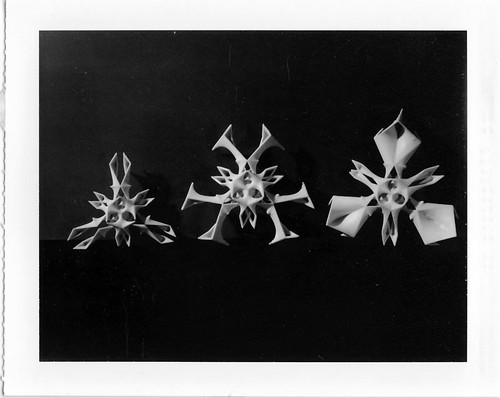
A collection of fast prototyping models (ZPrint) developed in the Pratt Institute School of Architecture 2007 PreFab China Design and style Studio:Evan Douglis, Richard Sarrach, Che-Wei Wang, Eric Wong


Operate made by: Dan Breitner, Andres Correa , Brad Rothenberg


Please go to www.core.form-ula.com + www.prefabchina.com for a lot more


pfc_07_12-copy-1


Image by core.formula

Prefab china


A collection of speedy prototyping models (ZPrint) created in the Pratt Institute School of Architecture 2007 PreFab China Style Studio,Evan Douglis, Richard Sarrach, Che-Wei Wang, Eric Wong


Function made by: Dan Breitner, Andres Correa , Brad Rothenberg


Please check out www.core.form-ula.com + www.prefabchina.com for more


All pictures are scanned from the proof poloroid of a huge format 4×5 camera. The photographer is Kim Keever and will be portion of the upcoming publication Autogenic Structures by Evan Douglis


(Source from rapid prototyping from China blog)
Monday, February 23, 2015

Nice Precision Engineering Business images

A few good precision engineering company images I located:


Image from web page 689 of “Architect and engineer” (1905)


Image by Web Archive Book Photos
Identifier: architectenginee1030sanf
Title: Architect and engineer
Year: 1905 (1900s)
Authors:
Subjects: Architecture Architecture Architecture Creating
Publisher: San Francisco : Architect and Engineer, Inc
Contributing Library: San Francisco Public Library
Digitizing Sponsor: San Francisco Public Library


View Book Web page: Book Viewer
About This Book: Catalog Entry
View All Photos: All Images From Book


Click right here to view book on-line to see this illustration in context in a browseable on-line version of this book.


Text Appearing Before Image:
llied Arts C.RLETON M. WiNSLOw, Contributing Editor, The Architect and Engineer Co-operation with Consumers H. RoY Kelley^ Los Angeles Co-operation with Contractors Louis J. Gill, San Diego Co-operation with Other Architects Chas. F. B. Roeth, Oakland Co-operation with Architectural Education Warren C. Perry, University of California School of Architecture Co-operation with Public Authorities Jas. S. Dean, City Manager, Sacramento Incidental Music, and Solos by: Ev.A Gruninger Atkinson, Contralto Phyllida Ashley, PianistAustin W. Sperry, Baritone SATURDAY, OCT. 11 Morning: Chairman. A. M. Edelman. Los Angeles.Organization Session.Round Table Discussion.Illustrated talk on Gardens—Myron Hunt, Los Angeles.Start off of Golf Tournament.Placing Contest for Ladies. Afternoon: Golf Tournament, continued. Visits to notable Pebble Beach Residences.Evening: Chairman (Not Chosen). Golf Dinner. Entertainment.Note: Ladies will be welcomed to all functions. 128 The ARCHITECT and ENGINEER September, 1930


Text Appearing Following Image:
A fine instance of the exceptional precision of Port Orford Cedar woodworking—f/te living area of the H. W. Bunker residence, Hillsborough, California. This cream-white cedar is ideal for all interior trim Pacific Coast architects recognize Port Orford Ce-dar as the outstanding wood for all interior trim. Finely, evenly grained, satin-smooth, it takesa gorgeous, porcelain-like enamel finish. Notrace of grain shows through. Holds enamel foryears. Cream-white, it readily assumes correct walnutand mahogany stains with richness and warmth. Light and pliable, it operates speedily and easily.Never ever checks or splinters. Doesnt warp or twist.Free of charge from knots, pitch and rosin. For specialdesigns, it machines to sharp, clean-reduce edges. Your lumber dealer or millwork home has PortOrford Cedar lumber and plywood or can obtainit promptly. Mail the coupon to our sales agentsfor total details about this fine wood. PORT ORFORD CEDAR Products Business MARSHFIELD, OREGON Port Orfopd Cedar ^he c5ri§t


Note About Images
Please note that these photos are extracted from scanned web page images that may possibly have been digitally enhanced for readability – coloration and appearance of these illustrations may possibly not perfectly resemble the original work.


(Source from rapid prototyping from China blog)

Sunday, January 11, 2015

Good Sheet Metal China images

A handful of nice sheet metal china pictures I located:


Stalinorgel. Stalin’s Organ. Сталинский орган.


Image by Peer.Gynt

Katyusha a number of rocket launchers (Russian: Катюша) are a type of rocket artillery initial built and fielded by the Soviet Union in Globe War II. Compared to other artillery, these multiple rocket launchers provide a devastating quantity of explosives to an area target swiftly, but with reduced accuracy and requiring a longer time to reload. They are fragile compared to artillery guns, but economical and effortless to generate. Katyushas of Planet War II, the 1st self-propelled artillery mass-produced by the Soviet Union,[1] had been usually mounted on trucks. This mobility gave Katyushas (and other self-propelled artillery) an additional benefit: getting capable to provide a big blow all at once, and then move just before being located and attacked with counter-battery fire.


Katyusha weapons of Globe War II included the BM-13 launcher, light BM-8, and heavy BM-31. These days, the nickname is also applied to newer truck-mounted Soviet multiple rocket launchers—notably the widespread BM-21—and derivatives.


The nickname


Initially, the secrecy kept their military designation from getting recognized by the soldiers who operated them. They had been referred to as by code names such as Kostikov Guns (right after the head of the RNII), and lastly classed as Guards Mortars.[two] The name BM-13 was only allowed into secret documents in 1942, and remained classified until after the war.[three]


Since they have been marked with the letter K, for Voronezh Komintern Factory,[three] Red Army troops adopted a nickname from Mikhail Isakovsky’s well-liked wartime song, Katyusha, about a girl longing for her absent beloved, who is away performing military service.[4] Katyusha is the Russian equivalent of Katie, an endearing diminutive form of the name Katherine: Yekaterina →Katya →Katyusha.


German troops coined the sobriquet Stalin’s organ (German: Stalinorgel), after Soviet leader Joseph Stalin for its visual resemblance to a church musical organ and alluding to the sound of the weapon’s rockets. They are identified by the very same name in Sweden. [four]


The heavy BM-31 launcher was also referred to as Andryusha (Андрюша, “Andrew”, endearing diminutive).[5]

Katyushas of Planet War II


Katyusha rocket launchers have been mounted on several platforms throughout Planet War II, such as on trucks, artillery tractors, tanks, and armoured trains, as properly as on naval and riverine vessels as assault support weapons.


The design and style was fairly straightforward, consisting of racks of parallel rails on which rockets were mounted, with a folding frame to raise the rails to launch position. Every truck had between 14 and 48 launchers. The 132-mm diameter M-13 rocket of the BM-13 technique was 180 centimetres (70.9 in) lengthy, 13.two centimetres (5.two in) in diameter and weighed 42 kilograms (92 lb). Initially, the caliber was 130 mm, but the caliber was changed (very first the designation, and then the actual size), to stay away from confusing them with standard artillery shells[three]. It was propelled by a strong nitrocellulose-primarily based propellant of tubular shape, arranged in a steel-case rocket engine with a single central nozzle at the bottom end. The rocket was stabilised by cruciform fins of pressed sheet steel. The warhead, either fragmentation, high-explosive or shaped-charge, weighed about 22 kg (48 lb). The range of the rockets was about five.4 kilometres (three.4 mi). Later, 82-mm diameter M-eight and 310-mm diameter M-31 rockets have been also developed.


The weapon is much less accurate than standard artillery guns, but is extremely successful in saturation bombardment, and was particularly feared by German soldiers. A battery of 4 BM-13 launchers could fire a salvo in 7–10 seconds that delivered 4.35 tons of high explosives more than a four-hectare (ten acres) effect zone.[2] With an effective crew, the launchers could redeploy to a new location immediately following firing, denying the enemy the opportunity for counterbattery fire. Katyusha batteries had been typically massed in very large numbers to produce a shock impact on enemy forces. The weapon’s disadvantage was the lengthy time it took to reload a launcher, in contrast to standard guns which could sustain a continuous low rate of fire.


The sound of the rocket launching also was exclusive in that the continuous &quotwoosh&quot sound that came from the firing of the rockets could be employed for psychological warfare. The rocket’s devastating destruction also helped to decrease the morale of the German army.


Improvement

Katyushas of Planet War II


Katyusha rocket launchers have been mounted on many platforms during World War II, such as on trucks, artillery tractors, tanks, and armoured trains, as well as on naval and riverine vessels as assault help weapons.


The design and style was relatively straightforward, consisting of racks of parallel rails on which rockets have been mounted, with a folding frame to raise the rails to launch position. Each truck had among 14 and 48 launchers. The 132-mm diameter M-13 rocket of the BM-13 technique was 180 centimetres (70.9 in) long, 13.two centimetres (5.two in) in diameter and weighed 42 kilograms (92 lb). Initially, the caliber was 130 mm, but the caliber was changed (very first the designation, and then the actual size), to keep away from confusing them with regular artillery shells[3]. It was propelled by a strong nitrocellulose-primarily based propellant of tubular shape, arranged in a steel-case rocket engine with a single central nozzle at the bottom end. The rocket was stabilised by cruciform fins of pressed sheet steel. The warhead, either fragmentation, higher-explosive or shaped-charge, weighed about 22 kg (48 lb). The range of the rockets was about 5.four kilometres (3.4 mi). Later, 82-mm diameter M-8 and 310-mm diameter M-31 rockets were also developed.


The weapon is less precise than conventional artillery guns, but is incredibly efficient in saturation bombardment, and was especially feared by German soldiers. A battery of four BM-13 launchers could fire a salvo in 7–10 seconds that delivered 4.35 tons of higher explosives over a four-hectare (10 acres) effect zone.[2] With an efficient crew, the launchers could redeploy to a new location instantly right after firing, denying the enemy the opportunity for counterbattery fire. Katyusha batteries were usually massed in extremely big numbers to produce a shock effect on enemy forces. The weapon’s disadvantage was the extended time it took to reload a launcher, in contrast to conventional guns which could sustain a continuous low rate of fire.


The sound of the rocket launching also was special in that the constant &quotwoosh&quot sound that came from the firing of the rockets could be utilized for psychological warfare. The rocket’s devastating destruction also helped to decrease the morale of the German army.


Combat history

BM-13 battery fire, in the course of the Battle of Berlin, April 1945, with metal blast covers pulled over the windshields


The numerous rocket launchers were leading secret in the beginning of World War II. A specific unit of the NKVD secret police was raised to operate them.[two] On July 7, 1941, an experimental artillery battery of seven launchers was 1st utilised in battle at Orsha in Belarus, below the command of Captain Ivan Flyorov, destroying a station with several provide trains, and causing huge German Army casualties. Following the good results, the Red Army organized new Guards Mortar batteries for the support of infantry divisions. A battery’s complement was standardized at four launchers. They remained under NKVD manage till German Nebelwerfer rocket launchers became widespread later in the war.[6]

A battery of BM-31 several rocket launchers in operation


On August eight, 1941, Stalin ordered the formation of eight Unique Guards Mortar regiments under the direct manage of the Common Headquarters Reserve (Stavka-VGK). Each and every regiment comprised 3 battalions of three batteries, totalling 36 BM-13 or BM-8 launchers. Independent Guards Mortar battalions had been also formed, comprising 36 launchers in 3 batteries of twelve. By the end of 1941, there had been eight regiments, 35 independent battalions, and two independent batteries in service, holding a total of 554 launchers.[11]


In June 1942 Heavy Guards Mortar battalions were formed about the new M-30 static rocket launch frames, consisting of 96 launchers in three batteries. In July, a battalion of BM-13s was added to the establishment of a tank corps.[12] In 1944, the BM-31 was employed in Motorized Heavy Guards Mortar battalions of 48 launchers. In 1943, Guards Mortar brigades, and later divisions, were formed equipped with static launchers.[11]


By the end of 1942, 57 regiments have been in service—together with the smaller sized independent battalions, this was the equivalent of 216 batteries: 21% BM-eight light launchers, 56% BM-13, and 23% M-30 heavy launchers. By the end of the war, the equivalent of 518 batteries were in service.[11]

[edit] Katyushas given that World War II

Russian forces use BM-27 rocket launchers during the Second Chechen War


The success and economy of multiple rocket launchers (MRL) have led them to continue to be developed. For the duration of the Cold War, the Soviet Union fielded several models of Katyushas, notably the BM-21 launchers fitting the stereotypical Katyusha mould, and the bigger BM-27. Advances in artillery munitions have been applied to some Katyusha-kind numerous launch rocket systems, which includes bomblet submunitions, remotely-deployed land mines, and chemical warheads.


With the breakup of the Soviet Union, Russia inherited most of its military arsenal such as the Katyusha rockets. In current history, they have been employed by Russian forces in the course of the 1st and Second Chechen Wars and by Armenian and Azerbaijani forces for the duration of the Nagorno-Karabakh War. Georgian government forces are reported to have utilised BM-21 or equivalent rocket artillery in fighting in the 2008 South Ossetia war.[13]


Katyushas had been exported to Afghanistan, Angola, Czechoslovakia, Egypt, East Germany, Hungary, Iran, Iraq, North Korea, Poland, Syria, and Vietnam. They have been also constructed in Czechoslovakia[14], People’s Republic of China, North Korea, and Iran.[citation needed]


Katyushas also saw action in the Korean War, used by the Chinese People’s Volunteer Army against the South and United Nations forces. Soviet BM-13s had been identified to have been imported to China before the Sino-Soviet split and had been operational in the People’s Liberation Army.


Israel captured BM-24 MRLs in the course of the Six-Day War (1967), used them in two battalions for the duration of the Yom Kippur War (1973) and the 1982 Lebanon War, and later developed the MAR-240 launcher for the identical rockets, primarily based on a Sherman tank chassis. In the course of the 2006 Lebanon War, Hezbollah fired among 3,970 and four,228 rockets, from light truck-mounts and single-rail man-transportable launchers. About 95% of these were 122 mm (four.eight in) Syrian-manufactured Katyusha artillery rockets, which carried warheads up to 30 kg (66 lb) and had a range of up to 30 km (19 mi).[15][16].[15][17][18] Hamas has launched 122-mm “Grad-sort Katyusha” rockets from the Gaza Strip against a number of cities in Israel,[19] even though they are not reported to have truck-mounted launchers.


Katyushas had been also allegedly used by the Rwandan Patriotic Front throughout its 1990 invasion of Rwanda, by means of the 1994 genocide. They were successful in battle, but translated into significantly anti-Tutsi sentiment in the neighborhood media.[20]


It was reported that BM-21 launchers had been utilised against American forces for the duration of 2003 invasion of Iraq. They have also been employed in the Afghanistan and Iraq insurgencies. In Iraq, according to Associated Press and Agence France-Presse reports, Katyusha rockets were fired at the Green Zone late March 2008.[21][22]


ROM Royal Ontario Museum 2010


Image by BRJ INC.

JNF Charity Box, Palestinian, for use in Germany. Sheet metal, enamel. 999.119.51


These photographs are from my go to to the Royal Ontario Museum. I went due to the fact they have been obtaining a specific exhibit featuring the terracota army. Despite the fact that photographs of the figures themselves have been strictly prohibited I still managed to get some very good shots from other exhibits the museum was obtaining.


Burnig Sheets of Metal


Image by niqodemus


(Source from rapid prototyping from China blog)