Check out these china prototyping images:
Fast prototyping Protei 011 “Optimist”
Image by cesarharada.com
(Source from rapid prototyping from China blog)
Check out these china prototyping images:
Fast prototyping Protei 011 “Optimist”
Image by cesarharada.com
A handful of good china speedy prototyping photos I found:
Protei 011 “Optimist” Kit
Image by cesarharada.com
scoutbots.com/
protei.org
Some cool metal components china images:
mong kok, components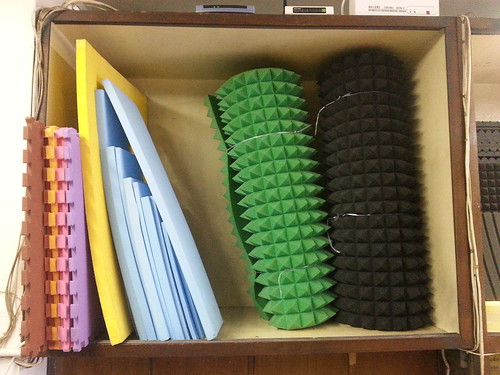
Image by cesarharada.com
mong kok, supplies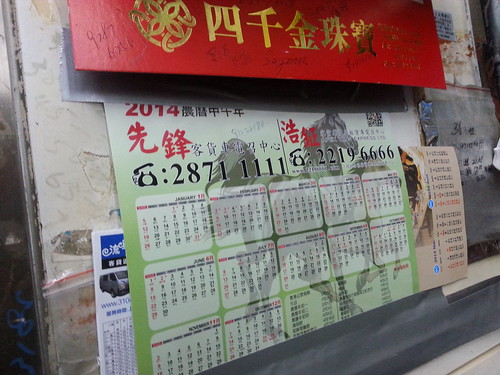
Image by cesarharada.com
mong kok, supplies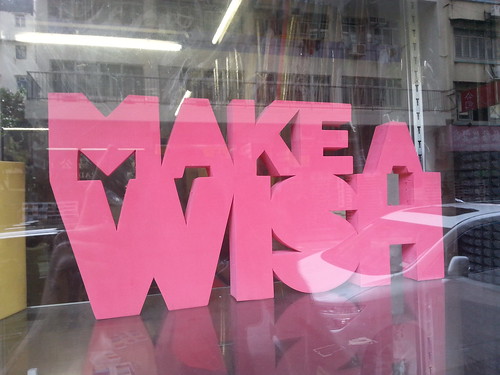
Image by cesarharada.com
A handful of good prototype china images I discovered:
Ubco Assembly
Image by locusresearch
2×2 in assambly, China 2015
Some cool prototype engineering photos:
DSC_0149
Image by meccanica
DSC_0157
Image by meccanica
Some cool higher precision engineering photos:
Vice and Drill Chuck
Image by tudedude
View On Black
Aligning the vice on a mill employing a .five inch High speed steel Dowel. The vice is only quite lightly bolted whilst carrying out this.
Some cool china metal stamping images:
Image from page 247 of “The Chinese : a general description of the Empire of China and its inhabitants” (1846)
Image by World wide web Archive Book Pictures
Identifier: chinesegeneralde02daviuoft
Title: The Chinese : a general description of the Empire of China and its inhabitants
Year: 1846 (1840s)
Authors: Davis, John Francis, Sir, 1795-1890
Subjects: China — Description and travel China — History
Publisher: London : M. A. Nattali
Contributing Library: Robarts – University of Toronto
Digitizing Sponsor: MSN
View Book Page: Book Viewer
About This Book: Catalog Entry
View All Photos: All Photos From Book
Click here to view book on the web to see this illustration in context in a browseable on the internet version of this book.
Text Appearing Ahead of Image:
very sonorous nature of their go?igs arisesfrom the large proportion of tin in combination withcopper. In the most considerable Budhist temples isalways suspended a excellent cylindrical bell, which, how-ever, is not rung like our bells, by swinging with aclapper, but struck on the outdoors with a big woodenmallet. The fantastic bell at Peking, measured by oneof the Jesuits, was fourteen feet and a half in height,and almost thirteen in diameter. This, as nicely asmost other people of the sort, is extremely ancient and withsuch antique specimens we may consist of the vases andtripods of bronze and other metals, on which theChinese location wonderful retailer, but which are generali 236 THE CHINESE. rather too clumsy to possess much elegance. Anotherof their antiques in metal is the circular mirror, thespeculum of which is formed apparently of a mixtureof copper and tin, with probably a portion of silver.Some of the round metal mirrors, sold in Mr. Saltscollection of Egyptian antiquities, are surprisingly likethese.
Text Appearing Right after Image:
Metal Tea-pot, covering earthenware. But there is a puzzling house in several of theChinese mirrors which deserves particular notice, andwe may possibly give it collectively with the remedy furnished bySir David Brewster : The mirror has a knob in thecentre of the back, by which it can be held, and onthe rest of the back are stamped in relief particular circleswith a type of Grecian bortler. Its polished surfacehas that degree of convexity which provides an image ofthe face half its all-natural size and its exceptional pro-perty is, that when you reject the rays of the sunfrom the polished surface^the image of the ornamentalborder, and circles stam])ed upon the back, is seendistinctly reflected on the wall, or on a sheet of paper. The metal of which the mirror is created seems to METALLIC MIRRORS. 237 be what is known as Chinese silver, a composition of tinand copper, like the metal for the specula of reflectingtelescopes. The metal is quite sonorous. The mirrorhas a rim (at the back) of about l-4th, or l-6th
Note About Photos
Please note that these pictures are extracted from scanned web page photos that could have been digitally enhanced for readability – coloration and appearance of these illustrations may not completely resemble the original perform.
Check out these prototype china images:
Human Logistics 人流 / SML.20120910.G12.00234.1
Image by See-ming Lee 李思明 SML
Videography prototype / proof of concept – 1 min 30 sec edit
Verify out these china metal fabrication images:
Evening stalker
Image by ATOMIC Hot Links
Down on Crenshaw.
SZX Metalworks Shenzhen China
Image by dcmaster
SZX Metalworks Shenzhen China
Image by dcmaster
Verify out these precision engineering images:
Twist Drill
Image by tudedude
Check out these slot milling pictures:
back to the mill
Image by kimncris
Handmade stage base
Image by Bushman.K
I created this aluminum base today, making use of some scrap element from the shop scrap box. It is not completed but, since I have to cut it for the needed length and attach the bracket for micrometer head.
I am also going to make some holes there to be capable to attach it to a tripod with common 1/4" screw. In addition, there must be some holes or slots to lessen weight and bulk.
Roadtrip to Castle Loevestein
Image by F.d.W.
Loevestein
From Wikipedia, the free of charge encyclopedia
Jump to: navigation, search
Slot Loevestein
Poederoijen, the Netherlands
Slot Loevestein
The Netherlands
Type
Castle
Coordinates
51.8164°N 5.0214°E
51.8164°N five.0214°ECoordinates: 51.8164°N 5.0214°E
Constructed
1361
Built by
Dirc Loef van Horne
Current
situation
Excellent
Open to
the public
Yes
Slot Loevestein (1621)
Castle Loevestein (Slot Loevestein in Dutch) is a medieval castle built by the knight Dirc Loef van Horne (therefore "Loef’s stein" ((stone)) property) in between 1357 and 1397.
Till the Second World War Loevestein Castle was element of the Nieuwe Hollandse Waterlinie, the primary Dutch defense line that was primarily based on flooding an location of land south and east of the western provinces. At present the castle is utilised as a medieval museum and function centre.
History
Aerial view of Loevestein Castle.
It was built in a strategic place in the middle of the Netherlands, where the Maas and Waal rivers come together (just west of current day villages Poederoijen and Brakel, in the municipality of Zaltbommel, in Gelderland). At very first it was a basic square brick constructing, used to charge toll from trading vessels employing the rivers. In the 16th century (about 1575, orders provided by William the Silent) it was expanded to a bigger fortress surrounded by earthen fortifications with some stone bastions on the northern side, two moats, an arsenal, and housing for a commander and soldiers.
It changed hands twice amongst the Northern Dutch and the Spanish (December 9, 1570 it was taken by the Geuzen, ten days later Spanish once more, and from June 25, 1572 Dutch till this day), the warring parties of the day. The castle quickly (from 1619) became a prison for political prisoners. A single popular inmate was the eminent lawyer, poet and politician Hugo de Groot (Hugo Grotius) typically presented as the "father of contemporary international law", who was serving a controversially imposed life sentence from 1619.[1] In 1621 Hugo de Groot managed to pull off a daring escape in a book chest. The idea for this escape came from his wife Maria van Reigersberg (also living in the castle).[two] He subsequently became the Swedish Ambassador to France for ten years. One more higher profile inmate was the English Vice-Admiral George Ayscue.
en.wikipedia.org/wiki/Loevestein
Some cool precision engineered images:
Old Engineering Data References
Image by tudedude
Squashed Bolts
Image by tudedude
For Listorama a set of Squashed bolts Macro
A couple of good high precision grinding images I found:
The Rebellion is About to be Crushed
Image by Viewminder
There had been hundreds of demonstrators occupying the corner of LaSalle and Jackson tonight on the sidewalk at the Bank of America Building.
Tension saturated the protest.
The City of Chicago’s had enough.
The police have been walking amongst the crowd.
The demonstrators were told to move their factors…
the meals cart…
indicators on the sidewalk…
the drums.
It was like a little game.
The cops would inform them to move it…
or maintain moving themselves…
and individuals would move the stuff about the corner.
Then the police would tell them to move it from there.
The officers had been stern about any person crossing the curb into the street.
I got a single of the cops alone and I told him…
‘I smell a crackdown.’
He looked me in the eyes and he only nodded his head up and down a few occasions.
Though the protestors chant ‘whose streets’ and reply ‘our streets’…
the message is being conveyed quietly but successfully.
These streets belong to the City of Chicago.
And the City is about to take them back.
Two items were the physical center of the occupiers…
the food cart exactly where folks could grab anything to eat or drink… a bottle of water or a cup of coffee…
and the drums.
The drums utilized to sound loudly day and night.
They gave the entire movement a true pulse.
Initial the police apparently arrested a couple of individuals for playing them…
then they mentioned that they could not be left on the sidewalk.
In their absence there is a nervous silence.
Whoever determined that the drums need to be taken out was genius.
I never ever gave so much thought to some thing like the sound of a drum.
But observing the circumstance tonight I realized that they gave the men and women a specific power.
That power is largely gone this evening.
And the warmth, sustinence and comraderie of the food cart has been taken away as well.
A casual observer may possibly not even notice the crackdown.
It is subtle and properly believed out.
A longtime observer of the movement would see the impact immediately.
A sense of doom settled more than the group even even though the chanting and sign waving continued.
The drums have been gone.
Right here and there as individuals gathered in clusters and conversations spilled out onto the sidewalk I couldn’t support but notice…
this is a time of crisis for The Occupation.
Although probably there was a specific wisdom in a ‘leaderless’ movement…
now there is no path to turn to respond quickly and strategically in a powerful and unified manner.
The movement started as a proactive and spontaneous demonstration of the grievances and aggravation of so many folks.
Now with out a leader to make fast and strategic choices it can only respond in a weak and fragmented way to the crackdown by the City.
It has grow to be reactionary.
Here and there men and women are lobbying other people to a single course of action or an additional…
Some say the group requirements to resist with greater intensity…
other individuals want an out and out fight.
One demonstrator in an ominous sign had a gas mask strapped to his side at the prepared.
Simply because the movement is openly democratic and all significant decisions are voted on publicly at the Common Assembly meetings every single night at ‘The Horse’ in the park…
the group is largely incapable of surprise.
The days of the occupation are numbered.
And I think in the end they could be counted on one’s fingers.
The police have had a lot more than thirty days to strategy a method to rout the occupiers.
And when the police make their move the occupiers will be crushed with overwhelming force.
They will split up and they will be defeated in a matter of minutes.
A battle is not a time for democratic manuevering.
To win a battle a group have to be cohesive, united and of 1 thoughts.
A victorious army is a product of several becoming 1.
Without a strong and capable leader this will never happen.
Those with a propensity for violence and mayhem will sieze the chance in the chaos and lash out in the moments before defeat is total and their actions will become the legacy of the group.
What an incredible factor to observe on the ground in the middle of it all.
I see it in the eyes and on the faces of the men and women who come to have their voices heard.
I see no imminent victory.
Genuinely I’m shocked the city has demonstrated so much patience.
I suppose every person believed that the weather would be the thing that ended it all.
I’m confident the officials who are gonna have to give the orders hoped the exact same.
The larger ups are watching.
With the G8 and the Nato Summits coming up in Might of 2012 there is a feeling that the City is not handling this too effectively and that there’s gonna be a prevalence of disorder and chaos then.
Get ready for the ‘dry run.’
The finish will come swiftly.
The protestors will be arrested and dispersed with precision.
Sure…
some windows will get broken.
Issues will be thrown.
Yahoo’s will lash out and do stupid shit.
But it really is gonna all be over in a couple of minutes.
Occupiers…
it really is time to make a move.
And it really is gotta be a great 1.
How can you keep away from a crushing defeat?
Regain your proactivity and get ahead of this.
It is coming whether or not you’re prepared or not.
There will be no decisive victory.
How can you transition from this phase into the next?
It is not gonna take place by accident.
It’s time to think.
It is time to act.
The noose is tightening and you are getting surrounded.
Look at the thuggish behavior of the Illinois State Police final evening at the Thompson Center.
Absolutely nothing will be achieved by holding your ground in front of an army that is overwhelming in physical strength and numbers and would maybe even relish the chance to ‘tune you up’ en masse.
In the face of all this… in the quick moment… with no a dramatic and super-numeric show of assistance in the form of thousands of reinforcements your epitaph has already been written.
If tommorow a lot more than three thousand show up and hyperlink arms and hearts and souls with the movement then everything I’ve said is off the table… at least for some time.
Sources inside the police division say that they could not handle two thousand mass arrests.
Unless there are that several ready to call their bluff it really is time to go to ‘Plan B.’
Considering that there is no ‘Plan B’ someone’s gotta do some fast thinkin’.
If the authorities were sensible they’d give the group some victory in exchange for providing up the occupation at the present internet site.
But no one’s ever accused the authorities of becoming intelligent.
A bully will constantly respond to any threat to his dominance in a bullyish manner.
Occupiers… prepare to get your asses kicked.
Or…
tone it down…
back off a little…
regroup…
move into the ‘second phase.’
I have no notion what the ‘second phase’ is but it sounds logical.
I mean…
I’m all for standing up for what’s appropriate.
Given the appropriate situations I could be convinced to dig in and resist till the end.
But would not it be better to live to ‘fight’ one more day?
Gahd I hope I’m entirely incorrect and I’ve totally underestimated the courage, the fortitude, the ingenuity and the determination of the group.
Now is the time for deep believed.
If a battle can be won…
I say win it.
If a battle is certain to be disasterous…
I say keep away from it.
Whilst the group remains in its present type and adequate strength…
what must be regarded is what the legacy of these five weeks will be.
What victories have been won?
1st the dissatisfaction of a big quantity of folks has been demonstrated… and their wish for alter has been heard far and wide.
Everyone can see about the globe that significant numbers of us are not happy with the way that factors are going.
Second…
that the identical folks are prepared to get off of their couches… move away from their televisions and take action to make our world greater, a lot more just and level the financial ‘playing field.’
Third…
and it’s my opinion that the greatest of victories that this movement has succeeded at is driving the discussion of a nation for nearly two months.
I consider the most wonderful factor has been the sheer numbers of folks who came to the occupation internet site and talked to every other about what the planet should appear like in the future.
This in itself is possibly the greatest victory of all.
It means so much.
The way I see it there are two paths at this point…
imminent annihilation of the movement in a crushing defeat by the authorities…
or a strategic and proactive restructuring of the group and it really is mission.
Personally… I dig the second path.
I’m not in the mood to be spittin’ up all the mucus in my lungs soon after suckin’ down a few also several breaths of tear gas although a Chicago cop tunes me up with the business finish of his billyclub whilst he’s all dressed up like a hockey golie.
That shit would give me poor dreams for a although.
Lets hold our core sturdy… our base vast… our assistance intact and our occupiers cost-free and healthful and regroup for the winter.
The orginaization can be structured into a lot more local cells beneath the umbrella of a central organization…
meetings can take place… far more supporters recruited… a greater organization achieved over the coming months…
and in the spring or even right here and there in the meantime the movement can be known as on to pop up with tiny notice and demonstrate properly for what it believes to be essential to our future as a group and a people.
It’s time to go ‘guerilla.’
What began as a peaceful and non-violent movement should develop into a transition as a peaceful and nonviolent movement.
Let us stay accurate to our principles.
We have shown fantastic commitment, restraint, cohesiveness and respect for the laws and customs of our society even as we criticized it and made clear our want for great modify.
We can make some thing of that.
Some thing wonderful.
If with no thinking we stroll into a battle that cannot be won we will have squandered the help of so many, the victories accomplished and the tough operate and sacrifice of thousands who think that the future requirements to be rethought and our world changed for the betterment of all.
Or at least the 99%.
Let’s not let our buddies be brutalized on the street and have our brothers and sisters choking on the tear gas… our indicators and banners trampled by the riot police on horseback… and our whole movement summed up by that one video of a guy wearing a bandanna over his face as the tear gas flies and he throws a rock at the police.
We’ve worked as well hard and come also far for that.
We’re greater and we’re smarter and we’re a lot more grown up.
We have made our voices heard over the final 5 weeks.
Let’s move into the future exactly where we can achieve one thing lasting and potent.
Let our legacy reflect the justice and equality and the far better society that we seek and the intelligence and comraderie which with we sought it.
Collectively and powerful we can change the world with our motivation, determination, intelligence and patience.
Fragmented and crushed the final we will be seen or heard from is on the news on the day of our demise.
This is the moment that will determine the future of our movement.
We want to be smart… remain robust… stay united and make the most of this moment.
We stand for one thing fantastic.
We require to move forward with honor and strength and continue to challenge the status quo.
The moment is right here.
Appropriate Right here Correct Now
Dr. Jeff
Image by Globe T.E.A.M. Sports
Expedition doctor Jeff Evans cannot resist functioning his precision tweezers to clean some debris from Luis’ eye. Globe T.E.A.M. Sports’ October 2010 Soldiers to the Summit Expedition. Photo © Didrik Johnck 2010.
Check out these huge precision machining pictures:
Huge Countersink
Image by tudedude
Old and worn, but still does a great job
Pad Prep
Image by jurvetson
Tom and the rest of the "rocket pit crew" helped me get it on the rail. (photo by oddwick)
It’s my heaviest rocket project so far. I fiber-glassed the body, added a flight personal computer up in the nose cone, epoxy-coated the fins, and filled the remaining totally free space in the nose and tail cones with expanding two-element foam.
I like the sleek shape and symmetry of the design and style. In the early days of rocketry, I wonder if the comic books had been the design inspiration. It turns out that this shape and weight distribution is unstable, and so I epoxied two pounds of lead buck shot into the tip of the nose cone to hold it from spiraling out of control.
Here I am adjusting the angle to tilt slightly into the wind (to decrease the recovery hike distance).
I have already armed the on-board laptop which will detonate 5 grams of black powder to pop a large parachute when it detects apogee (it has barometric and tilt sensors and an accelerometer it also logs flight data for later Pc download). The motor also has an ejection charge that will detonate 14 seconds right after launch as a redundant precaution.
The final step will be to thread the electric igniter up by means of the center of the solid-AP Aerotech K550 motor. Soon after clipping to the 12V power supply and a continuity test, she is prepared to fly.
We are go flight.
A handful of nice machined aluminum parts photos I identified:
Proton Pack
Image by clarksworth
Practically completed as of April.
To go into overly nerdy detail, this is a replica of a single of the couple of "hero" GB1 packs that survived getting utilized in each the initial and second films. The original packs had extensive detailing, as well as electrical and mechanical features. These heavy, bulky props were disliked by the actors (Murray specifically), and so had been largely replaced by considerably much less functional, sloppy fibreglass casts for the second film. Even though it really is difficult to spot on screen, the GB2-created packs have a considerably duller, significantly less detailed appearance and are somewhat "wonky". The occasional GB1 surviving packs appear in closeup sequences. The GB1 packs initially sported a thick, distinctive ribbon cable whose supply is unknown. By the time of the second film (as nevertheless nowadays), this cable proved not possible to uncover, so was substituted by a more affordable option. The above prop reflects those modifications, as properly as approximates 5 years worth of wear – both fictional and accidental.
Some cool milling solutions pictures:
Wool Mill in City Mills, One particular of Some 35 Manufacturing Cities and Towns on the Eighty Mile Charles River 03/1973
Image by The U.S. National Archives
Original Caption: Wool Mill in City Mills, 1 of Some 35 Manufacturing Cities and Towns on the Eighty Mile Charles River 03/1973
U.S. National Archives’ Regional Identifier: 412-DA-7530
Photographer: Halberstadt, Ernst, 1910-1987
Subjects:
Boston (Suffolk county, Massachusetts, United States) inhabited place
Environmental Protection Agency
Project DOCUMERICA
Persistent URL: arcweb.archives.gov/arc/action/ExternalIdSearch?id=550015
Repository: Nevertheless Image Records Section, Specific Media Archives Solutions Division (NWCS-S), National Archives at College Park, 8601 Adelphi Road, College Park, MD, 20740-6001.
For data about ordering reproductions of photographs held by the Nonetheless Picture Unit, check out: www.archives.gov/research/order/nevertheless-pictures.html
Reproductions may be ordered via an independent vendor. NARA maintains a list of vendors at www.archives.gov/study/order/vendors-photos-maps-dc.html
Access Restrictions: Unrestricted
Use Restrictions: Unrestricted
Some cool bridgeport milling photos:
Bridgeport mill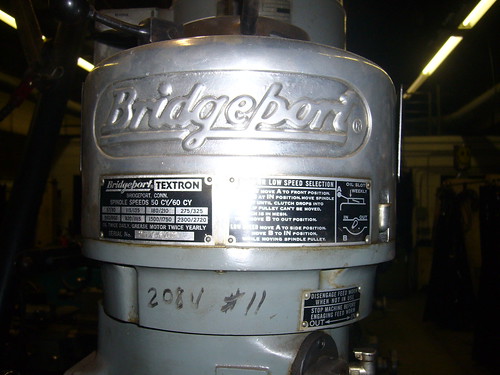
Image by illiquid
Check out these precision turned components manufacturers images:
Steven F. Udvar-Hazy Center: P-38 Lightning, with B-29 Enola Gay behind it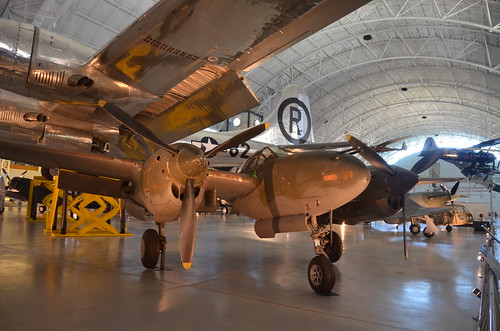
Image by Chris Devers
See more photos of this, and the Wikipedia article.
Details, quoting from Smithsonian National Air and Space Museum | Lockheed P-38J-10-LO Lightning
In the P-38 Lockheed engineer Clarence "Kelly" Johnson and his team of designers created one of the most successful twin-engine fighters ever flown by any nation. From 1942 to 1945, U. S. Army Air Forces pilots flew P-38s over Europe, the Mediterranean, and the Pacific, and from the frozen Aleutian Islands to the sun-baked deserts of North Africa. Lightning pilots in the Pacific theater downed more Japanese aircraft than pilots flying any other Allied warplane.
Maj. Richard I. Bong, America’s leading fighter ace, flew this P-38J-10-LO on April 16, 1945, at Wright Field, Ohio, to evaluate an experimental method of interconnecting the movement of the throttle and propeller control levers. However, his right engine exploded in flight before he could conduct the experiment.
Transferred from the United States Air Force.
Manufacturer:
Lockheed Aircraft Company
Date:
1943
Country of Origin:
United States of America
Dimensions:
Overall: 390 x 1170cm, 6345kg, 1580cm (12ft 9 9/16in. x 38ft 4 5/8in., 13988.2lb., 51ft 10 1/16in.)
Materials:
All-metal
Physical Description:
Twin-tail boom and twin-engine fighter; tricycle landing gear.
Long Description:
From 1942 to 1945, the thunder of P-38 Lightnings was heard around the world. U. S. Army pilots flew the P-38 over Europe, the Mediterranean, and the Pacific; from the frozen Aleutian Islands to the sun-baked deserts of North Africa. Measured by success in combat, Lockheed engineer Clarence "Kelly" Johnson and a team of designers created the most successful twin-engine fighter ever flown by any nation. In the Pacific Theater, Lightning pilots downed more Japanese aircraft than pilots flying any other Army Air Forces warplane.
Johnson and his team conceived this twin-engine, single-pilot fighter airplane in 1936 and the Army Air Corps authorized the firm to build it in June 1937. Lockheed finished constructing the prototype XP-38 and delivered it to the Air Corps on New Year’s Day, 1939. Air Corps test pilot and P-38 project officer, Lt. Benjamin S. Kelsey, first flew the aircraft on January 27. Losing this prototype in a crash at Mitchel Field, New York, with Kelsey at the controls, did not deter the Air Corps from ordering 13 YP-38s for service testing on April 27. Kelsey survived the crash and remained an important part of the Lightning program. Before the airplane could be declared ready for combat, Lockheed had to block the effects of high-speed aerodynamic compressibility and tail buffeting, and solve other problems discovered during the service tests.
The most vexing difficulty was the loss of control in a dive caused by aerodynamic compressibility. During late spring 1941, Air Corps Major Signa A. Gilke encountered serious trouble while diving his Lightning at high-speed from an altitude of 9,120 m (30,000 ft). When he reached an indicated airspeed of about 515 kph (320 mph), the airplane’s tail began to shake violently and the nose dropped until the dive was almost vertical. Signa recovered and landed safely and the tail buffet problem was soon resolved after Lockheed installed new fillets to improve airflow where the cockpit gondola joined the wing center section. Seventeen months passed before engineers began to determine what caused the Lightning’s nose to drop. They tested a scale model P-38 in the Ames Laboratory wind tunnel operated by the NACA (National Advisory Committee for Aeronautics) and found that shock waves formed when airflow over the wing leading edges reached transonic speeds. The nose drop and loss of control was never fully remedied but Lockheed installed dive recovery flaps under each wing in 1944. These devices slowed the P-38 enough to allow the pilot to maintain control when diving at high-speed.
Just as the development of the North American P-51 Mustang, Republic P-47 Thunderbolt, and the Vought F4U Corsair (see NASM collection for these aircraft) pushed the limits of aircraft performance into unexplored territory, so too did P-38 development. The type of aircraft envisioned by the Lockheed design team and Air Corps strategists in 1937 did not appear until June 1944. This protracted shakedown period mirrors the tribulations suffered by Vought in sorting out the many technical problems that kept F4U Corsairs off U. S. Navy carrier decks until the end of 1944.
Lockheed’s efforts to trouble-shoot various problems with the design also delayed high-rate, mass production. When Japan attacked Pearl Harbor, the company had delivered only 69 Lightnings to the Army. Production steadily increased and at its peak in 1944, 22 sub-contractors built various Lightning components and shipped them to Burbank, California, for final assembly. Consolidated-Vultee (Convair) subcontracted to build the wing center section and the firm later became prime manufacturer for 2,000 P-38Ls but that company’s Nashville plant completed only 113 examples of this Lightning model before war’s end. Lockheed and Convair finished 10,038 P-38 aircraft including 500 photo-reconnaissance models. They built more L models, 3,923, than any other version.
To ease control and improve stability, particularly at low speeds, Lockheed equipped all Lightnings, except a batch ordered by Britain, with propellers that counter-rotated. The propeller to the pilot’s left turned counter-clockwise and the propeller to his right turned clockwise, so that one propeller countered the torque and airflow effects generated by the other. The airplane also performed well at high speeds and the definitive P-38L model could make better than 676 kph (420 mph) between 7,600 and 9,120 m (25,000 and 30,000 ft). The design was versatile enough to carry various combinations of bombs, air-to-ground rockets, and external fuel tanks. The multi-engine configuration reduced the Lightning loss-rate to anti-aircraft gunfire during ground attack missions. Single-engine airplanes equipped with power plants cooled by pressurized liquid, such as the North American P-51 Mustang (see NASM collection), were particularly vulnerable. Even a small nick in one coolant line could cause the engine to seize in a matter of minutes.
The first P-38s to reach the Pacific combat theater arrived on April 4, 1942, when a version of the Lightning that carried reconnaissance cameras (designated the F-4), joined the 8th Photographic Squadron based in Australia. This unit launched the first P-38 combat missions over New Guinea and New Britain during April. By May 29, the first 25 P-38s had arrived in Anchorage, Alaska. On August 9, pilots of the 343rd Fighter Group, Eleventh Air Force, flying the P-38E, shot down a pair of Japanese flying boats.
Back in the United States, Army Air Forces leaders tried to control a rumor that Lightnings killed their own pilots. On August 10, 1942, Col. Arthur I. Ennis, Chief of U. S. Army Air Forces Public Relations in Washington, told a fellow officer "… Here’s what the 4th Fighter [training] Command is up against… common rumor out there that the whole West Coast was filled with headless bodies of men who jumped out of P-38s and had their heads cut off by the propellers." Novice Lightning pilots unfamiliar with the correct bailout procedures actually had more to fear from the twin-boom tail, if an emergency dictated taking to the parachute but properly executed, Lightning bailouts were as safe as parachuting from any other high-performance fighter of the day. Misinformation and wild speculation about many new aircraft was rampant during the early War period.
Along with U. S. Navy Grumman F4F Wildcats (see NASM collection) and Curtiss P-40 Warhawks (see NASM collection), Lightnings were the first American fighter airplanes capable of consistently defeating Japanese fighter aircraft. On November 18, men of the 339th Fighter Squadron became the first Lightning pilots to attack Japanese fighters. Flying from Henderson Field on Guadalcanal, they claimed three during a mission to escort Boeing B-17 Flying Fortress bombers (see NASM collection).
On April 18, 1943, fourteen P-38 pilots from the 70th and the 339th Fighter Squadrons, 347th Fighter Group, accomplished one of the most important Lightning missions of the war. American ULTRA cryptanalysts had decoded Japanese messages that revealed the timetable for a visit to the front by the commander of the Imperial Japanese Navy, Admiral Isoroku Yamamoto. This charismatic leader had crafted the plan to attack Pearl Harbor and Allied strategists believed his loss would severely cripple Japanese morale. The P-38 pilots flew 700 km (435 miles) at heights from 3-15 m (10-50 feet) above the ocean to avoid detection. Over the coast of Bougainville, they intercepted a formation of two Mitsubishi G4M BETTY bombers (see NASM collection) carrying the Admiral and his staff, and six Mitsubishi A6M Zero fighters (see NASM collection) providing escort. The Lightning pilots downed both bombers but lost Lt. Ray Hine to a Zero.
In Europe, the first Americans to down a Luftwaffe aircraft were Lt. Elza E. Shahan flying a 27th Fighter Squadron P-38E, and Lt. J. K. Shaffer flying a Curtiss P-40 (see NASM collection) in the 33rd Fighter Squadron. The two flyers shared the destruction of a Focke-Wulf Fw 200C-3 Condor maritime strike aircraft over Iceland on August 14, 1942. Later that month, the 1st fighter group accepted Lightnings and began combat operations from bases in England but this unit soon moved to fight in North Africa. More than a year passed before the P-38 reappeared over Western Europe. While the Lightning was absent, U. S. Army Air Forces strategists had relearned a painful lesson: unescorted bombers cannot operate successfully in the face of determined opposition from enemy fighters. When P-38s returned to England, the primary mission had become long-range bomber escort at ranges of about 805 kms (500 miles) and at altitudes above 6,080 m (20,000 ft).
On October 15, 1943, P-38H pilots in the 55th Fighter Group flew their first combat mission over Europe at a time when the need for long-range escorts was acute. Just the day before, German fighter pilots had destroyed 60 of 291 Eighth Air Force B-17 Flying Fortresses (see NASM collection) during a mission to bomb five ball-bearing plants at Schweinfurt, Germany. No air force could sustain a loss-rate of nearly 20 percent for more than a few missions but these targets lay well beyond the range of available escort fighters (Republic P-47 Thunderbolt, see NASM collection). American war planners hoped the long-range capabilities of the P-38 Lightning could halt this deadly trend, but the very high and very cold environment peculiar to the European air war caused severe power plant and cockpit heating difficulties for the Lightning pilots. The long-range escort problem was not completely solved until the North American P-51 Mustang (see NASM collection) began to arrive in large numbers early in 1944.
Poor cockpit heating in the H and J model Lightnings made flying and fighting at altitudes that frequently approached 12,320 m (40,000 ft) nearly impossible. This was a fundamental design flaw that Kelly Johnson and his team never anticipated when they designed the airplane six years earlier. In his seminal work on the Allison V-1710 engine, Daniel Whitney analyzed in detail other factors that made the P-38 a disappointing airplane in combat over Western Europe.
• Many new and inexperienced pilots arrived in England during December 1943, along with the new J model P-38 Lightning.
• J model rated at 1,600 horsepower vs. 1,425 for earlier H model Lightnings. This power setting required better maintenance between flights. It appears this work was not done in many cases.
• During stateside training, Lightning pilots were taught to fly at high rpm settings and low engine manifold pressure during cruise flight. This was very hard on the engines, and not in keeping with technical directives issued by Allison and Lockheed.
• The quality of fuel in England may have been poor, TEL (tetraethyl lead) fuel additive appeared to condense inside engine induction manifolds, causing detonation (destructive explosion of fuel mixture rather than controlled burning).
• Improved turbo supercharger intercoolers appeared on the J model P-38. These devices greatly reduced manifold temperatures but this encouraged TEL condensation in manifolds during cruise flight and increased spark plug fouling.
Using water injection to minimize detonation might have reduced these engine problems. Both the Republic P-47 Thunderbolt and the North American P-51 Mustang (see NASM collection) were fitted with water injection systems but not the P-38. Lightning pilots continued to fly, despite these handicaps.
During November 1942, two all-Lightning fighter groups, the 1st and the 14th, began operating in North Africa. In the Mediterranean Theater, P-38 pilots flew more sorties than Allied pilots flying any other type of fighter. They claimed 608 enemy a/c destroyed in the air, 123 probably destroyed and 343 damaged, against the loss of 131 Lightnings.
In the war against Japan, the P-38 truly excelled. Combat rarely occurred above 6,080 m (20,000 ft) and the engine and cockpit comfort problems common in Europe never plagued pilots in the Pacific Theater. The Lightning’s excellent range was used to full advantage above the vast expanses of water. In early 1945, Lightning pilots of the 12th Fighter Squadron, 18th Fighter Group, flew a mission that lasted 10 ½ hours and covered more than 3,220 km (2,000 miles). In August, P-38 pilots established the world’s long-distance record for a World War II combat fighter when they flew from the Philippines to the Netherlands East Indies, a distance of 3,703 km (2,300 miles). During early 1944, Lightning pilots in the 475th Fighter Group began the ‘race of aces.’ By March, Lieutenant Colonel Thomas J. Lynch had scored 21 victories before he fell to antiaircraft gunfire while strafing enemy ships. Major Thomas B. McGuire downed 38 Japanese aircraft before he was killed when his P-38 crashed at low altitude in early January 1945. Major Richard I. Bong became America’s highest scoring fighter ace (40 victories) but died in the crash of a Lockheed P-80 (see NASM collection) on August 6, 1945.
Museum records show that Lockheed assigned the construction number 422-2273 to the National Air and Space Museum’s P-38. The Army Air Forces accepted this Lightning as a P-38J-l0-LO on November 6, 1943, and the service identified the airplane with the serial number 42-67762. Recent investigations conducted by a team of specialists at the Paul E. Garber Facility, and Herb Brownstein, a volunteer in the Aeronautics Division at the National Air and Space Museum, have revealed many hitherto unknown aspects to the history of this aircraft.
Brownstein examined NASM files and documents at the National Archives. He discovered that a few days after the Army Air Forces (AAF) accepted this airplane, the Engineering Division at Wright Field in Dayton, Ohio, granted Lockheed permission to convert this P-38 into a two-seat trainer. The firm added a seat behind the pilot to accommodate an instructor who would train civilian pilots in instrument flying techniques. Once trained, these test pilots evaluated new Lightnings fresh off the assembly line.
In a teletype sent by the Engineering Division on March 2, 1944, Brownstein also discovered that this P-38 was released to Colonel Benjamin S. Kelsey from March 3 to April 10, 1944, to conduct special tests. This action was confirmed the following day in a cable from the War Department. This same pilot, then a Lieutenant, flew the XP-38 across the United States in 1939 and survived the crash that destroyed this Lightning at Mitchel Field, New York. In early 1944, Kelsey was assigned to the Eighth Air Force in England and he apparently traveled to the Lockheed factory at Burbank to pick up the P-38. Further information about these tests and Kelsey’s involvement remain an intriguing question.
One of Brownstein’s most important discoveries was a small file rich with information about the NASM Lightning. This file contained a cryptic reference to a "Major Bong" who flew the NASM P-38 on April 16, 1945, at Wright Field. Bong had planned to fly for an hour to evaluate an experimental method of interconnecting the movement of the throttle and propeller control levers. His flight ended after twenty-minutes when "the right engine blew up before I had a chance [to conduct the test]." The curator at the Richard I. Bong Heritage Center confirmed that America’s highest scoring ace made this flight in the NASM P-38 Lightning.
Working in Building 10 at the Paul E. Garber Facility, Rob Mawhinney, Dave Wilson, Wil Lee, Bob Weihrauch, Jim Purton, and Heather Hutton spent several months during the spring and summer of 2001 carefully disassembling, inspecting, and cleaning the NASM Lightning. They found every hardware modification consistent with a model J-25 airplane, not the model J-10 painted in the data block beneath the artifact’s left nose. This fact dovetails perfectly with knowledge uncovered by Brownstein. On April 10, the Engineering Division again cabled Lockheed asking the company to prepare 42-67762 for transfer to Wright Field "in standard configuration." The standard P-38 configuration at that time was the P-38J-25. The work took several weeks and the fighter does not appear on Wright Field records until May 15, 1944. On June 9, the Flight Test Section at Wright Field released the fighter for flight trials aimed at collecting pilot comments on how the airplane handled.
Wright Field’s Aeromedical Laboratory was the next organization involved with this P-38. That unit installed a kit on July 26 that probably measured the force required to move the control wheel left and right to actuate the power-boosted ailerons installed in all Lightnings beginning with version J-25. From August 12-16, the Power Plant Laboratory carried out tests to measure the hydraulic pump temperatures on this Lightning. Then beginning September 16 and lasting about ten days, the Bombing Branch, Armament Laboratory, tested type R-3 fragmentation bomb racks. The work appears to have ended early in December. On June 20, 1945, the AAF Aircraft Distribution Office asked that the Air Technical Service Command transfer the Lightning from Wright Field to Altus Air Force Base, Oklahoma, a temporary holding area for Air Force museum aircraft. The P-38 arrived at the Oklahoma City Air Depot on June 27, 1945, and mechanics prepared the fighter for flyable storage.
Airplane Flight Reports for this Lightning also describe the following activities and movements:
6-21-45 Wright Field, Ohio, 5.15 hours of flying.
6-22-45Wright Field, Ohio, .35 minutes of flying by Lt. Col. Wendel [?] J. Kelley and P. Shannon.
6-25-45Altus, Oklahoma, .55 hours flown, pilot P. Shannon.
6-27-45Altus, Oklahoma, #2 engine changed, 1.05 hours flown by Air Corps F/O Ralph F. Coady.
10-5-45 OCATSC-GCAAF (Garden City Army Air Field, Garden City, Kansas), guns removed and ballast added.
10-8-45Adams Field, Little Rock, Arkansas.
10-9-45Nashville, Tennessee,
5-28-46Freeman Field, Indiana, maintenance check by Air Corps Capt. H. M. Chadhowere [sp]?
7-24-46Freeman Field, Indiana, 1 hour local flight by 1st Lt. Charles C. Heckel.
7-31-46 Freeman Field, Indiana, 4120th AAF Base Unit, ferry flight to Orchard Place [Illinois] by 1st Lt. Charles C. Heckel.
On August 5, 1946, the AAF moved the aircraft to another storage site at the former Consolidated B-24 bomber assembly plant at Park Ridge, Illinois. A short time later, the AAF transferred custody of the Lightning and more than sixty other World War II-era airplanes to the Smithsonian National Air Museum. During the early 1950s, the Air Force moved these airplanes from Park Ridge to the Smithsonian storage site at Suitland, Maryland.
• • •
Quoting from Wikipedia | Lockheed P-38 Lightning:
The Lockheed P-38 Lightning was a World War II American fighter aircraft built by Lockheed. Developed to a United States Army Air Corps requirement, the P-38 had distinctive twin booms and a single, central nacelle containing the cockpit and armament. Named "fork-tailed devil" by the Luftwaffe and "two planes, one pilot" by the Japanese, the P-38 was used in a number of roles, including dive bombing, level bombing, ground-attack, photo reconnaissance missions, and extensively as a long-range escort fighter when equipped with drop tanks under its wings.
The P-38 was used most successfully in the Pacific Theater of Operations and the China-Burma-India Theater of Operations as the mount of America’s top aces, Richard Bong (40 victories) and Thomas McGuire (38 victories). In the South West Pacific theater, the P-38 was the primary long-range fighter of United States Army Air Forces until the appearance of large numbers of P-51D Mustangs toward the end of the war. The P-38 was unusually quiet for a fighter, the exhaust muffled by the turbo-superchargers. It was extremely forgiving, and could be mishandled in many ways, but the rate of roll was too slow for it to excel as a dogfighter. The P-38 was the only American fighter aircraft in production throughout American involvement in the war, from Pearl Harbor to Victory over Japan Day.
Variants: Lightning in maturity: P-38J
The P-38J was introduced in August 1943. The turbo-supercharger intercooler system on previous variants had been housed in the leading edges of the wings and had proven vulnerable to combat damage and could burst if the wrong series of controls were mistakenly activated. In the P-38J model, the streamlined engine nacelles of previous Lightnings were changed to fit the intercooler radiator between the oil coolers, forming a "chin" that visually distinguished the J model from its predecessors. While the P-38J used the same V-1710-89/91 engines as the H model, the new core-type intercooler more efficiently lowered intake manifold temperatures and permitted a substantial increase in rated power. The leading edge of the outer wing was fitted with 55 gal (208 l) fuel tanks, filling the space formerly occupied by intercooler tunnels, but these were omitted on early P-38J blocks due to limited availability.
The final 210 J models, designated P-38J-25-LO, alleviated the compressibility problem through the addition of a set of electrically-actuated dive recovery flaps just outboard of the engines on the bottom centerline of the wings. With these improvements, a USAAF pilot reported a dive speed of almost 600 mph (970 km/h), although the indicated air speed was later corrected for compressibility error, and the actual dive speed was lower. Lockheed manufactured over 200 retrofit modification kits to be installed on P-38J-10-LO and J-20-LO already in Europe, but the USAAF C-54 carrying them was shot down by an RAF pilot who mistook the Douglas transport for a German Focke-Wulf Condor. Unfortunately the loss of the kits came during Lockheed test pilot Tony LeVier‘s four-month morale-boosting tour of P-38 bases. Flying a new Lightning named "Snafuperman" modified to full P-38J-25-LO specs at Lockheed’s modification center near Belfast, LeVier captured the pilots’ full attention by routinely performing maneuvers during March 1944 that common Eighth Air Force wisdom held to be suicidal. It proved too little too late because the decision had already been made to re-equip with Mustangs.
The P-38J-25-LO production block also introduced hydraulically-boosted ailerons, one of the first times such a system was fitted to a fighter. This significantly improved the Lightning’s rate of roll and reduced control forces for the pilot. This production block and the following P-38L model are considered the definitive Lightnings, and Lockheed ramped up production, working with subcontractors across the country to produce hundreds of Lightnings each month.
Noted P-38 pilots
Richard Bong and Thomas McGuire
The American ace of aces and his closest competitor both flew Lightnings as they tallied 40 and 38 victories respectively. Majors Richard I. "Dick" Bong and Thomas J. "Tommy" McGuire of the USAAF competed for the top position. Both men were awarded the Medal of Honor.
McGuire was killed in air combat in January 1945 over the Philippines, after racking up 38 confirmed kills, making him the second-ranking American ace. Bong was rotated back to the United States as America’s ace of aces, after making 40 kills, becoming a test pilot. He was killed on 6 August 1945, the day the atomic bomb was dropped on Japan, when his P-80 Shooting Star jet fighter flamed out on takeoff.
Charles Lindbergh
The famed aviator Charles Lindbergh toured the South Pacific as a civilian contractor for United Aircraft Corporation, comparing and evaluating performance of single- and twin-engined fighters for Vought. He worked to improve range and load limits of the F4U Corsair, flying both routine and combat strafing missions in Corsairs alongside Marine pilots. In Hollandia, he attached himself to the 475th FG flying P-38s so that he could investigate the twin-engine fighter. Though new to the machine, he was instrumental in extending the range of the P-38 through improved throttle settings, or engine-leaning techniques, notably by reducing engine speed to 1,600 rpm, setting the carburetors for auto-lean and flying at 185 mph (298 km/h) indicated airspeed which reduced fuel consumption to 70 gal/h, about 2.6 mpg. This combination of settings had been considered dangerous; it was thought it would upset the fuel mixture and cause an explosion. Everywhere Lindbergh went in the South Pacific, he was accorded the normal preferential treatment of a visiting colonel, though he had resigned his Air Corps Reserve colonel’s commission three years before. While with the 475th, he held training classes and took part in a number of Army Air Corps combat missions. On 28 July 1944, Lindbergh shot down a Mitsubishi Ki-51 "Sonia" flown expertly by the veteran commander of 73rd Independent Flying Chutai, Imperial Japanese Army Captain Saburo Shimada. In an extended, twisting dogfight in which many of the participants ran out of ammunition, Shimada turned his aircraft directly toward Lindbergh who was just approaching the combat area. Lindbergh fired in a defensive reaction brought on by Shimada’s apparent head-on ramming attack. Hit by cannon and machine gun fire, the "Sonia’s" propeller visibly slowed, but Shimada held his course. Lindbergh pulled up at the last moment to avoid collision as the damaged "Sonia" went into a steep dive, hit the ocean and sank. Lindbergh’s wingman, ace Joseph E. "Fishkiller" Miller, Jr., had also scored hits on the "Sonia" after it had begun its fatal dive, but Miller was certain the kill credit was Lindbergh’s. The unofficial kill was not entered in the 475th’s war record. On 12 August 1944 Lindbergh left Hollandia to return to the United States.
Charles MacDonald
The seventh-ranking American ace, Charles H. MacDonald, flew a Lightning against the Japanese, scoring 27 kills in his famous aircraft, the Putt Putt Maru.
Robin Olds
Main article: Robin Olds
Robin Olds was the last P-38 ace in the Eighth Air Force and the last in the ETO. Flying a P-38J, he downed five German fighters on two separate missions over France and Germany. He subsequently transitioned to P-51s to make seven more kills. After World War II, he flew F-4 Phantom IIs in Vietnam, ending his career as brigadier general with 16 kills.
Clay Tice
A P-38 piloted by Clay Tice was the first American aircraft to land in Japan after VJ-Day, when he and his wingman set down on Nitagahara because his wingman was low on fuel.
Antoine de Saint-Exupéry
Noted aviation pioneer and writer Antoine de Saint-Exupéry vanished in a F-5B-1-LO, 42-68223, c/n 2734, of Groupe de Chasse II/33, out of Borgo-Porreta, Bastia, Corsica, a reconnaissance variant of the P-38, while on a flight over the Mediterranean, from Corsica to mainland France, on 31 July 1944. His health, both physical and mental (he was said to be intermittently subject to depression), had been deteriorating and there had been talk of taking him off flight status. There have been suggestions (although no proof to date) that this was a suicide rather than an aircraft failure or combat loss. In 2000, a French scuba diver found the wreckage of a Lightning in the Mediterranean off the coast of Marseille, and it was confirmed in April 2004 as Saint-Exupéry’s F-5B. No evidence of air combat was found. In March 2008, a former Luftwaffe pilot, Horst Rippert from Jagdgruppe 200, claimed to have shot down Saint-Exupéry.
Adrian Warburton
The RAF’s legendary photo-recon "ace", Wing Commander Adrian Warburton DSO DFC, was the pilot of a Lockheed P-38 borrowed from the USAAF that took off on 12 April 1944 to photograph targets in Germany. W/C Warburton failed to arrive at the rendezvous point and was never seen again. In 2003, his remains were recovered in Germany from his wrecked USAAF P-38 Lightning.
• • • • •
Quoting Smithsonian National Air and Space Museum | Boeing B-29 Superfortress "Enola Gay":
Boeing’s B-29 Superfortress was the most sophisticated propeller-driven bomber of World War II and the first bomber to house its crew in pressurized compartments. Although designed to fight in the European theater, the B-29 found its niche on the other side of the globe. In the Pacific, B-29s delivered a variety of aerial weapons: conventional bombs, incendiary bombs, mines, and two nuclear weapons.
On August 6, 1945, this Martin-built B-29-45-MO dropped the first atomic weapon used in combat on Hiroshima, Japan. Three days later, Bockscar (on display at the U.S. Air Force Museum near Dayton, Ohio) dropped a second atomic bomb on Nagasaki, Japan. Enola Gay flew as the advance weather reconnaissance aircraft that day. A third B-29, The Great Artiste, flew as an observation aircraft on both missions.
Transferred from the United States Air Force.
Manufacturer:
Boeing Aircraft Co.
Martin Co., Omaha, Nebr.
Date:
1945
Country of Origin:
United States of America
Dimensions:
Overall: 900 x 3020cm, 32580kg, 4300cm (29ft 6 5/16in. x 99ft 1in., 71825.9lb., 141ft 15/16in.)
Materials:
Polished overall aluminum finish
Physical Description:
Four-engine heavy bomber with semi-monoqoque fuselage and high-aspect ratio wings. Polished aluminum finish overall, standard late-World War II Army Air Forces insignia on wings and aft fuselage and serial number on vertical fin; 509th Composite Group markings painted in black; "Enola Gay" in black, block letters on lower left nose.
Some cool cnc milling aluminum images:
Bonnette_Test_ 017
Image by Drummond Masterton
Bonnette_Test_ 005
Image by Drummond Masterton
Bonnette_Test_ 003
Image by Drummond Masterton
Some cool precision machined components makers pictures:
Steven F. Udvar-Hazy Center: Northrop P-61C Black Widow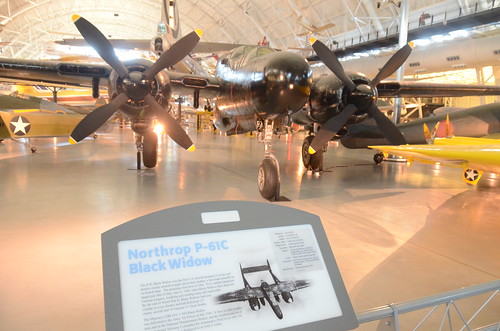
Image by Chris Devers
Examine & contrast:
Northrop P-61C Black widow:
* Front view
* Above view
Star Wars ARC-170 Fighter:
* Official web page
* Wikia
* Wikipedia
* Toy evaluation
I put it to you that they are the Identical Thing.
* twin engines
* double-cockpit in front
* gunner’s cockpit in back
* broad wing coming out from the middle
• • • • •
See far more images of this, and the Wikipedia write-up.
Specifics, quoting from Smithsonian National Air and Space Museum: Steven F. Udvar-Hazy | Northrop P-61C Black Widow:
The P-61 Black Widow was the initial U.S. aircraft developed to locate and destroy enemy aircraft at night and in poor weather, a feat produced possible by the use of on-board radar. The prototype 1st flew in 1942. P-61 combat operations started just following D-Day, June 6, 1944, when Black Widows flew deep into German airspace, bombing and strafing trains and road visitors. Operations in the Pacific started at about the identical time. By the finish of World War II, Black Widows had observed combat in each and every theater and had destroyed 127 enemy aircraft and 18 German V-1 buzz bombs.
The Museum’s Black Widow, a P-61C-1-NO, was delivered to the Army Air Forces in July 1945. It participated in cold-climate tests, high-altitude drop tests, and in the National Thunderstorm Project, for which the leading turret was removed to make room for thunderstorm monitoring gear.
Transferred from the United States Air Force.
Manufacturer:
Northrop Aircraft Inc.
Date:
1943
Country of Origin:
United States of America
Dimensions:
All round: 450 x 1500cm, 10637kg, 2000cm (14ft 9 3/16in. x 49ft two 9/16in., 23450.3lb., 65ft 7 3/8in.)
Extended Description:
The P-61 Black Widow was the very first United States aircraft created from the commence to locate and destroy other aircraft at evening and in bad weather. It served in combat for only the final year of Planet War II but flew in the European, Mediterranean, Pacific, and China-Burma-India theaters. Black Widow crews destroyed 127 enemy aircraft and 18 robot V-1 buzz bombs.
Jack Northrop’s massive fighter was born during the dark days of the Battle of Britain and the London Blitz in 1940. British successes against German daylight bombers forced the Luftwaffe (German Air Force) to shift to night bombing. By the time Royal Air Force (RAF) Spitfires could launch, climb out, and then attempt to intercept these raids, the bombers crews had typically dropped their loads and turned for house. An aircraft was necessary to patrol the skies over England for up to seven hours in the course of the night, and then stick to radar vectors to attack German aircraft just before they reached their target. U.S. Army Air Corps officers noted this requirement and decided that America must have a evening fighter if and when it entered the war.
The Army awarded a contract to Northrop on January 30, 1941. The resulting design and style featured twin tail booms and rudders for stability when the aircraft closed in behind an intruder. It was a large aircraft with a massive fuel load and two effective engines. Armament evolved into four 20 mm cannons mounted in the belly firing forward and a powered, remote-controlled turret on best of the center fuselage equipped with four .50 cal. machine guns. The three-man crew consisted of the pilot, a gunner seated behind him, and a radar observer/gunner at the rear behind the gun turret. Only the pilot could fire the cannons but any of the 3 could operate the machine guns.
Simultaneously, perform was proceeding, at a laboratory run by the Massachusetts Institute of Technology, to develop the airborne radar set. The Army tested an early design and style in a Douglas B-18 in 1941. The considerably-enhanced SCR-520 set was ready by early 1942. Meanwhile, Army enthusiasm for the XP-61 developed one more contract on March ten, 1941, for 13 service-test YP-61s. Even before these airplanes flew, Northrop received orders for 410 production machines! Northrop test pilot Vance Breeze flew the aircraft on Might 26, 1942. Although the Black Widow was almost as large as a medium bomber, it was a correct fighter. The only prohibited flight maneuvers had been outside loops, sustained inverted flight, and deliberate spins.
As Northrop advanced the design toward production, provide troubles arose and modifications became needed. The four-gun top turret was the exact same variety fitted to the prime forward position on the Boeing B-29 Superfortress (see NASM collection) and that bomber had production priority more than the P-61. As a outcome, many hundred P-61s did not have this turret. Those that did skilled buffeting when the turret was traversed from side to side and a repair took time. By October 1943, the initial P-61s have been coming off the line. Education began immediately, and the initial evening fighters arrived in the European Theater by March 1944. Combat operations began just right after D-Day (June 6) and the Black Widows quickly departed from their original part as defensive interceptors and became aggressors. They flew deep into German airspace, bombing and strafing trains and road traffic and creating travel challenging for the enemy by day and at evening.
P-61s arrived in the Pacific Theater at about the very same time as the European Black Widows. For years, the Japanese had operated lone bombers over Allied targets at evening and now U. S. fighters could find and attack them. However, on June 30, 1944, a Mitsubishi BETTY (see NASM collection) became the very first P-61 kill in the Pacific. Soon, Black Widows controlled the evening skies. On the evening of August 14-15, a P-61 named "Lady in the Dark" by her crew encountered an intruding Nakajima Ki-43 Hayabusa (Peregrine Falcon) OSCAR (see NASM collection) and eventually forced it into the sea with out firing a shot. Although the war was officially over, no one was confident that all of the Japanese had heard the message and stopped fighting. The American night fighters flew once more the next night and "Lady in the Dark" again discovered a target. It was a Nakajima Ki-44 Shoki (Demon) TOJO and the fighters maneuvered wildly as they attempted to obtain an benefit. The P-61 crew lost and reacquired the Ki-44 numerous occasions then ultimately lost it for excellent and returned to base. The next day ground troops discovered the wrecked TOJO. In the darkness, Lady in the Dark’s crew had forced the Japanese pilot to fly into the ground, again with out firing a shot.
With the war more than, the Army cancelled additional production. Northrop had built 706 aircraft like 36 with a very modified center fuselage. These F-15As (later redesignated RF-61C) mounted a quantity of cameras in the nose and proved able reconnaissance platforms. Many of these airplanes participated in the initial great aerial photographic survey of the Pacific islands. A couple of, plus some special objective P-61s, stayed in active service till 1950.
NASM’s Black Widow is a P-61C-1-NO, U.S. Army Air Forces serial number 43-8330. Northrop delivered it to the Army on July 28, 1945. By October 18, this P-61 was flying at Ladd Field, Alaska, in cold climate tests and it remained there till March 30, 1946. This airplane later moved to Pinecastle Air Force Base, Florida, for participation in the National Thunderstorm Project. The project’s aim was to learn far more about thunderstorms and to use this understanding to far better protect civil and military airplanes that operated near them. The U. S. Weather Bureau and the National Advisory Committee for Aeronautics (NACA) undertook the study with cooperation from the Army Air Forces and Navy. With its radar and specific flight qualities, the P-61 was capable of locating the most turbulent regions of a storm, penetrating them, and returning crew and instruments intact for detailed study.
Pinecastle personnel removed the guns and turret from 43-8330 in July 1946 to make space for new equipment. In September, the aircraft moved to Clinton County Army Air Base, Ohio, exactly where it remained till January 1948. The Air Force then assigned the aircraft to the Flight Test Division at Wright-Patterson Air Force Base, Ohio. Soon after declaring the airplane surplus in 1950, the Air Force stored it at Park Ridge, Illinois, on October three along with critical aircraft destined for the National Air Museum.
But 43-8830 was not done flying. NACA asked the Smithsonian to lend them the aircraft for use in one more unique system. The committee wanted to investigate how aerodynamic shapes behaved when dropped from higher altitude. The Black Widow arrived at the Ames Aeronautical Laboratory, Naval Air Station Moffett Field, California, on February 14, 1951. NACA returned the aircraft and delivered it to the Smithsonian at Andrews Air Force Base, Maryland, on August ten, 1954. When the engines shut down for the last time, this P-61 had accumulated only 530 total flight hours. Smithsonian personnel trucked it to the Paul Garber Facility in Suitland, Maryland. In 2006, the aircraft was preserved and assembled at the Udvar-Hazy Center. The three different paint schemes from its previous service life have been revealed by meticulously removing individual layers of paint.
