Showing posts with label Elements. Show all posts

Sunday, August 30, 2015

Cool Precision Engineering Elements photos

A couple of nice precision engineering components images I found:


Beaulieu National Motor Museum 18-09-2012


Image by Karen Roe

1903 Cadillac

USA

This Model A was the initial Cadillac to be brought to Britain. Frederick Stanley Bennett imported it and drove it in the 1903 Thousand Miles Trial. Bennett subsequently became the official UK importer and was behind the standardisation tests of 1908 in which three identical Cadillacs were dismantled and then rebuilt from a mixed up pile of components, proving the interchangeability of the elements.

Produced in 1902 by Henry Leland, Cadillac was constructed upon the remains of the original Henry Ford Firm. From the starting Leland insisted on the highest requirements of precision engineering in order to build a quality mass produced car, demanding that ‘We need to make every piston so precise and every single cylinder so exact that every piston will fit into every cylinder’. Regardless of these higher production requirements more than 2000 Cadillacs had been developed in 1903.

Engine: 1609cc, 1 cylinder, overhead valve, six,5hp

Performance: 30mph

Cost New: £200

Manufacturer: Cadillac Automobile Business, Detroit

Owner: Mr J.F. Bennett and Mrs M Southam


Housing a collection of over 250 automobiles and motorcycles telling the story of motoring on the roads of Britain from the dawn of motoring to the present day, the award winning (Winner – The International Historic Motoring Awards of the Year 2012) National Motor Museum appeals to all age groups. From World Land Speed Record Breakers such as Campbell’s famous Bluebird to film favourites such as the magical flying car, Chitty Chitty Bang Bang and uncommon oddities like the giant orange on wheels. Don’t miss fascinating extra attributes such as the Motorsport Gallery, Wheels and Jack Tucker’s Garage – A permanent, multi award-winning 1930’s garage has been produced inside the Museum, comprehensive down to the final nut and bolt and rusty drainpipe. While the building is a comprehensive fabrication, everything in it – all the fixtures, fittings, tools and ephemera – are genuine artefacts collected over a period of 25 years.


Custom Inshore Snook Spinning Rod


Image by Cajun Custom Rods

This Cajun Custom Rods™ “Inshore Snook Spinning Rod&quot is functionality-enhanced and hand-crafted to provide you the quite greatest custom fishing rod obtainable – loaded for inshore fishing action! Precision-tuned for energy-finesse inshore spin-casting, this custom fishing rod leverages cutting-edge technologies to incorporate: a classic layout of hand-tuned Titanium REC Recoil spinning guides with &quotSpring-Back technology,&quot a CCR™ split grip manage technique utilizing Super Grade Premium Higher Density (HD) Portuguese cork, a sensitivity-tuned and ergonomic AERO spinning reel seat (silver hood / comfort finish), ProWrap &quotMetallic Green &amp Black&quot thread, and a laser-cut Snook decal. This custom fishing rod is built around a perfectly engineered 7′ Lamiglas inshore popping series rod blank … engineered, fabricated, and hand-tuned to each premium component! Custom-made, corrosion-proof, and strike-prepared … At Cajun Custom Rods™, you style the rod of your dreams and we’ll build your self-assurance!”


&quotTight Wraps, Tight Lines, and Content Fishing on the 4th of July!&quot


– Jaesen Yerger

Cajun Custom Rods™, Inc.
www.cajuncustomrods.com


Custom Inshore Snook Spinning Rod


Image by Cajun Custom Rods

This Cajun Custom Rods™ “Inshore Snook Spinning Rod&quot is efficiency-enhanced and hand-crafted to supply you the extremely greatest custom fishing rod available – loaded for inshore fishing action! Precision-tuned for power-finesse inshore spin-casting, this custom fishing rod leverages cutting-edge technologies to include: a standard layout of hand-tuned Titanium REC Recoil spinning guides with &quotSpring-Back technology,&quot a CCR™ split grip manage program utilizing Super Grade Premium High Density (HD) Portuguese cork, a sensitivity-tuned and ergonomic AERO spinning reel seat (silver hood / comfort finish), ProWrap &quotMetallic Green &amp Black&quot thread, and a laser-cut Snook decal. This custom fishing rod is constructed around a completely engineered 7′ Lamiglas inshore popping series rod blank … engineered, fabricated, and hand-tuned to every single premium element! Custom-developed, corrosion-proof, and strike-ready … At Cajun Custom Rods™, you design the rod of your dreams and we’ll create your self-assurance!”


&quotTight Wraps, Tight Lines, and Content Fishing on the 4th of July!&quot


– Jaesen Yerger

Cajun Custom Rods™, Inc.
www.cajuncustomrods.com


(Source from rapid prototyping from China blog)

Sunday, June 7, 2015

Latest Precision Engineering Elements News

State legislature wants to invest in aerospace

Horst Engineering, the 69-year-old loved ones enterprise that I lead, not too long ago closed our Mexican operations and is expanding precision machining and forming operations in Connecticut and Massachusetts. We see opportunities right here but are keenly aware of the …
Read far more on Hartford Organization


Three teenagers &#39touched inappropriately&#39 close to station in Marlow

3 teenagers had been touched inappropriately by a man in a series of sexual assaults near the train station in Marlow yesterday afternoon. Police say he approached two girls and a 19-year-old lady in the area about Station Method among 4pm and&nbsp…
Study much more on Bucks Free of charge Press


SkinnyPack at the head of the pack in DuPont Awards 2015

The four-colour IPL label, which fills in between the “legs” of the tub and completes the bottom of the container, is converted by Precision Press. ADVERTISEMENT. Filling of the new …. “Prent has a great style group that can articulate what we as a …
Read more on Packaging Globe


(Source from rapid prototyping from China blog)

Tuesday, February 17, 2015

HLH Prototypes Now Offering Superior Vacuum Casting Production Elements


Shenzhen, China (PRWEB) February 02, 2015


HLH Prototypes has lately upgraded their facility to supply superior quality vacuum casting production components. With established credentials in producing prototypes, the company gives superior vacuum casting production parts in a range of material within the budget of the client. Their precision cast parts are employed in a wide spectrum of industries.


&#13


1 of the executives with the company stated, “Our expertise includes CNC machining, vacuum casting and speedy injection molding amongst other individuals. One particular of China’s biggest and longest operating prototyping and contract manufacturing bureaus, HLH Prototypes has its own UKAS ISO9001:2008 accredited modern facilities positioned in Shenzhen, China. Our achievement is attributed to our resolve to provide the highest possible levels of service and quality whilst sustaining competitive charges.”


&#13


Following urethane casting, HLH Prototypes has capacity to create a wide range of finishes for the components. The prototyping contract-manufacturing bureau has at its disposal on internet site vacuum casting facilities employing urethane parts, in addition to the complete variety of post process machining and finishing possibilities.


&#13


Shedding some light on the 3D printing prototyping services on offer you, Nissan additional stated, “Due to the years of engineering knowledge, we have the understanding to supply practical however reasonably priced prototyping services to company establishments and people scattered all across the globe. The broad choice of cutting edge technologies and superior components, enables us to roll out prototyping and low-to-mid-volume production of plastic and metal components. Using the state of art technologies such as CNC, SLA, SLS and FDM allow for low volume production and for larger volumes.”


&#13


The in depth knowledge in ideal rapid prototyping in China and massive investments in technologies and coaching has enabled HLH Prototypes to cater to the prototyping and production requirements of its clientele to perfection. The contract-manufacturing bureau is a lot more than capable of accomplishing projects with exceptional and varied finishes and higher precision and accuracy. Owing to the aforementioned motives, one particular can safely infer that HLH Prototypes is the top manufacturer cast urethane parts.


&#13


About HLH Prototypes:


&#13


With the base of operations in Shenzhen, China HLH Prototypes is performing a commendable job when it comes to supplying diligent and bespoke options such as solution development, prototyping and manufacturing services to its clientele scattered all across the globe. It excels in delivering a wide portfolio of solutions including precision CNC machining and turning, vacuum casting and reaction injection molding, SLA and SLS 3D printing and hand sculpture plus fast and production tooling and sheet metal work all under one roof although maintaining the rates on the reduced side. All the above attributes pointed out above make HLH Prototypes the most expert CNC prototype service in China.


&#13


Contact Data:


&#13


HLH Prototypes&#13

1801 Xing Ji Creating, &#13

Xin Sha Road, Shajing, &#13

Baoan, Shenzhen, &#13

China, 518125&#13

Factory: 2nd floor, Constructing 6, &#13

Hua Fa Industrial Park, &#13

Fu Yuan 1st Road, Fuyong, &#13

Baoan, Shenzhen, China&#13

Tel: +86-755-82569129 (ext 817 for English)&#13

Fax: +86-755-82569136&#13

E-mail: info(at)hlhprototypes(dot)com &#13

Web site: http://www.hlhprototypes.com&#13

###


&#13

&#13

&#13

&#13

&#13


(Source from rapid prototyping from China blog)

Thursday, October 23, 2014

Cool Cnc Machined Elements pictures

A handful of nice cnc machined elements photos I located:


Julien Maire “Relief”


Image by iMAL.org
www.imal.org/en/relief


Via expanding &amp contracting pieces, and stereolithographic projections, Julien Maire’s installations indirectly address new technologies, media archaeology and manipulate fiction.


For much more than ten years, Julien Maire has mastered and used in unexpected techniques sophisticated technologies such as CNC mills, laser cutters, precision optics, and so forth. Right now, 3D printers are naturally also portion of his toolbox.

For these two new pieces, Julien designed and constructed all original components, mechanisms and components making use of the complete range of machines accessible at Fablab.iMAL, from Ultimaker and Mendel DIY printers to the laser-primarily based Form1 3D printer.


Julien Maire “Relief”


Image by iMAL.org

Stereolithographic projection


www.imal.org/en/relief


Via expanding &amp contracting pieces, and stereolithographic projections, Julien Maire’s installations indirectly address new technologies, media archaeology and manipulate fiction.


For far more than ten years, Julien Maire has mastered and employed in unexpected approaches advanced technologies such as CNC mills, laser cutters, precision optics, etc. Today, 3D printers are naturally also part of his toolbox.

For these two new pieces, Julien developed and built all original parts, mechanisms and components making use of the entire range of machines accessible at Fablab.iMAL, from Ultimaker and Mendel DIY printers to the laser-primarily based Form1 3D printer.


Julien Maire “Relief”


Image by iMAL.org
www.imal.org/en/relief


Via expanding &amp contracting pieces, and stereolithographic projections, Julien Maire’s installations indirectly address new technologies, media archaeology and manipulate fiction.


For a lot more than ten years, Julien Maire has mastered and used in unexpected ways sophisticated technologies such as CNC mills, laser cutters, precision optics, and so forth. Right now, 3D printers are naturally also element of his toolbox.

For these two new pieces, Julien developed and constructed all original parts, mechanisms and components employing the complete variety of machines available at Fablab.iMAL, from Ultimaker and Mendel DIY printers to the laser-based Form1 3D printer.


(Posted by an aluminium machining China Company and precision CNC machined parts China manufacturer)

Wednesday, October 15, 2014

Good Sheet Metal Elements images

Some cool sheet metal elements images:


Tupolev Tu-four


Image by Peer.Gynt

Monino Central Air Force Museum (Moscow) July 2010


The Tupolev Tu-4 (NATO reporting name: Bull) was a piston-engined Soviet strategic bomber that served the Soviet Air Force from the late 1940s to mid-1960s. It was a reverse-engineered copy of the U.S.-produced Boeing B-29 Superfortress.

Towards the finish of Planet War II, the Soviet Union saw the need for a strategic bombing capability equivalent to that of the United States Army Air Forces. The Soviet VVS air arm did have their own-design and style Petlyakov Pe-8 4-engined &quotheavy&quot in service at the start of the war, but only 93 have been built by the end of the war as the sort had been equipped with unreliable turbocharged V12 diesel engines at the commence of its service to give it extended variety. The U.S. often carried out bombing raids on Japan, really close to the Soviet Union’s borders, from distant Pacific forward bases using B-29 Superfortresses. Joseph Stalin ordered the improvement of a comparable bomber.


The U.S. twice refused to supply the Soviet Union with B-29s under Lend Lease. Nevertheless, on 4 occasions during 1944, person B-29s produced emergency landings in Soviet territory and one crashed soon after the crew bailed out. In accordance with the Soviet–Japanese Neutrality Pact, the Soviets had been neutral in the Pacific War and the bombers have been therefore interned and kept by the Soviets. Regardless of Soviet neutrality, America demanded the return of the bombers, but the Soviets refused. 3 repairable B-29s had been flown to Moscow and delivered into Tupolev OKB. One particular B-29 was dismantled, the second was utilized for flight tests and training, and the third one particular was left as a standard for cross-reference. With the Soviet declaration of war against Japan in accordance with the Yalta agreement to enter the war within 90 days of VE day (to let it time to move its forces from Europe to Asia) at about 11pm on August eight, 1945 — two days right after the U.S. bombing of Hiroshima and the subsequent entente with Japan ending, the fourth B-29 was returned to the US along with its crew.


Stalin tasked Tupolev with cloning the Superfortress in as brief a time as feasible as an alternative of continuing with his personal comparable ANT-64 or samolet (aircraft) 64, and Soviet sector was to generate 20 copies of the aircraft ready for State acceptance trials in just two years.


The Soviet Union used the metric technique, hence sheet aluminum in thicknesses matching the B-29’s imperial measurements have been unavailable. The corresponding metric-gauge metal was of various thicknesses. Alloys and other supplies new to the Soviet Union had to be brought into production. In depth re-engineering had to take place to compensate for the variations, and Soviet official strength margins had to be decreased to avoid further redesign,[9] yet despite these challenges the prototype Tu-four only weighed about 750 lb (340 kg) much more than the B-29, a distinction of much less than 1%.


The engineers and suppliers of elements were under stress from Tupolev, Stalin, and the government to generate an exact clone of the original B-29 to facilitate production and Tupolev had to overcome substantial resistance in favor of using equipment that was not only already in production but in some situations much better than the American version. Each and every component produced and each and every alteration was scrutinized and was subject to a lengthy bureaucratic method. Differences have been restricted to the engines, the defensive weapons, the radio (a later model used in lend-lease B-25s was employed in spot of the radio in the interned B-29s) and the identification buddy or foe (IFF) program – the American IFF getting unsuitable. The Soviet engine, the Shvetsov ASh-73 was a development of the Wright R-1820 but was not otherwise associated to the B-29s Wright R-3350. and the remote-controlled gun turrets were redesigned to accommodate the harder hitting and longer ranged Soviet Nudelman NS-23 23mm cannon. Kerber, Tupolev’s deputy at the time, recalled in his memoirs that engineers necessary authorization from a higher-ranking common to use Soviet-made parachutes. Extra changes had been created as a result of difficulties encountered during testing, associated to engine and propeller failures and equipment modifications had been produced throughout the aircraft’s service life. Despite the fact that it has been extensively quoted, the Tu-4 did not have a random hole drilled in the wing either to emulate a bullet hole or due to the fact a Boeing engineer made a mistake – the Russians had three total aircraft and the wreckage of a fourth and the likelihood of all four getting a hole in the same spot is as well small to be credible. The aircraft included 1 Boeing-Witchita −5-BW, 2 Boeing-Witchita −15-BWs and the wreckage of 1 Boeing-Renton −1-BN – 3 diverse models from two diverse production lines. Only 1 of the 4 had de-icing boots as utilised on the Tu-four.


The Tu-four 1st flew on 19 May 1947, piloted by test pilot Nikolai Rybko. Serial production started immediately, and the sort entered big-scale service in 1949. Entry into service of the Tu-four threw the USAF into a panic, because the Tu-4 possessed enough range to attack Chicago or Los Angeles on a 1-way mission, and this may have informed the maneuvers and air combat practice performed by US and British air forces in 1948 involving fleets of B-29s. Some attempts to develop midair refueling systems have been made to extend the bomber’s variety, but these have been fitted to only a few aircraft.

The aircraft was initial displayed during a flyover at the Aviation Day parade on three August 1947 at the Tushino Airport in Moscow. 3 aircraft flew overhead. It was assumed that these were merely the three B-29 bombers that were recognized to have been diverted to the USSR throughout Planet War II. Minutes later a fourth aircraft appeared. Western analysts realized that the Soviets must have reverse-engineered the B-29. The appearance of an clearly Superfortress-derived Tu-70 transport more than the crowd removed any doubt about the accomplishment of the reverse-engineering.

Eight hundred and forty-seven Tu-4s had been built when production ended in the Soviet Union in 1952, some going to China during the later 1950s. Many experimental variants were built and the beneficial experience launched the Soviet strategic bomber plan. Tu-4s were withdrawn in the 1960s, getting replaced by far more advanced aircraft: the Tupolev Tu-16 (beginning in 1954) and the Tupolev Tu-95 (beginning in 1956). By the beginning of the 1960s, the only Tu-4s nevertheless operated by the Soviets were utilized for transport or airborne laboratory purposes. A Tu-4A was the very first Soviet aircraft to drop a nuclear weapon, the RDS-1.


Santa’s Electric


Image by jurvetson

What a superb present from Tesla – the opportunity to drive the identical vehicle that I have had since August, but now with an completely new motor, inverter and gear box. They just upgraded me to Powertrain 1.5 and firmware 3.1.12


It’s much smoother and has the rail gun torque that I had read so a lot about. Also, the battery coolant pump now shuts down when parked (an irksome precaution in early models that is no longer required).


The fascinating back story is that a key redesign of the whole drivetrain was enabled by a breakthrough in the semiconductor market – a new IGBT (power transistor) that just began shipping. Advances in the smallest of components unlocked a design and style cascade to remove the need for shifting altogether (no transmission) while also improving efficiency (longer range, higher efficiency, 30% more torque, 14,000 RPM redline).


The Tesla weblog has the full story and gearbox photos from the CTO, J.B. Straubel.


(Posted by an aluminium machining China Company and precision CNC machined parts China manufacturer)

Wednesday, October 1, 2014

Multitasking machining for valve elements


The DBF 630 / 800 allow complete machining in one particular clamping position, therefore the name DBF (which stands for turning-drilling-milling ) which has a decisive ef…
Video Rating: 5 / five


Jason Verbelli & Fernando Morris on the SEG (six Parts): http://www.youtube.com/watch?v=OBOwolOuHm8 Pdf of the presentation: http://www.scribd.com/doc/13460878…


(Posted by an aluminium machining China Company and precision CNC machined parts China manufacturer)

Sunday, September 28, 2014

Latest Cnc Machined Elements Makers News

SRAM 1X Case Study: Reinventing the Bicycle Drivetrain for a Lighter, Easier

Most element businesses have been providing a ten-speed rear cassette instead of a 9-speed which allowed a comparable gear variety to the 3-ring set up. However, elite cross-nation pros, always in search of the lightest answer feasible, took …
Study more on Core77.com (blog)


(Posted by an aluminium machining China Company and precision CNC machined parts China manufacturer)

Saturday, September 27, 2014

Deburring Machined Elements (Internal) - IEPC Cascade


Deburring Machined Elements (Internal) – IEPC Cascade.
Video Rating: / 5


ABOUT ZERO HOUR Parts Zero Hour Components was founded by a mechanical engineer who realized that in today’s quickly paced development cycles, waiting more then one particular …
Video Rating: / five


(Posted by an aluminium machining China Company and precision CNC machined parts China manufacturer)

Tuesday, September 23, 2014

Newest Precision Turned Elements Suppliers News

Computer foil existing

My intuition got a little upbraiding as soon as upon a time during a discussion about the existing distribution in a copper foil pad of a circuit board. I made the blithe and apparently incorrect assumption that, as in this first sketch, if existing were …
Read a lot more on EDN.com (blog)


(Posted by an aluminium machining China Company and precision CNC machined parts China manufacturer)

Monday, September 22, 2014

Precision Turned Elements and The Style Method


When you have chosen a company to perform with for getting precision turned elements, you need to have to ensure the business in query is 1 of extended establishment, and consequently a good track record with earlier clients, reliability and professionalism. Nonetheless, ahead of you go by way of with your order you need to have to ascertain that the design you have produced is fully up to normal and falls in line with the exact specifications that you have for the job. Keeping a great normal of item ensures that you retain the client you are functioning for and continue to provide an outstanding good quality service for them. This will ascertain that your company maintains a steady workload and is usually wanted by the quite very best of customers.


The design and style stage of the method is down to you and your company completely and ought to not be left to the organization that you are hiring to make the precision turned components that you require. Consequently, if any errors are produced throughout the production as a result of the style, the business you have hired can not be held accountable for this. As you can tell, it is vitally important that you have any styles thoroughly checked out prior to sending them on to the company that you have chosen to total the work. Also, if you are not entirely comfy with undertaking the designing your self, you can often hire an option business to do this for you as nicely.


You must be quite careful when hiring a company to do this variety of work for you due to the higher standards the business suggestions set out. The requirements are extremely precise and always need to be of the utmost in top quality and as a result, you need to have to completely investigation and confirm the previous operate of any business that you are seeking to function with on your projects. You will require to look at how lengthy your order will take to comprehensive and also how long their delivery time frame is as this will of course play a part in their service to you as a client. Look into any feedback that is displayed on their internet site and study the organization in common as greatest you can in order to ascertain that they are the right company for you to be putting your orders with. On a final note, constantly make positive that they can preserve up with the workload that you have as this will make certain all of your future orders for precision turned components can be met.


Precision turned elements and the design stage with Apt Leicester! – http://aptleicester.co.uk/


Locate A lot more Precision Turned Components Suppliers Articles


(Posted by an aluminium machining China Company and precision CNC machined parts China manufacturer)

Sunday, September 21, 2014

Newest Machining Elements Manufacturer News

Southeastern Technology finds future of manufacturing

When it opened in 1982, Southeastern Technologies workers produced by hand components with tool and die machines and industrial grinders. &quotThirty years ago this is what manufacturing was,&quot SET Business Development Chief Michael Spencer stated pointing to a an&nbsp…
Study a lot more on The Everyday News Journal


Johnson hits Gov. Dayton on overall health care

He appeared at Mack Engineering — a modest Minneapolis manufacturing company of machined components for businesses such as John Deere and Honeywell – where co-owner Jennifer Salisbury stated her organization was experiencing skyrocketing overall health&nbsp…
Read more on Minneapolis Star Tribune


(Posted by an aluminium machining China Company and precision CNC machined parts China manufacturer)

Latest Brass Precision Turned Elements News

The OECD BEPS Action Strategy – Status And Potential Implications For Luxembourg

The OECD also publishes routinely a &quotCalendar for planned stakeholders input&quot (see www.oecd.org/ctp/discussiondrafts.htm) – the most recent (13 Might 2014) version does not give any far more precise guidance on the likely concern dates of draft output for …
Study much more on Mondaq News Alerts (registration)


Metal Finishing Chemical substances, International Industry Analysts

Sales for Aerospace, Aluminium Finishing, Auto Elements,. Automotive OEM, Coil, Common Sector, and Wire/Tube. (contains corresponding Graph/Chart) II-six. Metal Finishing Chemical substances Come Under Environmental Scanner II-six. two. Marketplace TRENDS&nbsp…
Study much more on SYS-CON Media (press release)


(Posted by an aluminium machining China Company and precision CNC machined parts China manufacturer)

Saturday, September 20, 2014

Cool Precision Turned Elements Suppliers pictures

Some cool precision turned components suppliers images:


Montblanc Boutique in the Yorkdale Mall, Toronto, Ontario – 115


Image by antefixus21

Montblanc Wrist Watch wall display case.


Chronograph – Nicholas Rieussec time piece.


Swiss made.


Montblanc Nicolas Rieussec Chronograph Automatic Watch Review

WRIST TIME REVIEWS

20 COMMENTSJANUARY 3, 2011 BY ARIEL ADAMS


This watch review is going to be a bit different than how I usually do them. Why? Because shortly before the review I was actually able to visit the manufacture making the movements of this watch. That experience offered me some special insight that allowed me to understand this timepiece more.

I know there is a lot of talk on the "manufacture" movement. In fact, a recent panel discussion I had with fellow watch expert journalists allowed me to realize that there is no strict definition of "watch manufacture" or "manufacture movement." This definitional ambiguity hurts my ability to explain things properly, but let it be said that Montblanc makes the movement in each of the Nicolas Rieussec watches themselves. Of course there is some help from suppliers, but this is about as "in-house" a job as most people want it to be. My understanding is that the components of the movements are made at the Valfleurier facility in Buttes Switzerland. The pieces are then sent to Montblanc Le Locle for assembly and testing.


What fascinated me most about the Montblanc manufacture in Le Locle Switzerland was just how modern it was. I mean it is true that many watch manufactures feel like you are in some combo of a hospital and science lab, but the machinery available to the watch makers at the Le Locle facility was impressive. I have a larger feature length article on this topic that will come out soon – but in short, when it comes to the Nicolas Rieussec line of timepieces, Montblanc relies on a clever environment that combines the human approach of watch makers with the precision assistance of machines.


A few example of this synergy between man (or woman) and machine? Here are two. One of the images here is of a machine that robotically applies lubricant to designated spots in a watch. Such lubricant must be precisely applied with an exact amount. The more consistently applied the better. While a human assembles the movement, a robot is used to apply the lubricant better and with more precision in terms of amount than any human can do consistently. Another example is a machine that allows a watch maker to adjust the screws on a balance wheel and test the accuracy of the rate in real time. Basically the machine combines a magnifier, computer controlled screw driver, and a watch movement rate tester in one. While it is operated by a person, the machine makes it easy to adjust a traditional weighted balance wheel to its most precise weight distribution in the escapement assembly.


One of my favorite images here that illustrates the culture of the manufacture is the image of the watch tools with the computer mouse. If you look closely you’ll also notice the presence of a Montblanc pen. Each work station gives watchmakers a computer terminal as well as watch making tools. While I have seen this before, it certainly isn’t common.


With their movements all made in Switzerland by Montblanc, the Nicolas Rieussec collection currently consists of a few watches. My main focus here is on the Automatic Chronograph that also has a GMT and date complication (that I tested). The movement is known as the R200. The two manually wound variants (with slightly different functions) are the R100, R110, and R120 (a limited edition that used a silicium escapement). I am not going to go overboard with technical details, but the movements represent an interesting medium between the ultra-high end, and mass manufactured pieces.


The R200 has a lot of impressive features on paper. Notable to the watch nerd is that it has a column wheel based chronograph that uses a vertical clutch. These features offer more durability and precision when using the chronograph. There are very few European chronographs that feature both of these features. I should also note that some of Seiko’s higher-end chronograph movements also feature column wheels and vertical clutches, as do pieces by brands such as Patek Philippe and (the former) Daniel Roth. Why all the focus on the chronograph? Well that is the new signature complication of Montblanc. The brand latched on to the complication for good reason (as well as to Mr. Nicolas Rieussec). "Chronograph" literally means "time writer." What is Montblanc known for? Yes, making pens. Sound too good to be true to have a watch in your collection that is a "time writer?" So the emphasis on this complication make perfect sense. Nicolas Rieussec is guy credited with "inventing the chronograph." Montblanc adopted him.


A while ago Rieussec created a device that looks like an early seismograph. It was a clock with a stop and start function that pulled a disc of paper along a smaller writing tip. This device was the first known "chronograph." It was meant to measure time in horse races and actually "wrote." The look of the chronograph on the watch is taken from this early device. Montblanc keeps replicas of them around the manufacture for inspiration. Each Nicolas Rieussec watch uses two discs that move along stationary hands to show the chronograph time (up to 30 minutes). These are also monopusher chronographs that use a single pusher to cycle through "start, stop, and reset" functions for the chronograph. The pusher is large, easy to find, and placed at the 5 o’clock position on the watch. Don’t miss the exposed synthetic palette rubies exposed on the top of the chronograph dials.


This chronograph style is the signature look of the Nicolas Rieussec collection. The time is displayed on an off-centered dial at the top of the face. While small, Montblanc really helped that dial standout and be legible. It uses that fancy looking font that you’ll find on most Montblanc Star watches. I really do love that font.


On the manually-wound versions of the Nicolas Rieussec, the time dial has a third hand used for the date. On the automatic, the third had is GMT hand. Working just like you would assume, the main time hour hand can be independently adjusted to alter the time when moving through time zones when traveling. To the left of the dial is a day/night indicator linked to the GMT hand. This useful complication help you know if it is day or night on your second timezone given that it is displayed on the 12, versus 24 hour scale. Who’d a though this would turn out to be such a useful travel watch? Both time zones share the minute hand. I was generally impressed by the GMT functionality of the watch and feels that the R200 movement’s use of the third hand is better than having it be a date indicator.


While the left of the dial has the day/night indicator, the right has a date wheel. For symmetry Montblanc uses a window of a similar shape, but I don’t much care for "open" date windows. It also does not look spectacular with the upper and lower date being partially under the dial – though that does actually help with keeping your focus on the actual date. While the windows that flank the time dial look nice, I have a feeling Montblanc might work to revise or polish the design in future generations of the watch.


Coming in a few tones, the dial of the Montblanc Nicolas Rieussec is an interesting creature. It took me a while to warm up to it, but I am enjoying the design. While totally different than other collection Montblanc offers, the Nicolas Rieussec does share the brand’s DNA nicely. Of course the crown has that lovely white Montblanc star, and the case is very much inspired by the Star collection. To create visual depth, the power part of the dial is partially "eclipsed" by a plate of Geneva stripe polished metal – plus, the dial looks to be made up of a few layers. The chronograph dials are covered with a sort of wish-bone like bridge that uses blued steel screws (blued steel is also used for some of the hands). This is a nice element, but I had one suggestion for Montblanc. While this might increase the cost a bit, I think it would be really welcome. The bridge is made from stamped steel. What if it could be made from milled and hand-polished steel? It would provide a wonderful visual cue and reminder that this is a hand-assembled watch. Perhaps in the future.


Let’s visit the R200 movement again. It is an automatic version of the R100 with a few addition complications (as mentioned above). You can see the rotor placed over the movement, with the small Montblanc star shaped hole that is designed to pass right over the column wheel opening window. The movement has two mainspring barrels for a power reserve of 72 hours. The movement operates at 28,800bmp and can be adjusted to be very accurate. I saw a movement at the manufacture that was adjusted to operate within less than one second of deviation a day. I love that the movement combines modern technology and traditionalism. Like I said, it uses a free-weighted balance spring and column wheel, enjoys helps from highly sophisticated machinery in its assembly and manufacture.


The Nicolas Rieussec watch case is 43mm wide and 14.8mm tall. It isn’t a small watch, but it does wear like a medium one. Its height is visually reduced by the highly curved lugs. Front and rear crystal are sapphire (with the front crystal having double AR coating), while it is water resistant to 30 meters.


Montblanc has assured me that their dedication to the Nicolas Rieussec collection is intense. The collection will receive more attention in the future, which is aided by the fact that the watch is a marketing success. One of the reasons for this is the pricing. While the watches aren’t cheap they are more reasonable that you’d expect. The pieces come in gold, platinum, and steel. The gold models are in the ,000 range. Not cheap, but Montblanc isn’t asking for ,000. Actually, their platinum version is about ,000 – which in the luxury market isn’t that much for a platinum watch. In steel the watch retails for about ,200. It comes in a steel bracelet or an alligator strap (black or brown). I am told that soon Montblanc will develop a brand new metal bracelet for the Nicolas Rieussec collection.


Overall these are enjoyable watches. The Montblanc identity is a major positive, and I enjoy the visual design and functionality of the R200 movement. While unique in its looks, this is an easy watch to wear daily. Montblanc isn’t making a mere collector’s piece here. Designed to prevent boredom but maintain utility the Nicolas Rieussec watch collection is intended for all types of watch lovers to worn daily.


Montblanc Boutique in the Yorkdale Mall, Toronto, Ontario – 118


Image by antefixus21

Montblanc Wrist Watch wall display case.


Chronograph – Nicholas Rieussec time piece.


Swiss made.


Montblanc Nicolas Rieussec Chronograph Automatic Watch Review

WRIST TIME REVIEWS

20 COMMENTSJANUARY 3, 2011 BY ARIEL ADAMS


This watch review is going to be a bit different than how I usually do them. Why? Because shortly before the review I was actually able to visit the manufacture making the movements of this watch. That experience offered me some special insight that allowed me to understand this timepiece more.

I know there is a lot of talk on the "manufacture" movement. In fact, a recent panel discussion I had with fellow watch expert journalists allowed me to realize that there is no strict definition of "watch manufacture" or "manufacture movement." This definitional ambiguity hurts my ability to explain things properly, but let it be said that Montblanc makes the movement in each of the Nicolas Rieussec watches themselves. Of course there is some help from suppliers, but this is about as "in-house" a job as most people want it to be. My understanding is that the components of the movements are made at the Valfleurier facility in Buttes Switzerland. The pieces are then sent to Montblanc Le Locle for assembly and testing.


What fascinated me most about the Montblanc manufacture in Le Locle Switzerland was just how modern it was. I mean it is true that many watch manufactures feel like you are in some combo of a hospital and science lab, but the machinery available to the watch makers at the Le Locle facility was impressive. I have a larger feature length article on this topic that will come out soon – but in short, when it comes to the Nicolas Rieussec line of timepieces, Montblanc relies on a clever environment that combines the human approach of watch makers with the precision assistance of machines.


A few example of this synergy between man (or woman) and machine? Here are two. One of the images here is of a machine that robotically applies lubricant to designated spots in a watch. Such lubricant must be precisely applied with an exact amount. The more consistently applied the better. While a human assembles the movement, a robot is used to apply the lubricant better and with more precision in terms of amount than any human can do consistently. Another example is a machine that allows a watch maker to adjust the screws on a balance wheel and test the accuracy of the rate in real time. Basically the machine combines a magnifier, computer controlled screw driver, and a watch movement rate tester in one. While it is operated by a person, the machine makes it easy to adjust a traditional weighted balance wheel to its most precise weight distribution in the escapement assembly.


One of my favorite images here that illustrates the culture of the manufacture is the image of the watch tools with the computer mouse. If you look closely you’ll also notice the presence of a Montblanc pen. Each work station gives watchmakers a computer terminal as well as watch making tools. While I have seen this before, it certainly isn’t common.


With their movements all made in Switzerland by Montblanc, the Nicolas Rieussec collection currently consists of a few watches. My main focus here is on the Automatic Chronograph that also has a GMT and date complication (that I tested). The movement is known as the R200. The two manually wound variants (with slightly different functions) are the R100, R110, and R120 (a limited edition that used a silicium escapement). I am not going to go overboard with technical details, but the movements represent an interesting medium between the ultra-high end, and mass manufactured pieces.


The R200 has a lot of impressive features on paper. Notable to the watch nerd is that it has a column wheel based chronograph that uses a vertical clutch. These features offer more durability and precision when using the chronograph. There are very few European chronographs that feature both of these features. I should also note that some of Seiko’s higher-end chronograph movements also feature column wheels and vertical clutches, as do pieces by brands such as Patek Philippe and (the former) Daniel Roth. Why all the focus on the chronograph? Well that is the new signature complication of Montblanc. The brand latched on to the complication for good reason (as well as to Mr. Nicolas Rieussec). "Chronograph" literally means "time writer." What is Montblanc known for? Yes, making pens. Sound too good to be true to have a watch in your collection that is a "time writer?" So the emphasis on this complication make perfect sense. Nicolas Rieussec is guy credited with "inventing the chronograph." Montblanc adopted him.


A while ago Rieussec created a device that looks like an early seismograph. It was a clock with a stop and start function that pulled a disc of paper along a smaller writing tip. This device was the first known "chronograph." It was meant to measure time in horse races and actually "wrote." The look of the chronograph on the watch is taken from this early device. Montblanc keeps replicas of them around the manufacture for inspiration. Each Nicolas Rieussec watch uses two discs that move along stationary hands to show the chronograph time (up to 30 minutes). These are also monopusher chronographs that use a single pusher to cycle through "start, stop, and reset" functions for the chronograph. The pusher is large, easy to find, and placed at the 5 o’clock position on the watch. Don’t miss the exposed synthetic palette rubies exposed on the top of the chronograph dials.


This chronograph style is the signature look of the Nicolas Rieussec collection. The time is displayed on an off-centered dial at the top of the face. While small, Montblanc really helped that dial standout and be legible. It uses that fancy looking font that you’ll find on most Montblanc Star watches. I really do love that font.


On the manually-wound versions of the Nicolas Rieussec, the time dial has a third hand used for the date. On the automatic, the third had is GMT hand. Working just like you would assume, the main time hour hand can be independently adjusted to alter the time when moving through time zones when traveling. To the left of the dial is a day/night indicator linked to the GMT hand. This useful complication help you know if it is day or night on your second timezone given that it is displayed on the 12, versus 24 hour scale. Who’d a though this would turn out to be such a useful travel watch? Both time zones share the minute hand. I was generally impressed by the GMT functionality of the watch and feels that the R200 movement’s use of the third hand is better than having it be a date indicator.


While the left of the dial has the day/night indicator, the right has a date wheel. For symmetry Montblanc uses a window of a similar shape, but I don’t much care for "open" date windows. It also does not look spectacular with the upper and lower date being partially under the dial – though that does actually help with keeping your focus on the actual date. While the windows that flank the time dial look nice, I have a feeling Montblanc might work to revise or polish the design in future generations of the watch.


Coming in a few tones, the dial of the Montblanc Nicolas Rieussec is an interesting creature. It took me a while to warm up to it, but I am enjoying the design. While totally different than other collection Montblanc offers, the Nicolas Rieussec does share the brand’s DNA nicely. Of course the crown has that lovely white Montblanc star, and the case is very much inspired by the Star collection. To create visual depth, the power part of the dial is partially "eclipsed" by a plate of Geneva stripe polished metal – plus, the dial looks to be made up of a few layers. The chronograph dials are covered with a sort of wish-bone like bridge that uses blued steel screws (blued steel is also used for some of the hands). This is a nice element, but I had one suggestion for Montblanc. While this might increase the cost a bit, I think it would be really welcome. The bridge is made from stamped steel. What if it could be made from milled and hand-polished steel? It would provide a wonderful visual cue and reminder that this is a hand-assembled watch. Perhaps in the future.


Let’s visit the R200 movement again. It is an automatic version of the R100 with a few addition complications (as mentioned above). You can see the rotor placed over the movement, with the small Montblanc star shaped hole that is designed to pass right over the column wheel opening window. The movement has two mainspring barrels for a power reserve of 72 hours. The movement operates at 28,800bmp and can be adjusted to be very accurate. I saw a movement at the manufacture that was adjusted to operate within less than one second of deviation a day. I love that the movement combines modern technology and traditionalism. Like I said, it uses a free-weighted balance spring and column wheel, enjoys helps from highly sophisticated machinery in its assembly and manufacture.


The Nicolas Rieussec watch case is 43mm wide and 14.8mm tall. It isn’t a small watch, but it does wear like a medium one. Its height is visually reduced by the highly curved lugs. Front and rear crystal are sapphire (with the front crystal having double AR coating), while it is water resistant to 30 meters.


Montblanc has assured me that their dedication to the Nicolas Rieussec collection is intense. The collection will receive more attention in the future, which is aided by the fact that the watch is a marketing success. One of the reasons for this is the pricing. While the watches aren’t cheap they are more reasonable that you’d expect. The pieces come in gold, platinum, and steel. The gold models are in the ,000 range. Not cheap, but Montblanc isn’t asking for ,000. Actually, their platinum version is about ,000 – which in the luxury market isn’t that much for a platinum watch. In steel the watch retails for about ,200. It comes in a steel bracelet or an alligator strap (black or brown). I am told that soon Montblanc will develop a brand new metal bracelet for the Nicolas Rieussec collection.


Overall these are enjoyable watches. The Montblanc identity is a major positive, and I enjoy the visual design and functionality of the R200 movement. While unique in its looks, this is an easy watch to wear daily. Montblanc isn’t making a mere collector’s piece here. Designed to prevent boredom but maintain utility the Nicolas Rieussec watch collection is intended for all types of watch lovers to worn daily.


Montblanc Boutique in the Yorkdale Mall, Toronto, Ontario – 114


Image by antefixus21

Montblanc Wrist Watch wall display case.


Chronograph – Nicholas Rieussec time piece.


Swiss made.


Montblanc Nicolas Rieussec Chronograph Automatic Watch Review

WRIST TIME REVIEWS

20 COMMENTSJANUARY 3, 2011 BY ARIEL ADAMS


This watch review is going to be a bit different than how I usually do them. Why? Because shortly before the review I was actually able to visit the manufacture making the movements of this watch. That experience offered me some special insight that allowed me to understand this timepiece more.

I know there is a lot of talk on the "manufacture" movement. In fact, a recent panel discussion I had with fellow watch expert journalists allowed me to realize that there is no strict definition of "watch manufacture" or "manufacture movement." This definitional ambiguity hurts my ability to explain things properly, but let it be said that Montblanc makes the movement in each of the Nicolas Rieussec watches themselves. Of course there is some help from suppliers, but this is about as "in-house" a job as most people want it to be. My understanding is that the components of the movements are made at the Valfleurier facility in Buttes Switzerland. The pieces are then sent to Montblanc Le Locle for assembly and testing.


What fascinated me most about the Montblanc manufacture in Le Locle Switzerland was just how modern it was. I mean it is true that many watch manufactures feel like you are in some combo of a hospital and science lab, but the machinery available to the watch makers at the Le Locle facility was impressive. I have a larger feature length article on this topic that will come out soon – but in short, when it comes to the Nicolas Rieussec line of timepieces, Montblanc relies on a clever environment that combines the human approach of watch makers with the precision assistance of machines.


A few example of this synergy between man (or woman) and machine? Here are two. One of the images here is of a machine that robotically applies lubricant to designated spots in a watch. Such lubricant must be precisely applied with an exact amount. The more consistently applied the better. While a human assembles the movement, a robot is used to apply the lubricant better and with more precision in terms of amount than any human can do consistently. Another example is a machine that allows a watch maker to adjust the screws on a balance wheel and test the accuracy of the rate in real time. Basically the machine combines a magnifier, computer controlled screw driver, and a watch movement rate tester in one. While it is operated by a person, the machine makes it easy to adjust a traditional weighted balance wheel to its most precise weight distribution in the escapement assembly.


One of my favorite images here that illustrates the culture of the manufacture is the image of the watch tools with the computer mouse. If you look closely you’ll also notice the presence of a Montblanc pen. Each work station gives watchmakers a computer terminal as well as watch making tools. While I have seen this before, it certainly isn’t common.


With their movements all made in Switzerland by Montblanc, the Nicolas Rieussec collection currently consists of a few watches. My main focus here is on the Automatic Chronograph that also has a GMT and date complication (that I tested). The movement is known as the R200. The two manually wound variants (with slightly different functions) are the R100, R110, and R120 (a limited edition that used a silicium escapement). I am not going to go overboard with technical details, but the movements represent an interesting medium between the ultra-high end, and mass manufactured pieces.


The R200 has a lot of impressive features on paper. Notable to the watch nerd is that it has a column wheel based chronograph that uses a vertical clutch. These features offer more durability and precision when using the chronograph. There are very few European chronographs that feature both of these features. I should also note that some of Seiko’s higher-end chronograph movements also feature column wheels and vertical clutches, as do pieces by brands such as Patek Philippe and (the former) Daniel Roth. Why all the focus on the chronograph? Well that is the new signature complication of Montblanc. The brand latched on to the complication for good reason (as well as to Mr. Nicolas Rieussec). "Chronograph" literally means "time writer." What is Montblanc known for? Yes, making pens. Sound too good to be true to have a watch in your collection that is a "time writer?" So the emphasis on this complication make perfect sense. Nicolas Rieussec is guy credited with "inventing the chronograph." Montblanc adopted him.


A while ago Rieussec created a device that looks like an early seismograph. It was a clock with a stop and start function that pulled a disc of paper along a smaller writing tip. This device was the first known "chronograph." It was meant to measure time in horse races and actually "wrote." The look of the chronograph on the watch is taken from this early device. Montblanc keeps replicas of them around the manufacture for inspiration. Each Nicolas Rieussec watch uses two discs that move along stationary hands to show the chronograph time (up to 30 minutes). These are also monopusher chronographs that use a single pusher to cycle through "start, stop, and reset" functions for the chronograph. The pusher is large, easy to find, and placed at the 5 o’clock position on the watch. Don’t miss the exposed synthetic palette rubies exposed on the top of the chronograph dials.


This chronograph style is the signature look of the Nicolas Rieussec collection. The time is displayed on an off-centered dial at the top of the face. While small, Montblanc really helped that dial standout and be legible. It uses that fancy looking font that you’ll find on most Montblanc Star watches. I really do love that font.


On the manually-wound versions of the Nicolas Rieussec, the time dial has a third hand used for the date. On the automatic, the third had is GMT hand. Working just like you would assume, the main time hour hand can be independently adjusted to alter the time when moving through time zones when traveling. To the left of the dial is a day/night indicator linked to the GMT hand. This useful complication help you know if it is day or night on your second timezone given that it is displayed on the 12, versus 24 hour scale. Who’d a though this would turn out to be such a useful travel watch? Both time zones share the minute hand. I was generally impressed by the GMT functionality of the watch and feels that the R200 movement’s use of the third hand is better than having it be a date indicator.


While the left of the dial has the day/night indicator, the right has a date wheel. For symmetry Montblanc uses a window of a similar shape, but I don’t much care for "open" date windows. It also does not look spectacular with the upper and lower date being partially under the dial – though that does actually help with keeping your focus on the actual date. While the windows that flank the time dial look nice, I have a feeling Montblanc might work to revise or polish the design in future generations of the watch.


Coming in a few tones, the dial of the Montblanc Nicolas Rieussec is an interesting creature. It took me a while to warm up to it, but I am enjoying the design. While totally different than other collection Montblanc offers, the Nicolas Rieussec does share the brand’s DNA nicely. Of course the crown has that lovely white Montblanc star, and the case is very much inspired by the Star collection. To create visual depth, the power part of the dial is partially "eclipsed" by a plate of Geneva stripe polished metal – plus, the dial looks to be made up of a few layers. The chronograph dials are covered with a sort of wish-bone like bridge that uses blued steel screws (blued steel is also used for some of the hands). This is a nice element, but I had one suggestion for Montblanc. While this might increase the cost a bit, I think it would be really welcome. The bridge is made from stamped steel. What if it could be made from milled and hand-polished steel? It would provide a wonderful visual cue and reminder that this is a hand-assembled watch. Perhaps in the future.


Let’s visit the R200 movement again. It is an automatic version of the R100 with a few addition complications (as mentioned above). You can see the rotor placed over the movement, with the small Montblanc star shaped hole that is designed to pass right over the column wheel opening window. The movement has two mainspring barrels for a power reserve of 72 hours. The movement operates at 28,800bmp and can be adjusted to be very accurate. I saw a movement at the manufacture that was adjusted to operate within less than one second of deviation a day. I love that the movement combines modern technology and traditionalism. Like I said, it uses a free-weighted balance spring and column wheel, enjoys helps from highly sophisticated machinery in its assembly and manufacture.


The Nicolas Rieussec watch case is 43mm wide and 14.8mm tall. It isn’t a small watch, but it does wear like a medium one. Its height is visually reduced by the highly curved lugs. Front and rear crystal are sapphire (with the front crystal having double AR coating), while it is water resistant to 30 meters.


Montblanc has assured me that their dedication to the Nicolas Rieussec collection is intense. The collection will receive more attention in the future, which is aided by the fact that the watch is a marketing success. One of the reasons for this is the pricing. While the watches aren’t cheap they are more reasonable that you’d expect. The pieces come in gold, platinum, and steel. The gold models are in the ,000 range. Not cheap, but Montblanc isn’t asking for ,000. Actually, their platinum version is about ,000 – which in the luxury market isn’t that much for a platinum watch. In steel the watch retails for about ,200. It comes in a steel bracelet or an alligator strap (black or brown). I am told that soon Montblanc will develop a brand new metal bracelet for the Nicolas Rieussec collection.


Overall these are enjoyable watches. The Montblanc identity is a major positive, and I enjoy the visual design and functionality of the R200 movement. While unique in its looks, this is an easy watch to wear daily. Montblanc isn’t making a mere collector’s piece here. Designed to prevent boredom but maintain utility the Nicolas Rieussec watch collection is intended for all types of watch lovers to worn daily.


(Posted by an aluminium machining China Company and precision CNC machined parts China manufacturer)

Aero Engine Elements Manufactured


The processes employed are numerous and varied, some for the broad forming of a metal part to shape, some for finishing, other individuals for joining parts with each other, and yet other individuals for altering the condition of an external surface. Other, totally various, methods are utilised to produce components in composite materials.


Aerospace pressings.


1 of the familiar classic strategies is presswork, utilised to type parts to shape from metal sheet. Specifically with the higher-strength metals used in gas turbines, pressing may possibly have to be carried out with the material at high temperature, yet even then it is quite tough to accomplish the preferred dimensional tolerance. The metal tends to warp, spring back, twist, or in some other way deform so that lengthy (and consequently costly) hand operating could be needed to right the shape, and even then there may be locked-in tension. Much better isothermal (constant temperature) presswork is now getting achieved employing heated dies, of metal or ceramic, which repeatedly generate accurate stress-cost-free shapes. Very good benefits are also becoming achieved by hot blow-forming, in which the sheet-metal blank is forced into the die beneath the stress of argon fed beneath microprocessor control to keep the right strain-rate. Argon, one of the inert gases, does not react with metals even in their molten state, and so plays an critical part in the manufacture of aero engines.


Another related approach is superplastic forming SPF. About 30 years ago it was found that some metals with suitably fine grain structure can be subjected to tremendous ductile (tensile) deformation without having tearing. With careful handle of temperature and strain price, SPF components can be made in aluminium, titanium alloy and specific superplastic steels by deep drawing. The presses have to be specially made, but the forming pressures are quite modest. The finished component can have very modest bend radii and suffer such huge adjustments in shape that the metal actually flows. For instance, a billet can be squeezed into a thin-walled portion with integral stiffeners. SPF is typically combined with diffusion bonding to generate complex elements which in impact are a single piece of metal, alternatively of becoming created by joining maybe a dozen separate components.


Sheet metal spinning.


Yet another ancient craft is sheet metal spinning. The contemporary equivalent is flow-turning, in which a workpiece, initially generally a flat disc (a blank), is forced by personal computer-controlled rollers to bend to shape around a central rotating die referred to as a mandrel. The outcome is virtually any preferred conical or even cylindrical shape, exactly to size with no joint. Previously, such a portion had to be made by wrapping and welding sheet, followed by drawing and sizing to correct the shape.


CNC machining.


An additional familiar strategy is aerospace cnc machining, in which tough tools reduce away material from the workpiece. There are different kinds of cnc machining. In turning, the element is rotated on a lathe although becoming reduce by a tool which slowly moves into or along the perform. In cnc milling, it is the work which is gradually moved past a rotating cutter. Jig boring is a sort of higher-precision vertical milling. Broaching entails pulling or pushing a cutter past the workpiece to machine a linear slot such as a fir-tree root or a spline along a shaft the broach is a linear cutter with many teeth, every of which approaches a little closer to the finished profile. All machining is right now most likely to be computer numerically controlled CNC. The machine tool is controlled by a pc, into which is fed a tape proper to the particular component. This drastically saves time, and makes attainable the rapid machining of complicated shapes which previously may have had to be forged, cast, or assembled by joining several components collectively. It also virtually eliminates human error, so `scrap’ has nearly turn out to be a issue of the previous.


Aerospace grinding.


There are a lot of other tactics which can be employed to shape a component. In grinding, the cutting is performed by millions of exceedingly tough particles projecting microscopically from the surface of a wheel or drum. In electrolytic grinding, the wheel is electrically conductive and, with the workpiece, is immersed in a bath of electrolyte (conductive liquid, typically a remedy of salts). The rotating wheel does not really touch the workpiece, but removes tiny particles by electrochemical reaction. The rotation of the wheel sweeps away the by-products, which would inhibit the reaction.


Aerospace castings and die forgings.


Amongst the simple forming methods, casting and forging are supreme. In heavy engineering, forging implies heating a rough billet or slab of metal almost to melting point and then squeezing it to shape either in a giant press or by utilizing blows from a steam-powered hammer. In gasturbine manufacture almost all forging is dieforging, in which the workpiece – in some cases virtually white-hot, in other folks at area temperature – is squeezed in a press among upper and reduce dies. Such parts as primary drive shafts, compressor casings or half-casings, combustor rings, rotor discs, blades, and gearwheels can be forged very close indeed to the completed shape and dimensions. Die forging is an economical way of making components which, in the case of blades, incorporate thin aerofoils with twist and camber that would be difficult to make by other approaches, apart from ECM. In isothermal hot forging the dies are in a furnace, held at a constant temperature. Such precision forging demands exact control of forging temperature and absolute cleanliness of the dies. Forged components are also recognized as wrought parts.


A specific variety of forging, a lot employed to make blading, is upset forging. Bar stock is fed into a machine which, at higher speed, electrically brings the working end of the bar to forging temperature and then, by hydraulically controlling the feed of the stock and the withdrawal speed of an anvil forced against the finish, leaves the finish of the bar with a particular irregular profile. This profile distributes the metal properly to make the root, tip, and any shrouds or snubbers in subsequent forging.


A process somewhat akin to forging is extrusion. As the name indicates, this is forming a linear portion of continual cross-section by squeezing it like toothpaste by means of a die of the appropriate shape. It has been used for a lot of engine parts, such as rings utilized to stiffen casings, which of course need bending to circular shape and then joining the ends. Most metals are not hard to extrude, but steels had been a challenge until a French firm found 40 years ago that molten glass could be used as the lubricant.


In casting, the metal is melted and run as a liquid into a mould. Hence, the problem of shaping a refractory (heat-resistant) alloy is sidestepped. Quite hot components, such as the flaps of an afterburner main nozzle, utilised to be welded from sheet, but right now are more cheaply cast in a single piece. Casting is also employed for creating such parts as aluminium gearbox casings. In classic casting the mould is created in sand by a pattern which is a replica of the part to be produced. In die casting a permanent mould is employed. A certain form of casting considerably employed to make circular components is centrifugal casting. Here the die is generally water-cooled metal, for more rapidly solidification, and it is rotated at higher speed on a vertical axis to give a finished component of higher density devoid of flaws.


For turbine blades the most critical method is now investment or ‘lost-wax’ casting. Utilized by the Chinese about 2000 BC, it begins by making a multi-piece steel die containing a highly polished internal cavity obtaining the precise inverse shape of the completed part. Molten wax is very carefully injected to fill the die completely, and allowed to set to produce a replica of the completed part. A number of – usually from two to 20 – of these identical patterns are then assembled on a ‘wax gating tree’ in Christmas-tree style. This is then dipped in slurry, a liquid ceramic, which quickly dries. The tree is dipped many more instances until the ceramic coat is about six mm (.25 in) thick. The wax is then melted and run out, care being taken to make certain that every single ceramic shell mould is fully free from wax by firing it at more than 1,000°C. The red-hot mould is then filled with the blade alloy, which has been electric-induction melted and brought to an precise temperature. Following cooling, the ceramic shell is removed and the blades are cut away from the cast gating tree, chemically cleaned, and carefully inspected by quite a few approaches. Investment casting is employed for a lot of engine hot section components, but it is particularly important for turbine blades.


aviation-database.com has lots of sources for the aircraft market. The net is a vast source of information. Aviation-database collects the industry into 1 massive database of contacts. CNC machining is an post giving technical guidance and you can click on the logo prime or bottom to return to the searchable database providing speak to particulars of organizations worldwide supplying this service.


Uncover A lot more Metal Components Companies Articles


(Posted by an aluminium machining China Company and precision CNC machined parts China manufacturer)

Tuesday, September 16, 2014

Most recent Precision Turned Elements Suppliers News

How to Specify Pneumatic Cylinders

Shuttling components into and out of a semiautomatic assembly station. Clamping components to be welded or bonded … This organization set up requirements for all companies of tie-rod cylinders. Mounting codes have been … Here&#39s a query to assist you decide …
Study a lot more on Assembly Magazine


(Posted by an aluminium machining China Company and precision CNC machined parts China manufacturer)

Wednesday, September 10, 2014

Nice Precision Machined Elements Companies photographs

Some cool precision machined components makers pictures:


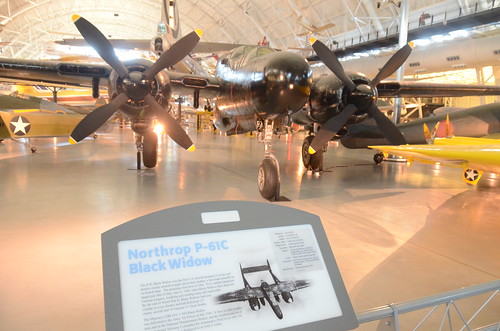
Steven F. Udvar-Hazy Center: Northrop P-61C Black Widow


Image by Chris Devers

Examine &amp contrast:


Northrop P-61C Black widow:

* Front view

* Above view


Star Wars ARC-170 Fighter:

* Official web page

* Wikia

* Wikipedia

* Toy evaluation


I put it to you that they are the Identical Thing.


* twin engines

* double-cockpit in front

* gunner’s cockpit in back

* broad wing coming out from the middle


• • • • •


See far more images of this, and the Wikipedia write-up.


Specifics, quoting from Smithsonian National Air and Space Museum: Steven F. Udvar-Hazy | Northrop P-61C Black Widow:


The P-61 Black Widow was the initial U.S. aircraft developed to locate and destroy enemy aircraft at night and in poor weather, a feat produced possible by the use of on-board radar. The prototype 1st flew in 1942. P-61 combat operations started just following D-Day, June 6, 1944, when Black Widows flew deep into German airspace, bombing and strafing trains and road visitors. Operations in the Pacific started at about the identical time. By the finish of World War II, Black Widows had observed combat in each and every theater and had destroyed 127 enemy aircraft and 18 German V-1 buzz bombs.


The Museum’s Black Widow, a P-61C-1-NO, was delivered to the Army Air Forces in July 1945. It participated in cold-climate tests, high-altitude drop tests, and in the National Thunderstorm Project, for which the leading turret was removed to make room for thunderstorm monitoring gear.


Transferred from the United States Air Force.


Manufacturer:
Northrop Aircraft Inc.


Date:

1943


Country of Origin:

United States of America


Dimensions:

All round: 450 x 1500cm, 10637kg, 2000cm (14ft 9 3/16in. x 49ft two 9/16in., 23450.3lb., 65ft 7 3/8in.)


Extended Description:

The P-61 Black Widow was the very first United States aircraft created from the commence to locate and destroy other aircraft at evening and in bad weather. It served in combat for only the final year of Planet War II but flew in the European, Mediterranean, Pacific, and China-Burma-India theaters. Black Widow crews destroyed 127 enemy aircraft and 18 robot V-1 buzz bombs.


Jack Northrop’s massive fighter was born during the dark days of the Battle of Britain and the London Blitz in 1940. British successes against German daylight bombers forced the Luftwaffe (German Air Force) to shift to night bombing. By the time Royal Air Force (RAF) Spitfires could launch, climb out, and then attempt to intercept these raids, the bombers crews had typically dropped their loads and turned for house. An aircraft was necessary to patrol the skies over England for up to seven hours in the course of the night, and then stick to radar vectors to attack German aircraft just before they reached their target. U.S. Army Air Corps officers noted this requirement and decided that America must have a evening fighter if and when it entered the war.


The Army awarded a contract to Northrop on January 30, 1941. The resulting design and style featured twin tail booms and rudders for stability when the aircraft closed in behind an intruder. It was a large aircraft with a massive fuel load and two effective engines. Armament evolved into four 20 mm cannons mounted in the belly firing forward and a powered, remote-controlled turret on best of the center fuselage equipped with four .50 cal. machine guns. The three-man crew consisted of the pilot, a gunner seated behind him, and a radar observer/gunner at the rear behind the gun turret. Only the pilot could fire the cannons but any of the 3 could operate the machine guns.


Simultaneously, perform was proceeding, at a laboratory run by the Massachusetts Institute of Technology, to develop the airborne radar set. The Army tested an early design and style in a Douglas B-18 in 1941. The considerably-enhanced SCR-520 set was ready by early 1942. Meanwhile, Army enthusiasm for the XP-61 developed one more contract on March ten, 1941, for 13 service-test YP-61s. Even before these airplanes flew, Northrop received orders for 410 production machines! Northrop test pilot Vance Breeze flew the aircraft on Might 26, 1942. Although the Black Widow was almost as large as a medium bomber, it was a correct fighter. The only prohibited flight maneuvers had been outside loops, sustained inverted flight, and deliberate spins.


As Northrop advanced the design toward production, provide troubles arose and modifications became needed. The four-gun top turret was the exact same variety fitted to the prime forward position on the Boeing B-29 Superfortress (see NASM collection) and that bomber had production priority more than the P-61. As a outcome, many hundred P-61s did not have this turret. Those that did skilled buffeting when the turret was traversed from side to side and a repair took time. By October 1943, the initial P-61s have been coming off the line. Education began immediately, and the initial evening fighters arrived in the European Theater by March 1944. Combat operations began just right after D-Day (June 6) and the Black Widows quickly departed from their original part as defensive interceptors and became aggressors. They flew deep into German airspace, bombing and strafing trains and road traffic and creating travel challenging for the enemy by day and at evening.


P-61s arrived in the Pacific Theater at about the very same time as the European Black Widows. For years, the Japanese had operated lone bombers over Allied targets at evening and now U. S. fighters could find and attack them. However, on June 30, 1944, a Mitsubishi BETTY (see NASM collection) became the very first P-61 kill in the Pacific. Soon, Black Widows controlled the evening skies. On the evening of August 14-15, a P-61 named &quotLady in the Dark&quot by her crew encountered an intruding Nakajima Ki-43 Hayabusa (Peregrine Falcon) OSCAR (see NASM collection) and eventually forced it into the sea with out firing a shot. Although the war was officially over, no one was confident that all of the Japanese had heard the message and stopped fighting. The American night fighters flew once more the next night and &quotLady in the Dark&quot again discovered a target. It was a Nakajima Ki-44 Shoki (Demon) TOJO and the fighters maneuvered wildly as they attempted to obtain an benefit. The P-61 crew lost and reacquired the Ki-44 numerous occasions then ultimately lost it for excellent and returned to base. The next day ground troops discovered the wrecked TOJO. In the darkness, Lady in the Dark’s crew had forced the Japanese pilot to fly into the ground, again with out firing a shot.


With the war more than, the Army cancelled additional production. Northrop had built 706 aircraft like 36 with a very modified center fuselage. These F-15As (later redesignated RF-61C) mounted a quantity of cameras in the nose and proved able reconnaissance platforms. Many of these airplanes participated in the initial great aerial photographic survey of the Pacific islands. A couple of, plus some special objective P-61s, stayed in active service till 1950.


NASM’s Black Widow is a P-61C-1-NO, U.S. Army Air Forces serial number 43-8330. Northrop delivered it to the Army on July 28, 1945. By October 18, this P-61 was flying at Ladd Field, Alaska, in cold climate tests and it remained there till March 30, 1946. This airplane later moved to Pinecastle Air Force Base, Florida, for participation in the National Thunderstorm Project. The project’s aim was to learn far more about thunderstorms and to use this understanding to far better protect civil and military airplanes that operated near them. The U. S. Weather Bureau and the National Advisory Committee for Aeronautics (NACA) undertook the study with cooperation from the Army Air Forces and Navy. With its radar and specific flight qualities, the P-61 was capable of locating the most turbulent regions of a storm, penetrating them, and returning crew and instruments intact for detailed study.


Pinecastle personnel removed the guns and turret from 43-8330 in July 1946 to make space for new equipment. In September, the aircraft moved to Clinton County Army Air Base, Ohio, exactly where it remained till January 1948. The Air Force then assigned the aircraft to the Flight Test Division at Wright-Patterson Air Force Base, Ohio. Soon after declaring the airplane surplus in 1950, the Air Force stored it at Park Ridge, Illinois, on October three along with critical aircraft destined for the National Air Museum.


But 43-8830 was not done flying. NACA asked the Smithsonian to lend them the aircraft for use in one more unique system. The committee wanted to investigate how aerodynamic shapes behaved when dropped from higher altitude. The Black Widow arrived at the Ames Aeronautical Laboratory, Naval Air Station Moffett Field, California, on February 14, 1951. NACA returned the aircraft and delivered it to the Smithsonian at Andrews Air Force Base, Maryland, on August ten, 1954. When the engines shut down for the last time, this P-61 had accumulated only 530 total flight hours. Smithsonian personnel trucked it to the Paul Garber Facility in Suitland, Maryland. In 2006, the aircraft was preserved and assembled at the Udvar-Hazy Center. The three different paint schemes from its previous service life have been revealed by meticulously removing individual layers of paint.


(Posted by an aluminium machining China Company and precision CNC machined parts China manufacturer)

Monday, September 8, 2014

Cool Cnc Machined Elements photos

Some cool cnc machined elements pictures:


P8220010


Image by ehud42

All elements soldered / plugged in – just figuring out which pin goes into which hole.


CNC Project Information Weblog


(Posted by an aluminium machining China Company and precision CNC machined parts China manufacturer)

Machined Elements and CNC Precision Turning


http://www.hsrowe.co.uk/ Rowes Precision Items are a CNC Turning Centre and Turned Components Manufacturer, we offer CNC Precision Turning, Turned Components Produc…
Video Rating: / five


(Posted by an aluminium machining China Company and precision CNC machined parts China manufacturer)

The VMC Group Publishes VMA 1826 Certification Standard for Seismic Certification of Nonstructural Developing Elements


Bloomingdale, NJ (PRWEB) September 04, 2014


The VMC Group is pleased to announce the availability of their VMA 1826 Certification Regular for Seismic Certification of Nonstructural Constructing Components. The common is now accessible for download at http://www.ibcapproval.com/Approval-Requirements. The VMA 1826 Regular delineates the process by which The VMC Group’s Engineering Solutions Division certifies products for compliance with the International Developing Code®, the needs of the manufacturer and the path for continued compliance.


“Our certification procedure is precise and controlled,” states John Wilson, Jr., CEO of The VMC Group. “The VMA 1826 Certification Common for Seismic Certification of Nonstructural Creating Elements is the culmination of more than 14 years of Special Seismic Certification testing expertise. Because 2000, we have completed far more than 900 shake table tests for nonstructural developing elements. The VMA 1826 Normal is our way of defining the scope of operate so that all elements of the method are understood by the client and the industry at the onset of the project. Specific Seismic Certification saves lives in a seismic occasion, for that reason the process is stringent and every single and each applicant ought to realize this when beginning the VMA application approach. Getting IBC® Certification is a way to ensure that for the duration of seismic events, crucial equipment maintains its structural integrity and functionality. Companies who invest in this approach are at the forefront of ensuring the country’s safety.”


The VMC Group’s Engineering Solutions Division launched http://www.ibcapproval.com final year as a resource to engineers hunting to specify merchandise that comply with the International Constructing Code®. The website exemplifies the pioneering spirit The VMC Group exhibited when it became the 1st organization to acquire independent recognition as a Certified Seismic Qualification Agency. Given that that time, The VMC Group has worked with some of the biggest OEMs in the world to concern Particular Seismic Certification for products in the HVAC and energy generation industries.                            


VMA 1826 approval is limited to components that need Specific Seismic Certification in accordance with IBC® chapters 16 &amp 17, ASCE7-10 section 13.two.two and ICC-ES AC156 or components that require Unique Seismic Certification. All successfully completed VMA numbers are posted on the homepage of http://www.ibcapproval.com.


http://www.ibcapproval.com also gives producers interested in acquiring Unique Seismic Certification everything they require to know about the VMA certification method, like a Pre-Approval info section A section devoted to the VMA Approval Method which characteristics particulars on The VMC Group’s exclusive ten-Stage IBC®/OSHPD Signature Implementation Methodology™ and an opportunity to commence the procedure by downloading the VMA 1826 Particular Seismic Certification application.


The VMC Group’s Engineering Services Division, is a Seismic Qualification Plan for equipment companies. Goods that effectively complete this preapproval procedure will receive a VMA Quantity and a Certificate of Compliance indicating that after a Style Earthquake, the Designated Seismic Method shall keep structural integrity and functionality.


For practically ten decades, The VMC Group has been recognized as a globe leader in the design and manufacture of vibration isolation and seismic energy management technologies. The VMC Group and their Engineering Services Division have been delivering IBC® Certification for Fortune 500 companies and companies of HVAC, power generation and fire protection systems for 10 years.


For more information on The VMC Group goods or The VMC Group’s Engineering Services Division please visit http://www.TheVMCGroup.com. For much more info on The VMC Group’s IBC Certification Solutions, please visit http://www.ibcapproval.com today or call 800-569-8423.


(Posted by an aluminium machining China Company and precision CNC machined parts China manufacturer)