Showing posts with label pictures. Show all posts

Thursday, November 5, 2015

Cool Fast Prototyping Price pictures

Check out these rapid prototyping expense pictures:


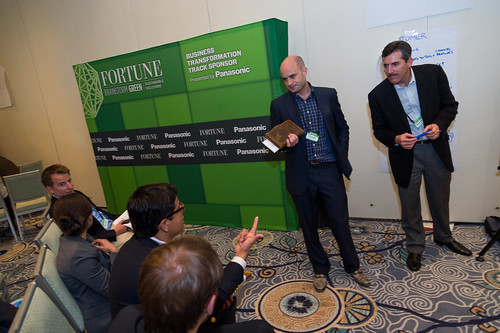
Fortune Brainstorm Green 2013

Image by Fortune Live Media

Tuesday, April 30, 2013


Solar: How do we scale solar to be on 50% of the roofs in the US by 2018?

Presented by Panasonic

Plummeting panel and balance-of-program charges are generating solar electrical energy increasingly competitive with carbon-intensive options. Nonetheless, the all round pace of adoption in the U.S. is still slow. This functioning session will explore practical breakthroughs to installing solar on 50% of U.S. rooftops by 2015. Using fast prototyping in tiny groups, participants will function together to locate solutions and then participate in the identified actions to accelerate progress.


Contributors:

David Crane, President and CEO, NRG Energy

Ed Fenster, Co-founder, Sunrun

Andy Karsner, Executive Chairman and Founder, Manifest Energy

Danny Kennedy, Founder and President, Sungevity

Nat Kreamer, President and CEO, Clean Energy Finance

Paul Nahi, Chief Executive Officer, Enphase Power

Richard O’Day, Managing Director, Global Market Options Group, Credit Suisse

Billy Parish, Founder and President, Solar Mosaic

Naimish Patel, Chief Executive Officer, Gridco Systems

Laura Spanjian, Sustainability Director, City of Houston

Howard Wenger, President, Regions, SunPower Corp

Ray Wood, Managing Director, Head, U.S. Energy and Renewables Group, Bank of America Merrill Lynch


Facilitator: Jib Ellison, Founder and CEO, Blu Skye Consulting


Photograph by Stuart Isett/Fortune Brainstorm Green


Fortune Brainstorm Green 2013

Image by Fortune Live Media

Tuesday, April 30, 2013


Solar: How do we scale solar to be on 50% of the roofs in the US by 2018?

Presented by Panasonic

Plummeting panel and balance-of-system costs are making solar electrical energy increasingly competitive with carbon-intensive alternatives. Even so, the all round pace of adoption in the U.S. is nonetheless slow. This working session will discover practical breakthroughs to installing solar on 50% of U.S. rooftops by 2015. Using rapid prototyping in little groups, participants will perform with each other to locate solutions and then participate in the identified actions to accelerate progress.


Contributors:

David Crane, President and CEO, NRG Energy

Ed Fenster, Co-founder, Sunrun

Andy Karsner, Executive Chairman and Founder, Manifest Power

Danny Kennedy, Founder and President, Sungevity

Nat Kreamer, President and CEO, Clean Energy Finance

Paul Nahi, Chief Executive Officer, Enphase Energy

Richard O’Day, Managing Director, International Market Solutions Group, Credit Suisse

Billy Parish, Founder and President, Solar Mosaic

Naimish Patel, Chief Executive Officer, Gridco Systems

Laura Spanjian, Sustainability Director, City of Houston

Howard Wenger, President, Regions, SunPower Corp

Ray Wood, Managing Director, Head, U.S. Power and Renewables Group, Bank of America Merrill Lynch


Facilitator: Jib Ellison, Founder and CEO, Blu Skye Consulting


Photograph by Stuart Isett/Fortune Brainstorm Green


Fortune Brainstorm Green 2013

Image by Fortune Reside Media

Tuesday, April 30, 2013


Solar: How do we scale solar to be on 50% of the roofs in the US by 2018?

Presented by Panasonic

Plummeting panel and balance-of-technique costs are producing solar electricity increasingly competitive with carbon-intensive options. Nevertheless, the overall pace of adoption in the U.S. is nevertheless slow. This working session will explore sensible breakthroughs to installing solar on 50% of U.S. rooftops by 2015. Employing speedy prototyping in small groups, participants will work together to uncover solutions and then participate in the identified actions to accelerate progress.


Contributors:

David Crane, President and CEO, NRG Energy

Ed Fenster, Co-founder, Sunrun

Andy Karsner, Executive Chairman and Founder, Manifest Power

Danny Kennedy, Founder and President, Sungevity

Nat Kreamer, President and CEO, Clean Power Finance

Paul Nahi, Chief Executive Officer, Enphase Power

Richard O’Day, Managing Director, Global Marketplace Options Group, Credit Suisse

Billy Parish, Founder and President, Solar Mosaic

Naimish Patel, Chief Executive Officer, Gridco Systems

Laura Spanjian, Sustainability Director, City of Houston

Howard Wenger, President, Regions, SunPower Corp

Ray Wood, Managing Director, Head, U.S. Energy and Renewables Group, Bank of America Merrill Lynch


Facilitator: Jib Ellison, Founder and CEO, Blu Skye Consulting


Photograph by Stuart Isett/Fortune Brainstorm Green


(Source from rapid prototyping from China blog)

Saturday, October 31, 2015

Nice Precision Engineering China pictures

A couple of nice precision engineering china photos I found:


The Future of Overall health: Overview

Image by World Economic Forum

DAVOS/SWITZERLAND, 23JAN13 – (FLTR) Victor J. Dzau, President and Chief Executive Officer, Duke University Healthcare Center and Overall health Program, Duke University, USA Worldwide Agenda Council on Customized &amp Precision Medicine, Margaret A. Hamburg, Commissioner, US Food and Drug Administration, USA Worldwide Agenda Council on Customized &amp Precision Medicine, Peer M. Schatz, Chief Executive Officer, QIAGEN, Germany Global Agenda Council on Customized &amp Precision Medicine, David B. Agus, Professor of Medicine and Engineering, USC Center for Applied Molecular Medicine, USA International Agenda Council on Customized &amp Precision Medicine, Karin Johansson, State Secretary, Ministry of Wellness and Social Affairs of Sweden Global Agenda Council on Digital Overall health and Liu Jiren, Chairman and Chief Executive Officer, Neusoft Corporation, People’s Republic of China International Agenda Council on Emerging Multinationals are observed throughout the interactive session ‘The Future of Health -Strengthening Individual Resilience’ at the Annual Meeting 2013 of the Planet Economic Forum in Davos, Switzerland, January 23, 2013..

.

Copyright by World Economic Forum.

.

swiss-image.ch/Photo Remy Steinegger


The Future of Overall health: Overview

Image by World Financial Forum

DAVOS/SWITZERLAND, 23JAN13 – (FLTR) Victor J. Dzau, President and Chief Executive Officer, Duke University Health-related Center and Overall health Program, Duke University, USA Global Agenda Council on Customized &amp Precision Medicine, Margaret A. Hamburg, Commissioner, US Food and Drug Administration, USA Worldwide Agenda Council on Customized &amp Precision Medicine, Peer M. Schatz, Chief Executive Officer, QIAGEN, Germany International Agenda Council on Personalized &amp Precision Medicine, David B. Agus, Professor of Medicine and Engineering, USC Center for Applied Molecular Medicine, USA International Agenda Council on Personalized &amp Precision Medicine, Karin Johansson, State Secretary, Ministry of Wellness and Social Affairs of Sweden International Agenda Council on Digital Well being and Liu Jiren, Chairman and Chief Executive Officer, Neusoft Corporation, People’s Republic of China Worldwide Agenda Council on Emerging Multinationals are noticed throughout the interactive session ‘The Future of Well being -Strengthening Individual Resilience’ at the Annual Meeting 2013 of the World Financial Forum in Davos, Switzerland, January 23, 2013..

.

Copyright by Planet Financial Forum.

.

swiss-image.ch/Photo Remy Steinegger


(Source from rapid prototyping from China blog)

Thursday, September 17, 2015

Cool China Prototypes pictures

Some cool china prototypes pictures:


BMW GUGGENHEIM LAB

Image by DCF_pics

MARS IN MUMBAI

Prototypes of adjust developed for the BMW Guggenheim Lab


Informal settlements dominate a lot of the world’s emerging cityscape. The tense social and spatial circumstances they bring forth render most urban techniques ineffective. Neither prime-down planning, defined by a technocratic strategy of ever bigger infrastructure, nor bottom-up efforts, in the kind of increasingly sophisticated neighborhood level projects, seem capable to meet the challenges at the scale the establishing metropolis demands. Can micro-scale interventions be designed to accomplish citywide techniques?


This conceptual divide is additional exacerbated in Mumbai, where slums that make up two-thirds of the population reduce via the entire island city in a sharp spatial divide. Attempts to address the dire challenges from, water safety to pollution and extreme congestion, are limited to either the formal or informal settlements. MARS Architects has produced a vision for a United Mumbai, the starting point for incorporating informal settlements as totally integrated parts of the formal city.


More than the coming weeks, stakeholder meetings will be held at the Guggenheim Lab Mumbai to talk about our ten proposed technologies, from wall systems to transport systems. Stick to us as an expanding method of architectural interventions turns slums into sustainable settlements, which in turn become the backbone of a United Mumbai.


Component 1: SPI MODEL

The foundation of this project is an in-depth study of Mumbai’s population density. Not merely mapping Mumbai’s infamous situations in abstract terms but introducing a new methodology that greater represents the knowledge on the ground. The new metric, named the Stacked Population Index (SPI), measures the density of folks per amount of offered floor surface. Suddenly the accurate extents of Mumbai’s informal settlements can be observed: a yellow forest of towering densities covers the whole urban landscape. The harsh reality the city accommodates two thirds of its population on much less than a quarter of its residential surface, and but urban plans for Mumbai largely ignore their existence.


Comply with the project: MARS Architects Facebook web page


Occasion specifics: BMW GUGGENHEIM LAB


BMW GUGGENHEIM LAB

Image by DCF_pics

MARS IN MUMBAI

Prototypes of change developed for the BMW Guggenheim Lab


Informal settlements dominate considerably of the world’s emerging cityscape. The tense social and spatial situations they bring forth render most urban techniques ineffective. Neither top-down preparing, defined by a technocratic method of ever larger infrastructure, nor bottom-up efforts, in the kind of increasingly sophisticated neighborhood level projects, seem able to meet the challenges at the scale the developing metropolis demands. Can micro-scale interventions be designed to accomplish citywide strategies?


This conceptual divide is further exacerbated in Mumbai, where slums that make up two-thirds of the population cut by means of the complete island city in a sharp spatial divide. Attempts to address the dire challenges from, water safety to pollution and serious congestion, are restricted to either the formal or informal settlements. MARS Architects has produced a vision for a United Mumbai, the starting point for incorporating informal settlements as completely integrated components of the formal city.


More than the coming weeks, stakeholder meetings will be held at the Guggenheim Lab Mumbai to go over our ten proposed technologies, from wall systems to transport systems. Follow us as an expanding method of architectural interventions turns slums into sustainable settlements, which in turn turn into the backbone of a United Mumbai.


Portion 1: SPI MODEL

The foundation of this project is an in-depth study of Mumbai’s population density. Not merely mapping Mumbai’s infamous circumstances in abstract terms but introducing a new methodology that greater represents the experience on the ground. The new metric, named the Stacked Population Index (SPI), measures the density of people per quantity of offered floor surface. Abruptly the true extents of Mumbai’s informal settlements can be observed: a yellow forest of towering densities covers the entire urban landscape. The harsh reality the city accommodates two thirds of its population on significantly less than a quarter of its residential surface, and yet urban plans for Mumbai mainly ignore their existence.


Follow the project: MARS Architects Facebook web page


Occasion information: BMW GUGGENHEIM LAB


BMW GUGGENHEIM LAB

Image by DCF_pics

MARS IN MUMBAI

Prototypes of adjust created for the BMW Guggenheim Lab


Informal settlements dominate considerably of the world’s emerging cityscape. The tense social and spatial circumstances they bring forth render most urban techniques ineffective. Neither leading-down arranging, defined by a technocratic approach of ever bigger infrastructure, nor bottom-up efforts, in the kind of increasingly sophisticated community level projects, look capable to meet the challenges at the scale the creating metropolis demands. Can micro-scale interventions be developed to attain citywide strategies?


This conceptual divide is additional exacerbated in Mumbai, exactly where slums that make up two-thirds of the population reduce through the complete island city in a sharp spatial divide. Attempts to address the dire challenges from, water safety to pollution and severe congestion, are limited to either the formal or informal settlements. MARS Architects has created a vision for a United Mumbai, the starting point for incorporating informal settlements as completely integrated components of the formal city.


Over the coming weeks, stakeholder meetings will be held at the Guggenheim Lab Mumbai to discuss our ten proposed technologies, from wall systems to transport systems. Comply with us as an expanding system of architectural interventions turns slums into sustainable settlements, which in turn turn out to be the backbone of a United Mumbai.


Element 1: SPI MODEL

The foundation of this project is an in-depth study of Mumbai’s population density. Not merely mapping Mumbai’s infamous situations in abstract terms but introducing a new methodology that greater represents the experience on the ground. The new metric, called the Stacked Population Index (SPI), measures the density of men and women per quantity of available floor surface. Abruptly the correct extents of Mumbai’s informal settlements can be observed: a yellow forest of towering densities covers the entire urban landscape. The harsh reality the city accommodates two thirds of its population on significantly less than a quarter of its residential surface, and yet urban plans for Mumbai mostly ignore their existence.


Comply with the project: MARS Architects Facebook page


Event details: BMW GUGGENHEIM LAB


(Source from rapid prototyping from China blog)

Friday, July 31, 2015

Cool Metal Components China pictures

Some cool metal components china pictures:


mong kok, materials


Image by cesarharada.com


handy taxi driver in mong kok, materials


Image by cesarharada.com


mong kok, supplies


Image by cesarharada.com


(Source from rapid prototyping from China blog)

Saturday, July 25, 2015

Good Rapidly Prototyping pictures

A couple of good fast prototyping images I found:


DTJ_010564


Image by dagtj

Workshop: Excellent Design and style More rapidly, Day 2: Paper prototyping


DEMO-Founder-College-Muir-01562


Image by The DEMO Conference

Clover Foods CEO Ayr Muir offers a keynote entitled ‘Rapid Prototyping in The Fast Food Business’ in the course of DEMO Fall 2013 at the Santa Clara Convention Center in Santa Clara, California Wednesday October 16, 2013. Full coverage of DEMO, the Launchpad for Emerging Technologies and Trends, can be located at bit.ly/DEMOsite.


DEMO-Founder-College-Muir-01566


Image by The DEMO Conference

Clover Foods CEO Ayr Muir gives a keynote entitled ‘Rapid Prototyping in The Quickly Food Business’ for the duration of DEMO Fall 2013 at the Santa Clara Convention Center in Santa Clara, California Wednesday October 16, 2013. Comprehensive coverage of DEMO, the Launchpad for Emerging Technologies and Trends, can be located at bit.ly/DEMOsite.


(Source from rapid prototyping from China blog)

Tuesday, May 19, 2015

Cool Milling Engineering pictures

A couple of good milling engineering images I identified:


sound effects that made Tv history


Image by brizzle born and bred
image above: Two veterans of the Workshop recreate some of its renowned sounds.


The BBC’s Radiophonic Workshop, a pioneering force in sound effects, would have been 50 this month. Ten years following it was disbanded, what remains of its former glory?


Deep in the bowels of BBC Maida Vale studios, behind a door marked B11, is all that is left of an institution in British television history.


A green lampshade, an immersion tank and half a guitar lie forlornly on a shelf, above a couple of old synthesisers in a area complete of electrical bric-a-brac.


These are the sad remnants of the BBC Radiophonic Workshop, set up 50 years ago to develop revolutionary sound effects and incidental music for radio and tv.


The corporation initially only offered its founders a six-month contract, simply because it feared any longer in the throes of such creative and experimental workout routines may make them ill.


Using reel-to-reel tape machines, early heroines such as Daphne Oram and Delia Derbyshire recorded everyday or strange sounds and then manipulated these by speeding up, slowing down or cutting the tape with razor blades and piecing it back together.


The sound of the Tardis was 1 sound engineer’s front-door key scraped across the bass strings on a broken piano. Other impromptu props integrated a lampshade, champagne corks and assorted cutlery.


Ten years ago the workshop was disbanded due to charges but its reputation as a Heath Robinson-style, pioneering force in sound is as powerful as ever, acknowledged by ambient DJs like Aphex Twin.


Although considerably of its gear has lengthy been sold off, each and every sound and musical theme it produced has been preserved. To mark its 50 years, there are plans for a CD box-set.


Right here Dick Mills and Mark Ayres, who each worked there, use the surviving gear to revive four sounds from the previous.


Green Lampshade


This was a stroke of genius from Delia Derbyshire, who died in 2001 and famously created the Medical doctor Who theme tune from Ron Grainer’s score.


The magic of Delia Derbyshire’s lampshade, recreated by Dick Mills and Mark Ayres


She would hit the tatty-seeking aluminium lampshade to create a sound with a organic, pure frequency. Right after recording it on tape, she would play with it to make the desired sound effect.


For a documentary on the Tuareg people of the Sahara desert, she took the ringing element of the lampshade sound, faded it up and then reconstructed it utilizing the workshop’s 12 oscillators to give a whooshing sound, allied to her own voice.


&quotSo the camels rode off into the sunset with my voice in their hooves and a green lampshade on their backs,&quot she once said.


The green lampshade has because gained close to-mythical status and Peter Howell, who succeeded Derbyshire in the early 1970s and reworked the Medical professional Who theme tune, can see why.


&quotIt’s a helpful point to cling on to simply because every person knows what a lampshade is due to the fact it symbolises the use of domestic objects to produce sounds.&quot


The workshop fascinates his music students nowadays simply because of all the kit employed back then, he says, and its influence is nonetheless clearly observed – an advert for a VW Golf that makes use of only sounds of the vehicle, for instance.


&quotThe sampling era we’re now in is the subsequent generation of the same principle.&quot


Dalek Voice


The sound that sent youngsters, and many adults, cowering behind sofas was co-produced by Mills, a sound engineer who joined the workshop in its initial year and left 35 years later.

Generating the voice of the Daleks


&quotWe tried to give the impression that whenever a Dalek spoke, it wasn’t speaking like we do, it was accessing words from a memory bank, so they all sound the same – dispassionate, mechanical and retrievable.&quot


He utilised a centre-tap transformer plugged into the microphone of an actor standing at the side of the set, and the threat in the voice was all in the overall performance.


Sometimes the tape got played at the wrong speed and the voice came out slightly differently, but the arrival of the EMS VCS3 synthesiser in the late 60s did not signal the end for this tried and tested strategy.


In other methods, nevertheless, the synthesisers changed the way the workshop operated and – in spite of some resistance by individuals – presented a larger selection.


Workshop Highlights


Sound effects: Quatermass and the Pit, The Goon Show, Blake’s 7, The Hitch-Hiker’s Guide to the Galaxy, Doctor Who Music: Woman’s Hour, Tomorrow’s World, Blue Peter, John Craven’s Newsround, Medical doctor Who


&quotSynthesisers provided a wide open pallet of colours and sounds to play with, but you still had to pick what you wanted to do and learn the discipline of this new technological type,&quot says Mills.


&quotSo on the one hand, it was effortless but you still had the original difficulty of considering of the idea in the 1st place.&quot


Sci-Fi Door Opening


Sci-fi fans will recognise the &quotswooshing&quot door from programmes such as Physician Who and Blake’s 7, plus in the odd hotel scene in other programmes.


The workshop’s suitcase synth


The suitcase synthesiser was a portable version of the VCS3, useful for jobs out of the studio.


Recalling the early days and influences, Mills says: &quotWe would take a pre-recorded sound effect from the BBC’s vast library but treated them to produce cerebral effects. If you wanted a character to seem to be thinking, you got him to read the line and put in a strange echo.&quot


Related tactics had been already utilized in Europe in &quotmusique concrete&quot.


&quotThey did it for their own investigation and study, but our way of life was we never did something until a commission.


So all our experimentation and investigation was taking place in the context of that radio or tv programme.&quot


One of Mills’ proudest creations was the slimy monster sound, which was him spreading Swarfega cleaning gel on his hands and then slowing down the sound.


And he produced the upset tummy of Major Bloodnok in The Goon Show, a colonial officer who liked curry, by utilizing burp sounds and an oscillator to give a violent, explosive gastro-effect. Making use of contrasting sounds extremely speedily is a trick in audio comedy.


&quotWe did our personal factor in the name of artistic creation. Functioning here was a bit like surf riding. Every so typically a creative wave of power kept you going till the wave ran out.&quot


Broken Guitar


1 pluck of a guitar string became the well-known Dr Who bass line. Derbyshire and Mills sped it up and slowed it down to get the different notes, and these had been cut to give it an further twang on the front of each note.


Demonstration of the Radiophonic Workshop’s guitar


&quotIt slides up to the note each and every time if you listen meticulously,&quot says Mills. &quotDelia fabricated the baseline out of two or 3 lines of tape.


&quotYou’d be scrabbling around the floor saying ‘Where’s that half-inch of tape I wanted to play on the front of that note?’&quot


Every single sound generated by the workshop and employed in radio or tv is preserved, partly in thanks to archivist Mark Ayres, who worked there whilst a student.


He believes a single of its greatest legacies is that it created listeners much more utilised to hearing such sounds as portion of everyday entertainment and education.


&quotIt led to] the steady integration of experimental sound into popular culture and the placement of such sound into the mainstream rather than it becoming confined to various strictly academic studios.


&quotCertainly, considerably of this took place in parallel with developments elsewhere – The Beatles’ Sergeant Pepper and Pink Floyd’s Dark Side of the Moon for example.


&quotLater on, the workshop housed a couple of the most advanced laptop-primarily based MIDI studios in the globe, but by that time competition from the outside world was too fantastic and, under [the BBC’s policy] Producer Decision, the workshop could not compete on price and its demise was inevitable.&quot


Old Mills and Guthrie along the Mississippi


Image by Gmonkey


PA – Mill Run: Fallingwater


Image by wallyg

The cantilevered terraces are crucial to the organization and knowledge of Fallingwater, uniting the indoor and outside space.


Fallingwater, at times referred to as the Edgar J. Kaufmann Sr. Residence or just the Kaufmann Residence, situated inside a five,one hundred-acre nature reserve 50 miles southeast of Pittsburgh, was created by Frank Lloyd Wright and built between 1936 and 1939. Built more than a 30-foot flowing waterfall on Bear Run in the Mill Run section of Stewart Township, Fayette County, Pennsylvania, the property served as a vacation retreat for the Kaufmann family members such as patriarch, Edgar Kaufmann Sr., was a effective Pittsburgh businessman and president of Kaufmann’s Department Retailer, and his son, Edgar Kaufmann, Jr., who studied architecture briefly below Wright. Wright collaborated with employees engineers Mendel Glickman and William Wesley Peters on the structural design, and assigned his apprentice, Robert Mosher, as his permanent on-web site representative throughout construction. Despite frequent conflicts amongst Wright, Kaufmann, and the construction contractor, the home and guesthouse had been ultimately constructed at a price of 5,000.


Fallingwater was designated a National Historic Landmark in 1966. It was listed amongst the Smithsonian’s 28 Locations to See Before You Die. In a 1991 poll of members of the American Institute of Architects (AIA), it was voted &quotthe greatest all-time work of American architecture.&quot In 2007, Fallingwater was ranked #29 on the AIA 150 America’s Favourite Architecture list.


National Register #74001781 (1974)


(Source from rapid prototyping from China blog)

Sunday, May 17, 2015

Good Quickly Prototyping pictures

Check out these rapidly prototyping images:


150210-N-HW977-495


Image by NAVSEA Corona

150210-N-HW977-495

SAN DIEGO, Calif. (Feb. ten, 2015) Rear Adm. Lorin Selby, commander of Naval Surface Warfare Center (NSWC), left, Troy Clarke, NSWC Corona public affairs officer, and Arman Hovakemian, NSWC Corona chief technology officer, discuss the Griffin missile launcher as an example of NSWC Corona’s speedy prototyping capability. (U.S. Navy photo by Greg Vojtko/Released)


My office


Image by juhansonin

Lots of magnetic wall space (covered with project layouts and comps), two dry erase boards, dual 30&quot monitors (overkill) and lots of drawing space on the table.


Note the lack of image stitching (30 seconds in photoshop).


For a bigger picture, see flickr.com/photo_zoom.gne?id=356025851&ampcontext=pool-four…


Ripley Engineering Business Card


Image by Ripley Engineering

Download a Ripley Engineering Enterprise Card.


Ripley Engineering delivers:


– Precision Sheet Metal Fabrication

– Laser cutting Quickly-TRACK service

– Powder Coating (plus Wet Spraying)

– Electro-mechanical Assembly

– Style Help and Prototyping


(Source from rapid prototyping from China blog)

Saturday, May 16, 2015

Cool Metal Parts China pictures

A couple of good metal components china pictures I located:


Blue Metal and Light


Image by Stuck in Customs

A lot of regulars know that I like to get &quotlost&quot in cities and uncover tiny secrets right here or there. But, that’s frequently in the older, charming part of cities. I rarely go into the industrial or mega-residential areas since at times they are far more sterile or significantly less intriguing. Properly, this portion of Beijing is sort of a neo-industrial jungle of wild architecture and unexpected forms of light. There are dozens of brand-new buildings, each with exciting designs and numerous angles. I ended up staying in this area deep into the night.


from the blog www.stuckincustoms.com


Way to the future appropriate now


Image by aurelio.asiain

Much much more greater at a close approach: the unfinished National Grand Theater of China, in Beijing, next to the Great Hall of the Men and women. With 150,000 square meters floor region, it was supposed to be finished and ready to have performances by 2005, but the construction is still going on. (This is part of a growing set, try operating the slideshow first.)


(Source from rapid prototyping from China blog)

Saturday, May 9, 2015

Cool Prototype Makers In China pictures

A handful of nice prototype manufacturers in china pictures I located:


Steven F. Udvar-Hazy Center: SR-71 Blackbird (starboard tail view)


Image by Chris Devers
See much more photographs of this, and the Wikipedia post.


Specifics, quoting from Smithsonian National Air and Space Museum | Lockheed SR-71 Blackbird:


No reconnaissance aircraft in history has operated globally in much more hostile airspace or with such full impunity than the SR-71, the world’s quickest jet-propelled aircraft. The Blackbird’s overall performance and operational achievements placed it at the pinnacle of aviation technology developments for the duration of the Cold War.


This Blackbird accrued about two,800 hours of flight time throughout 24 years of active service with the U.S. Air Force. On its final flight, March 6, 1990, Lt. Col. Ed Yielding and Lt. Col. Joseph Vida set a speed record by flying from Los Angeles to Washington, D.C., in 1 hour, four minutes, and 20 seconds, averaging 3,418 kilometers (2,124 miles) per hour. At the flight’s conclusion, they landed at Washington-Dulles International Airport and turned the airplane more than to the Smithsonian.


Transferred from the United States Air Force.


Manufacturer:
Lockheed Aircraft Corporation


Designer:
Clarence L. &quotKelly&quot Johnson


Date:

1964


Country of Origin:

United States of America


Dimensions:

General: 18ft 5 15/16in. x 55ft 7in. x 107ft 5in., 169998.5lb. (5.638m x 16.942m x 32.741m, 77110.8kg)

Other: 18ft 5 15/16in. x 107ft 5in. x 55ft 7in. (five.638m x 32.741m x 16.942m)


Materials:

Titanium


Physical Description:

Twin-engine, two-seat, supersonic strategic reconnaissance aircraft airframe constructed largley of titanium and its alloys vertical tail fins are constructed of a composite (laminated plastic-kind material) to lessen radar cross-section Pratt and Whitney J58 (JT11D-20B) turbojet engines function massive inlet shock cones.


(Source from rapid prototyping from China blog)

Sunday, April 26, 2015

Cool Milling Engineering pictures

Some cool milling engineering pictures:


PA – Mill Run: Fallingwater – Livingroom


Image by wallyg

Fallingwater’s monumental 1,800 square foot living measures roughly 40 by 50 feet and a central, symmetrical raised cove ceiling.


Fallingwater, occasionally referred to as the Edgar J. Kaufmann Sr. Residence or just the Kaufmann Residence, positioned within a five,one hundred-acre nature reserve 50 miles southeast of Pittsburgh, was designed by Frank Lloyd Wright and built in between 1936 and 1939. Built over a 30-foot flowing waterfall on Bear Run in the Mill Run section of Stewart Township, Fayette County, Pennsylvania, the residence served as a trip retreat for the Kaufmann family including patriarch, Edgar Kaufmann Sr., was a effective Pittsburgh businessman and president of Kaufmann’s Division Shop, and his son, Edgar Kaufmann, Jr., who studied architecture briefly below Wright. Wright collaborated with employees engineers Mendel Glickman and William Wesley Peters on the structural style, and assigned his apprentice, Robert Mosher, as his permanent on-website representative all through building. Despite frequent conflicts between Wright, Kaufmann, and the construction contractor, the house and guesthouse had been ultimately constructed at a cost of five,000.


The 23¾&quot x 18¼&quot x 60&quot wood coffee table was designed by Frank Lloyd Wright. The smaller tabonettes, a side table or occasional table, also made by Wright, came in three sizes and all bearing a resemblance to their bigger coffee table counterpart. The name, tabonette, came about from a mistaken transcription by one of Wright’s apprentices who might misspelled the word taboret. The Zabuton, 25½&quot x 29¾&quot floor cushions, had been created by Frank Lloyd Wright in 1939. The Higher Hassocks, also designed by Wright, are taller versions of the Zabuton at 12&quot x 26&quot x 21¾&quot. They represent 1 of the earliest makes use of of latex foam, a material suggested by Edgar Jaufmann Jr., in a residential setting. Surrounded by a walnut veneer frame, the floor cushions are upholsted with either a red or yellow, heavily textured, wool blend Jack Lenor Larsen fabric known as Doria. The cost-free floating seats of differing heights support produce a casual environment.


Fallingwater was designated a National Historic Landmark in 1966. It was listed amongst the Smithsonian’s 28 Areas to See Ahead of You Die. In a 1991 poll of members of the American Institute of Architects (AIA), it was voted &quotthe greatest all-time work of American architecture.&quot In 2007, Fallingwater was ranked #29 on the AIA 150 America’s Preferred Architecture list.


National Register #74001781 (1974)


PA – Mill Run: Fallingwater – Livingroom


Image by wallyg

Fallingwater’s monumental 1,800 square foot living measures roughly 40 by 50 feet and a central, symmetrical raised cove ceiling.


The wood and lacquer red cubical sculpture that sits on the coffee table was designed by artist Paul Mayén in the 1950s. The 23¾&quot x 18¼&quot x 60&quot wood coffee table was designed by Frank Lloyd Wright. The smaller sized tabonettes, a side table or occasional table, also created by Wright, came in 3 sizes and all bearing a resemblance to their bigger coffee table counterpart. The name, tabonette, came about from a mistaken transcription by 1 of Wright’s apprentices who might misspelled the word taboret. The Zabuton, 25½&quot x 29¾&quot floor cushions, had been made by Frank Lloyd Wright in 1939. The High Hassocks, also designed by Wright, are taller versions of the Zabuton at 12&quot x 26&quot x 21¾&quot. They represent 1 of the earliest uses of latex foam, a material recommended by Edgar Jaufmann Jr., in a residential setting. Surrounded by a walnut veneer frame, the floor cushions are upholsted with either a red or yellow, heavily textured, wool blend Jack Lenor Larsen fabric named Doria. The totally free floating seats of differing heights help generate a casual atmosphere.


Fallingwater, at times referred to as the Edgar J. Kaufmann Sr. Residence or just the Kaufmann Residence, situated within a five,100-acre nature reserve 50 miles southeast of Pittsburgh, was made by Frank Lloyd Wright and built in between 1936 and 1939. Built over a 30-foot flowing waterfall on Bear Run in the Mill Run section of Stewart Township, Fayette County, Pennsylvania, the home served as a vacation retreat for the Kaufmann family members such as patriarch, Edgar Kaufmann Sr., was a productive Pittsburgh businessman and president of Kaufmann’s Division Store, and his son, Edgar Kaufmann, Jr., who studied architecture briefly below Wright. Wright collaborated with staff engineers Mendel Glickman and William Wesley Peters on the structural design, and assigned his apprentice, Robert Mosher, as his permanent on-website representative throughout construction. Despite frequent conflicts in between Wright, Kaufmann, and the construction contractor, the house and guesthouse had been ultimately constructed at a price of 5,000.


Wright specified Johnson Liquid Wax for the flagstone floors all through the home. The waxed sheen drew a parallel to the wet bedrock of the stream below. Whilst building Fallingwater, Wright was commissioned to design the Johnson Wax Creating in Racine, Wisconsin.


Fallingwater was designated a National Historic Landmark in 1966. It was listed amongst the Smithsonian’s 28 Places to See Prior to You Die. In a 1991 poll of members of the American Institute of Architects (AIA), it was voted &quotthe very best all-time function of American architecture.&quot In 2007, Fallingwater was ranked #29 on the AIA 150 America’s Favored Architecture list.


National Register #74001781 (1974)


PA – Mill Run: Fallingwater


Image by wallyg

Fallingwater, at times referred to as the Edgar J. Kaufmann Sr. Residence or just the Kaufmann Residence, situated inside a five,one hundred-acre nature reserve 50 miles southeast of Pittsburgh, was made by Frank Lloyd Wright and built among 1936 and 1939. Built more than a 30-foot flowing waterfall on Bear Run in the Mill Run section of Stewart Township, Fayette County, Pennsylvania, the property served as a holiday retreat for the Kaufmann family members including patriarch, Edgar Kaufmann Sr., was a successful Pittsburgh businessman and president of Kaufmann’s Department Retailer, and his son, Edgar Kaufmann, Jr., who studied architecture briefly below Wright. Wright collaborated with employees engineers Mendel Glickman and William Wesley Peters on the structural style, and assigned his apprentice, Robert Mosher, as his permanent on-website representative throughout building. Regardless of frequent conflicts amongst Wright, Kaufmann, and the construction contractor, the house and guesthouse had been finally constructed at a price of five,000.


Fallingwater was designated a National Historic Landmark in 1966. It was listed among the Smithsonian’s 28 Places to See Just before You Die. In a 1991 poll of members of the American Institute of Architects (AIA), it was voted &quotthe very best all-time work of American architecture.&quot In 2007, Fallingwater was ranked #29 on the AIA 150 America’s Preferred Architecture list.


National Register #74001781 (1974)


(Source from rapid prototyping from China blog)

Tuesday, April 14, 2015

Cool Fast Prototyping pictures

Some cool fast prototyping pictures:


FDM Machine Brochure


Image by IsaacMao

You can get a full functioned 3D Printer at about 30K US$


Dev: docking station


Image by R.Rasmussen

Instance of quickly prototyping


Dev: docking station


Image by R.Rasmussen

&quotfreestanding card slot&quot (not implemented)


(Source from rapid prototyping from China blog)
Thursday, March 26, 2015

Good China Prototype pictures

Verify out these china prototype images:


Protei 11. 1st commercial prototype. 20140331 Hong Kong.


Image by cesarharada.com

protei.org


(Source from rapid prototyping from China blog)

Tuesday, February 10, 2015

Good Precision Engineering Solutions pictures

A few nice precision engineering services photos I found:


Red Arrows Show Group for 2014


Image by Defence Pictures

The Royal Air Force Aerobatics Group (RAFAT), The Red Arrows for the 2014 show season line up in front of one particular of their Hawk aircraft at RAF Scampton.


The Royal Air Force Aerobatic Team, The Red Arrows, is one of the world’s premier aerobatic show teams.


Representing the speed, agility and precision of the Royal Air Force, the Team is the public face of the service.


They help in recruiting, contribute to Defence Diplomacy when displaying overseas and act as ambassadors for the United Kingdom.


The Red Arrows also market the Best of British, supporting market and demonstrating the capabilities of the nation’s gear and engineering knowledge.


——————————————————-

© Crown Copyright 2013

Photographer: Senior Aircraftsman Adam Fletcher (RAF)

Image 45157029.jpg from www.defenceimages.mod.uk


Use of this image is subject to the terms and conditions of the MoD News Licence at www.defenceimagery.mod.uk/fotoweb/20121001_Crown_copyrigh…


For most recent news pay a visit to www.gov.uk/government/organisations/ministry-of-defence

Comply with us:
www.facebook.com/defenceimages
www.twitter.com/defenceimages


Image from page 270 of “Pacific service magazine” (1912)


Image by Internet Archive Book Pictures
Identifier: pacificservicema1627paci
Title: Pacific service magazine
Year: 1912 (1910s)
Authors: Pacific Gas and Electric Business
Subjects: Pacific Gas and Electric Business Electric utilities Electrical engineering Public utilities
Publisher: San Francisco : Pacific Gas and Electric Firm
Contributing Library: San Francisco Public Library
Digitizing Sponsor: San Francisco Public Library


View Book Page: Book Viewer
About This Book: Catalog Entry
View All Pictures: All Images From Book


Click here to view book online to see this illustration in context in a browseable on the web version of this book.


Text Appearing Ahead of Image:
rk within the estimated timeand, also, inside the estimated price. Theconstruction operate, in fact, was remarkablefor the mathematical precision with whichthe three major features, namely, the di- version dam. the tunnel and the energy-residence, have been carried to completion within afew days of one another, so that all vexa-tious delays have been eliminated from the con-struction system. It was indeed regardedas an achievement that a power-plant ofso fantastic magnitude, involving the construc-tion of a diversion dam 130 feet high and470 feet long and a concrete-lined tunnelnearly 4 miles in length, must be vehicle-ried via to completion in the space ofabout twenty-five months. Since its building Pit No. Three hasbeen doing yeoman service. The engineer-ing department had estimated its probablecontribution to the Pacific Service powerpool at 400,000,000 kilowatt hours a year.It might be mentioned now that the plant hasbravely lived up to the predictions madefor it, and at the present time is respon-


Text Appearing Following Image:
Diversion dam and tunnel intake at Pit River No. 3 Improvement. The gate-residence isseen at the intense right of the picture. 236 Pacific Service Magazine sible for about twenty per cent of the regu-lar output from our companys comprehen-sive electric producing technique. Pit No. Three, apart from its servicevalue, is exceptional for uncommon and pic-turesque attributes of building. The verydiversion dam that stretches across theriver is in itself a perform of art, surmountedas it is by a highway bridge which whenbrilliantly lit at evening presents a spec-tacle worth the view. This bridge wasbuilt by our company, with the complete con-sent of the Board of Supervisors of ShastaCounty, as part of a new highway routebetween the towns of Burney and Bartle.Prior to that travelers along that routecrossed the Pit river at Pecks bridge, butthat time-honored wooden structure nowlies fifty feet below the surface of LakeBritton, by which name the forebay reser-voir created by impounding the waters ofth


Note About Pictures
Please note that these photos are extracted from scanned web page photos that might have been digitally enhanced for readability – coloration and look of these illustrations might not completely resemble the original function.


(Source from rapid prototyping from China blog)

Wednesday, January 21, 2015

Cool China Fast Prototype pictures

A few nice china speedy prototype images I discovered:


Pump up the 3d printer


Image by · · · — — — · · ·

MakerBot with ABS? feed.


(Source from rapid prototyping from China blog)

Friday, January 9, 2015

Cool China Metal Fabrication pictures

A handful of nice china metal fabrication photos I found:


SZX Metalworks Shenzhen China


Image by dcmaster


Atman


Image by elycefeliz
Atman (sculpture): This 32-foot tall abstract sculpture is owned by the Eden Park-based Cincinnati Art

Museum. It was developed by Mark di Suvero and installed in 1986. Born in Shanghai, this piece is

reminiscent of calligraphy strokes, and its name means “World Soul.”


Ohio Outdoor Sculpture Inventory
3 red I-beams lean with each other forming a tripod extra beams rest atop the tripod and a beam is attached horizontally about halfway up connecting two of the legs.


Marco Polo &quotMark&quot di Suvero is an American abstract expressionist sculptor born Marco Polo Levi in Shanghai, China in 1933 to Italian expatriates. He immigrated to San Francisco, California in 1942 with his family. From 1953 to 1957, he attended the University of California, Berkeley to study Philosophy. He later moved to New York City where he was surrounded by an explosion of Abstract Expressionism. Even though operating in building, he was critically injured in a freight elevator accident and focused all his focus on sculpture.


Although in rehabilitation, he discovered to function with an arc welder. His early operates were massive outdoor pieces that incorporated railroad ties, tires, scrap metal and structural steel. This exploration has transformed over time into a concentrate on I-beams and heavy gauge metal. Numerous of the pieces contain sections that are allowed to swing and rotate providing the general forms a considerable degree of motion. He prides himself on his hands-on strategy to the fabrication and installation of his operate.


di Suvero at the moment lives in New York City with his second wife and daughter. He has three working studios, considering that 1981 in Extended Island City, a former brickyard on the edge of the East River in Extended Island ,an open air fabrication facility in Petaluma California, which he created in partnership with initial wife from 1975 to 1988 as the third studio on a river barge in Chalon-sur-Saône, France, considering that 1972.


He most recently published a book, titled Dreambook, a compilation of images of sculptures, poems, and ideas. The vibrant colors in it are reflected in the bright colors he usually wears.


Mark di Suvero internet site
Mark di Suvero is a lifelong activist for peace and social justice, and has demonstrated a generous commitment to assisting artists. In 1962, he co-founded Park Location Gallery, the very first artists’ cooperative in New York City. In 1977, he established the Athena Foundation to help artists to realize their ambitions. In 1986, he established Socrates Sculpture Park at the website of a landfill on the East River in Queens, New York. By means of his leadership, a four.five acre parcel was transformed by a coalition of artists and community members into an open studio and exhibition space. To date, the park has hosted the perform of more than 800 artists.


To Make Meanings True: A Conversation with Mark di Suvero
I’m essentially interested in anything that Suzanne K. Langer pointed out—that human beings use symbols all the time. The words that we’re employing now are symbolic, and mathematics depends on the use of symbols. If you do not have icons, which are symbols, the pc does not function. Langer, a Freudian, dealt with the symbolic structure that Freud had discovered in the human unconscious/subconscious. Human beings have produced huge symbolic structures like language, mathematics, and art, and these have that really hard word, meaning. What is the which means of one’s life? What is the meaning of a poem? The which means of music? These items are accurate to our gut reaction to life and very tough to define.


What is so thrilling about sculpture is that we make these meanings real—that is, in 3 dimensions, so that you can bump into them in the dark. There is a way of hunting at the objective planet that is really analytical, that describes it and tests it. And then there is a way, as in sculpture, when you have the true object there, that is like a springboard into dreams, poetry, and the feeling—the internal feeling of one’s life. Far more and a lot more, we have a split in human minds among the feeling, internal, subjective world and the objective world where the auto runs into somebody or into a wall. In contrast to the analytical, the subjective world is significantly much more plastic and changes in approaches that depend on meanings at a psychic level.


. . . There’s a query of what utilised to be called “social consciousness,” which is the type of responsibility you feel toward other human beings. I think that there’s a enormous amount of current art that offers with the art marketplace and that has definitely no relation to social consciousness.


I consider that we are all associated, all interconnected, if not by language undoubtedly by some of our beliefs, no matter whether religion or dreams or art or poetry and emotions, and that this is part of our duty.


I do not like the word responsibility, but if you are functioning a crane—I am a union crane operator—you know extremely effectively that your duty isn’t just to the steel that you are lifting but to the lives of co-workers who rely on you doing the correct thing. The capacity for danger is as undesirable as the capacity for killing by individuals who have guns. You have to be really careful. We have, in our instances, observed the tragedy of tv violence, when young children have taken guns, as in Columbine, and killed other students, which is the limit of insanity. Insanity and irresponsibility are great dangers whenever there is a massive quantity of energy involved. This colonial war with Iraq is a racist war, a war that depends on a president who lied about the explanation for war and does not admit that he lied. This president has killed numerous far more children than were killed in Columbine and is not becoming held responsible. They’re Iraqi young children. One particular of the horrors of American politics is that this sort of colonial war has turn into acceptable.


(Source from rapid prototyping from China blog)

Sunday, January 4, 2015

Nice Machining Engineering pictures

Some cool machining engineering pictures:


Crossness Pumping Station


Image by failing_angel

Taken during the Steam Day at Crossness Pumping Station


(Source from rapid prototyping from China blog)

Thursday, December 4, 2014

Nice Fast Prototyping Expense pictures

Some cool rapid prototyping cost photos:


Universal stand-alone filament spool holder (Fully 3D-printable) – Print test parts 1st


Image by Inventive Tools

3D-print only what you want although testing!


As you currently realise this image is not the complete filament spool stand (www.thingiverse.com/point:508896). It shows a vital component and very best-practice associated to 3D-printing.


As with any product development one never knows precisely from begin how issues will match together.


Based on what 3D printer and settings you use, this spool stand will take a few hours to print. It is therefore unnecessary to 3D-print lengthy item iterations just to uncover out that you need to have to alter a portion of the whole style.


The 3D-prints shown in this image represent the parts of the model with fittings which we wanted to give a test-run ahead of we defined the final dimensions.


Therefore we cut away the smallest feasible volume surrounding the fittings and 3D-printed them in a fraction of the time which otherwise would have taken hours and hours to find out.


Right after measuring the benefits we could adjust the CAD-model correspondently and get perfect fittings when 3D-printing the final model.


This procedure is ideal for testing overhangs, fittings, critical dimensions, material consumption price, and so on.


So in other words…. do not waste time and filament! :)


CandyFab


Image by Ric e Ette

Image taken at the &quotMaker Faire 2008&quot (San Mateo, CA) – a collection of creative, weird, and sometimes useless (but often exciting) inventions, exhibits and art performances. Verify out the other photographs in this set.


From http://makerfaire.com/pub/e/1117:


The CandyFab Project is an open source work to create low-price three-dimensional strong freeform fabrication technologies for culinary, educational, and artistic purposes. We will show progress towards designing a new CandyFab hardware reference platform, constructed mostly from off-the-shelf parts.


Confeitos de açúcar produzidos por uma impressora 3D.


Foto tirada na &quotMaker Faire 2008&quot (em San Mateo, Califórnia) – uma feira repleta de criativas, supreendentes, e algumas vezes inúteis (mas sempre interessantes) invenções, mostras e exibições de arte. Confira as outras fotos deste álbum.


(Source from rapid prototyping in China blog)

Wednesday, November 19, 2014

Cool China Mechanical Engineering pictures

Some cool china mechanical engineering photos:


Group China Observes Control Program


Image by Dept of Energy Solar Decathlon

Collegiate members of Group China observe the handle program as their teammates give tours to the public of their house, made out of shipping containers, at the U.S. Division of Power Solar Decathlon 2011 in Washington, D.C., Friday, Sept. 30, 2011. (Credit: Stefano Paltera/U.S. Division of Power Solar Decathlon)


(Source from rapid prototyping in China blog)

Tuesday, November 4, 2014

Cool Machining Engineering pictures

Some cool machining engineering images:


Crossness Pumping Station


Image by failing_angel

Taken throughout the Steam Day at Crossness Pumping Station


Crossness Pumping Station


Image by failing_angel

Taken throughout the Steam Day at Crossness Pumping Station


Crossness Pumping Station


Image by failing_angel

Taken throughout the Steam Day at Crossness Pumping Station


(Posted by an aluminium machining China Company and precision CNC machined parts China manufacturer)

Thursday, October 30, 2014

Nice Prototype China pictures

A few good prototype china images I located:


The Transportable Atelier Mini, Nyc.


Image by atelier-ying


Men and women enjoy camera bags, so why not atelier bags or pochade bags?


1. Giveaway waterproof medicine bag from a nearby pharmacy. These are intended to hold numerous pill bottles and nonetheless look excellent filled to the brim. The green bag and red accessories generate the most vibrant color energy.

2. Red drawing tool set (marker, flat marker, fountain pen, ballpoint pen and tape. All in red)

three. Traveling relic of St. Therese de Lisieux who painted watercolors, wrote and prayed.

four. Renzo Piano’s intense yellow sticker papers, look so very good with red or green inks.

five. my Indispensable electric eraser and refills with fresh batteries. I really feel like a dentist employing this.

7. Pre-mixed Gesso and gesso brush. In a pinch, I usually paint with xerox correction fluid.

eight. My unfinished prototype for a futuristic, apocalyptic, Gundam &quotHand of God&quot camera. Till I full this, it may possibly as properly spend time being charged by an actual hand of God (see relic in no. three above).

9. name seals in amber and bone

ten. Midori refill and miniature Moleskine notebooks (not shown).


sweet china girl


Image by merwing✿little dear

I could not resist tweaking her faceup a small bit to match the prototype much better. P


Black-backed early prototype


Image by jimabeles

This is a genuinely early 2G prototype. In contrast to my other prototype with the silver back (and a couple other folks that have surfaced on the net), the case is all black. And the screen is a matte, plastic material.


In contrast to the other prototype, which boots to the iPhone OS, this 1 only boots to the diagnostic plan.


The serial quantity indicates that it was manufactured in in China, the 42nd week of 2006 (the iPhone was announced the 1st week of 2007 and released June 29, 2007).


(Posted by an aluminium machining China Company and precision CNC machined parts China manufacturer)