Showing posts with label Space. Show all posts

Thursday, July 2, 2015

Space Exploration Deutsches Museum

A few nice precision engineering elements photos I discovered:


Space Exploration Deutsches Museum


Image by brewbooks

A-4 (V2) Rakete Steurung

A4 (V2) Rocket Control Technique


V-two Rocket (from Wikipedia)


My impression of the A-4 as a student of the history of technology

As in several other technical locations, the most advanced technologies are developed initially for destructive indicates. The A4 was the first true rocket and the technologies (and the engineers building it) went on to pioneer the American space program and play essential roles in the Russian space development as effectively. In the history of technology this was a pioneering effort – and like significantly of the other war technology developed by Germany, United States, Great Britain, Japan, and Russia – it was applied to increase the course of man sooner or later.


From the Deutsches Museum Display

Die Steurung der A-four Rakete musste in ihrer Antreibsbahn sehr präzise erfolgen.

Guiding the A-four rocket on it really is course needed great precision.


Dies gesach automatisch durch Verwendung einer Tragheitslenkung.


It was controlled automatically by an inertial steering mechanism.


Ihre Entwicklung bedeuete eine weitere Pionierleistung.

It really is improvement signifies however one more pioneering feat.


(brewbooks note – following is my poor translation)

Die A4 besass vier Ruder am Ende der Flossen

The A4 had 4 rudders at the finish of the fins.


Elements of A4 Rocket Handle Technique (from diagram)

Ortungssystem und Steursignalerrechung

Bearing Method and Manage Signal Calculation


i061706 144


Custom Inshore Snook Spinning Rod


Image by Cajun Custom Rods

This Cajun Custom Rods™ “Inshore Snook Spinning Rod&quot is functionality-enhanced and hand-crafted to provide you the very ideal custom fishing rod available – loaded for inshore fishing action! Precision-tuned for power-finesse inshore spin-casting, this custom fishing rod leverages cutting-edge technologies to include: a traditional layout of hand-tuned Titanium REC Recoil spinning guides with &quotSpring-Back technology,&quot a CCR™ split grip handle technique using Super Grade Premium Higher Density (HD) Portuguese cork, a sensitivity-tuned and ergonomic AERO spinning reel seat (silver hood / comfort finish), ProWrap &quotMetallic Green &amp Black&quot thread, and a laser-cut Snook decal. This custom fishing rod is constructed about a completely engineered 7′ Lamiglas inshore popping series rod blank … engineered, fabricated, and hand-tuned to each premium component! Custom-made, corrosion-proof, and strike-prepared … At Cajun Custom Rods™, you design the rod of your dreams and we’ll create your self-confidence!”


&quotTight Wraps, Tight Lines, and Happy Fishing on the 4th of July!&quot


– Jaesen Yerger

Cajun Custom Rods™, Inc.
www.cajuncustomrods.com


(Source from rapid prototyping from China blog)

Thursday, April 30, 2015

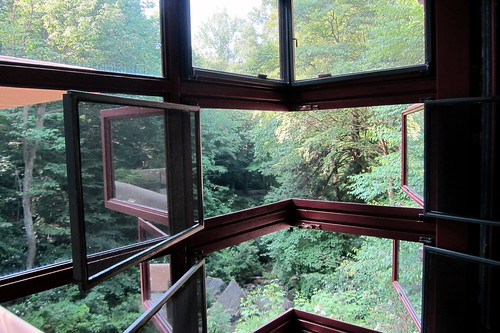
PA - Mill Run: Fallingwater - Dressing Space

A couple of nice milling engineering photos I found:


PA – Mill Run: Fallingwater – Dressing Area


Image by wallyg

Fallingwater functions a 3-story light tower or light screen, which runs through the Dressing Space or Edgar Kaufmann Sr’s Study on the second floor, and Edgar Kaufmann Jr.’s Study on the third floor. At the corner, the casement windows open outward, breaking the down the box and permitting the corner to vanish. At Edgar Kaufmann Sr.’s suggestion, exactly where the windows meet the ragged stones walls, the glass runs directly into caulking channels, blurring the line between the exterior and interior space. When viewed from the exterior, the vertical shaft of glass serves to balance the structural stone masses and preserve the house’s transparency. The ceiling is treated with a bevel, minimizing the cantilevered mass of concrete, steel and stone to a practically invisible sliver exactly where it meets the window frame.


Fallingwater, sometimes referred to as the Edgar J. Kaufmann Sr. Residence or just the Kaufmann Residence, positioned inside a five,100-acre nature reserve 50 miles southeast of Pittsburgh, was designed by Frank Lloyd Wright and built in between 1936 and 1939. Constructed over a 30-foot flowing waterfall on Bear Run in the Mill Run section of Stewart Township, Fayette County, Pennsylvania, the property served as a trip retreat for the Kaufmann family members including patriarch, Edgar Kaufmann Sr., was a effective Pittsburgh businessman and president of Kaufmann’s Department Shop, and his son, Edgar Kaufmann, Jr., who studied architecture briefly below Wright. Wright collaborated with employees engineers Mendel Glickman and William Wesley Peters on the structural design and style, and assigned his apprentice, Robert Mosher, as his permanent on-site representative all through construction. Regardless of frequent conflicts amongst Wright, Kaufmann, and the building contractor, the home and guesthouse had been finally constructed at a price of 5,000.


Fallingwater was designated a National Historic Landmark in 1966. It was listed among the Smithsonian’s 28 Areas to See Prior to You Die. In a 1991 poll of members of the American Institute of Architects (AIA), it was voted &quotthe ideal all-time function of American architecture.&quot In 2007, Fallingwater was ranked #29 on the AIA 150 America’s Favourite Architecture list.


National Register #74001781 (1974)


Sobey Manufacturing shingle mill, 1915


Image by Seattle Municipal Archives
Item 51879, Engineering Department Photographic Negatives (Record Series 2613-07), Seattle Municipal Archives.


7-Axis Milling Equipment (NASA, Marshall Center)


Image by NASA’s Marshall Space Flight Center
Editor’s Note: This image is one of a series showing engineering technology at NASA’s Marshall Space Flight Center in Huntsville, Ala.


Caption: Ares 7-axis milling gear and facilities.


Credit: NASA/MSFC/D. Stoffer


(Source from rapid prototyping from China blog)
Saturday, September 20, 2014

Produced In Space Announces Launch of Very first Zero-Gravity 3D Printer to International Space Station


Mountain View, Calif. (PRWEB) September 20, 2014


On September 20 at two:14am the 1st 3D printer intended for in-space use will depart aboard a rocket from Cape Canaveral, Fla., headed for the International Space Station (ISS).


&#13


This “machine shop for space” will mark the very first time that a multi-objective manufacturing device will be utilized off-world to produce parts, tools and emergency solutions. Developed by Made In Space, Inc., beneath a contract with NASA Marshall Space Flight Center (MSFC), the 3D printer is part of a technologies demonstration intended to show that on-web site, on-demand manufacturing is a viable alternative to launching things from Earth.


&#13


“Everything that has ever been constructed for space has been built on the ground. Tremendous amounts of cash and time have been spent to spot even the simplest of items in space to help exploration and improvement,” mentioned Aaron Kemmer, Chief Executive Officer of Made In Space. “This new capability will fundamentally change how the supply and development of space missions is looked at.”


&#13


Following delivery to ISS, the 3D printer is scheduled to be installed in the Microgravity Science Glovebox (MSG) to conduct its series of prints. The printer will generate a series of test coupons, parts, tools, use case examples and even STEM project styles by students as portion of the 3D Printing in Zero-G Experiment. This experiment, intended to demonstrate additive manufacturing capabilities in space, was created by means of a partnership amongst Created In Space and NASA MSFC. Produced In Space is working with enterprise partners to formulate added use case examples to demonstrate printer capabilities.


&#13


Produced In Space’s additive manufacturing technology creates 3D objects layer by layer from filament by means of an extrusion technique specifically adapted for the challenges of the space environment. In addition to designing and building the hardware, Produced In Space will be operating the printer from a mission manage ground station.


&#13


“There were dozens of particular difficulties we had to solve in constructing a 3D printer for the Space Station. From thermal approach adjustments to rigorous security requirements, the challenges our team had to overcome were numerous, and we’re deeply proud to see the results of the work carried out by the Created In Space and NASA MSFC team now head out for a grand field test,” stated Kemmer.


&#13


This very first printer will be making use of ABS plastic whilst the second generation unit, scheduled for delivery to ISS in 2015, will provide a number of material capacity and an enhanced develop volume. The second Produced In Space printer will be accessible for use by organizations, researchers and anybody who desires to create in-space hardware rapidly, affordably, and safely.


&#13


“Placing additive manufacturing in space will lead to related capabilities on each future space station, deep space exploration vehicle, and space colony,” stated Kemmer. “Rapid construction of important materials is a crucial need if humans are going to establish a higher footprint in our universe.”


&#13


Created In Space developed the zero-gravity printer via NASA’s Tiny Business Innovation Analysis (SBIR) system. The prototype unit was tested on Zero-G Corporation’s modified Boeing 727 parabolic airplane, made achievable by NASA’s Flight Possibilities System. The flight unit passed NASA’s comprehensive security and operational standards on the way to being deemed flight ready.


&#13


Kemmer said, “This is more than a 3D printer. It is a lot more than a machine shop in space. It is a landmark for humanity. For the very first time in the history of our species, we will be manufacturing tools and hardware away from the Earth. Now that we’ve produced this breakthrough, the sky is no longer the limit for additive manufacturing – the era of off-world manufacturing has begun.”


&#13


About Made In Space&#13

Founded in 2010 with the goal of enabling humanity’s future in space, Produced In Space, Inc. has created additive manufacturing technologies for use in zero-gravity. By constructing hardware that can develop what is necessary in space, as opposed to launching it from Earth, the business plans to accelerate and broaden space development while also delivering unprecedented access for men and women on Earth to use in-space manufacturing capabilities.


&#13


Created In Space’s team consists of profitable entrepreneurs, knowledgeable space experts and essential 3D printing developers. With more than 30,000+ hours of 3D printing technology testing, and 400+ parabolas of microgravity test flights, Created In Space’s expertise and expertise has led to the very first 3D printers developed for use on the International Space Station.


&#13


For a lot more data about Produced In Space, visit: http://www.madeinspace.us&#13

Comply with on Twitter @_MadeInSpace&#13

Facebook: http://www.facebook.com/WeAreMadeInSpace


&#13


Photos and video can be discovered at madeinspace.us


&#13

&#13

&#13

&#13

&#13


Associated Machined Parts Necessary Press Releases


(Posted by an aluminium machining China Company and precision CNC machined parts China manufacturer)

Created In Space Announces Launch of Very first Zero-Gravity 3D Printer to International Space Station


Mountain View, Calif. (PRWEB) September 20, 2014


On September 20 at 2:14am the 1st 3D printer intended for in-space use will depart aboard a rocket from Cape Canaveral, Fla., headed for the International Space Station (ISS).


&#13


This “machine shop for space” will mark the initial time that a multi-purpose manufacturing device will be utilized off-world to generate parts, tools and emergency solutions. Created by Made In Space, Inc., below a contract with NASA Marshall Space Flight Center (MSFC), the 3D printer is portion of a technologies demonstration intended to show that on-site, on-demand manufacturing is a viable option to launching items from Earth.


&#13


“Everything that has ever been built for space has been built on the ground. Tremendous amounts of money and time have been spent to place even the simplest of items in space to aid exploration and development,” mentioned Aaron Kemmer, Chief Executive Officer of Created In Space. “This new capability will fundamentally alter how the provide and development of space missions is looked at.”


&#13


Following delivery to ISS, the 3D printer is scheduled to be installed in the Microgravity Science Glovebox (MSG) to conduct its series of prints. The printer will create a series of test coupons, components, tools, use case examples and even STEM project styles by students as component of the 3D Printing in Zero-G Experiment. This experiment, intended to demonstrate additive manufacturing capabilities in space, was created by way of a partnership in between Made In Space and NASA MSFC. Created In Space is working with business partners to formulate added use case examples to demonstrate printer capabilities.


&#13


Produced In Space’s additive manufacturing technology creates 3D objects layer by layer from filament by way of an extrusion approach particularly adapted for the challenges of the space atmosphere. In addition to designing and creating the hardware, Produced In Space will be operating the printer from a mission manage ground station.


&#13


“There had been dozens of distinct troubles we had to resolve in constructing a 3D printer for the Space Station. From thermal method adjustments to rigorous safety requirements, the challenges our group had to overcome have been quite a few, and we’re deeply proud to see the benefits of the perform completed by the Created In Space and NASA MSFC group now head out for a grand field test,” said Kemmer.


&#13


This 1st printer will be employing ABS plastic whilst the second generation unit, scheduled for delivery to ISS in 2015, will supply numerous material capacity and an improved create volume. The second Made In Space printer will be obtainable for use by businesses, researchers and anyone who wants to develop in-space hardware quickly, affordably, and safely.


&#13


“Placing additive manufacturing in space will lead to equivalent capabilities on each and every future space station, deep space exploration automobile, and space colony,” said Kemmer. “Rapid construction of critical supplies is a essential need if humans are going to establish a greater footprint in our universe.”


&#13


Made In Space created the zero-gravity printer via NASA’s Small Company Innovation Investigation (SBIR) plan. The prototype unit was tested on Zero-G Corporation’s modified Boeing 727 parabolic airplane, produced feasible by NASA’s Flight Opportunities Plan. The flight unit passed NASA’s extensive security and operational requirements on the way to being deemed flight ready.


&#13


Kemmer mentioned, “This is far more than a 3D printer. It is much more than a machine shop in space. It’s a landmark for humanity. For the 1st time in the history of our species, we will be manufacturing tools and hardware away from the Earth. Now that we’ve made this breakthrough, the sky is no longer the limit for additive manufacturing – the era of off-globe manufacturing has begun.”


&#13


About Made In Space&#13

Founded in 2010 with the purpose of enabling humanity’s future in space, Created In Space, Inc. has created additive manufacturing technology for use in zero-gravity. By constructing hardware that can build what is needed in space, as opposed to launching it from Earth, the organization plans to accelerate and broaden space improvement whilst also offering unprecedented access for individuals on Earth to use in-space manufacturing capabilities.


&#13


Created In Space’s group consists of profitable entrepreneurs, experienced space authorities and crucial 3D printing developers. With more than 30,000+ hours of 3D printing technology testing, and 400+ parabolas of microgravity test flights, Made In Space’s expertise and knowledge has led to the initial 3D printers created for use on the International Space Station.


&#13


For a lot more info about Produced In Space, visit: http://www.madeinspace.us&#13

Follow on Twitter @_MadeInSpace&#13

Facebook: http://www.facebook.com/WeAreMadeInSpace


&#13


Images and video can be located at madeinspace.us


&#13

&#13

&#13

&#13

&#13


Find Much more Machining Parts Press Releases


(Posted by an aluminium machining China Company and precision CNC machined parts China manufacturer)

Friday, September 19, 2014

Outernet Begins Broadcasting Open Supply Ecology Blueprints From Space


New York, N.Y. (PRWEB) September 16, 2014


Outernet is a global broadcast data startup becoming incubated by the Media Development Investment Fund, a registered 501(c)(three), based in New York City. Outernet is humanity’s totally free public library which gives unrestricted international access to high quality uncensored content material from all over the web.


&#13


Open Source Ecology (OSE) has offered to Outernet, blueprints for the first four machines of its collection of 50, from its International Village Building Set (GVCS). As additional machines are released, Outernet will add them to its Core Archive.


&#13


OSE’s International Village Construction Set is a collection of the 50 most essential machines necessary for modern life to exist – everything from a tractor, to an oven, to a circuit maker. The Set includes fabrication and automated machines that make other machines. Since new machines can be built from current machines, the GVCS is intended to be the seed for creating infrastructures of contemporary civilization.


&#13


Outernet’s mission is to distribute relevant data to the world, which is a organic match with OSE’s mission. All of OSE’s work is truly open supply and is obtainable below a Inventive Commons license which will be distributed over Outernet beneath the same license. When reading OSE’s mission, it is challenging to distinguish it from Outernet’s personal aim of empowering individuals by means of expertise.


&#13


“We see a planet of prosperity that does not leave any individual behind. We see a world of interdisciplinary, synergistic systems thinking – not the isolated silos of today’s globe. This operate of distributing raw productive power to men and women is not only a indicates to solving wicked issues – but a implies for humans themselves to evolve.” —Marcin Jakubowski, OSE founder


&#13


“Being in a position to broadcast the details necessary for men and women to tangibly enhance their lives is an overwhelming milestone for us. Adding the operate carried out by Marcin and Open Supply Ecology to the Outernet Core Archive is a proud moment for our company and a considerable step not only for totally free access to info, but freedom to build one’s own dreams. There is nothing far more innately satisfying than providing for one’s loved ones and OSE enables that in a extremely actual, raw way. We’re thrilled to give OSE access to the breadth of humanity through Outernet.” —Syed Karim, CEO of Outernet


&#13


Initial discussion has occurred in between Outernet and OSE to add the Outernet receiver as the 51st item to the Worldwide Village Construction Set. Utilizing other GVCS tools, such as the Energy Cube, Solar Concentrator, CNC Multi-machine, and the CNC Circuit Mill, a user will be able to build and power an Outernet receiver that would work as a digital library for a house or an entire village. Constructing any international village necessitates a device that delivers cultural collateral. Outernet is that library.


&#13


Outernet was founded by Syed Karim in February, 2014 and turned on its initial broadcast signal on August 11, 2014. Outernet broadcasts the most important content material from the web to Earth from satellites for totally free. Folks can access the Outernet signal making use of a homemade receiver built from broadly accessible components, instructions for which are accessible on the Outernet site. Outernet is the most considerable step towards universal information access, regardless of wealth, geography, or political environment. For more information, please make contact with Thane Richard at thane@outernet.is


&#13


Open Supply Ecology is a 501(c)(3) organization founded in 2003 by Marcin Jakubowski Ph.D. Mr. Jakubowski has given a lot of presentations of his function and is a Senior Fellow at the TED Institute, Shuttleworth Foundation Fellow and a 2013 White Property Champion of Alter. The Global Village Construction Set was voted Time Magazine’s Ideal Inventions of 2012. Since its inception, OSE has grown into a single of the premier open supply hardware groups and is one particular of the 1st organizations of its type to effectively apply the open supply software model to hardware.


&#13


OSE seeks to empower millions of individuals around the planet by generating all the machinery and systems essential to construct a society from the ground up, although putting the costs inside attain of the typical individual. In most cases, the charges of OSE’s machines are about 20% of comparable machinery that is currently accessible off-shelf.


&#13


OSE is also and educational center that teaches by means of its numerous workshops supplied all through the year exactly where people come from all over to understand the necessary skills to start their own GVCS enterprises. OSE is searching for qualified leaders to run workshops at the OSE headquarters and at other locations. Please see http://bit.ly/1lHE2fw for far more info on the workshops.


&#13

&#13

&#13

&#13

&#13


Locate Far more Cnc Turning Components Press Releases


(Posted by an aluminium machining China Company and precision CNC machined parts China manufacturer)

Saturday, August 16, 2014

NASA is building the world's first 3D-printed space cameras

Subtractive vs Additive Processes


Image by Ѕolo

CNC China Machining: start with a large solid block and remove material to create your part.

3D Printing/Rapid China Prototyping: create the part by binding loose material layer by layer.


Two great tastes that taste great together.


Machined aluminum brick from Bram, printed Alumide brick from me via Shapeways.


NASA is building the world"s first 3D-printed space cameras

Budinoff is also working on a way to build 3D-printed metal mirrors. Mirrors are crucial parts of telescopes, and it may be possible to create them with powdered aluminum. Aluminum is notoriously porous, which makes it difficult to polish. If Budinoff …
Read more on Fox News


NASA to 3D Print An Entire Space Telescope, Minus the Lenses

There will only be four 3D printed parts in Budinoff"s telescope, however, these four parts, which were laser sintered from powdered aluminum and titanium, are replacing anywhere from 20-40 conventional parts. Additionally, the parts can be much more …
Read more on 3DPrint.com


NASA engineer developing 3D printed space cameras

Specifically, a 3D printed 2- in. camera design involves the fabrication of four different pieces made from powdered aluminum and titanium, but a traditionally-manufactured camera would require between five and 10 times the number of parts. In addition …
Read more on Vision Systems Design

Monday, August 11, 2014

Supplier to Discuss Space Exploration Projects at IMTS 2014

Supplier to Discuss Space Exploration Projects at IMTS 2014

Mr. Babcock has 35 years" experience in China manufacturing, including manual and computerized CNC programming and China machining. He will discuss national space exploration projects and his China company"s participation in the China manufacturing, assembly and testing of …
Read more on MarketWatch

Saturday, August 9, 2014

Steven F. Udvar-Hazy Center: Space exhibit panorama (misc)

A few nice brass precision turned components China images I found:


Steven F. Udvar-Hazy Center: Space exhibit panorama (misc)


Image by Chris Devers

Uploaded by Eye-Fi.


Steven F. Udvar-Hazy Center: Space exhibit panorama (misc)


Image by Chris Devers

Uploaded by Eye-Fi.

Tuesday, August 5, 2014

CNC China Milling Smart Space Saving 32”x9.45” table,15.37x9.45x13.75(XYZ)-less space

Cnc China Milling China Machines on eBay:


CNC Milling Smart Space Saving 32”x9.45” table,15.37x9.45x13.75(XYZ)-less space


$5,100.00 (7 Bids)
End Date: Saturday Aug-9-2014 11:25:29 PDT
Bid now | Add to watch list


SHERLINE 5400 VERTICAL 3 AXIS CNC MILL MILLING MACHINE W/ CONTROL DRIVER


$1,199.99
End Date: Tuesday Sep-2-2014 11:37:50 PDT
Buy It Now for only: $1,199.99
Buy It Now | Add to watch list


*NEW* CNC Router milling cutting engraving Machine High-Z S-720 CNC-Technik


$255.00 (9 Bids)
End Date: Sunday Aug-10-2014 1:54:51 PDT
Bid now | Add to watch list