Showing posts with label Steven. Show all posts

Friday, September 11, 2015

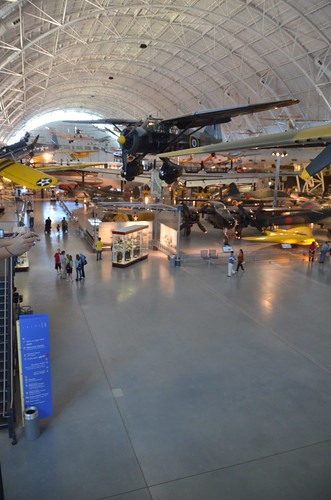
Steven F. Udvar-Hazy Center: map of the museum

Check out these die casting china images:


Steven F. Udvar-Hazy Center: map of the museum

Image by Chris Devers

This is the on-site version of the facility map, also obtainable (and probably more useful to you, reader) as this PDF document: Steven F. Udvar-Hazy Center: Boeing Aviation Hangar &amp James S McDonnell Space Hangar.


Tv Shows We Utilized To Watch – British Tv show – BBC Till Death Us Do Component

Image by brizzle born and bred

Till Death Us Do Component was a British television sitcom that aired on BBC1 from 1965 to 1968, 1970, and from 1972 to 1975. Initial airing as a Comedy Playhouse pilot, the series aired for seven series until 1975. Six years later, ITV continued the sitcom, calling it Till Death…. From 1985 to 1992, the BBC created a sequel In Sickness and in Well being.


Designed by Johnny Speight, Till Death Us Do Part centred on the East End Garnett family, led by patriarch Alf Garnett (Warren Mitchell), a reactionary white working-class man who holds racist and anti-socialist views. His gentle and extended-suffering wife Else was played by Dandy Nichols, and his daughter Rita by Una Stubbs. Rita’s vibrant but layabout husband Mike Rawlins (Antony Booth) is a socialist.


The character Alf Garnett became a effectively recognized character in British culture, and Mitchell played him on stage and tv up until 1998, when Speight died.


In addition to the spin-off In Sickness and in Health, Till Death Us Do Portion was re-produced in a lot of nations, from Brazil to Germany (Ein Herz und eine Seele), and Hong Kong (All in a Household), with the most notable remake becoming the lengthy-operating 1970s American series, All in the Household.


Many episodes from the first 3 series are believed to no longer exist, obtaining been wiped in the mid 70s as was the policy at the time.


The series became an instant hit because, although a comedy, in the context of its time it did deal with elements of operating-class life comparatively realistically. It addressed racial and political troubles at a difficult time in British society.


The attitude of those who made the programme was that Alf’s views were so clearly unacceptable that they were risible, but some regarded as the series uncomfortable and disturbing.


Some had been oblivious to the fact that Johnny Speight was satirising racist attitudes. Ironically, several who held related opinions to the character enjoyed the show, maybe missing the point that Alf’s opinions had been offensive and that they have been getting ridiculed.


Mitchell imbued the character of Alf Garnett with an earthy charm that served to humanise Alf and make him likable. According to interviews he gave, the reality that some viewers overlooked Alf’s views and regarded him as a rough diamond disappointed Speight.


The show captured a essential feature of Britain in the 1960s – the widening generation gap. Alf (and to a lesser degree his wife) represented the old guard, the classic and conservative attitudes of the older generation.


Alf’s battles with his left-wing son-in-law have been not just ideological but generational and cultural. His son-in-law and daughter (a supporter of her husband rather than an active protagonist) represented the younger generation.


They saw the constructive aspects of the new era such as relaxed sexual mores, fashions, music, and so on. The very same things have been anathema to Alf – and indicative of every thing that was wrong with the younger generation and the liberal attitudes they embraced.


Alf was portrayed as the archetypal working-class Conservative. The subjects that excited him most had been football and politics, even though his actual information of either was limited.


He utilized language not considered acceptable for tv in the 1960s. He often referred to racial minorities as &quotcoons&quot and similar terms.


He referred to his Liverpudlian son-in-law as &quotShirley Temple&quot or a &quotrandy Scouse git&quot (Randy Scouse Git as a phrase caught the ear of Micky Dolenz of The Monkees who heard it although on tour in the UK – and who co-opted it as the title of the group’s subsequent single – although their record label re-named it &quotAlternate Title&quot in the UK marketplace to keep away from controversy) and to his wife as a &quotsilly moo&quot (a substitute for &quotcow&quot which was vetoed by the BBC’s head of comedy Frank Muir).


Nevertheless, Michael Palin writes in his diary 16 July 1976 that Warren Mitchell told him that ‘silly moo&quot wasn’t scripted, &quotIt came out throughout a rehearsal when he forgot the line &quotSilly old mare&quot.’ Controversially, the show was one particular of the earliest mainstream programmes to feature the swear word &quotbloody&quot.


The show was a single of numerous held up by Mary Whitehouse as an instance of the BBC’s moral laxity.


In a demonstration of Speight’s satirical skills – on finding out that Mary Whitehouse was a critic of the show – Speight designed an episode exactly where Alf Garnett was observed as a fan of Whitehouse. He was seen proudly reading her present book. &quotWhat are you reading?&quot his son-in-law asks.


When he relates that it is Mary Whitehouse – his son-in-law sniggers. Alf’s rejoinder is &quotShe’s concerned for the bleedin’ moral fibre of the nation!&quot


In the end &quotsilly moo&quot became a comic catch phrase. Another Garnett phrase was &quotit stands to reason&quot, typically just before making some patently unreasonable comment.


Alf was an admirer of Enoch Powell, a appropriate-wing Conservative politician known specifically for sturdy opposition to the immigration of non-white races into the United Kingdom.


Alf was also a supporter of West Ham United (a football club based in the East Finish) and recognized to make derogatory remarks about &quotthe Jews up at Spurs&quot (referring to Tottenham Hotspur, a North London club with a sizeable Jewish following). This was a playful touch by Speight, being aware of that in true life Mitchell was each Jewish and a Spurs supporter. In interviews, Speight explained he had originally primarily based Alf on his father, an East Finish docker who was staunchly reactionary and held &quotunenlightened&quot attitudes toward black individuals. Speight produced clear that he regretted his father held such attitudes – beliefs Speight regarded as reprehensible. Speight saw the show as a way of ridiculing such views and dealing with his complex feelings about his father.


The series switched to colour in 1972 and Rita had a infant son, Micheal.


Toward the end of the series Dandy Nichols fell ill and was unable to attend the live-audience recordings. The problem was solved by obtaining her pre-record her lines which were then edited into the show.


Ultimately even this was too considerably and so in a later episode Else was observed leaving for Australia, to Alf’s dismay. Patricia Hayes, who had been noticed from time to time previously as subsequent door neighbour Mrs. Reed, was offered a 1st name Min and became a starring character along with her husband Bert, previously played by Bill Maynard and now by Alfie Bass.


The show’s rating began to suffer and in 1975, the series was dropped. The final episode, saw Alf drop his job and get a telegram from Else asking for a divorce.


As with most BBC sitcoms Till Death Us Do Element was recorded before a live studio audience. The programs were recorded onto 2 inch Quadruplex videotape. From 1966 to 1968 the show was each taped and transmitted in black and white. When the show returned in 1970 it was recorded the exact same way only in colour.


The opening titles/end credits of the 1st colour episodes originally employed the b/w sequence from the 60’s tinted in red, as seen on UKTV Gold repeats in 2006.


CAST


Warren Mitchell … Alf Garnett

Una Stubbs … Rita

Dandy Nichols … Else Garnett

Anthony Booth … Mike Rawlins


See video clip


www.youtube.com/watch?v=h36UigPqHqs&ampfeature=associated


Warren Mitchell (born 14 January 1926) is an English actor who rose to initial prominence in the function of bigoted cockney Alf Garnett in the BBC television series Till Death Us Do Component (1965-1975) scripted by Johnny Speight. He holds both British and Australian citizenship and has enjoyed considerable good results in stage performances in each nations.


Mitchell was born Warren Misel in Stoke Newington, London. He is of Russian Jewish descent[1], but describes himself in interviews as an atheist who often believes in God.[2] His father was a glass and china merchant. He was interested in acting from an early age, and attended the Gladys Gordon’s Academy of Dramatic Arts in Walthamstow from the age of seven. He did properly at college and read physical chemistry at University College, Oxford, for six months. There he met his modern Richard Burton, and with each other they joined the RAF in 1944. He completed his navigator training in Canada just as the war ended.


Dandy Nichols (21 Could 1907 – six February 1986) was an English actress most noted for her function as Else Garnett, the lengthy-suffering wife of the racially bigoted and misogynistic character Alf Garnett in the BBC sitcom Till Death Us Do Element.


Born Daisy Sander in Hammersmith, London, she began her working life as a secretary in a London factory. Twelve years later, right after drama, diction and fencing classes, she was spotted in a charity show by a producer, who offered her a job in his repertory theatre company in Cambridge. Throughout her early career on stage she acted beneath the name Barbara Nichols but later changed it to Dandy, her childhood nickname.


When the Second Planet War broke out, she returned to workplace operate but later undertook a six-week tour with ENSA. When the war was more than, she returned to the theatre and also began appearing in films: generally comedies and invariably as a maid or char.


Her successes in theatre contain the Royal Court Theatre and Broadway productions of Residence. Her large screen debut was in Hue and Cry, in 1947, followed with performances in Nicholas Nickleby, The Winslow Boy, The History of Mr Polly, Scott of the Antarctic, Mother Riley Meets the Vampire and Dickens’ The Pickwick Papers.


Una Stubbs (born 1 Could 1937) is an English actress and former dancer who has appeared extensively on British television and significantly less frequently in films or on the stage. She is particularly identified for her roles in the sitcom Till Death Us Do Component and the children’s series Worzel Gummidge.


Una Stubbs was born at Hinckley, Leicestershire. She very first appeared on tv as a single of The Dougie Squires Dancers on the British Tv music show Cool for Cats in 1956.


Her first significant screen part was in Cliff Richard’s 1963 film, Summer time Holiday. A handful of years later, she created her breakthrough in tv comedy, playing Rita Rawlins, the married daughter of Alf Garnett in Till Death Us Do Part. She also appeared in the quick-lived sitcom Till Death… (1981), once more playing Rita.


From 1970 to 1972, Stubbs appeared on most editions of It’s Cliff Richard! and It really is Cliff! on BBC1, singing, dancing and acting along with the host and the weekly guests. When she took maternity leave from the show, her Tv mother Dandy Nichols appeared on the show with Cliff to cover for her absence. She also appeared in the 1972 West End revue, Cowardy Custard, and two years later in the revue Cole, at the Mermaid Theatre.


Stubbs featured in the Fawlty Towers episode &quotThe Anniversary&quot. She played Rita a third time in a handful of episodes of the BBC sitcom In Sickness and in Overall health (1985-92). But right after 1986, she stopped appearing as Rita, due to technical arguments with the BBC. Even so, she played Rita a fourth time in the Granada series, A Word With Alf.


Stubbs played Aunt Sally in the ITV children’s series Worzel Gummidge opposite Jon Pertwee, and was for numerous years a team captain in the weekly game show Give Us a Clue. She had an ongoing role as Miss Bat in the Tv series The Worst Witch and has appeared in shows such as Midsomer Murders, Heartbeat, Casualty, Maintaining up Appearances and as Edith Pagett in ITV’s 2006 adaptation of Agatha Christie’s Miss Marple story Sleeping Murder. Stubbs has also appeared in The Catherine Tate Show playing a variety of characters.


On stage, Stubbs appeared in Noël Coward’s &quotStar Top quality&quot in 2001. She also appeared in La Cage Aux Folles at the Menier Chocolate Factory in 2008.


Antony &quotTony&quot George Booth (born 9 October 1931 in Liverpool, greater recognized as Tony Booth) is an English actor, very best identified for his part as Mike Rawlins in the BBC series Till Death Us Do Part. His daughter, Cherie, a prominent Queen’s Counsel, is married to former Prime Minister Tony Blair. He is a cousin to the Booth family members of 19th-century American actors.


Booth was born into a functioning class family members in Jubilee Road, Liverpool. His father was a merchant seaman during Planet War II, his mother was of Irish descent. He attended St Edmunds Infant’s College and spent a year in hospital as a child with diphtheria. He then passed the 11 plus examination and attended St. Mary’s College, Crosby exactly where he was awarded a bursary to cover the price of his books. Hopes that he could progress to university had been dashed when he had to leave college and get a job after his father was badly injured in an industrial accident. He then worked as a clerk in a docklands warehouse and at the United States Consulate in Liverpool, before becoming named up for national service with the Royal Corps of Signals.


Yanghsuo – Impression Liu Sanjie

Image by Mulligan Stu

Scenes from the impressive outside light show – Impression Liu Sanjie. It is in an impressive outside stadium, overlooking the Li River and Karst mountains. As part of the light show, floodlights on the karst mountains generate an awe inspiring backdrop. It is directed by Zhang Yimou, who also directed the opening and closing ceremonies for the 2008 Beijing Olympic Games.


A single of the most dramatic scenes – fisherman casting their nets. There are hundreds of performers in the show – providing employment to regional individuals


(Source from rapid prototyping from China blog)

Friday, September 4, 2015

Steven F. Udvar-Hazy Center: Kawanishi N1K2-Ja Shiden Kai "George"

A few nice precision engineering elements images I identified:


Steven F. Udvar-Hazy Center: Kawanishi N1K2-Ja Shiden Kai “George”

Image by Chris Devers
See a lot more photos of this, and the Wikipedia report.


Particulars, quoting from Smithsonian National Air and Space Museum: Steven F. Udvar-Hazy | Kawanishi N1K2-Ja Shiden (Violet Lightning) Kai (Modified) &quotGEORGE&quot:


GEORGE is the unlikely Allied nickname for the very best Japanese naval fighter developed in quantity throughout World War II. The official Japanese name and designation was Kawanishi N1K2 Shiden (Violet Lightning). This outstanding land-based fighter sprang straight from a floatplane fighter design, the N1K1 REX (see NASM collection).


Many countries utilized floatplanes for scouting and reconnaissance duties, and to hunt submarines and surface ships, but only Japan built and fielded fighters on floats. The Japanese Imperial Navy intended to use these specialized aircraft to achieve air superiority above a beachhead to assistance amphibious landing operations exactly where carrier or land-based fighters had been unavailable. The Kawanishi N1K1 (Allied codename REX) was the only airplane made especially for this purpose to fly in the course of Planet War II.


In September 1940, the Japanese Navy issued a specification for floatplane fighters capable of supporting offensive naval operations. A team of engineers like Toshihara Baba, Shizuo Kikuhara, Hiroyuki Inoue, and Elizaburo Adachi had readied the initial prototype by Might 1942, and it flew on Might 6. Tests showed that the speed of new airplane was only slightly less than the Mitsubishi A6M Zero (see NASM collection) and the amphibious fighter was virtually as maneuverable as its land-primarily based cousin. This was remarkable efficiency for an aircraft that could not retract or jettison its enormous landing gear.


Extended just before the very first Kyofu flew, Kawanishi engineers believed that the fundamental style would also make an excellent land-based fighter. The conversion appeared to entail basically replacing the major and wingtip floats with a traditional landing gear. The business decided to develop this variant as a private venture. As the project unfolded, the engineers decided to replace the 14-cylinder engine with a new 18-cylinder model anticipated to create about two,000 horsepower. The new engine essential a bigger propeller and this component, in turn, necessary abnormally lengthy landing gear struts to stop the blade ideas from contacting the ground. Kawanishi flew the initial N1K1-J land-primarily based fighter on December 27, 1942. The new engine failed to deliver the anticipated power and the landing gear functioned poorly. The airplane also fell quick of projected speed (649 kph – 403 mph) by 74 kph (46 mph) and could handle only 575 kph (357 mph). This was more rapidly than the Mitsubishi A6M Zero ZEKE, nonetheless, and the Japanese Navy badly required an powerful counter to new American naval fighter aircraft such as the Grumman F6F Hellcat and Vought F4U Corsair (see NASM collection). The Japanese Navy ordered Kawanishi to abandon two other fighter projects and start building Shidens.


By the end of 1943, Kawanishi delivered about 70 of the new fighters and the Navy employed these airplanes for pilot familiarization and coaching. Expecting Allied amphibious landings in the Philippines, the Navy sent the very first Shiden unit to Cebu in time to challenge Allied air energy supporting the invasion of that island in October 1944. Engine, landing gear, logistics, and upkeep issues plagued the Shiden units but Allied pilots realized they faced a excellent new Japanese fighter.


With N1K1-J production underway and Shidens flying combat missions, Kawanishi set about refining the design. They lowered the wings from mid-fuselage and the extra ground clearance permitted the engineers to install a shorter, much more conventional and less-troublesome landing gear, simplified the fuselage structure, and redesigned the empennage. Only the wings and armament remained from the initial design. The engine continued to give problems, but the Navy was impressed with these improvements and ordered the new version into production as the N1K2-J Shiden Kai (modified). In air-to-air combat, seasoned Japanese pilots flying Shiden Kais could much more than hold their personal against most American pilots flying F6F Hellcats. In February 1945, a brave pilot, Warrant Officer Muto, single-handedly engaged 12 Hellcats and shot down four of them before the remainder disengaged. Flying intercept missions against Boeing B-29 Superfortresses above the residence islands, the Shiden Kai was less effective since of inadequate climb speed and energy loss at high altitudes.


Kawanishi developed a number of other variants and planned a lot more when the war ended. About 1,500 of the various models had been created. In battle over Formosa (Taiwan), the Philippines, Okinawa, and the house islands, Shiden pilots acquitted themselves nicely but this superb airplane was yet another very good design and style that appeared too late and in as well few numbers to reverse Japan’s fortunes in the air war.


NASM’s Shiden Kai is one of 3 remaining today. The other two are displayed at the U. S. Air Force Museum in Dayton, Ohio, and the New England Air Museum in Windsor Locks, Connecticut. American intelligence units collected 4 GEORGE fighters from numerous Japanese airfields and delivered them to Yokosuka Naval Shipyard for shipment to the United States. The NASM GEORGE came from Omura or Oppama Naval Air Station, Japan, and the fighter arrived stateside aboard the escort carrier &quotUSS Barnes.&quot It was probably evaluated at the Naval Aircraft Factory at Philadelphia, and then moved to Willow Grove Naval Air Station. The GEORGE remained outdoors on show and steadily deteriorated along with a group of German and Japanese airplanes till 1983 when the Smithsonian Institution acquired it. The airplane was stored at the Paul Garber Facility until NASM loaned it to the Champlin Fighter Museum in Mesa, Arizona, for restoration in December 1991 and the project was completed in November 1994. The restored Shiden Kai wears the colors and markings of the 343rd Kokutai, a unit stationed at Omura Naval Air Station in 1945.


Transferred from the United States Navy.


Manufacturer:
Kawanishi Kokuki K. K.


Date:

1942


Nation of Origin:

Japan


Dimensions:

Overall: 400 x 930cm, 2675kg, 1200cm (13ft 1 1/2in. x 30ft 6 1/8in., 5897.3lb., 39ft four 7/16in.)


Components:

All-metal monocoque construction


Physical Description:

Single-engine, low-wing monoplane, standard layout with tailwheel landing gear.


Image from page 241 of “The Bell Technique technical journal” (1922)

Image by Net Archive Book Images
Identifier: bellsystemtechni06amerrich
Title: The Bell Program technical journal
Year: 1922 (1920s)
Authors: American Phone and Telegraph Company
Subjects: Telecommunication Electric engineering Communication Electronics Science Technologies
Publisher: [Brief Hills, N.J., etc., American Phone and Telegraph Co.]
Contributing Library: Prelinger Library
Digitizing Sponsor: Web Archive


View Book Web page: Book Viewer
About This Book: Catalog Entry
View All Images: All Images From Book


Click right here to view book on the web to see this illustration in context in a browseable on the web version of this book.


Text Appearing Ahead of Image:
partially eliminatelarge interfering currents. This appears a most unusual arrangementuntil it is remembered that, despite the fact that the amplitude of a particularpart of the current may be elevated, the total load on the first stagemay nicely be higher than that on the final stage. This is the reverseof the scenario in cascade amplification where the first tubes handleonly a modest existing and the succeeding ones a proportionately largercurrent. The discrimination of a single of the tuned circuits when a couplingresistance of 1 ohm is utilized is provided by curve A of Fig. 4. Curve Bshows the effect of adding the second tuned circuit. If regenerativeamplification had been employed, each the selectivity and amplificationcould of course be significantly enhanced, but this has not been utilised becauseof the necessity for higher stability and measurement precision. Modulator. As previously mentioned, the second amplifier unitworks into a modulator, the circuit of which is shown in Fig. 5. This is LOW FREQUENCYTUNED CIRCUIT


Text Appearing Right after Image:
TO LOW FRE-QUENCY AMPLIFIER-RECTIFIER Fig. 5—Modulator for heterodyne current analyzer of a two tube balanced type In which modulation, or frequency trans-formation, takes spot in the grid circuit. The heterodyning fre-quency is applied in the frequent input lead across a suitable resistance.The input from the amplifier is applied via a transformer acrossthe grids of the two tubes in series with a high resistance in each and every side.No biasing possible is applied on the grids. A modulator operated inthis manner has the house of providing a modulation output propor-tional to the smaller sized of the two input currents and independent of thelarger. The amplitude of this output may possibly, as a result, be determinedentirely by the amplitude of the element becoming measured. Anotherdesirable characteristic of this kind of modulator is that its efficiency isnot affected by interference, therefore it will show a fixed relation among ANALYZER FOR Complex ELECTRIC WAVES 237 the low frequency output and a offered


Note About Photos
Please note that these photos are extracted from scanned page photos that may possibly have been digitally enhanced for readability – coloration and appearance of these illustrations may possibly not perfectly resemble the original operate.


(Source from rapid prototyping from China blog)

Thursday, August 20, 2015

Steven F. Udvar-Hazy Center: B-29 Superfortress "Enola Gay" caption

A few nice precision engineering companies images I found:


Steven F. Udvar-Hazy Center: B-29 Superfortress “Enola Gay” caption


Image by Chris Devers
See more photos of this, and the Wikipedia article.


Details, quoting from Smithsonian National Air and Space Museum | Boeing B-29 Superfortress "Enola Gay":


Boeing’s B-29 Superfortress was the most sophisticated propeller-driven bomber of World War II and the first bomber to house its crew in pressurized compartments. Although designed to fight in the European theater, the B-29 found its niche on the other side of the globe. In the Pacific, B-29s delivered a variety of aerial weapons: conventional bombs, incendiary bombs, mines, and two nuclear weapons.


On August 6, 1945, this Martin-built B-29-45-MO dropped the first atomic weapon used in combat on Hiroshima, Japan. Three days later, Bockscar (on display at the U.S. Air Force Museum near Dayton, Ohio) dropped a second atomic bomb on Nagasaki, Japan. Enola Gay flew as the advance weather reconnaissance aircraft that day. A third B-29, The Great Artiste, flew as an observation aircraft on both missions.


Transferred from the United States Air Force.


Manufacturer:
Boeing Aircraft Co.
Martin Co., Omaha, Nebr.


Date:

1945


Country of Origin:

United States of America


Dimensions:

Overall: 900 x 3020cm, 32580kg, 4300cm (29ft 6 5/16in. x 99ft 1in., 71825.9lb., 141ft 15/16in.)


Materials:

Polished overall aluminum finish


Physical Description:

Four-engine heavy bomber with semi-monoqoque fuselage and high-aspect ratio wings. Polished aluminum finish overall, standard late-World War II Army Air Forces insignia on wings and aft fuselage and serial number on vertical fin; 509th Composite Group markings painted in black; "Enola Gay" in black, block letters on lower left nose.


Long Description:

Boeing’s B-29 Superfortress was the most sophisticated, propeller-driven, bomber to fly during World War II, and the first bomber to house its crew in pressurized compartments. Boeing installed very advanced armament, propulsion, and avionics systems into the Superfortress. During the war in the Pacific Theater, the B-29 delivered the first nuclear weapons used in combat. On August 6, 1945, Colonel Paul W. Tibbets, Jr., in command of the Superfortress Enola Gay, dropped a highly enriched uranium, explosion-type, "gun-fired," atomic bomb on Hiroshima, Japan. Three days later, Major Charles W. Sweeney piloted the B-29 Bockscar and dropped a highly enriched plutonium, implosion-type atomic bomb on Nagasaki, Japan. Enola Gay flew as the advance weather reconnaissance aircraft that day. On August 14, 1945, the Japanese accepted Allied terms for unconditional surrender.


In the late 1930s, U. S. Army Air Corps leaders recognized the need for very long-range bombers that exceeded the performance of the B-17 Flying Fortress. Several years of preliminary studies paralleled a continuous fight against those who saw limited utility in developing such an expensive and unproven aircraft but the Air Corps issued a requirement for the new bomber in February 1940. It described an airplane that could carry a maximum bomb load of 909 kg (2,000 lb) at a speed of 644 kph (400 mph) a distance of at least 8,050 km (5,000 miles). Boeing, Consolidated, Douglas, and Lockheed responded with design proposals. The Army was impressed with the Boeing design and issued a contract for two flyable prototypes in September 1940. In April 1941, the Army issued another contract for 250 aircraft plus spare parts equivalent to another 25 bombers, eight months before Pearl Harbor and nearly a year-and-a-half before the first Superfortress would fly.


Among the design’s innovations was a long, narrow, high-aspect ratio wing equipped with large Fowler-type flaps. This wing design allowed the B-29 to fly very fast at high altitudes but maintained comfortable handling characteristics during takeoff and landing. More revolutionary was the size and sophistication of the pressurized sections of the fuselage: the flight deck forward of the wing, the gunner’s compartment aft of the wing, and the tail gunner’s station. For the crew, flying at extreme altitudes became much more comfortable as pressure and temperature could be regulated. To protect the Superfortress, Boeing designed a remote-controlled, defensive weapons system. Engineers placed five gun turrets on the fuselage: a turret above and behind the cockpit that housed two .50 caliber machine guns (four guns in later versions), and another turret aft near the vertical tail equipped with two machine guns; plus two more turrets beneath the fuselage, each equipped with two .50 caliber guns. One of these turrets fired from behind the nose gear and the other hung further back near the tail. Another two .50 caliber machine guns and a 20-mm cannon (in early versions of the B-29) were fitted in the tail beneath the rudder. Gunners operated these turrets by remote control–a true innovation. They aimed the guns using computerized sights, and each gunner could take control of two or more turrets to concentrate firepower on a single target.


Boeing also equipped the B-29 with advanced radar equipment and avionics. Depending on the type of mission, a B-29 carried the AN/APQ-13 or AN/APQ-7 Eagle radar system to aid bombing and navigation. These systems were accurate enough to permit bombing through cloud layers that completely obscured the target. The B-29B was equipped with the AN/APG-15B airborne radar gun sighting system mounted in the tail, insuring accurate defense against enemy fighters attacking at night. B-29s also routinely carried as many as twenty different types of radios and navigation devices.


The first XB-29 took off at Boeing Field in Seattle on September 21, 1942. By the end of the year the second aircraft was ready for flight. Fourteen service-test YB-29s followed as production began to accelerate. Building this advanced bomber required massive logistics. Boeing built new B-29 plants at Renton, Washington, and Wichita, Kansas, while Bell built a new plant at Marietta, Georgia, and Martin built one in Omaha, Nebraska. Both Curtiss-Wright and the Dodge automobile company vastly expanded their manufacturing capacity to build the bomber’s powerful and complex Curtiss-Wright R-3350 turbo supercharged engines. The program required thousands of sub-contractors but with extraordinary effort, it all came together, despite major teething problems. By April 1944, the first operational B-29s of the newly formed 20th Air Force began to touch down on dusty airfields in India. By May, 130 B-29s were operational. In June, 1944, less than two years after the initial flight of the XB-29, the U. S. Army Air Forces (AAF) flew its first B-29 combat mission against targets in Bangkok, Thailand. This mission (longest of the war to date) called for 100 B-29s but only 80 reached the target area. The AAF lost no aircraft to enemy action but bombing results were mediocre. The first bombing mission against the Japanese main islands since Lt. Col. "Jimmy" Doolittle’s raid against Tokyo in April 1942, occurred on June 15, again with poor results. This was also the first mission launched from airbases in China.


With the fall of Saipan, Tinian, and Guam in the Mariana Islands chain in August 1944, the AAF acquired airbases that lay several hundred miles closer to mainland Japan. Late in 1944, the AAF moved the XXI Bomber Command, flying B-29s, to the Marianas and the unit began bombing Japan in December. However, they employed high-altitude, precision, bombing tactics that yielded poor results. The high altitude winds were so strong that bombing computers could not compensate and the weather was so poor that rarely was visual target acquisition possible at high altitudes. In March 1945, Major General Curtis E. LeMay ordered the group to abandon these tactics and strike instead at night, from low altitude, using incendiary bombs. These firebombing raids, carried out by hundreds of B-29s, devastated much of Japan’s industrial and economic infrastructure. Yet Japan fought on. Late in 1944, AAF leaders selected the Martin assembly line to produce a squadron of B-29s codenamed SILVERPLATE. Martin modified these Superfortresses by removing all gun turrets except for the tail position, removing armor plate, installing Curtiss electric propellers, and modifying the bomb bay to accommodate either the "Fat Man" or "Little Boy" versions of the atomic bomb. The AAF assigned 15 Silverplate ships to the 509th Composite Group commanded by Colonel Paul Tibbets. As the Group Commander, Tibbets had no specific aircraft assigned to him as did the mission pilots. He was entitled to fly any aircraft at any time. He named the B-29 that he flew on 6 August Enola Gay after his mother. In the early morning hours, just prior to the August 6th mission, Tibbets had a young Army Air Forces maintenance man, Private Nelson Miller, paint the name just under the pilot’s window.


Enola Gay is a model B-29-45-MO, serial number 44-86292. The AAF accepted this aircraft on June 14, 1945, from the Martin plant at Omaha (Located at what is today Offut AFB near Bellevue), Nebraska. After the war, Army Air Forces crews flew the airplane during the Operation Crossroads atomic test program in the Pacific, although it dropped no nuclear devices during these tests, and then delivered it to Davis-Monthan Army Airfield, Arizona, for storage. Later, the U. S. Air Force flew the bomber to Park Ridge, Illinois, then transferred it to the Smithsonian Institution on July 4, 1949. Although in Smithsonian custody, the aircraft remained stored at Pyote Air Force Base, Texas, between January 1952 and December 1953. The airplane’s last flight ended on December 2 when the Enola Gay touched down at Andrews Air Force Base, Maryland. The bomber remained at Andrews in outdoor storage until August 1960. By then, concerned about the bomber deteriorating outdoors, the Smithsonian sent collections staff to disassemble the Superfortress and move it indoors to the Paul E. Garber Facility in Suitland, Maryland.


The staff at Garber began working to preserve and restore Enola Gay in December 1984. This was the largest restoration project ever undertaken at the National Air and Space Museum and the specialists anticipated the work would require from seven to nine years to complete. The project actually lasted nearly two decades and, when completed, had taken approximately 300,000 work-hours to complete. The B-29 is now displayed at the National Air and Space Museum, Steven F. Udvar-Hazy Center.


(Source from rapid prototyping from China blog)

Saturday, July 25, 2015

Steven F. Udvar-Hazy Center: B-29 Superfortress "Enola Gay" panorama

Some cool precision engineering components pictures:


Steven F. Udvar-Hazy Center: B-29 Superfortress “Enola Gay” panorama


Image by Chris Devers

Quoting Smithsonian National Air and Space Museum | Lockheed P-38J-10-LO Lightning:


In the P-38 Lockheed engineer Clarence &quotKelly&quot Johnson and his team of designers designed a single of the most successful twin-engine fighters ever flown by any nation. From 1942 to 1945, U. S. Army Air Forces pilots flew P-38s more than Europe, the Mediterranean, and the Pacific, and from the frozen Aleutian Islands to the sun-baked deserts of North Africa. Lightning pilots in the Pacific theater downed a lot more Japanese aircraft than pilots flying any other Allied warplane.


Maj. Richard I. Bong, America’s leading fighter ace, flew this P-38J-10-LO on April 16, 1945, at Wright Field, Ohio, to evaluate an experimental method of interconnecting the movement of the throttle and propeller handle levers. However, his proper engine exploded in flight prior to he could conduct the experiment.


Transferred from the United States Air Force.


Manufacturer:
Lockheed Aircraft Organization


Date:

1943


Nation of Origin:

United States of America


Dimensions:

General: 390 x 1170cm, 6345kg, 1580cm (12ft 9 9/16in. x 38ft 4 5/8in., 13988.2lb., 51ft ten 1/16in.)


Components:

All-metal


Physical Description:

Twin-tail boom and twin-engine fighter tricycle landing gear.


• • • • •


Quoting Smithsonian National Air and Space Museum | Boeing B-29 Superfortress &quotEnola Gay&quot:


Boeing’s B-29 Superfortress was the most sophisticated propeller-driven bomber of World War II and the 1st bomber to home its crew in pressurized compartments. Although developed to fight in the European theater, the B-29 found its niche on the other side of the globe. In the Pacific, B-29s delivered a assortment of aerial weapons: conventional bombs, incendiary bombs, mines, and two nuclear weapons.


On August six, 1945, this Martin-constructed B-29-45-MO dropped the very first atomic weapon used in combat on Hiroshima, Japan. 3 days later, Bockscar (on show at the U.S. Air Force Museum near Dayton, Ohio) dropped a second atomic bomb on Nagasaki, Japan. Enola Gay flew as the advance weather reconnaissance aircraft that day. A third B-29, The Wonderful Artiste, flew as an observation aircraft on each missions.


Transferred from the United States Air Force.


Manufacturer:
Boeing Aircraft Co.
Martin Co., Omaha, Nebr.


Date:

1945


Nation of Origin:

United States of America


Dimensions:

All round: 900 x 3020cm, 32580kg, 4300cm (29ft 6 five/16in. x 99ft 1in., 71825.9lb., 141ft 15/16in.)


Components:

Polished all round aluminum finish


Physical Description:

Four-engine heavy bomber with semi-monoqoque fuselage and higher-aspect ratio wings. Polished aluminum finish all round, normal late-Globe War II Army Air Forces insignia on wings and aft fuselage and serial quantity on vertical fin 509th Composite Group markings painted in black &quotEnola Gay&quot in black, block letters on reduced left nose.


DSM Engineering Plastics:


Image by PressReleaseFinder

DSM’s Akulon Ultraflow polyamide six employed by Miniature Precision Elements for hybrid electric engine covers


full story


(Source from rapid prototyping from China blog)
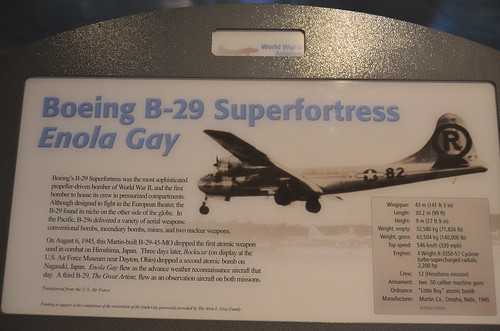
Wednesday, April 1, 2015

Steven F. Udvar-Hazy Center: B-29 Superfortress "Enola Gay" panorama

A few nice precision engineering components images I discovered:


Steven F. Udvar-Hazy Center: B-29 Superfortress “Enola Gay” panorama


Image by Chris Devers

Quoting Smithsonian National Air and Space Museum | Lockheed P-38J-10-LO Lightning:


In the P-38 Lockheed engineer Clarence &quotKelly&quot Johnson and his team of designers developed one particular of the most effective twin-engine fighters ever flown by any nation. From 1942 to 1945, U. S. Army Air Forces pilots flew P-38s over Europe, the Mediterranean, and the Pacific, and from the frozen Aleutian Islands to the sun-baked deserts of North Africa. Lightning pilots in the Pacific theater downed much more Japanese aircraft than pilots flying any other Allied warplane.


Maj. Richard I. Bong, America’s top fighter ace, flew this P-38J-10-LO on April 16, 1945, at Wright Field, Ohio, to evaluate an experimental approach of interconnecting the movement of the throttle and propeller manage levers. Nevertheless, his right engine exploded in flight before he could conduct the experiment.


Transferred from the United States Air Force.


Manufacturer:
Lockheed Aircraft Company


Date:

1943


Country of Origin:

United States of America


Dimensions:

All round: 390 x 1170cm, 6345kg, 1580cm (12ft 9 9/16in. x 38ft four five/8in., 13988.2lb., 51ft 10 1/16in.)


Components:

All-metal


Physical Description:

Twin-tail boom and twin-engine fighter tricycle landing gear.


• • • • •


Quoting Smithsonian National Air and Space Museum | Boeing B-29 Superfortress &quotEnola Gay&quot:


Boeing’s B-29 Superfortress was the most sophisticated propeller-driven bomber of World War II and the 1st bomber to residence its crew in pressurized compartments. Although created to fight in the European theater, the B-29 located its niche on the other side of the globe. In the Pacific, B-29s delivered a variety of aerial weapons: standard bombs, incendiary bombs, mines, and two nuclear weapons.


On August 6, 1945, this Martin-built B-29-45-MO dropped the 1st atomic weapon used in combat on Hiroshima, Japan. Three days later, Bockscar (on show at the U.S. Air Force Museum near Dayton, Ohio) dropped a second atomic bomb on Nagasaki, Japan. Enola Gay flew as the advance climate reconnaissance aircraft that day. A third B-29, The Excellent Artiste, flew as an observation aircraft on each missions.


Transferred from the United States Air Force.


Manufacturer:
Boeing Aircraft Co.
Martin Co., Omaha, Nebr.


Date:

1945


Country of Origin:

United States of America


Dimensions:

General: 900 x 3020cm, 32580kg, 4300cm (29ft six five/16in. x 99ft 1in., 71825.9lb., 141ft 15/16in.)


Components:

Polished all round aluminum finish


Physical Description:

Four-engine heavy bomber with semi-monoqoque fuselage and higher-aspect ratio wings. Polished aluminum finish all round, common late-World War II Army Air Forces insignia on wings and aft fuselage and serial quantity on vertical fin 509th Composite Group markings painted in black &quotEnola Gay&quot in black, block letters on decrease left nose.


Image from page 1043 of “The Bell System technical journal” (1922)


Image by Net Archive Book Photos
Identifier: bell00systemvol31techniamerrich
Title: The Bell Method technical journal
Year: 1922 (1920s)
Authors: American Phone and Telegraph Business
Subjects: Telecommunication Electric engineering Communication Electronics Science Technology
Publisher: [Quick Hills, N.J., and so forth., American Phone and Telegraph Co.]
Contributing Library: Prelinger Library
Digitizing Sponsor: Internet Archive


View Book Web page: Book Viewer
About This Book: Catalog Entry
View All Photos: All Images From Book


Click right here to view book online to see this illustration in context in a browseable online version of this book.


Text Appearing Just before Image:
he result is a direct-readingbridge shom in Figs. eight and 9 which has drastically facilitated the develop-ment of inductors in the megacycle range. The accuracy for majorcomponent varies from ±0.25 per cent at one megacycle up to ±1per cent at five megacycles. TEN-MEGACYCLE ADMITTANCE BRIDGE De^elopment of capacitois for the L3 coaxial technique has recjuired anew ten-megacycle admittance bridge. Intended specifically for determin-ing temperature coefficient and fre([uenc,y traits of modest capa-citors, the bridge is capable of measuring capacitance values up to 200MM/^vith a precision of drO.Ol mm/, and a wide range of conductance values.As opposed to the other two bridges described which make grounded measure-ments only, this bridge is arranged for direct and balanced-to-groundmeasurements as effectively. This is accomplished by utilizing the ratio-arm trans-former currently described in combination with a basic grounding circuitusing a three-position important, as shown in the bridge schematic of Fig. ten.


Text Appearing Following Image:
® © D @ @ ^_ Fig. 10—Ten-megacycle admittance l)ridge with three-position important for shift-ing ground to B for measuring direct admittance, to junction of CI and C2 forbalanced admittance, and to D for grounded admittance. Unknowns might beconnected from A to D or C to D. IMPEDAXCK RRIDGES FOR MrXiACYCLF, UANT.F. 1011 The (liroct-capacitanco measiiromeiits are useful iu the (lovelopmoui oflow alue(l capacitors, aud the balanced-to-jiiround measurements arehelpful in evaluating low-admittance off-ground networks. CONCLUSION Bridges have been created for the measurement of impedance andadmittance parameters at megacycle frequencies with accuracies hei-eto-fore i)ossible only at significantly lower fre(iuencies. Seeral of the twenty-megacycle common-purpose biidges hae been built and are furnishinguseful measurements of netwoiks and elements. Encounter with thesel)rid^(&gts has indicated ranges for which supplementary si)ecial-purposebridges would l)e desirable, and two such bridges have


Note About Pictures
Please note that these images are extracted from scanned page pictures that might have been digitally enhanced for readability – coloration and look of these illustrations could not completely resemble the original operate.


Enterprise Minister at Moyola Engineering


Image by DUP Images

Enterprise Minister Arlene Foster, pictured with Mark Semple, Managing Director Moyola Precision Engineering, at the company’s plant in Castledawson. The Minister formally announced a £5.3m investment project by the firm which supplies high specification machined elements to key companies across a range of sectors such as aerospace, automotive, health-related devices and energy generation.


Photo by Aaron McCracken/Harrisons 07778373486


(Source from rapid prototyping from China blog)

Monday, March 23, 2015

Steven F. Udvar-Hazy Center: Lockheed SR-71 Blackbird port panorama (F-four Corsair & P-40 Warhawk overhead)

Verify out these china fast prototype images:


Steven F. Udvar-Hazy Center: Lockheed SR-71 Blackbird port panorama (F-four Corsair & P-40 Warhawk overhead)


Image by Chris Devers
See a lot more pictures of this, and the Wikipedia write-up.


Details, quoting from Smithsonian National Air and Space Museum | Curtiss P-40E Warhawk (Kittyhawk IA):


Regardless of whether known as the Warhawk, Tomahawk, or Kittyhawk, the Curtiss P-40 proved to be a successful, versatile fighter during the very first half of Planet War II. The shark-mouthed Tomahawks that Gen. Claire Chennault’s &quotFlying Tigers&quot flew in China against the Japanese remain among the most well-liked airplanes of the war. P-40E pilot Lt. Boyd D. Wagner became the very first American ace of World War II when he shot down six Japanese aircraft in the Philippines in mid-December 1941.


Curtiss-Wright constructed this airplane as Model 87-A3 and delivered it to Canada as a Kittyhawk I in 1941. It served till 1946 in No. 111 Squadron, Royal Canadian Air Force. U.S. Air Force personnel at Andrews Air Force Base restored it in 1975 to represent an aircraft of the 75th Fighter Squadron, 23rd Fighter Group, 14th Air Force.


Donated by the Exchange Club in Memory of Kellis Forbes.


Manufacturer:
Curtiss Aircraft Business


Date:

1939


Country of Origin:

United States of America


Dimensions:

Overall: 330 x 970cm, 2686kg, 1140cm (10ft 9 15/16in. x 31ft 9 7/8in., 5921.6lb., 37ft four 13/16in.)


Supplies:

All-metal, semi-monocoque


Physical Description:

Single engine, single seat, fighter aircraft.


• • • • •


See much more photographs of this, and the Wikipedia report.


Particulars, quoting from Smithsonian National Air and Space Museum | Lockheed SR-71 Blackbird:


No reconnaissance aircraft in history has operated globally in much more hostile airspace or with such complete impunity than the SR-71, the world’s quickest jet-propelled aircraft. The Blackbird’s efficiency and operational achievements placed it at the pinnacle of aviation technologies developments throughout the Cold War.


This Blackbird accrued about two,800 hours of flight time during 24 years of active service with the U.S. Air Force. On its final flight, March 6, 1990, Lt. Col. Ed Yielding and Lt. Col. Joseph Vida set a speed record by flying from Los Angeles to Washington, D.C., in 1 hour, 4 minutes, and 20 seconds, averaging 3,418 kilometers (two,124 miles) per hour. At the flight’s conclusion, they landed at Washington-Dulles International Airport and turned the airplane more than to the Smithsonian.


Transferred from the United States Air Force.


Manufacturer:
Lockheed Aircraft Corporation


Designer:
Clarence L. &quotKelly&quot Johnson


Date:

1964


Nation of Origin:

United States of America


Dimensions:

All round: 18ft five 15/16in. x 55ft 7in. x 107ft 5in., 169998.5lb. (5.638m x 16.942m x 32.741m, 77110.8kg)

Other: 18ft 5 15/16in. x 107ft 5in. x 55ft 7in. (5.638m x 32.741m x 16.942m)


Materials:

Titanium


Physical Description:

Twin-engine, two-seat, supersonic strategic reconnaissance aircraft airframe constructed largley of titanium and its alloys vertical tail fins are constructed of a composite (laminated plastic-type material) to minimize radar cross-section Pratt and Whitney J58 (JT11D-20B) turbojet engines feature massive inlet shock cones.


• • • • •


See more images of this, and the Wikipedia article.


Particulars, quoting from Smithsonian National Air and Space Museum | Vought F4U-1D Corsair:


By V-J Day, September two, 1945, Corsair pilots had amassed an 11:1 kill ratio against enemy aircraft. The aircraft’s distinctive inverted gull-wing design allowed ground clearance for the enormous, three-bladed Hamilton Normal Hydromatic propeller, which spanned far more than four meters (13 feet). The Pratt and Whitney R-2800 radial engine and Hydromatic propeller was the biggest and 1 of the most potent engine-propeller combinations ever flown on a fighter aircraft.


Charles Lindbergh flew bombing missions in a Corsair with Marine Air Group 31 against Japanese strongholds in the Pacific in 1944. This airplane is painted in the colors and markings of the Corsair Sun Setter, a Marine close-support fighter assigned to the USS Essex in July 1944.


Transferred from the United States Navy.


Manufacturer:
Vought Aircraft Organization


Date:

1940


Country of Origin:

United States of America


Dimensions:

Overall: 460 x 1020cm, 4037kg, 1250cm (15ft 1 1/8in. x 33ft 5 9/16in., 8900lb., 41ft 1/8in.)


Supplies:

All metal with fabric-covered wings behind the major spar.


Physical Description:

R-2800 radial air-cooled engine with 1,850 horsepower, turned a 3-blade Hamilton Normal Hydromatic propeller with solid aluminum blades spanning 13 feet 1 inch wing bent gull-shaped on each sides of the fuselage.


Steven F. Udvar-Hazy Center: Lockheed SR-71 Blackbird port panorama (P-40 Warhawk & Bowlus 1-S-2100 Senior Albatross “Falcon” overhead)


Image by Chris Devers
See more photographs of this, and the Wikipedia post.


Details, quoting from Smithsonian National Air and Space Museum | Curtiss P-40E Warhawk (Kittyhawk IA):


Whether or not recognized as the Warhawk, Tomahawk, or Kittyhawk, the Curtiss P-40 proved to be a productive, versatile fighter throughout the initial half of Planet War II. The shark-mouthed Tomahawks that Gen. Claire Chennault’s &quotFlying Tigers&quot flew in China against the Japanese stay amongst the most popular airplanes of the war. P-40E pilot Lt. Boyd D. Wagner became the 1st American ace of Globe War II when he shot down six Japanese aircraft in the Philippines in mid-December 1941.


Curtiss-Wright built this airplane as Model 87-A3 and delivered it to Canada as a Kittyhawk I in 1941. It served till 1946 in No. 111 Squadron, Royal Canadian Air Force. U.S. Air Force personnel at Andrews Air Force Base restored it in 1975 to represent an aircraft of the 75th Fighter Squadron, 23rd Fighter Group, 14th Air Force.


Donated by the Exchange Club in Memory of Kellis Forbes.


Manufacturer:
Curtiss Aircraft Business


Date:

1939


Nation of Origin:

United States of America


Dimensions:

General: 330 x 970cm, 2686kg, 1140cm (10ft 9 15/16in. x 31ft 9 7/8in., 5921.6lb., 37ft 4 13/16in.)


Materials:

All-metal, semi-monocoque


Physical Description:

Single engine, single seat, fighter aircraft.


• • • • •


Quoting Smithsonian National Air and Space Museum | Bowlus 1-S-2100 Senior Albatross &quotFalcon&quot:


Hawley Bowlus developed the Senior Albatross series from a style he called the Bowlus Super Sailplane. In Germany, designers and pilots led the world in the constructing and flying of high-overall performance gliders, and Bowlus was strongly influenced by their operate. He and German glider pioneer, Martin Schempp, taught courses in aircraft design and building at the Curtiss-Wright Technical Institute in Glendale, California. The two instructors led a group of students that built the Super Sailplane in 1932. The Super’ served as a prototype for the Senior Albatross.


In Might 1934, Warren E. Eaton acquired the Senior Albatross now preserved at NASM from Hawley Bowlus. Eaton joined the U. S. Army Air Service and flew SPAD XIII fighters (see NASM collection) in the 103rd Aero Squadron, 3rd Pursuit Group, at Issoudon, France, from August 27, 1918, to the Armistice. He was credited with downing one enemy aircraft in aerial combat. Soon after the war, Eaton founded the Soaring Society of America and became that organization’s very first president.


Present of Mrs. Genevieve J. Eaton.


Manufacturer:
Bowlus-Dupont Sailplane Firm


Date:

1933


Nation of Origin:

United States of America


Dimensions:

Wingspan: 18.eight m (61 ft 9 in)

Length: 7.two m (23 ft 7 in)

Height: 1.six m (five ft four in)

Weight: Empty, 153 kg (340 lb)

Gross, 236 kg (520 lb)


Materials:

Originally skinned with mahogany and covered with lightweight cotton &quotglider cloth,&quot then covered with a shellac-based varnish. In 2000, restorers removed original fabric and shellac coating, recovered with Grade A cotton fabric followed by many coats of nitrate dope, then lemon shellac, finishing with many coats of Johnson Wax.


Physical Description:

Monoplane glider with strut-braced, gull-kind wing mounted higher on monocoque fuselage wooden construction with steel and aluminum fittings and controls fuselage and wing top edge covered with mahogany plywood. Fuselage skin applied over laminated Spruce bulkheads. Landing gear consists of single-wheel and …. [size?] tire mounted beneath forward fuselage, spring-steel tail skid beneath rudder.


Cockpit covered with hood created from laminated Spruce bulkheads and covered with Mahogany plywood. Circular openings reduce into hood on either side of pilot’s head. Instrumentation: altimeter, airspeed, variometer plus a bank-and-turn indicator powered by low-speed venturi tube installed on retractable mount beneath right wingroot.


Places aft of wing spar and all handle surfaces covered with glider cloth. Cloth is doped directly onto ribs and plywood skin with no stitching for smooth finish. Continuous-chord wing from fuselage to mid-span, tapered profile from mid-span to wingtip constant-chord,

split-trailing edge flaps and higher-aspect ratio ailerons. A Gö 549 airfoil is utilized at the wing root, becoming symmetrical at the tip.


All-flying elevator mounted on duraluminum torque-tube, rudder hinged to box-beam post, each surfaces built up from Spruce and covered with glider cloth.


• • • • •


See more photographs of this, and the Wikipedia write-up.


Details, quoting from Smithsonian National Air and Space Museum | Lockheed SR-71 Blackbird:


No reconnaissance aircraft in history has operated globally in far more hostile airspace or with such complete impunity than the SR-71, the world’s quickest jet-propelled aircraft. The Blackbird’s performance and operational achievements placed it at the pinnacle of aviation technologies developments in the course of the Cold War.


This Blackbird accrued about two,800 hours of flight time in the course of 24 years of active service with the U.S. Air Force. On its last flight, March six, 1990, Lt. Col. Ed Yielding and Lt. Col. Joseph Vida set a speed record by flying from Los Angeles to Washington, D.C., in 1 hour, four minutes, and 20 seconds, averaging 3,418 kilometers (two,124 miles) per hour. At the flight’s conclusion, they landed at Washington-Dulles International Airport and turned the airplane more than to the Smithsonian.


Transferred from the United States Air Force.


Manufacturer:
Lockheed Aircraft Corporation


Designer:
Clarence L. &quotKelly&quot Johnson


Date:

1964


Nation of Origin:

United States of America


Dimensions:

General: 18ft 5 15/16in. x 55ft 7in. x 107ft 5in., 169998.5lb. (five.638m x 16.942m x 32.741m, 77110.8kg)

Other: 18ft five 15/16in. x 107ft 5in. x 55ft 7in. (five.638m x 32.741m x 16.942m)


Components:

Titanium


Physical Description:

Twin-engine, two-seat, supersonic strategic reconnaissance aircraft airframe constructed largley of titanium and its alloys vertical tail fins are constructed of a composite (laminated plastic-sort material) to minimize radar cross-section Pratt and Whitney J58 (JT11D-20B) turbojet engines feature massive inlet shock cones.


Steven F. Udvar-Hazy Center: major hall panorama


Image by Chris Devers
See far more photos of this, and the Wikipedia article.


Specifics, quoting from Smithsonian National Air and Space Museum: Steven F. Udvar-Hazy | _details_pending_:


(Source from rapid prototyping from China blog)

Friday, February 6, 2015

Steven F. Udvar-Hazy Center: Dornier Do 335A-1 Pfeil (Arrow)

Some cool precision engineering solutions pictures:


Steven F. Udvar-Hazy Center: Dornier Do 335A-1 Pfeil (Arrow)


Image by Chris Devers

Quoting Smithsonian National Air and Space Museum | Dornier Do 335 A- Pfeil (Arrow):


The Do-335 was a single of a small group of aircraft marking the pinnacle of international piston-engined development. It was the fastest production piston-engined fighter ever constructed, attaining 846 kilometers per hour (474 mph) in level flight at a time when the official globe speed record was 755 kph (469 mph). Powered by two 1800-hp engines in a distinctive low-drag configuration and weighing 9600 kg (21,000 lb) loaded, it was an exceptional heavy fighter. This really revolutionary style also featured an ejection seat, for pilot safety, and a jettisoning fin.


The unconventional layout of the Do-335 — one engine &quotpulling&quot in the nose and yet another &quotpushing&quot in the tail – was patented by Claudius Dornier in 1937. The configuration provided the power of two engines, but with decreased drag and greater maneuverability. The German Aviation Ministry (RLM) was interested in the design and style, but initially wanted Dornier only to generate bombers. By 1942, Dornier was nevertheless continuing design and style function and the war scenario was worsening. The Luftwaffe now needed a multi-goal fighter, and the prototype Do-335V-1 (&quotV&quot indicating &quotversuchs&quot or &quotexperimental&quot) flew in fighter type in September, 1943 – six years after its conception. Orders have been quickly placed for 14 prototypes, 10 A- preproduction aircraft, 11 production A-1 single-seaters, and 3 A-10 and A-12 two-seat trainers.


The aircraft was quite massive for a single-seat fighter, with a cruciform tail and a tricycle landing gear. The two huge liquid-cooled Daimler-Benz DB-603 engines have been utilized in 4 diverse versions, each displacing 44.5 liters (2670 cu in) and weighing 910 kg (2006 lb). The engine made 1750 hp from 12 cylinders in an inverted V layout utilizing fuel injection and an eight.three:1 compression ratio. The rear 3-bladed propeller and dorsal fin were jettisoned by explosive bolts in an emergency, to let the pilot to bail out safely making use of a pneumatic ejection seat. The seat, inclined 13 degrees to the rear, was ejected with a force of 20 times gravity. The ventral fin could be jettisoned for a belly landing.


As opposed to a typical twin-engined aircraft, with wing-mounted engines, loss of an engine on the Do-335 did not lead to a handling dilemma. Even with 1 engine out, speed was a respectable 621 kph (348 mph). Since of its look, pilots dubbed it the &quotAnt eater&quot (&quotAmeisenbar&quot), though they described its efficiency as exceptional, particularly in acceleration and turning radius. The Do-335 was extremely docile in flight and had no unsafe spin characteristics. Several Do-335 prototypes had been built, as the Reich strained desperately to offer day and evening fighters and fast reconnaissance aircraft to the failing war work. A single of the many RLM production plans, issued in December 1943, known as for the production of 310 Do-335s by late 1945. Initial production was at the Dornier Manuel plant, but this factory was bombed heavily in March-April, 1944, and the Do-335 tooling was destroyed.


Ten Do-335A- preproduction aircraft have been then developed at Dornier’s Oberpfaffenhofen plant in July-October 1944, by which time the Allied bombing campaign was delaying arrivals of engines, propellers, radios, and structural subcomponents. This had a serious effect, since the Do-335 was not a easy aircraft: installation of the electronics alone took 60 hours of assembly, and the electrical parts list was 112 pages lengthy. Production of Daimler-Benz engines, for example, was switched to factories set up in underground salt mines and gypsum mines, but high humidity caused corrosion problems and production dropped 40 percent. Although a number of preproduction aircraft were issued to combat conversion units some ten months ahead of the war ended, no Do-335s really entered combat. Deliveries started to the 1st Experimental Squadron of the Commander-in-Chief of the Luftwaffe ( I/Versuchsverband Ob.d.L.) in late July 1944 for operational trials.


The very first of the Do-335A-1 production version left the Dornier line at Friedrichshafen early in 1945, 1 of only four produced in 1945. It was armed with a single 30 mm MK-103 cannon (70 rounds were carried) firing by way of the propeller hub and two 15 mm MG-151/15 cannon (200 rounds per gun) firing from the top of the forward engine. Even with the fighter circumstance as desperate as it was, these aircraft were nevertheless equipped to carry 500 kg (1100 lb) of bombs internally. Additional operational testing, which includes use of air-to-ground guided missiles, began in Spring 1945 with Trials Unit (Erprobungskommando) 335.


The Do-335A-six was to be a two-seat night fighter version with the advanced FFO FuG-217J Neptun radar getting triple &quottrident&quot-like antennas (therefore the name &quotNeptun&quot) on the fuselage and wings, but only a prototype was completed. A total of 37 prototypes, ten A-0s, 11 A-1s and 2 A-12 trainers have been built, despite the fact that nearly 85 extra aircraft have been in assembly when U.S. troops overran the Friedrichshafen factory in late April, 1945. The Vienna-Swechat plant of the Ernst Heinkel AG was also scheduled to develop the Do-335 beginning in February, 1945, but production in no way began.


The NASM aircraft is the second Do-335A-, designated A-02, with building number (werke nummer) 240102 and factory registration VG+PH. It was built at Dornier’s Rechlin-Oberpfaffenhofen, Germany, plant on April 16, 1945. It was captured by Allied forces at the plant on April 22, 1945. After checkout, it was flown from a grass runway at Oberweisenfeld, near Munich, to Cherbourg, France. For the duration of this flight, the Do-335 very easily outclimbed and outdistanced two escorting P-51s, beating them to Cherbourg by 45 minutes. Beneath the U.S. Army Air Force’s &quotProject Sea Horse,&quot two Do-335s had been shipped to the United States aboard the Royal Navy ship HMS &quotReaper&quot together with other captured German aircraft, for detailed evaluation. This aircraft was assigned to the U.S. Navy, which tested it at the Test and Evaluation Center, Patuxent River Naval Air Station, Maryland. The other aircraft, with registration FE-1012 (later T2-1012), went to the USAAF at Freeman Field, Indiana, where it was tested in early 1946. Its subsequent fate is unknown, and this is the only Do-335 recognized to exist.


Following Navy flight tests in 1945-48, the aircraft was donated to the Smithsonian’s National Air Museum in 1961 but was stored at NAS Norfolk until 1974. It was then returned to Oberpfaffenhofen, Germany, where the Dornier organization restored it to original situation in 1975. The return trip to Germany needed an exemption below U.S. laws regarding the export of munitions. The Dornier craftsmen carrying out the restoration – several of whom had worked on the original aircraft — were astonished to uncover that the explosive charges fitted to blow off the tail fin and rear propeller in an emergency had been nevertheless in the aircraft and active, 30 years after their original installation! The Do-335 was place on static show at the Might 1-9, 1976, Hannover Airshow, and then loaned to the Deutsches Museum in Munich, where it was on prominent display till returned to Silver Hill, MD, for storage in 1986.


Nation of Origin:

Germany


Physical Description:

Twin engine, pusher / puller, fighter / bomber grey/green, green late Planet War II development.


(Source from rapid prototyping from China blog)
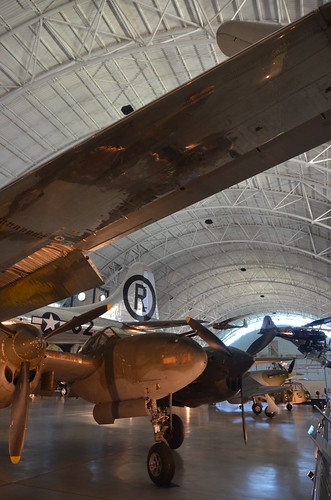
Friday, December 12, 2014

Steven F. Udvar-Hazy Center: Northrop P-61C Black Widow

A couple of good precision engineering solutions pictures I identified:


Steven F. Udvar-Hazy Center: Northrop P-61C Black Widow


Image by Chris Devers

Examine &amp contrast:


Northrop P-61C Black widow:

* Front view

* Above view


Star Wars ARC-170 Fighter:

* Official page

* Wikia

* Wikipedia

* Toy overview


I put it to you that they’re the Very same Issue.


* twin engines

* double-cockpit in front

* gunner’s cockpit in back

* broad wing coming out from the middle


***************


Quoting Smithsonian National Air and Space Museum | Northrop P-61C Black Widow:


The P-61 Black Widow was the initial U.S. aircraft designed to locate and destroy enemy aircraft at night and in poor weather, a feat made possible by the use of on-board radar. The prototype very first flew in 1942. P-61 combat operations began just after D-Day, June 6, 1944, when Black Widows flew deep into German airspace, bombing and strafing trains and road visitors. Operations in the Pacific began at about the identical time. By the end of Globe War II, Black Widows had observed combat in each theater and had destroyed 127 enemy aircraft and 18 German V-1 buzz bombs.


The Museum’s Black Widow, a P-61C-1-NO, was delivered to the Army Air Forces in July 1945. It participated in cold-weather tests, high-altitude drop tests, and in the National Thunderstorm Project, for which the best turret was removed to make space for thunderstorm monitoring equipment.


Transferred from the United States Air Force.


Manufacturer:
Northrop Aircraft Inc.


Date:

1943


Country of Origin:

United States of America


Dimensions:

Overall: 450 x 1500cm, 10637kg, 2000cm (14ft 9 3/16in. x 49ft 2 9/16in., 23450.3lb., 65ft 7 3/8in.)


(Source from rapid prototyping in China blog)

Thursday, October 2, 2014

Steven F. Udvar-Hazy Center: primary hall panorama

Verify out these precision machined elements producers images:


Steven F. Udvar-Hazy Center: main hall panorama


Image by Chris Devers


See far more pictures of this, and the Wikipedia article.


Particulars, quoting from Smithsonian National Air and Space Museum | _information_pending_:


(Posted by an aluminium machining China Company and precision CNC machined parts China manufacturer)

Sunday, September 28, 2014

Steven F. Udvar-Hazy Center: B-29 Superfortress "Enola Gay"

A handful of good precision machined elements producers photos I identified:


Steven F. Udvar-Hazy Center: B-29 Superfortress “Enola Gay”


Image by Chris Devers

Quoting Smithsonian National Air and Space Museum | Boeing B-29 Superfortress &quotEnola Gay&quot:


Boeing’s B-29 Superfortress was the most sophisticated propeller-driven bomber of Planet War II and the initial bomber to residence its crew in pressurized compartments. Even though created to fight in the European theater, the B-29 discovered its niche on the other side of the globe. In the Pacific, B-29s delivered a selection of aerial weapons: conventional bombs, incendiary bombs, mines, and two nuclear weapons.


On August six, 1945, this Martin-constructed B-29-45-MO dropped the 1st atomic weapon utilised in combat on Hiroshima, Japan. Three days later, Bockscar (on show at the U.S. Air Force Museum close to Dayton, Ohio) dropped a second atomic bomb on Nagasaki, Japan. Enola Gay flew as the advance climate reconnaissance aircraft that day. A third B-29, The Excellent Artiste, flew as an observation aircraft on both missions.


Transferred from the United States Air Force.


Manufacturer:
Boeing Aircraft Co.
Martin Co., Omaha, Nebr.


Date:

1945


Nation of Origin:

United States of America


Dimensions:

General: 900 x 3020cm, 32580kg, 4300cm (29ft 6 5/16in. x 99ft 1in., 71825.9lb., 141ft 15/16in.)


Components:

Polished general aluminum finish


Physical Description:

4-engine heavy bomber with semi-monoqoque fuselage and high-aspect ratio wings. Polished aluminum finish general, common late-World War II Army Air Forces insignia on wings and aft fuselage and serial quantity on vertical fin 509th Composite Group markings painted in black &quotEnola Gay&quot in black, block letters on reduce left nose.


Steven F. Udvar-Hazy Center: Hawker Hurricane Mk. IIC, with Northrop P-61C Black Widow in the background


Image by Chris Devers

Quoting Smithsonian National Air and Space Museum | Hawker Hurricane Mk. IIC:


Hawker Chief Designer Sydney Camm’s Hurricane ranks with the most critical aircraft designs in military aviation history. Developed in the late 1930s, when monoplanes had been considered unstable and as well radical to be productive, the Hurricane was the very first British monoplane fighter and the 1st British fighter to exceed 483 kilometers (300 miles) per hour in level flight. Hurricane pilots fought the Luftwaffe and helped win the Battle of Britain in the summer season of 1940.


This Mark IIC was constructed at the Langley factory, close to what is now Heathrow Airport, early in 1944. It served as a training aircraft during the Globe War II in the Royal Air Force’s 41 OTU.


Donated by the Royal Air Force Museum


Manufacturer:
Hawker Aircraft Ltd.


Date:

1944


Nation of Origin:

United Kingdom


Dimensions:

Wingspan: 12.2 m (40 ft)

Length: 9.8 m (32 ft three in)

Height: four m (13 ft)

Weight, empty: 2,624 kg (five,785 lb)

Weight, gross: three,951 kg (8,710 lb)

Leading speed:538 km/h (334 mph)

Engine:Rolls-Royce Merlin XX, liquid-cooled in-line V, 1,300 hp

Armament:4 20 mm Hispano cannons

Ordnance:two 250-lb or two 500-lb bombs or eight three-in rockets


Materials:

Fuselage: Steel tube with aircraft spruce forms and fabric, aluminum cowling

Wings: Stressed Skin Aluminum

Horizontal Stablizer: Anxiety Skin aluminum

Rudder: fabric covered aluminum

Handle Surfaces: fabric covered aluminum


Physical Description:

Hawker Hurricane Mk. IIC single seat, low wing monoplane ground attack fighter enclosed cockpit steel tube fuselage with aircraft spruce types and fabric, aluminum cowling, stressed skin aluminum wings and horizontal stablizer, fabric covered aluminum rudder and control surfaces grey green camoflage leading surface paint scheme with dove grey underside red and blue national roundel on upper wing surface and red, white, and blue roundel reduced wing surface red, white, blue, and yellow roundel fuselage sides red, white and blue tail flash Rolls-Royce Merlin XX, liquid cooled V-12, 1,280 horsepower engine Armament, 4: 20mm Hispano cannons.


• • • • •


Quoting Smithsonian National Air and Space Museum | Northrop P-61C Black Widow:


The P-61 Black Widow was the 1st U.S. aircraft made to find and destroy enemy aircraft at evening and in undesirable weather, a feat produced possible by the use of on-board radar. The prototype 1st flew in 1942. P-61 combat operations started just after D-Day, June six, 1944, when Black Widows flew deep into German airspace, bombing and strafing trains and road targeted traffic. Operations in the Pacific started at about the exact same time. By the finish of Globe War II, Black Widows had noticed combat in each and every theater and had destroyed 127 enemy aircraft and 18 German V-1 buzz bombs.


The Museum’s Black Widow, a P-61C-1-NO, was delivered to the Army Air Forces in July 1945. It participated in cold-climate tests, higher-altitude drop tests, and in the National Thunderstorm Project, for which the prime turret was removed to make area for thunderstorm monitoring gear.


Transferred from the United States Air Force.


Manufacturer:
Northrop Aircraft Inc.


Date:

1943


Country of Origin:

United States of America


Dimensions:

Overall: 450 x 1500cm, 10637kg, 2000cm (14ft 9 3/16in. x 49ft two 9/16in., 23450.3lb., 65ft 7 3/8in.)


(Posted by an aluminium machining China Company and precision CNC machined parts China manufacturer)

Friday, September 12, 2014

Steven F. Udvar-Hazy Center: SR-71 Blackbird (tail view)

Check out these aluminium machining china photos:


Steven F. Udvar-Hazy Center: SR-71 Blackbird (tail view)


Image by Chris Devers
See more pictures of this, and the Wikipedia report.


Particulars, quoting from Smithsonian National Air and Space Museum | Lockheed SR-71 Blackbird:


No reconnaissance aircraft in history has operated globally in a lot more hostile airspace or with such complete impunity than the SR-71, the world’s quickest jet-propelled aircraft. The Blackbird’s overall performance and operational achievements placed it at the pinnacle of aviation technology developments throughout the Cold War.


This Blackbird accrued about two,800 hours of flight time for the duration of 24 years of active service with the U.S. Air Force. On its last flight, March six, 1990, Lt. Col. Ed Yielding and Lt. Col. Joseph Vida set a speed record by flying from Los Angeles to Washington, D.C., in 1 hour, 4 minutes, and 20 seconds, averaging three,418 kilometers (2,124 miles) per hour. At the flight’s conclusion, they landed at Washington-Dulles International Airport and turned the airplane more than to the Smithsonian.


Transferred from the United States Air Force.


Manufacturer:
Lockheed Aircraft Corporation


Designer:
Clarence L. &quotKelly&quot Johnson


Date:

1964


Country of Origin:

United States of America


Dimensions:

All round: 18ft five 15/16in. x 55ft 7in. x 107ft 5in., 169998.5lb. (5.638m x 16.942m x 32.741m, 77110.8kg)

Other: 18ft five 15/16in. x 107ft 5in. x 55ft 7in. (5.638m x 32.741m x 16.942m)


Materials:

Titanium


Physical Description:

Twin-engine, two-seat, supersonic strategic reconnaissance aircraft airframe constructed largley of titanium and its alloys vertical tail fins are constructed of a composite (laminated plastic-kind material) to minimize radar cross-section Pratt and Whitney J58 (JT11D-20B) turbojet engines feature massive inlet shock cones.


Long Description:

No reconnaissance aircraft in history has operated in far more hostile airspace or with such total impunity than the SR-71 Blackbird. It is the fastest aircraft propelled by air-breathing engines. The Blackbird’s performance and operational achievements placed it at the pinnacle of aviation technology developments throughout the Cold War. The airplane was conceived when tensions with communist Eastern Europe reached levels approaching a complete-blown crisis in the mid-1950s. U.S. military commanders desperately necessary precise assessments of Soviet worldwide military deployments, specifically near the Iron Curtain. Lockheed Aircraft Corporation’s subsonic U-two (see NASM collection) reconnaissance aircraft was an in a position platform but the U. S. Air Force recognized that this relatively slow aircraft was already vulnerable to Soviet interceptors. They also understood that the speedy development of surface-to-air missile systems could place U-2 pilots at grave danger. The danger proved reality when a U-two was shot down by a surface to air missile more than the Soviet Union in 1960.


Lockheed’s 1st proposal for a new higher speed, high altitude, reconnaissance aircraft, to be capable of avoiding interceptors and missiles, centered on a style propelled by liquid hydrogen. This proved to be impracticable since of considerable fuel consumption. Lockheed then reconfigured the style for traditional fuels. This was feasible and the Central Intelligence Agency (CIA), already flying the Lockheed U-2, issued a production contract for an aircraft designated the A-12. Lockheed’s clandestine ‘Skunk Works’ division (headed by the gifted style engineer Clarence L. &quotKelly&quot Johnson) developed the A-12 to cruise at Mach 3.2 and fly properly above 18,288 m (60,000 feet). To meet these difficult specifications, Lockheed engineers overcame many daunting technical challenges. Flying more than 3 times the speed of sound generates 316° C (600° F) temperatures on external aircraft surfaces, which are enough to melt traditional aluminum airframes. The design group chose to make the jet’s external skin of titanium alloy to which shielded the internal aluminum airframe. Two conventional, but really effective, afterburning turbine engines propelled this exceptional aircraft. These power plants had to operate across a massive speed envelope in flight, from a takeoff speed of 334 kph (207 mph) to a lot more than three,540 kph (two,200 mph). To avert supersonic shock waves from moving inside the engine intake causing flameouts, Johnson’s group had to design a complicated air intake and bypass method for the engines.


Skunk Performs engineers also optimized the A-12 cross-section style to exhibit a low radar profile. Lockheed hoped to accomplish this by very carefully shaping the airframe to reflect as small transmitted radar power (radio waves) as achievable, and by application of special paint created to absorb, rather than reflect, those waves. This therapy became a single of the very first applications of stealth technologies, but it in no way entirely met the design and style targets.


Test pilot Lou Schalk flew the single-seat A-12 on April 24, 1962, right after he became airborne accidentally for the duration of high-speed taxi trials. The airplane showed wonderful guarantee but it required considerable technical refinement just before the CIA could fly the initial operational sortie on Could 31, 1967 – a surveillance flight over North Vietnam. A-12s, flown by CIA pilots, operated as element of the Air Force’s 1129th Unique Activities Squadron under the &quotOxcart&quot program. Although Lockheed continued to refine the A-12, the U. S. Air Force ordered an interceptor version of the aircraft designated the YF-12A. The Skunk Operates, nonetheless, proposed a &quotspecific mission&quot version configured to conduct post-nuclear strike reconnaissance. This system evolved into the USAF’s familiar SR-71.


Lockheed constructed fifteen A-12s, including a particular two-seat trainer version. Two A-12s have been modified to carry a specific reconnaissance drone, designated D-21. The modified A-12s had been redesignated M-21s. These had been designed to take off with the D-21 drone, powered by a Marquart ramjet engine mounted on a pylon among the rudders. The M-21 then hauled the drone aloft and launched it at speeds higher adequate to ignite the drone’s ramjet motor. Lockheed also constructed three YF-12As but this type in no way went into production. Two of the YF-12As crashed in the course of testing. Only one particular survives and is on display at the USAF Museum in Dayton, Ohio. The aft section of a single of the &quotwritten off&quot YF-12As which was later employed along with an SR-71A static test airframe to manufacture the sole SR-71C trainer. One SR-71 was lent to NASA and designated YF-12C. Including the SR-71C and two SR-71B pilot trainers, Lockheed constructed thirty-two Blackbirds. The 1st SR-71 flew on December 22, 1964. Simply because of intense operational charges, military strategists decided that the a lot more capable USAF SR-71s should replace the CIA’s A-12s. These were retired in 1968 after only 1 year of operational missions, largely more than southeast Asia. The Air Force’s 1st Strategic Reconnaissance Squadron (portion of the 9th Strategic Reconnaissance Wing) took over the missions, flying the SR-71 starting in the spring of 1968.


Soon after the Air Force began to operate the SR-71, it acquired the official name Blackbird– for the special black paint that covered the airplane. This paint was formulated to absorb radar signals, to radiate some of the tremendous airframe heat generated by air friction, and to camouflage the aircraft against the dark sky at higher altitudes.


Expertise gained from the A-12 system convinced the Air Force that flying the SR-71 safely essential two crew members, a pilot and a Reconnaissance Systems Officer (RSO). The RSO operated with the wide array of monitoring and defensive systems installed on the airplane. This gear incorporated a sophisticated Electronic Counter Measures (ECM) technique that could jam most acquisition and targeting radar. In addition to an array of advanced, higher-resolution cameras, the aircraft could also carry equipment made to record the strength, frequency, and wavelength of signals emitted by communications and sensor devices such as radar. The SR-71 was developed to fly deep into hostile territory, avoiding interception with its tremendous speed and higher altitude. It could operate safely at a maximum speed of Mach three.three at an altitude much more than sixteen miles, or 25,908 m (85,000 ft), above the earth. The crew had to put on pressure suits similar to these worn by astronauts. These suits have been needed to shield the crew in the occasion of sudden cabin stress loss although at operating altitudes.


To climb and cruise at supersonic speeds, the Blackbird’s Pratt &amp Whitney J-58 engines were developed to operate continuously in afterburner. Whilst this would seem to dictate high fuel flows, the Blackbird in fact achieved its ideal &quotgas mileage,&quot in terms of air nautical miles per pound of fuel burned, throughout the Mach three+ cruise. A typical Blackbird reconnaissance flight might require numerous aerial refueling operations from an airborne tanker. Every time the SR-71 refueled, the crew had to descend to the tanker’s altitude, typically about six,000 m to 9,000 m (20,000 to 30,000 ft), and slow the airplane to subsonic speeds. As velocity decreased, so did frictional heat. This cooling effect caused the aircraft’s skin panels to shrink significantly, and those covering the fuel tanks contracted so significantly that fuel leaked, forming a distinctive vapor trail as the tanker topped off the Blackbird. As quickly as the tanks had been filled, the jet’s crew disconnected from the tanker, relit the afterburners, and once again climbed to higher altitude.


Air Force pilots flew the SR-71 from Kadena AB, Japan, all through its operational career but other bases hosted Blackbird operations, also. The 9th SRW occasionally deployed from Beale AFB, California, to other areas to carryout operational missions. Cuban missions were flown directly from Beale. The SR-71 did not begin to operate in Europe till 1974, and then only temporarily. In 1982, when the U.S. Air Force based two aircraft at Royal Air Force Base Mildenhall to fly monitoring mission in Eastern Europe.


When the SR-71 became operational, orbiting reconnaissance satellites had already replaced manned aircraft to collect intelligence from websites deep inside Soviet territory. Satellites could not cover every single geopolitical hotspot so the Blackbird remained a vital tool for global intelligence gathering. On several occasions, pilots and RSOs flying the SR-71 offered data that proved important in formulating productive U. S. foreign policy. Blackbird crews supplied essential intelligence about the 1973 Yom Kippur War, the Israeli invasion of Lebanon and its aftermath, and pre- and post-strike imagery of the 1986 raid conducted by American air forces on Libya. In 1987, Kadena-primarily based SR-71 crews flew a number of missions more than the Persian Gulf, revealing Iranian Silkworm missile batteries that threatened commercial shipping and American escort vessels.


As the overall performance of space-primarily based surveillance systems grew, along with the effectiveness of ground-primarily based air defense networks, the Air Force began to shed enthusiasm for the expensive system and the 9th SRW ceased SR-71 operations in January 1990. Despite protests by military leaders, Congress revived the system in 1995. Continued wrangling over operating budgets, however, quickly led to final termination. The National Aeronautics and Space Administration retained two SR-71As and the 1 SR-71B for high-speed investigation projects and flew these airplanes until 1999.


On March six, 1990, the service profession of one particular Lockheed SR-71A Blackbird ended with a record-setting flight. This specific airplane bore Air Force serial quantity 64-17972. Lt. Col. Ed Yeilding and his RSO, Lieutenant Colonel Joseph Vida, flew this aircraft from Los Angeles to Washington D.C. in 1 hour, 4 minutes, and 20 seconds, averaging a speed of 3,418 kph (2,124 mph). At the conclusion of the flight, ’972 landed at Dulles International Airport and taxied into the custody of the Smithsonian’s National Air and Space Museum. At that time, Lt. Col. Vida had logged 1,392.7 hours of flight time in Blackbirds, a lot more than that of any other crewman.


This specific SR-71 was also flown by Tom Alison, a former National Air and Space Museum’s Chief of Collections Management. Flying with Detachment 1 at Kadena Air Force Base, Okinawa, Alison logged more than a dozen ’972 operational sorties. The aircraft spent twenty-4 years in active Air Force service and accrued a total of 2,801.1 hours of flight time.


Wingspan: 55’7&quot

Length: 107’5&quot

Height: 18’6&quot

Weight: 170,000 Lbs


Reference and Further Reading:


Crickmore, Paul F. Lockheed SR-71: The Secret Missions Exposed. Oxford: Osprey Publishing, 1996.


Francillon, Rene J. Lockheed Aircraft Because 1913. Annapolis, Md.: Naval Institute Press, 1987.


Johnson, Clarence L. Kelly: Far more Than My Share of It All. Washington D.C.: Smithsonian Institution Press, 1985.


Miller, Jay. Lockheed Martin’s Skunk Works. Leicester, U.K.: Midland Counties Publishing Ltd., 1995.


Lockheed SR-71 Blackbird curatorial file, Aeronautics Division, National Air and Space Museum.


DAD, 11-11-01


(Posted by an aluminium machining China Company and precision CNC machined parts China manufacturer)