Showing posts with label panorama. Show all posts

Saturday, July 25, 2015

Steven F. Udvar-Hazy Center: B-29 Superfortress "Enola Gay" panorama

Some cool precision engineering components pictures:


Steven F. Udvar-Hazy Center: B-29 Superfortress “Enola Gay” panorama


Image by Chris Devers

Quoting Smithsonian National Air and Space Museum | Lockheed P-38J-10-LO Lightning:


In the P-38 Lockheed engineer Clarence &quotKelly&quot Johnson and his team of designers designed a single of the most successful twin-engine fighters ever flown by any nation. From 1942 to 1945, U. S. Army Air Forces pilots flew P-38s more than Europe, the Mediterranean, and the Pacific, and from the frozen Aleutian Islands to the sun-baked deserts of North Africa. Lightning pilots in the Pacific theater downed a lot more Japanese aircraft than pilots flying any other Allied warplane.


Maj. Richard I. Bong, America’s leading fighter ace, flew this P-38J-10-LO on April 16, 1945, at Wright Field, Ohio, to evaluate an experimental method of interconnecting the movement of the throttle and propeller handle levers. However, his proper engine exploded in flight prior to he could conduct the experiment.


Transferred from the United States Air Force.


Manufacturer:
Lockheed Aircraft Organization


Date:

1943


Nation of Origin:

United States of America


Dimensions:

General: 390 x 1170cm, 6345kg, 1580cm (12ft 9 9/16in. x 38ft 4 5/8in., 13988.2lb., 51ft ten 1/16in.)


Components:

All-metal


Physical Description:

Twin-tail boom and twin-engine fighter tricycle landing gear.


• • • • •


Quoting Smithsonian National Air and Space Museum | Boeing B-29 Superfortress &quotEnola Gay&quot:


Boeing’s B-29 Superfortress was the most sophisticated propeller-driven bomber of World War II and the 1st bomber to home its crew in pressurized compartments. Although developed to fight in the European theater, the B-29 found its niche on the other side of the globe. In the Pacific, B-29s delivered a assortment of aerial weapons: conventional bombs, incendiary bombs, mines, and two nuclear weapons.


On August six, 1945, this Martin-constructed B-29-45-MO dropped the very first atomic weapon used in combat on Hiroshima, Japan. 3 days later, Bockscar (on show at the U.S. Air Force Museum near Dayton, Ohio) dropped a second atomic bomb on Nagasaki, Japan. Enola Gay flew as the advance weather reconnaissance aircraft that day. A third B-29, The Wonderful Artiste, flew as an observation aircraft on each missions.


Transferred from the United States Air Force.


Manufacturer:
Boeing Aircraft Co.
Martin Co., Omaha, Nebr.


Date:

1945


Nation of Origin:

United States of America


Dimensions:

All round: 900 x 3020cm, 32580kg, 4300cm (29ft 6 five/16in. x 99ft 1in., 71825.9lb., 141ft 15/16in.)


Components:

Polished all round aluminum finish


Physical Description:

Four-engine heavy bomber with semi-monoqoque fuselage and higher-aspect ratio wings. Polished aluminum finish all round, normal late-Globe War II Army Air Forces insignia on wings and aft fuselage and serial quantity on vertical fin 509th Composite Group markings painted in black &quotEnola Gay&quot in black, block letters on reduced left nose.


DSM Engineering Plastics:


Image by PressReleaseFinder

DSM’s Akulon Ultraflow polyamide six employed by Miniature Precision Elements for hybrid electric engine covers


full story


(Source from rapid prototyping from China blog)

Wednesday, April 1, 2015

Steven F. Udvar-Hazy Center: B-29 Superfortress "Enola Gay" panorama

A few nice precision engineering components images I discovered:


Steven F. Udvar-Hazy Center: B-29 Superfortress “Enola Gay” panorama


Image by Chris Devers

Quoting Smithsonian National Air and Space Museum | Lockheed P-38J-10-LO Lightning:


In the P-38 Lockheed engineer Clarence &quotKelly&quot Johnson and his team of designers developed one particular of the most effective twin-engine fighters ever flown by any nation. From 1942 to 1945, U. S. Army Air Forces pilots flew P-38s over Europe, the Mediterranean, and the Pacific, and from the frozen Aleutian Islands to the sun-baked deserts of North Africa. Lightning pilots in the Pacific theater downed much more Japanese aircraft than pilots flying any other Allied warplane.


Maj. Richard I. Bong, America’s top fighter ace, flew this P-38J-10-LO on April 16, 1945, at Wright Field, Ohio, to evaluate an experimental approach of interconnecting the movement of the throttle and propeller manage levers. Nevertheless, his right engine exploded in flight before he could conduct the experiment.


Transferred from the United States Air Force.


Manufacturer:
Lockheed Aircraft Company


Date:

1943


Country of Origin:

United States of America


Dimensions:

All round: 390 x 1170cm, 6345kg, 1580cm (12ft 9 9/16in. x 38ft four five/8in., 13988.2lb., 51ft 10 1/16in.)


Components:

All-metal


Physical Description:

Twin-tail boom and twin-engine fighter tricycle landing gear.


• • • • •


Quoting Smithsonian National Air and Space Museum | Boeing B-29 Superfortress &quotEnola Gay&quot:


Boeing’s B-29 Superfortress was the most sophisticated propeller-driven bomber of World War II and the 1st bomber to residence its crew in pressurized compartments. Although created to fight in the European theater, the B-29 located its niche on the other side of the globe. In the Pacific, B-29s delivered a variety of aerial weapons: standard bombs, incendiary bombs, mines, and two nuclear weapons.


On August 6, 1945, this Martin-built B-29-45-MO dropped the 1st atomic weapon used in combat on Hiroshima, Japan. Three days later, Bockscar (on show at the U.S. Air Force Museum near Dayton, Ohio) dropped a second atomic bomb on Nagasaki, Japan. Enola Gay flew as the advance climate reconnaissance aircraft that day. A third B-29, The Excellent Artiste, flew as an observation aircraft on each missions.


Transferred from the United States Air Force.


Manufacturer:
Boeing Aircraft Co.
Martin Co., Omaha, Nebr.


Date:

1945


Country of Origin:

United States of America


Dimensions:

General: 900 x 3020cm, 32580kg, 4300cm (29ft six five/16in. x 99ft 1in., 71825.9lb., 141ft 15/16in.)


Components:

Polished all round aluminum finish


Physical Description:

Four-engine heavy bomber with semi-monoqoque fuselage and higher-aspect ratio wings. Polished aluminum finish all round, common late-World War II Army Air Forces insignia on wings and aft fuselage and serial quantity on vertical fin 509th Composite Group markings painted in black &quotEnola Gay&quot in black, block letters on decrease left nose.


Image from page 1043 of “The Bell System technical journal” (1922)


Image by Net Archive Book Photos
Identifier: bell00systemvol31techniamerrich
Title: The Bell Method technical journal
Year: 1922 (1920s)
Authors: American Phone and Telegraph Business
Subjects: Telecommunication Electric engineering Communication Electronics Science Technology
Publisher: [Quick Hills, N.J., and so forth., American Phone and Telegraph Co.]
Contributing Library: Prelinger Library
Digitizing Sponsor: Internet Archive


View Book Web page: Book Viewer
About This Book: Catalog Entry
View All Photos: All Images From Book


Click right here to view book online to see this illustration in context in a browseable online version of this book.


Text Appearing Just before Image:
he result is a direct-readingbridge shom in Figs. eight and 9 which has drastically facilitated the develop-ment of inductors in the megacycle range. The accuracy for majorcomponent varies from ±0.25 per cent at one megacycle up to ±1per cent at five megacycles. TEN-MEGACYCLE ADMITTANCE BRIDGE De^elopment of capacitois for the L3 coaxial technique has recjuired anew ten-megacycle admittance bridge. Intended specifically for determin-ing temperature coefficient and fre([uenc,y traits of modest capa-citors, the bridge is capable of measuring capacitance values up to 200MM/^vith a precision of drO.Ol mm/, and a wide range of conductance values.As opposed to the other two bridges described which make grounded measure-ments only, this bridge is arranged for direct and balanced-to-groundmeasurements as effectively. This is accomplished by utilizing the ratio-arm trans-former currently described in combination with a basic grounding circuitusing a three-position important, as shown in the bridge schematic of Fig. ten.


Text Appearing Following Image:
® © D @ @ ^_ Fig. 10—Ten-megacycle admittance l)ridge with three-position important for shift-ing ground to B for measuring direct admittance, to junction of CI and C2 forbalanced admittance, and to D for grounded admittance. Unknowns might beconnected from A to D or C to D. IMPEDAXCK RRIDGES FOR MrXiACYCLF, UANT.F. 1011 The (liroct-capacitanco measiiromeiits are useful iu the (lovelopmoui oflow alue(l capacitors, aud the balanced-to-jiiround measurements arehelpful in evaluating low-admittance off-ground networks. CONCLUSION Bridges have been created for the measurement of impedance andadmittance parameters at megacycle frequencies with accuracies hei-eto-fore i)ossible only at significantly lower fre(iuencies. Seeral of the twenty-megacycle common-purpose biidges hae been built and are furnishinguseful measurements of netwoiks and elements. Encounter with thesel)rid^(&gts has indicated ranges for which supplementary si)ecial-purposebridges would l)e desirable, and two such bridges have


Note About Pictures
Please note that these images are extracted from scanned page pictures that might have been digitally enhanced for readability – coloration and look of these illustrations could not completely resemble the original operate.


Enterprise Minister at Moyola Engineering


Image by DUP Images

Enterprise Minister Arlene Foster, pictured with Mark Semple, Managing Director Moyola Precision Engineering, at the company’s plant in Castledawson. The Minister formally announced a £5.3m investment project by the firm which supplies high specification machined elements to key companies across a range of sectors such as aerospace, automotive, health-related devices and energy generation.


Photo by Aaron McCracken/Harrisons 07778373486


(Source from rapid prototyping from China blog)

Monday, March 23, 2015

Steven F. Udvar-Hazy Center: Lockheed SR-71 Blackbird port panorama (F-four Corsair & P-40 Warhawk overhead)

Verify out these china fast prototype images:


Steven F. Udvar-Hazy Center: Lockheed SR-71 Blackbird port panorama (F-four Corsair & P-40 Warhawk overhead)


Image by Chris Devers
See a lot more pictures of this, and the Wikipedia write-up.


Details, quoting from Smithsonian National Air and Space Museum | Curtiss P-40E Warhawk (Kittyhawk IA):


Regardless of whether known as the Warhawk, Tomahawk, or Kittyhawk, the Curtiss P-40 proved to be a successful, versatile fighter during the very first half of Planet War II. The shark-mouthed Tomahawks that Gen. Claire Chennault’s &quotFlying Tigers&quot flew in China against the Japanese remain among the most well-liked airplanes of the war. P-40E pilot Lt. Boyd D. Wagner became the very first American ace of World War II when he shot down six Japanese aircraft in the Philippines in mid-December 1941.


Curtiss-Wright constructed this airplane as Model 87-A3 and delivered it to Canada as a Kittyhawk I in 1941. It served till 1946 in No. 111 Squadron, Royal Canadian Air Force. U.S. Air Force personnel at Andrews Air Force Base restored it in 1975 to represent an aircraft of the 75th Fighter Squadron, 23rd Fighter Group, 14th Air Force.


Donated by the Exchange Club in Memory of Kellis Forbes.


Manufacturer:
Curtiss Aircraft Business


Date:

1939


Country of Origin:

United States of America


Dimensions:

Overall: 330 x 970cm, 2686kg, 1140cm (10ft 9 15/16in. x 31ft 9 7/8in., 5921.6lb., 37ft four 13/16in.)


Supplies:

All-metal, semi-monocoque


Physical Description:

Single engine, single seat, fighter aircraft.


• • • • •


See much more photographs of this, and the Wikipedia report.


Particulars, quoting from Smithsonian National Air and Space Museum | Lockheed SR-71 Blackbird:


No reconnaissance aircraft in history has operated globally in much more hostile airspace or with such complete impunity than the SR-71, the world’s quickest jet-propelled aircraft. The Blackbird’s efficiency and operational achievements placed it at the pinnacle of aviation technologies developments throughout the Cold War.


This Blackbird accrued about two,800 hours of flight time during 24 years of active service with the U.S. Air Force. On its final flight, March 6, 1990, Lt. Col. Ed Yielding and Lt. Col. Joseph Vida set a speed record by flying from Los Angeles to Washington, D.C., in 1 hour, 4 minutes, and 20 seconds, averaging 3,418 kilometers (two,124 miles) per hour. At the flight’s conclusion, they landed at Washington-Dulles International Airport and turned the airplane more than to the Smithsonian.


Transferred from the United States Air Force.


Manufacturer:
Lockheed Aircraft Corporation


Designer:
Clarence L. &quotKelly&quot Johnson


Date:

1964


Nation of Origin:

United States of America


Dimensions:

All round: 18ft five 15/16in. x 55ft 7in. x 107ft 5in., 169998.5lb. (5.638m x 16.942m x 32.741m, 77110.8kg)

Other: 18ft 5 15/16in. x 107ft 5in. x 55ft 7in. (5.638m x 32.741m x 16.942m)


Materials:

Titanium


Physical Description:

Twin-engine, two-seat, supersonic strategic reconnaissance aircraft airframe constructed largley of titanium and its alloys vertical tail fins are constructed of a composite (laminated plastic-type material) to minimize radar cross-section Pratt and Whitney J58 (JT11D-20B) turbojet engines feature massive inlet shock cones.


• • • • •


See more images of this, and the Wikipedia article.


Particulars, quoting from Smithsonian National Air and Space Museum | Vought F4U-1D Corsair:


By V-J Day, September two, 1945, Corsair pilots had amassed an 11:1 kill ratio against enemy aircraft. The aircraft’s distinctive inverted gull-wing design allowed ground clearance for the enormous, three-bladed Hamilton Normal Hydromatic propeller, which spanned far more than four meters (13 feet). The Pratt and Whitney R-2800 radial engine and Hydromatic propeller was the biggest and 1 of the most potent engine-propeller combinations ever flown on a fighter aircraft.


Charles Lindbergh flew bombing missions in a Corsair with Marine Air Group 31 against Japanese strongholds in the Pacific in 1944. This airplane is painted in the colors and markings of the Corsair Sun Setter, a Marine close-support fighter assigned to the USS Essex in July 1944.


Transferred from the United States Navy.


Manufacturer:
Vought Aircraft Organization


Date:

1940


Country of Origin:

United States of America


Dimensions:

Overall: 460 x 1020cm, 4037kg, 1250cm (15ft 1 1/8in. x 33ft 5 9/16in., 8900lb., 41ft 1/8in.)


Supplies:

All metal with fabric-covered wings behind the major spar.


Physical Description:

R-2800 radial air-cooled engine with 1,850 horsepower, turned a 3-blade Hamilton Normal Hydromatic propeller with solid aluminum blades spanning 13 feet 1 inch wing bent gull-shaped on each sides of the fuselage.


Steven F. Udvar-Hazy Center: Lockheed SR-71 Blackbird port panorama (P-40 Warhawk & Bowlus 1-S-2100 Senior Albatross “Falcon” overhead)


Image by Chris Devers
See more photographs of this, and the Wikipedia post.


Details, quoting from Smithsonian National Air and Space Museum | Curtiss P-40E Warhawk (Kittyhawk IA):


Whether or not recognized as the Warhawk, Tomahawk, or Kittyhawk, the Curtiss P-40 proved to be a productive, versatile fighter throughout the initial half of Planet War II. The shark-mouthed Tomahawks that Gen. Claire Chennault’s &quotFlying Tigers&quot flew in China against the Japanese stay amongst the most popular airplanes of the war. P-40E pilot Lt. Boyd D. Wagner became the 1st American ace of Globe War II when he shot down six Japanese aircraft in the Philippines in mid-December 1941.


Curtiss-Wright built this airplane as Model 87-A3 and delivered it to Canada as a Kittyhawk I in 1941. It served till 1946 in No. 111 Squadron, Royal Canadian Air Force. U.S. Air Force personnel at Andrews Air Force Base restored it in 1975 to represent an aircraft of the 75th Fighter Squadron, 23rd Fighter Group, 14th Air Force.


Donated by the Exchange Club in Memory of Kellis Forbes.


Manufacturer:
Curtiss Aircraft Business


Date:

1939


Nation of Origin:

United States of America


Dimensions:

General: 330 x 970cm, 2686kg, 1140cm (10ft 9 15/16in. x 31ft 9 7/8in., 5921.6lb., 37ft 4 13/16in.)


Materials:

All-metal, semi-monocoque


Physical Description:

Single engine, single seat, fighter aircraft.


• • • • •


Quoting Smithsonian National Air and Space Museum | Bowlus 1-S-2100 Senior Albatross &quotFalcon&quot:


Hawley Bowlus developed the Senior Albatross series from a style he called the Bowlus Super Sailplane. In Germany, designers and pilots led the world in the constructing and flying of high-overall performance gliders, and Bowlus was strongly influenced by their operate. He and German glider pioneer, Martin Schempp, taught courses in aircraft design and building at the Curtiss-Wright Technical Institute in Glendale, California. The two instructors led a group of students that built the Super Sailplane in 1932. The Super’ served as a prototype for the Senior Albatross.


In Might 1934, Warren E. Eaton acquired the Senior Albatross now preserved at NASM from Hawley Bowlus. Eaton joined the U. S. Army Air Service and flew SPAD XIII fighters (see NASM collection) in the 103rd Aero Squadron, 3rd Pursuit Group, at Issoudon, France, from August 27, 1918, to the Armistice. He was credited with downing one enemy aircraft in aerial combat. Soon after the war, Eaton founded the Soaring Society of America and became that organization’s very first president.


Present of Mrs. Genevieve J. Eaton.


Manufacturer:
Bowlus-Dupont Sailplane Firm


Date:

1933


Nation of Origin:

United States of America


Dimensions:

Wingspan: 18.eight m (61 ft 9 in)

Length: 7.two m (23 ft 7 in)

Height: 1.six m (five ft four in)

Weight: Empty, 153 kg (340 lb)

Gross, 236 kg (520 lb)


Materials:

Originally skinned with mahogany and covered with lightweight cotton &quotglider cloth,&quot then covered with a shellac-based varnish. In 2000, restorers removed original fabric and shellac coating, recovered with Grade A cotton fabric followed by many coats of nitrate dope, then lemon shellac, finishing with many coats of Johnson Wax.


Physical Description:

Monoplane glider with strut-braced, gull-kind wing mounted higher on monocoque fuselage wooden construction with steel and aluminum fittings and controls fuselage and wing top edge covered with mahogany plywood. Fuselage skin applied over laminated Spruce bulkheads. Landing gear consists of single-wheel and …. [size?] tire mounted beneath forward fuselage, spring-steel tail skid beneath rudder.


Cockpit covered with hood created from laminated Spruce bulkheads and covered with Mahogany plywood. Circular openings reduce into hood on either side of pilot’s head. Instrumentation: altimeter, airspeed, variometer plus a bank-and-turn indicator powered by low-speed venturi tube installed on retractable mount beneath right wingroot.


Places aft of wing spar and all handle surfaces covered with glider cloth. Cloth is doped directly onto ribs and plywood skin with no stitching for smooth finish. Continuous-chord wing from fuselage to mid-span, tapered profile from mid-span to wingtip constant-chord,

split-trailing edge flaps and higher-aspect ratio ailerons. A Gö 549 airfoil is utilized at the wing root, becoming symmetrical at the tip.


All-flying elevator mounted on duraluminum torque-tube, rudder hinged to box-beam post, each surfaces built up from Spruce and covered with glider cloth.


• • • • •


See more photographs of this, and the Wikipedia write-up.


Details, quoting from Smithsonian National Air and Space Museum | Lockheed SR-71 Blackbird:


No reconnaissance aircraft in history has operated globally in far more hostile airspace or with such complete impunity than the SR-71, the world’s quickest jet-propelled aircraft. The Blackbird’s performance and operational achievements placed it at the pinnacle of aviation technologies developments in the course of the Cold War.


This Blackbird accrued about two,800 hours of flight time in the course of 24 years of active service with the U.S. Air Force. On its last flight, March six, 1990, Lt. Col. Ed Yielding and Lt. Col. Joseph Vida set a speed record by flying from Los Angeles to Washington, D.C., in 1 hour, four minutes, and 20 seconds, averaging 3,418 kilometers (two,124 miles) per hour. At the flight’s conclusion, they landed at Washington-Dulles International Airport and turned the airplane more than to the Smithsonian.


Transferred from the United States Air Force.


Manufacturer:
Lockheed Aircraft Corporation


Designer:
Clarence L. &quotKelly&quot Johnson


Date:

1964


Nation of Origin:

United States of America


Dimensions:

General: 18ft 5 15/16in. x 55ft 7in. x 107ft 5in., 169998.5lb. (five.638m x 16.942m x 32.741m, 77110.8kg)

Other: 18ft five 15/16in. x 107ft 5in. x 55ft 7in. (five.638m x 32.741m x 16.942m)


Components:

Titanium


Physical Description:

Twin-engine, two-seat, supersonic strategic reconnaissance aircraft airframe constructed largley of titanium and its alloys vertical tail fins are constructed of a composite (laminated plastic-sort material) to minimize radar cross-section Pratt and Whitney J58 (JT11D-20B) turbojet engines feature massive inlet shock cones.


Steven F. Udvar-Hazy Center: major hall panorama
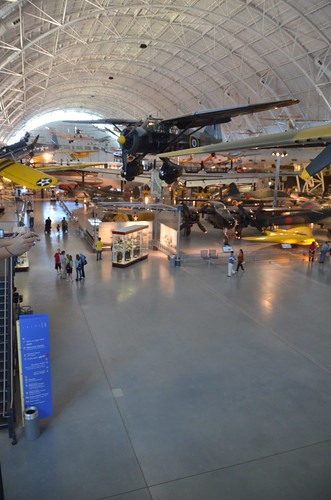

Image by Chris Devers
See far more photos of this, and the Wikipedia article.


Specifics, quoting from Smithsonian National Air and Space Museum: Steven F. Udvar-Hazy | _details_pending_:


(Source from rapid prototyping from China blog)

Thursday, October 2, 2014

Steven F. Udvar-Hazy Center: primary hall panorama

Verify out these precision machined elements producers images:


Steven F. Udvar-Hazy Center: main hall panorama


Image by Chris Devers


See far more pictures of this, and the Wikipedia article.


Particulars, quoting from Smithsonian National Air and Space Museum | _information_pending_:


(Posted by an aluminium machining China Company and precision CNC machined parts China manufacturer)

Saturday, August 9, 2014

Steven F. Udvar-Hazy Center: Space exhibit panorama (misc)

A few nice brass precision turned components China images I found:


Steven F. Udvar-Hazy Center: Space exhibit panorama (misc)


Image by Chris Devers

Uploaded by Eye-Fi.


Steven F. Udvar-Hazy Center: Space exhibit panorama (misc)


Image by Chris Devers

Uploaded by Eye-Fi.